







10 Dental Marketing Strategies to Grow Your Practice in 2026
Growing a dental practice in 2026 comes down to three things working together: being easy to find when a patient searches, being the obvious choice once they land on you, and giving them a reason to pick you over the office down the street. The strategies below are ordered so the ones that compound fastest come first, and the one most sedation practices overlook, using sedation itself as a growth lever, gets the attention it deserves.
- Your Google Business Profile, your reviews, and a fast website are the foundation. Fix those before spending on ads.
- Patients research local practices on Google more than anywhere else, so your local presence is your front door.
- Responding to every review, not just collecting them, measurably changes whether a patient chooses you.
- Offering and marketing sedation attracts anxious, high-value patients that general-appointment-only practices cannot serve.
- Growth only holds if your documentation and compliance scale with it, which is where the right systems protect the practice.

What's in This Guide
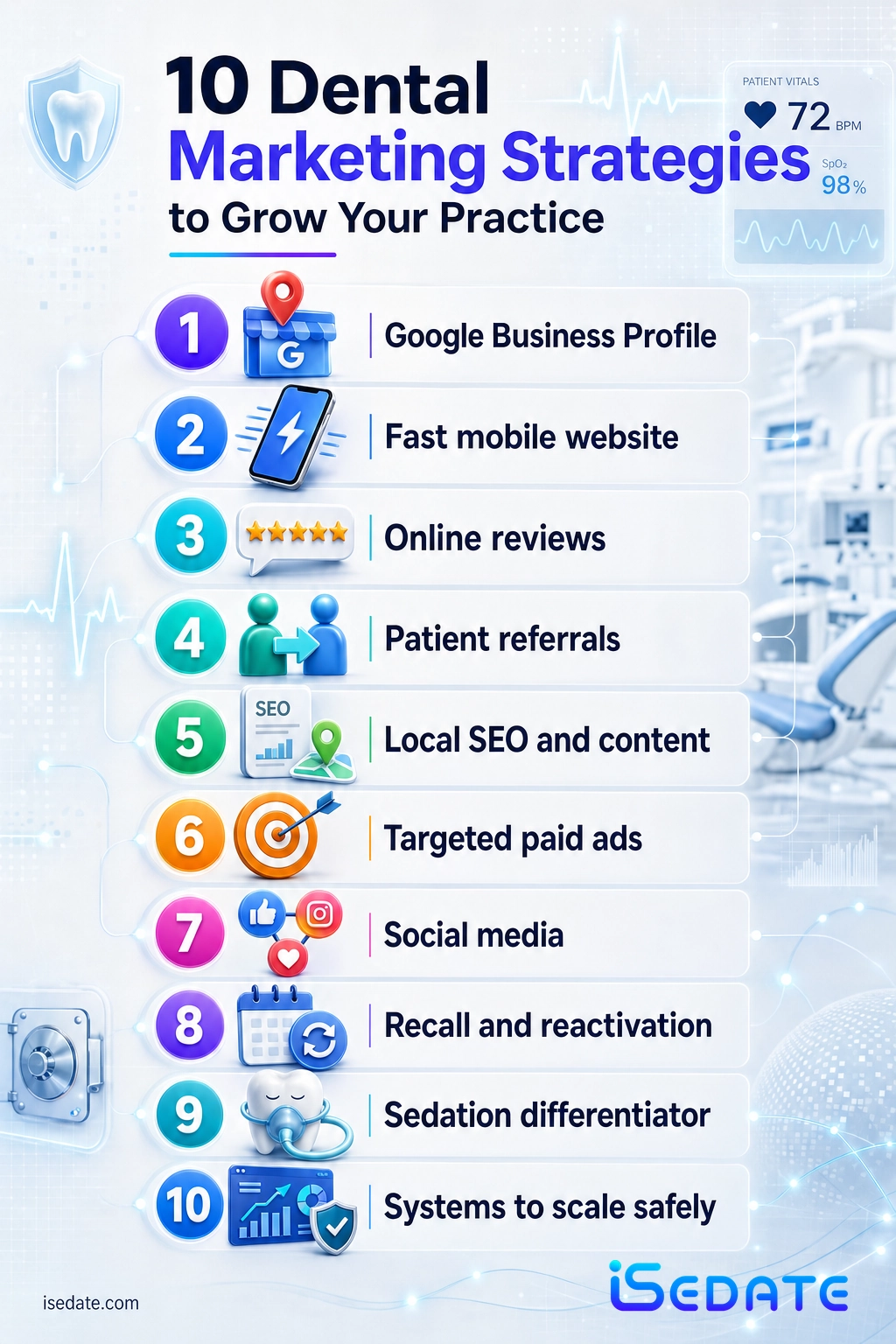
- 1. Claim and optimize your Google Business Profile
- 2. Build a fast, mobile-first website that converts
- 3. Turn online reviews into a patient-acquisition engine
- 4. Run a deliberate patient referral program
- 5. Invest in local SEO and helpful content
- 6. Use targeted paid ads for high-value cases
- 7. Show up on social media with real patient stories
- 8. Reactivate and retain patients with recall
- 9. Differentiate with sedation dentistry
- 10. Build the systems that let you scale safely
The 10 Dental Marketing Strategies That Actually Grow a Practice
1. Claim and Optimize Your Google Business Profile
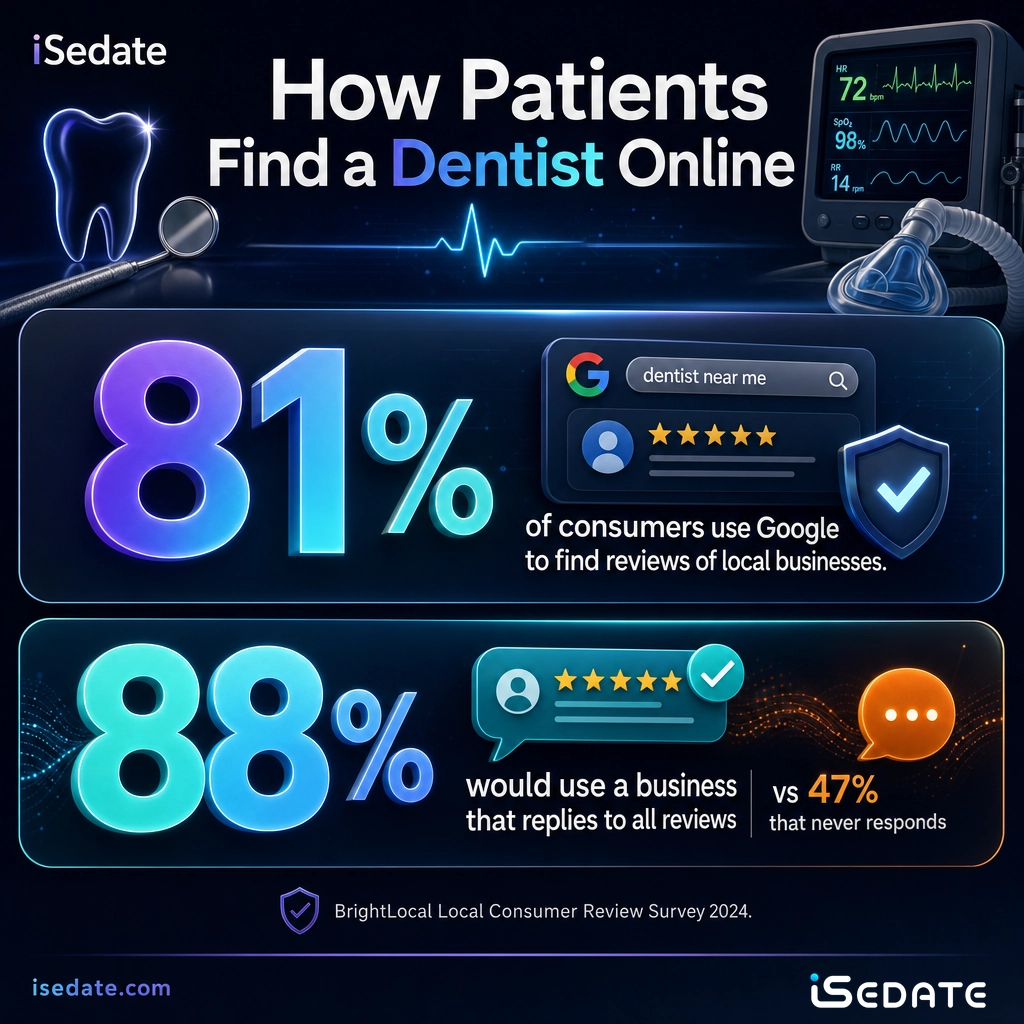
For a local dental practice, your Google Business Profile is the most valuable piece of marketing real estate you own, and it is free. It decides whether you appear in the map pack when someone nearby searches "dentist near me" or "sedation dentist," and it is often the first and only impression a prospective patient forms before they ever reach your website.
Why it matters: Patients research local businesses on Google more than on any other platform, so an incomplete or neglected profile quietly sends new patients to competitors who show up cleaner and more complete.
How to implement: Verify the listing, then fill every field: services, hours, insurance notes, parking, and accessibility. Add real photos of the office and team, not stock images. Pick the most specific primary category available, keep your name, address, and phone identical to your website, and post updates regularly so the profile looks active.
Source: BrightLocal Local Consumer Review Survey 2024
2. Build a Fast, Mobile-First Website That Converts
Most patients will visit your website on a phone, usually right after they see your Google listing. If it loads slowly, hides your phone number, or makes booking a chore, the visit you worked to earn ends in a bounce. A practice website is not a brochure, it is a conversion tool whose only jobs are to build trust and get the appointment.
Why it matters: A clean, fast site raises the percentage of visitors who actually book, which lowers the cost of every other channel feeding traffic to it.
How to implement: Put a tap-to-call button and an online booking link in the header on mobile. Keep load times quick by compressing images. Give each major service its own page with plain-language explanations, real photos, and credentials. Make sure the site is readable by AI search tools and voice assistants by answering common patient questions directly on the page.
Dedicate a page to each high-intent service you want to grow (for example, sedation dentistry, dental implants, or emergency care). A single "Services" page cannot rank for every treatment, and patients searching a specific procedure want a page that speaks only to it.
3. Turn Online Reviews Into a Patient-Acquisition Engine
Reviews are the closest thing dentistry has to word of mouth at scale. A steady flow of recent, specific reviews tells both patients and Google that your practice is active and trusted. Collecting them is only half the work. How you respond, especially to the occasional critical review, is itself a signal that shapes whether a reader books.
Why it matters: Responding to every review, not only the glowing ones, measurably changes whether a prospective patient will use a practice.
Would use a local business based on its review responses (BrightLocal, 2024)
How to implement: Ask every satisfied patient for a review at the moment they are happiest, usually right after a comfortable visit, and make it a one-tap link by text or email. Respond to all reviews within a day or two, thank the positive ones by name, and reply to critical ones calmly and briefly without disclosing any health information.
Source: BrightLocal Local Consumer Review Survey 2024
4. Run a Deliberate Patient Referral Program
Happy patients refer friends and family, but most practices leave that to chance. Treating referrals as a deliberate program, rather than a lucky byproduct, turns your existing patient base into your lowest-cost source of new, pre-trusted patients. A patient who arrives on a friend's recommendation already believes in you before the first appointment.
Why it matters: Referred patients convert faster, accept treatment more readily, and cost far less to acquire than patients won through paid channels.
How to implement: Make the ask simple and specific ("if you know someone putting off the dentist because of anxiety, we would love to help them"). Give patients an easy way to pass your details along, such as a share link or a card. Thank referrers personally. Check your state dental board rules before offering any incentive, because some states restrict patient rewards.
Referrals work best when you give patients a reason that is easy to repeat. "They did a great job" is forgettable. "They can sedate you so you sleep through it" is the kind of detail a nervous friend remembers and acts on.
5. Invest in Local SEO and Helpful Content
Local SEO is the work that makes your practice appear in organic search and the map pack over months, not days. It is slower than ads, but it lowers your cost per new patient the longer it runs, because it keeps producing traffic you do not pay for per click. Content, meaning the pages and posts that answer real patient questions, is the fuel that makes local SEO work.
Why it matters: A practice that ranks for the procedures it wants to grow captures patients at the exact moment they are searching, which is the most qualified traffic you can get.
How to implement: Build out service pages for each treatment, then support them with blog content that answers the questions patients actually ask, like what sedation feels like, how long recovery takes, or what a procedure costs. Target natural phrasing people use in search and voice, and keep your local signals consistent across every listing.
See how dentists run a growing sedation practice
6. Use Targeted Paid Ads for High-Value Cases
Paid search is the fastest way to appear at the top of results for a specific, high-intent search. Where local SEO compounds slowly, ads buy you immediate visibility, which makes them well suited to filling open chair time or promoting a high-value service such as implants or sedation. The catch is that they cost money every time someone clicks, so precision beats volume.
Why it matters: A well-targeted campaign can book a patient the same week, but a sloppy one burns budget on clicks that never become appointments.
How to implement: Point ads at specific services, not generic "dentist" terms, and send each ad to a matching service page rather than the homepage. Add your location and set a radius that reflects how far patients realistically drive. Track cost per booked appointment, not cost per click, and pause what does not convert.

7. Show Up on Social Media With Real Patient Stories
Social media does not usually book an appointment on the spot, but it keeps your practice visible and human between visits, and it gives referred patients something to see when they look you up. The practices that grow on social are not the ones posting stock graphics, they are the ones showing real people, real results, and the day-to-day personality of the office.
Why it matters: Familiarity lowers the barrier to booking, and an anxious patient who has watched your team be warm and calm on video is far more likely to call.
How to implement: Share before-and-after cases with consent, short clips of the team, and honest answers to common fears. Video outperforms static posts, so a 30-second clip of a dentist explaining what sedation feels like will travel further than a polished graphic. Post consistently rather than perfectly.
8. Reactivate and Retain Patients With Recall
The cheapest new patient is often one you already have. Every practice has a list of patients who are overdue for a visit or who started treatment and never finished. A disciplined recall and reactivation system brings them back without spending a dollar on advertising, and it protects the revenue you have already earned the trust to collect.
Why it matters: Keeping an existing patient costs a fraction of winning a new one, and reactivation campaigns produce booked appointments quickly.
How to implement: Automate recall reminders by text and email, then run periodic reactivation messages to patients who have lapsed. Personalize them where you can, and make rebooking a single tap. Segment incomplete treatment plans separately so the message speaks to what that patient actually needs.
The first eight strategies make your practice easier to find and easier to choose. The last two change what you are offering, and for a sedation practice that is where the largest, most defensible growth lives.
9. Differentiate With Sedation Dentistry
Fear keeps a meaningful share of adults out of the dental chair, and those patients tend to postpone care until a small problem becomes a large, high-value treatment plan. A practice that can sedate them comfortably does two things at once: it serves people no general-appointment-only office nearby can reach, and it unlocks bigger cases that anxious patients would otherwise decline. Offering sedation is a clinical service. Marketing it is a growth strategy.
Why it matters: Anxious patients are not a niche to tolerate, they are an underserved, high-value audience actively searching for a practice that will put them at ease.
How to implement: Give sedation its own service page and speak directly to the fear ("sleep through your appointment"). Use the phrase anxious patients search, such as "sedation dentist near me," in your page and listing. Feature calm, reassuring patient stories on social, and train your front desk to answer the nervous caller's questions with patience, because that first call is where the high-value patient decides.
Source: International Dental Journal, dental anxiety prevalence review (2021)

10. Build the Systems That Let You Scale Safely
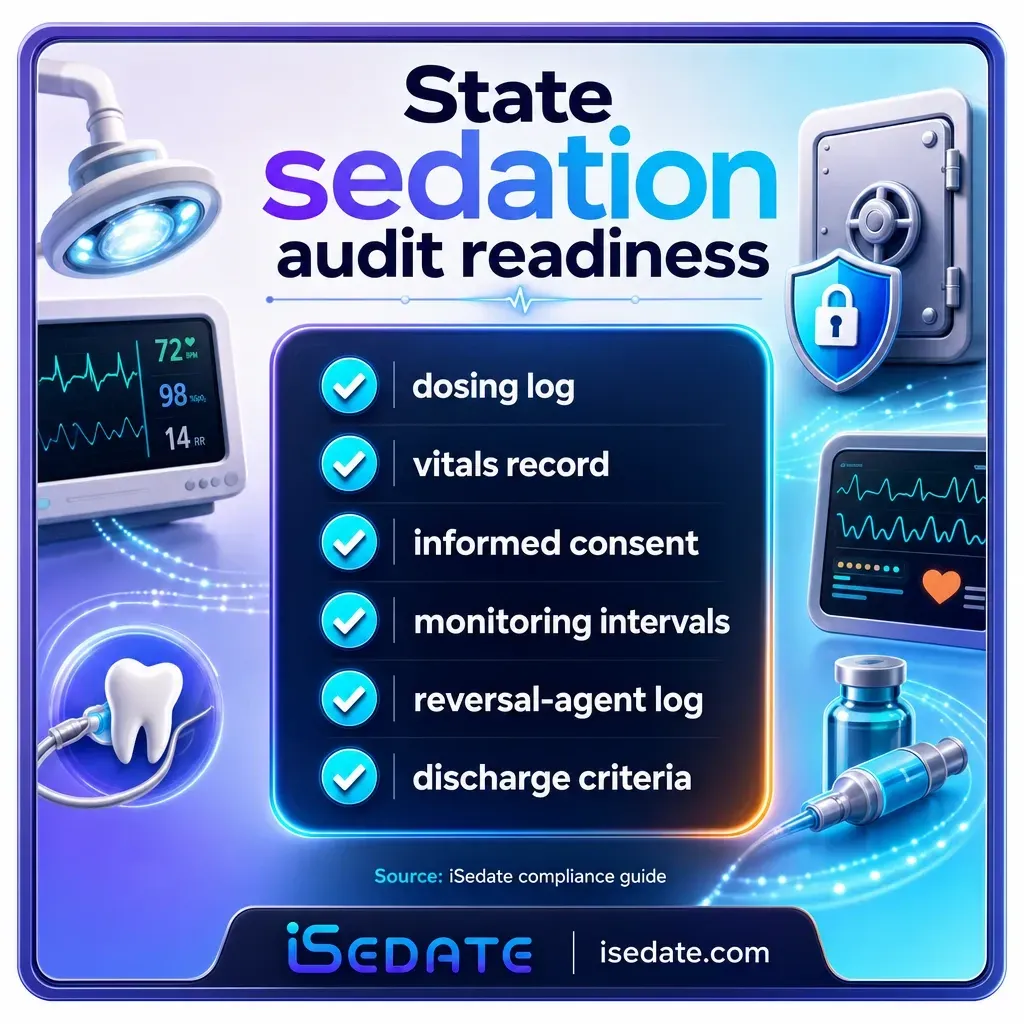
Marketing fills the schedule. Systems decide whether growth holds or breaks the practice. As sedation volume rises, so does the documentation and compliance burden behind every case, and that is exactly where a growing practice is most exposed. Flawless charting and audit-ready records are not back-office housekeeping, they are what protects the practice and its insurance standing if a claim ever arises, and the difference between documented-everything and did-not can be enormous in a dispute.
Why it matters: Winning more sedation patients only grows the practice if you can deliver the service safely and prove you did, visit after visit, without slowing the team down.
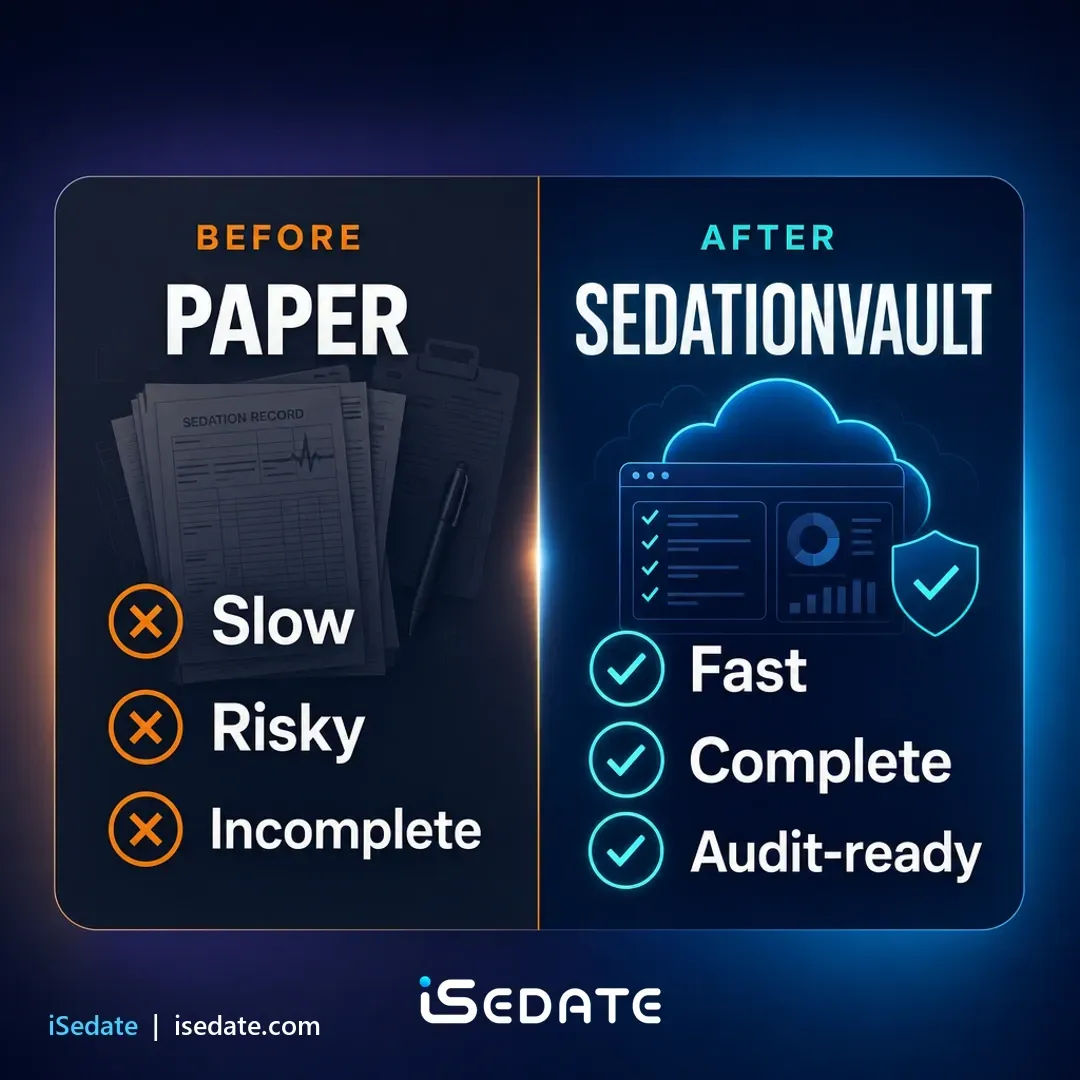
How to implement: Replace paper sedation charts with a dedicated platform that captures live vitals, builds audit-ready records automatically, and keeps consent and intake in one place. iSedate's SedationVault was built for this: it works with any vitals monitor on the market, charts oral and IV sedation in real time, and produces one-click, audit-ready PDF reports, so a practice can grow its sedation volume while staying ready for a state board audit.

SedationVault keeps the compliance and board-audit side handled and turns every case into an audit-ready record without adding steps for your team.
See how SedationVault keeps a growing practice audit-ready
Myth: "More marketing is always the answer to slow growth." It is not. Pouring budget into ads while your Google Business Profile is thin, your reviews are stale, or your booking is clunky just buys expensive traffic that bounces. Worse, marketing a sedation service you cannot document and scale safely invites risk, not revenue. Fix the foundation and the systems first, then amplify with paid channels.
How to Prioritize This List
You do not need to do all ten at once. Start with the strategies that compound and cost the least, then layer paid channels on top once the foundation converts.
| Strategy | Priority | Difficulty | Impact |
|---|---|---|---|
| Google Business Profile | Do first | Low | High |
| Reviews and responses | Do first | Low | High |
| Fast, converting website | Do first | Medium | High |
| Recall and reactivation | Do first | Low | High |
| Referral program | Next | Low | Medium |
| Local SEO and content | Next | Medium | High |
| Sedation as a differentiator | Next | Medium | High |
| Systems to scale safely | Next | Medium | High |
| Paid ads | Then amplify | Medium | Medium |
| Social media | Ongoing | Medium | Medium |
If you only do three things from this list: optimize your Google Business Profile, build a steady review habit with fast responses, and make your website book an appointment in one tap. Those three cost little, compound over time, and make every other strategy cheaper and more effective.
Strategy Summary Table
| # | Strategy | Why It Matters | Difficulty |
|---|---|---|---|
| 1 | Google Business Profile | Decides whether you appear in local map results at all | Low |
| 2 | Mobile-first website | Turns earned visits into booked appointments | Medium |
| 3 | Reviews and responses | Signals trust to patients and to Google | Low |
| 4 | Referral program | Lowest-cost source of pre-trusted new patients | Low |
| 5 | Local SEO and content | Lowers cost per new patient over time | Medium |
| 6 | Targeted paid ads | Fastest route to high-value cases | Medium |
| 7 | Social media | Builds familiarity that lowers the barrier to booking | Medium |
| 8 | Recall and reactivation | Recovers revenue from patients you already have | Low |
| 9 | Sedation as a differentiator | Reaches an underserved, high-value audience | Medium |
| 10 | Systems to scale safely | Protects the practice as volume grows | Medium |
Frequently Asked Questions
How much should a dental practice spend on marketing?
What is the most effective dental marketing strategy?
How long does dental marketing take to show results?
How do I attract more new patients to my dental practice?
Does offering sedation dentistry help grow a practice?
Methodology and Sources
Statistics in this article are drawn from primary and industry-standard sources and matched to the figure and year cited. Local search and review behavior figures come from BrightLocal's Local Consumer Review Survey 2024. Dental anxiety prevalence is drawn from a 2021 review published in the International Dental Journal. Guidance on prioritization, budgeting, and timelines reflects established dental practice-management practice rather than a single cited study and is presented as guidance, not as a statistic.
Sources: BrightLocal Local Consumer Review Survey 2024 | International Dental Journal, dental anxiety prevalence review (2021)
Attracting more patients is only worth it if your practice can serve them safely and prove it. If sedation is part of how you plan to grow, see how iSedate's SedationVault keeps the charting, vitals, and compliance audit-ready as your volume climbs.