







How Long Does Local Anesthesia Last?
Local anesthesia usually wears off within 30 minutes to a few hours, though some long-acting drugs keep an area numb for most of a day. The exact time depends on which anesthetic was used, the dose, and whether it was combined with a vasoconstrictor such as epinephrine. In dentistry, the numbness in your lip and tongue often outlasts the procedure itself by several hours.
- Typical range: numbness lasts 30 minutes to a few hours, and up to a full day with long-acting drugs.
- By dental drug: novocaine 30 to 60 minutes, lidocaine about 1.5 to 3.3 hours, bupivacaine 3 to 10 hours.
- Your tooth comes back first; the lip, cheek, and tongue stay numb longest.
- Dose, epinephrine, blood flow, infection, and your own metabolism all shift the timeline.
- Call your provider if numbness runs well past the expected window, especially beyond about 24 hours.
What's in This Guide
The Short Answer, by Type of Anesthesia
"Local anesthesia" covers everything from a dab of numbing gel to an injection that blocks a nerve for an entire surgery. Because the drugs and delivery differ, so do the timelines. For a routine dental injection or a minor skin procedure, plan on a few hours. For a numbing cream, closer to an hour. For an epidural or spinal block, the numbness can stretch far longer.
| Type of local anesthesia | How long numbness typically lasts |
|---|---|
| Numbing cream or gel (topical) | Up to 90 minutes |
| Standard injection (minor skin surgery) | Up to 3 hours |
| Short-acting dental shot (novocaine) | 30 to 60 minutes (up to 90 with epinephrine) |
| Common dental shot (lidocaine) | About 1.5 to 3.3 hours |
| Long-acting dental shot (bupivacaine) | 3 to 10 hours |
| Epidural or spinal block | A few hours to a few days |
Source: Bupa: Local anaesthesia | Medical News Today | DentalCare CE: Injectable Local Anesthetic Agents
Dental Numbing: Duration by Drug
Most people asking how long local anesthesia lasts have just left the dentist with a numb lip. The drug your provider chose is the biggest clue to how long that feeling will stick around. Here is how the common dental anesthetics compare on total duration of action.
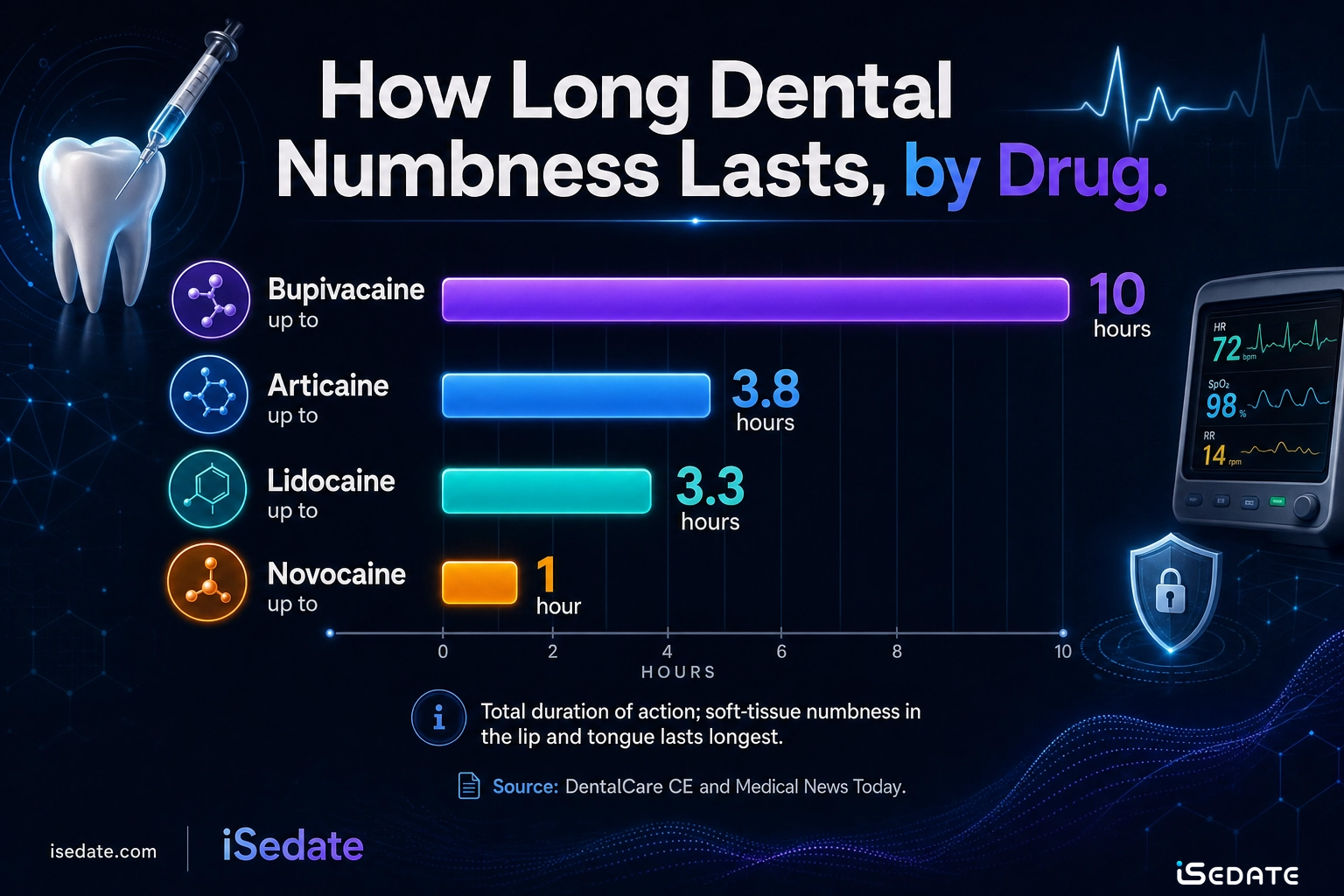
Maximum duration of numbness by dental anesthetic (hours)
Lidocaine is the workhorse of modern dentistry, with a duration of action of roughly 90 to 200 minutes. Articaine is similar, at about 60 to 230 minutes. Bupivacaine is the long-acting option, running anywhere from 3 to 10 hours, which makes it useful for lengthy surgeries or lasting post-operative pain control. Novocaine (procaine) is one of the shortest-acting shots, at 30 to 60 minutes, or up to 90 minutes when combined with epinephrine.
These are whole-drug durations. The part you actually feel splits into two phases, which is why your tooth and your lip come back on different clocks. More on that next.
Myth: if your lip is still numb, the anesthetic is still working on your tooth.
Reality: pulpal (tooth) anesthesia fades well before the soft-tissue numbness in your lip and tongue. Feeling returns to the tooth first, so you can be fully numb-lipped long after the tooth itself can feel again.
Source: DentalCare CE: Injectable Local Anesthetic Agents | Medical News Today
Why Your Lip Stays Numb Longer Than Your Tooth
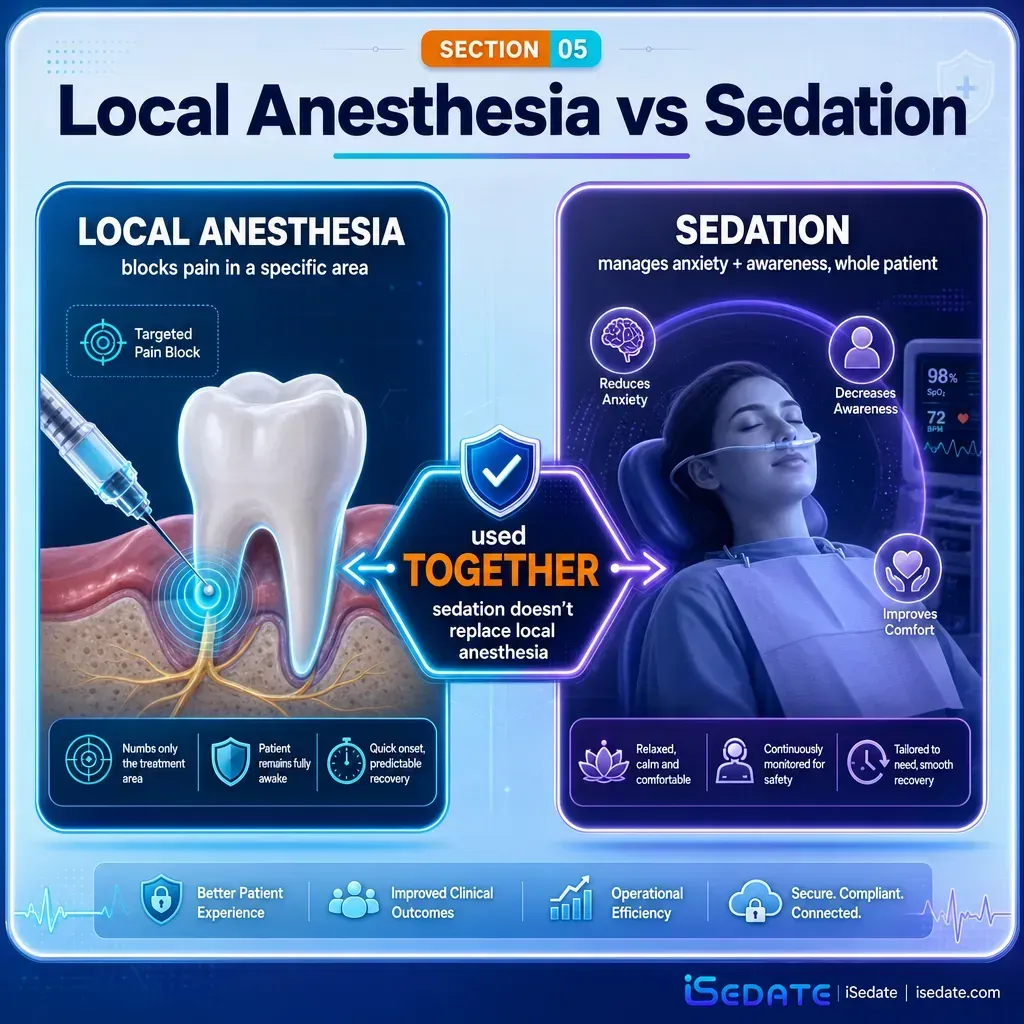
A dental injection numbs two different things: the nerve inside the tooth (pulpal anesthesia) and the surrounding soft tissue (your lip, cheek, and tongue). Soft-tissue numbness almost always lasts longer. As the drug wears off, feeling returns to the tooth first, then works its way back out to the lips and tongue over the following hours.
That gap is normal and expected. It is also the reason a two-hour filling can leave you with a numb lip at dinner. The tooth was ready for the procedure to finish long before the soft tissue was ready to feel again.
While your lip, cheek, and tongue are numb, you cannot feel a bite or a burn. Avoid chewing, and skip hot drinks and food until full feeling returns. Prolonged numbness is exactly why long-acting bupivacaine is not recommended for young children or special-needs patients: the risk of a child biting a numb lip or cheek is too high.
Source: DentalCare CE: Injectable Local Anesthetic Agents
What Changes How Long It Lasts
Two patients can get the same drug and walk out with very different timelines. These are the factors that lengthen or shorten the numbness.
Factors that change how long numbness lasts
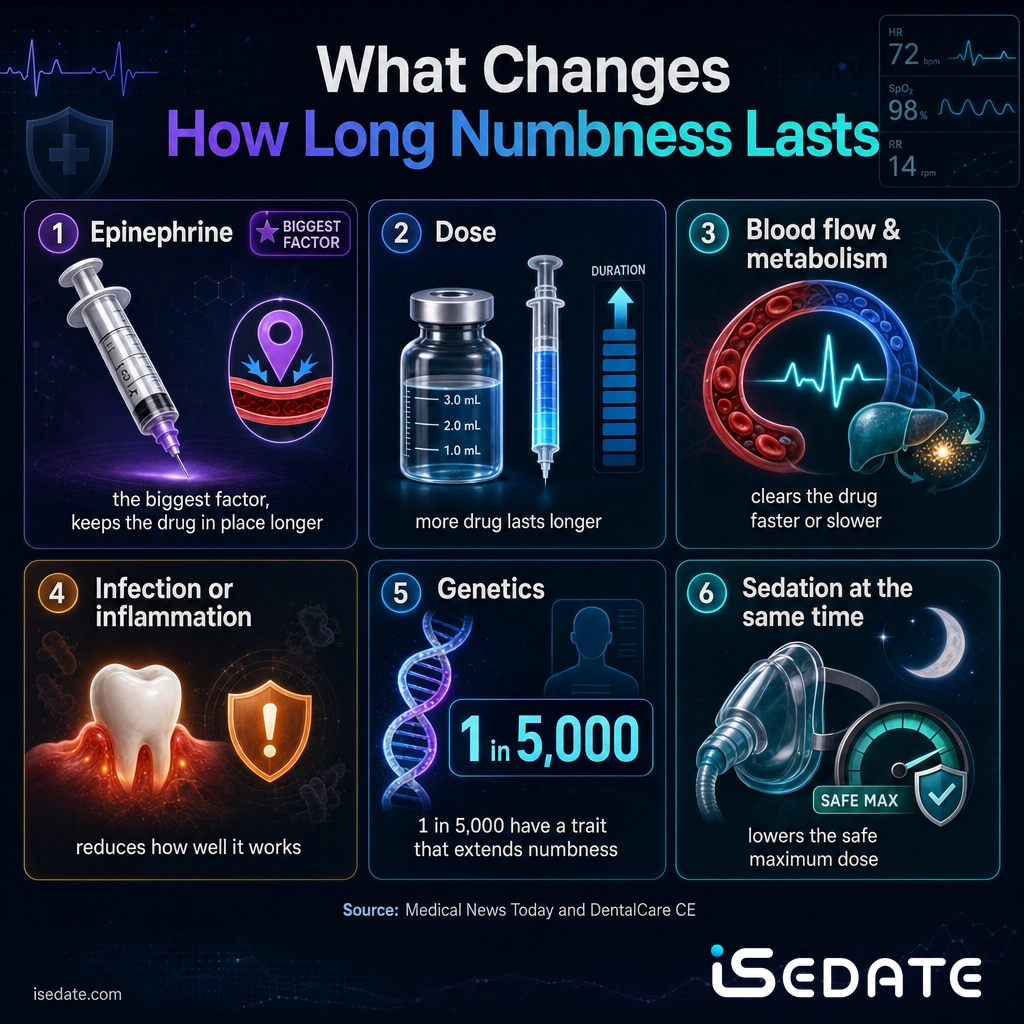
- Epinephrine (the biggest factor). This vasoconstrictor narrows the blood vessels around the injection site so the anesthetic stays put and keeps working longer. An epinephrine-free formula wears off sooner and is used for some patients with heart disease or high blood pressure.
- Dose. More drug lasts longer. A root canal calls for more anesthetic than a small filling, so the numbness runs longer too.
- Blood flow and metabolism. Well-perfused tissue clears the drug faster, and individual metabolism varies from person to person.
- Infection or inflammation. Anesthetic works less effectively on infected or inflamed tissue, so a provider may need to use more to get and keep the area numb.
- Your genetics. About 1 in 5,000 people have pseudocholinesterase deficiency, an inherited trait that makes certain anesthetics last far longer than normal.
- Sedation given at the same time. When local anesthetic is layered on top of sedation, the safe maximum dose actually drops, because the drugs have additive effects on the heart and nervous system. That makes the exact dose and timing a safety matter, not just a comfort one.
Source: Medical News Today | DentalCare CE: Injectable Local Anesthetic Agents
How to Make It Wear Off Faster
There is no way to instantly undo local anesthesia at home, but a few things genuinely help, and one in-office option can speed things up considerably.
Light activity and time. Gentle movement, like a short walk, can raise blood flow and help the body clear the drug a little faster. Check with your dentist or doctor first, since you should not be active right after some procedures.
For patients who cannot afford to stay numb for hours, dentists can inject a reversal drug called phentolamine mesylate, sold as OraVerse. It widens the blood vessels that epinephrine narrowed, flushing the anesthetic out of the area. In the trials that led to its FDA approval, OraVerse cut the median time to recover normal lip sensation by about 85 minutes in the lower lip and 83 minutes in the upper lip. Within one hour of getting it, 41 percent of patients had normal lower-lip feeling back, compared with just 7 percent in the control group.
OraVerse is considered safe and has been approved for children aged 3 and older since 2016, but it is an added cost and is usually not covered by insurance, so it is optional rather than routine.
Source: Drugs.com: OraVerse (phentolamine mesylate) prescribing information | Medical News Today
When Numbness Lasts Too Long
Numbness that outlives the expected window for your drug is worth a phone call. Most local anesthesia is gone within a few hours; a long-acting block can run most of a day. Beyond that, especially past about 24 hours, contact the provider who treated you.
Watch for a lingering loss of feeling, tingling, or a burning sensation that does not fade. Persistent altered sensation can point to nerve irritation (paresthesia) and should be evaluated. Separately, any sign of an allergic reaction, such as difficulty breathing, hives, itching, or swelling, needs immediate medical care rather than a wait-and-see approach.
Source: Medical News Today | Bupa: Local anaesthesia
For Providers: Why the Record Matters
From the chair, "how long will I be numb?" is a comfort question. From behind the chair, it is a documentation question. The honest answer depends on exactly which agent was used, at what concentration, in what total dose, with or without a vasoconstrictor, and at what time it was administered. Those are the same data points that protect the practice if a question is ever raised later.
The fastest way to answer a patient's numbness question accurately, and to defend a dose if a board or a carrier ever asks, is to have the anesthetic recorded cleanly in the first place: agent, concentration, cartridge count, vasoconstrictor, and the timestamp it was given, sitting right alongside the sedation record and vitals. A perfect record answers the patient today and protects the practice tomorrow.
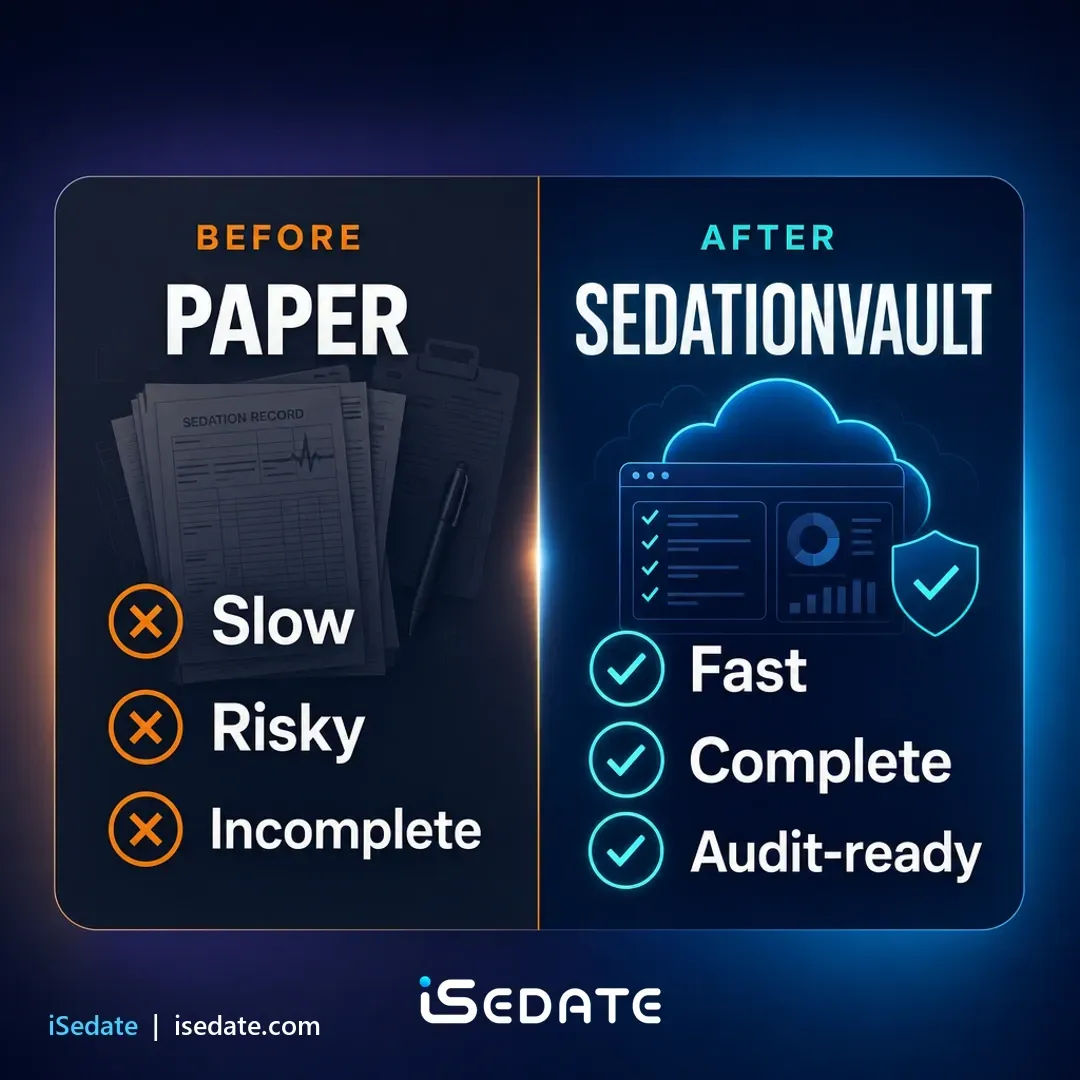
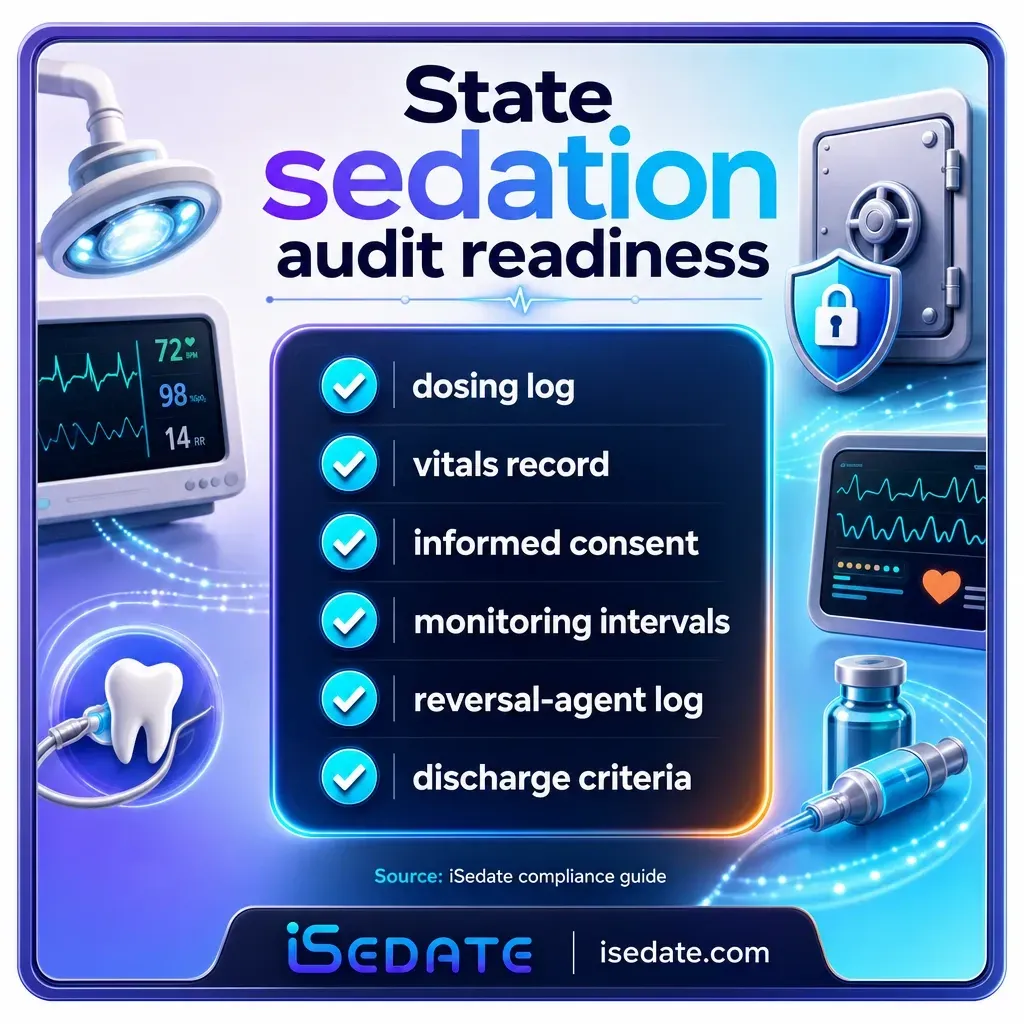
That is the job iSedate's SedationVault was built for. It timestamps the full sedation visit record, tracks dosage and the drug log, and produces an audit-ready PDF, so the anesthetic a patient received is never a guess reconstructed after the fact. Because the safe maximum local-anesthetic dose drops when sedation is running at the same time, tracking cumulative dose in one place is a safety feature, not paperwork.
See how SedationVault charts the sedation record
It pairs naturally with purpose-built charting for the anesthesia record, the broader sedation visit record, and dental sedation compliance, all in one audit-ready system.
Book a demo to see audit-ready sedation records
Frequently Asked Questions
How long does local anesthesia last?
Why is my lip still numb hours after a dental filling?
How can I make local anesthesia wear off faster?
When should I worry about numbness that will not go away?
Does epinephrine make local anesthesia last longer?
Related Reading
- More local anesthesia guides for patients and providers.
- The full sedation dentistry blog, covering oral and IV sedation.
- IV sedation guides, for deeper sedation beyond a local shot.
Methodology and sources. Duration figures for dental anesthetics are drawn from the DentalCare continuing-education course on injectable local anesthetic agents and from Medical News Today's review of local anesthesia. Timelines for topical, injected, and epidural anesthesia come from Bupa's patient guidance. Reversal-drug figures come from the FDA-approved prescribing information for OraVerse (phentolamine mesylate). All timings are typical ranges; individual results vary with drug, dose, vasoconstrictor, and patient factors. This article is general information, not medical advice; follow the guidance of your own dentist, surgeon, or anesthesia provider.
Sources: DentalCare CE: Injectable Local Anesthetic Agents | Medical News Today | Bupa: Local anaesthesia | Drugs.com: OraVerse prescribing information