






What Is IV Sedation and How Does It Work?
IV sedation is sedative medication given through a vein to keep you calm, relaxed, and comfortable during a procedure. Because the drug goes directly into your bloodstream, the provider can adjust the amount and the depth moment to moment, usually alongside local anesthesia that numbs the treatment area. It is one of the most common ways to make dental work, oral surgery, endoscopy, and other outpatient procedures tolerable for anxious patients, without the deeper risks of full general anesthesia.
- IV sedation puts sedative drugs straight into a vein, so the dose and depth can be controlled and adjusted during the procedure.
- It usually produces moderate or deep sedation: you are drowsy and may drift off, but you are not fully unconscious the way you are under general anesthesia.
- The American Society of Anesthesiologists defines four levels of sedation, from minimal to general anesthesia, and IV sedation can reach the deeper middle of that range.
- Common agents are midazolam, propofol, and fentanyl, given by a trained provider who monitors your breathing, oxygen, heart rate, and blood pressure throughout.
- Most people recover within 24 hours but cannot drive for a full day and must arrange a ride home.
What's in This Guide
- What IV Sedation Is
- How IV Sedation Works, Step by Step
- The Four Levels of Sedation, and Where IV Fits
- IV Sedation vs. Nitrous, Oral, and General Anesthesia
- What Drugs Are Used for IV Sedation
- Monitoring, Recovery, and Side Effects
- Who Is a Candidate for IV Sedation
- For Providers: Why the Sedation Record Matters
- Frequently Asked Questions
- Related Reading
What IV Sedation Is
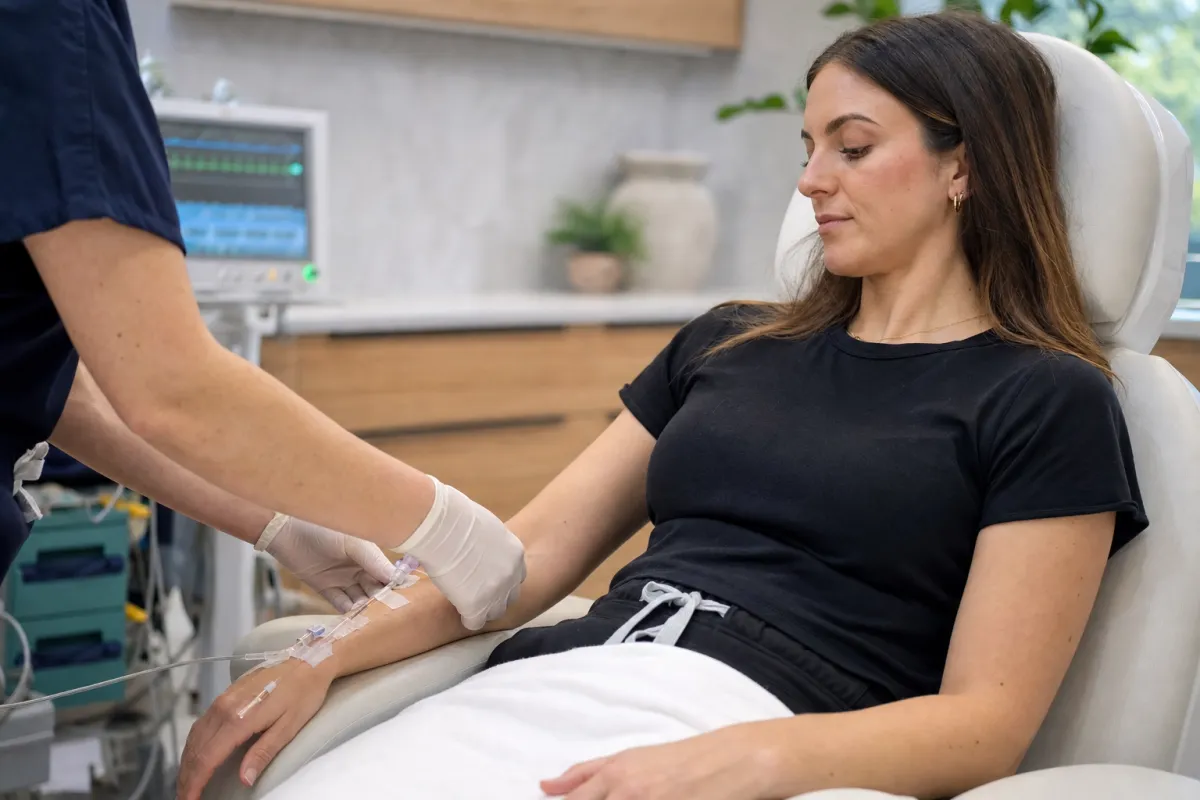
"IV" stands for intravenous, meaning "into a vein." IV sedation is the practice of delivering sedative medication through a thin catheter placed in a vein, usually in the arm or hand, so the drug takes effect quickly and can be adjusted throughout the procedure. You will often hear it called conscious sedation, monitored anesthesia care, or twilight sedation.
IV sedation is sedative drug delivered through a vein to relax you during a procedure. Because it enters the bloodstream directly, onset is fast and the depth is easy to control. It is typically paired with local anesthesia, and you usually stay breathing on your own while a provider monitors you.
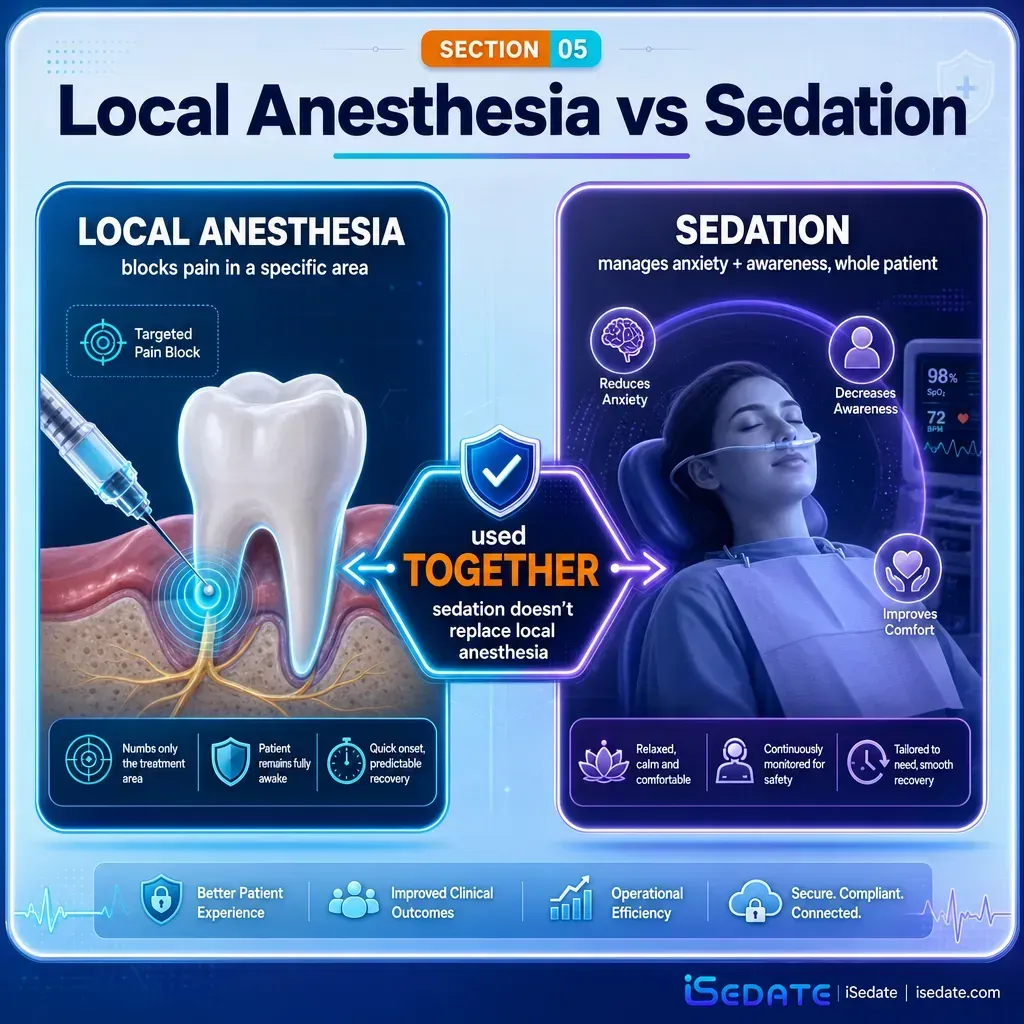
The point of IV sedation is not to put you to sleep for its own sake. It is to lower anxiety, blunt the memory of an unpleasant procedure, and keep you still and comfortable while the local anesthetic does the actual pain control. For many people with significant dental or procedural anxiety, it is the difference between getting needed care and avoiding it entirely.
Source: American Society of Anesthesiologists: IV/Monitored Sedation | Cleveland Clinic: Sedation Dentistry
How IV Sedation Works, Step by Step
The mechanics are simpler than most people expect. The speed and control come from the delivery route: medication in the bloodstream reaches the brain in seconds, so a provider can give a little, see how you respond, and give a little more. That approach of giving small amounts and watching the effect is called titration, and it is the reason IV sedation is so controllable.
- A vein is accessed. The provider places a small IV catheter, usually in the arm or back of the hand. This is the only needle stick most patients feel.
- Baseline monitors go on. A pulse oximeter clips to a finger and a blood pressure cuff and heart monitor are applied before any drug is given.
- Medication is titrated in. The sedative, often with an opioid for pain relief, is given in small increments. The provider watches how awake or drowsy you are and adjusts the dose.
- Local anesthesia numbs the area. Once you are relaxed, the treatment site is numbed so IV sedation handles calm and comfort while the local handles pain.
- You are monitored throughout. Breathing, oxygen level, heart rate, and blood pressure are tracked the entire time, and the dose is adjusted or paused as needed.
- Recovery begins when the drug stops. The effects wear off over a short period once dosing ends, and you are watched until you are stable enough to be taken home.
Under moderate sedation you typically keep breathing on your own and can still respond to a question or a light touch. You may or may not remember parts of the appointment. That combination, awake enough to protect your own airway but relaxed enough not to care about the procedure, is exactly what makes IV sedation useful.
Source: Cleveland Clinic: Sedation Dentistry | American Society of Anesthesiologists: IV/Monitored Sedation
The Four Levels of Sedation, and Where IV Fits
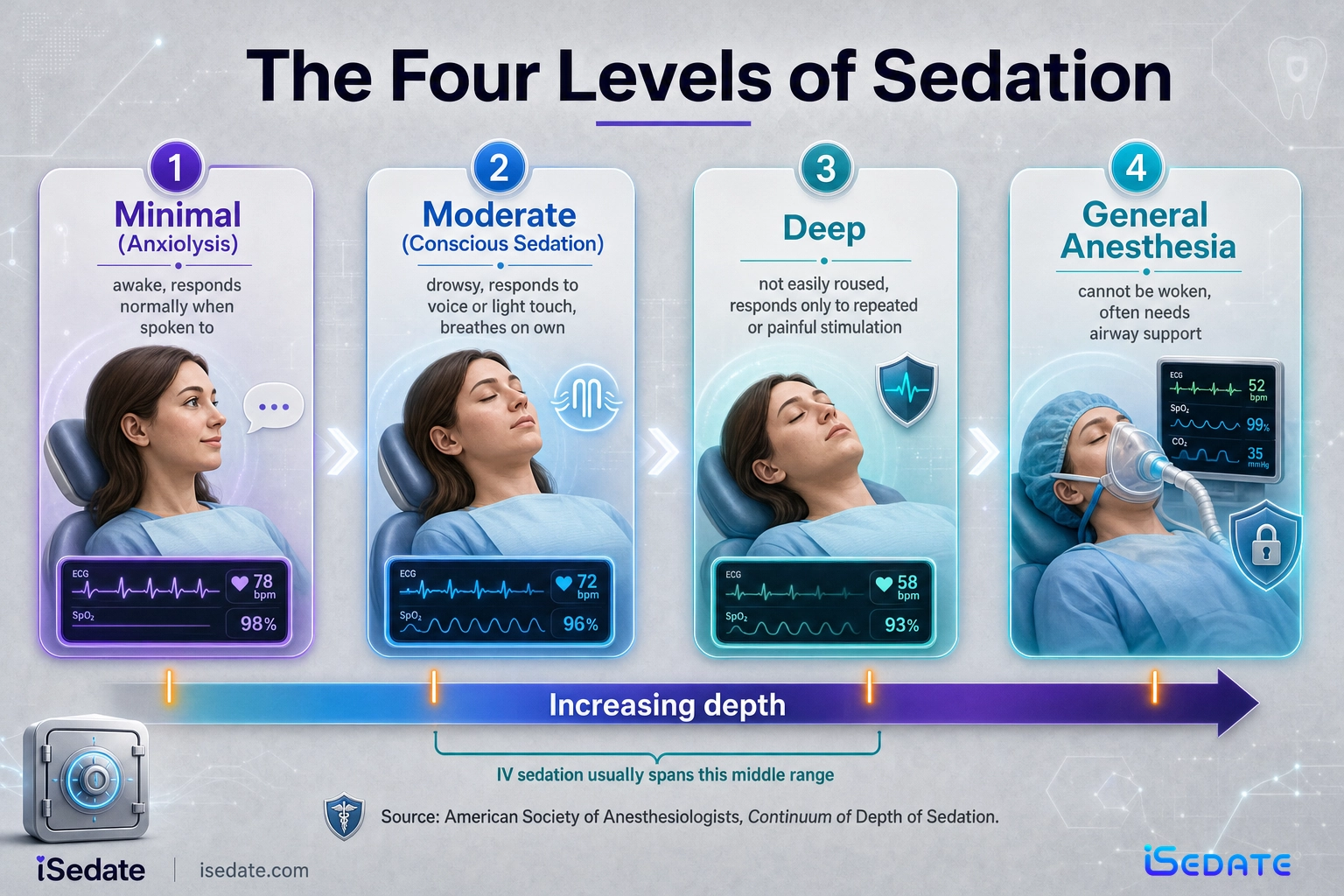
Sedation is not one fixed state. The American Society of Anesthesiologists (ASA) describes it as a continuum of four levels, from barely sedated to full general anesthesia. The key point for patients is that these levels are defined by how you respond, not by which drug or which route was used. IV sedation most often lands in the moderate-to-deep part of this range.
| Level | How you respond | Breathing and airway |
|---|---|---|
| Minimal (anxiolysis) | Respond normally when spoken to | Unaffected |
| Moderate ("conscious sedation") | Drowsy, respond purposefully to voice or light touch | No intervention needed; breathing adequate |
| Deep | Not easily roused; respond only to repeated or painful stimulation | May need airway help; breathing may be inadequate |
| General anesthesia | Cannot be woken, even by pain | Often needs airway and breathing support |
The dividing lines between levels are not sharp, and a patient can slip from one level into a deeper one, which is why the provider keeps titrating and monitoring. One more term worth clearing up: monitored anesthesia care (MAC) is not a depth of sedation at all. It is a service provided by a qualified anesthesia professional, who may keep you anywhere along the continuum as the procedure requires.
Source: ASA: Continuum of Depth of Sedation
IV Sedation vs. Nitrous, Oral, and General Anesthesia
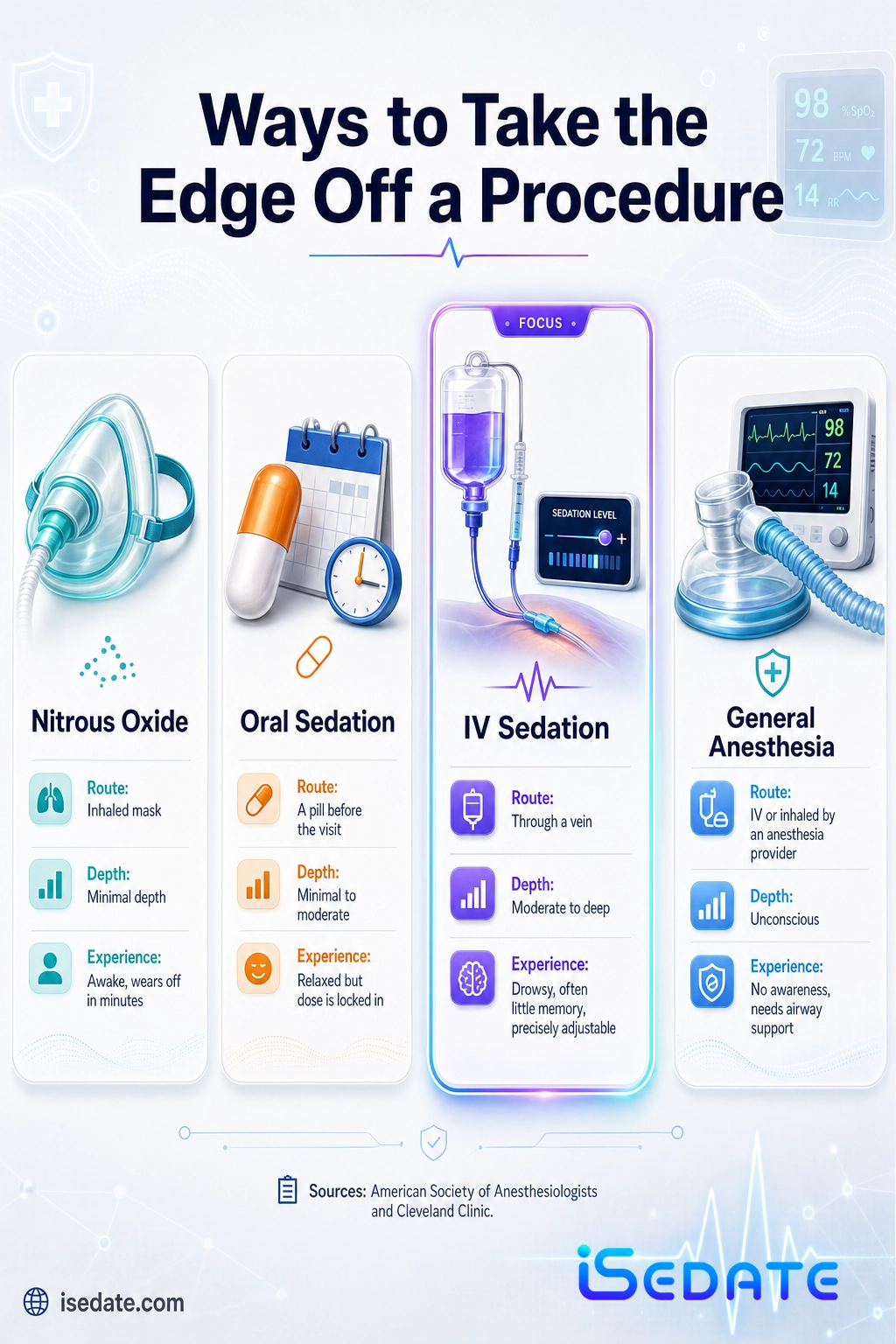
IV sedation is one of several ways to take the edge off a procedure, and the one patients most often confuse it with is general anesthesia. The two are not the same. The quickest way to see where IV sedation fits is to line up the common options side by side.
| Option | How it is given | Typical depth | Awareness and control |
|---|---|---|---|
| Nitrous oxide ("laughing gas") | Inhaled through a mask | Minimal | Fully awake; wears off in minutes |
| Oral sedation | A pill taken before the visit | Minimal to moderate | Awake but relaxed; slower onset, harder to fine-tune |
| IV sedation | Through a vein | Moderate to deep | Drowsy, often little memory; fast and precisely adjustable |
| General anesthesia | IV and/or inhaled, by an anesthesia provider | Unconscious | No awareness; usually needs airway and breathing support |
The practical difference between IV sedation and general anesthesia comes down to your airway. Under IV sedation you generally keep breathing on your own and can respond, even if you are very drowsy. Under general anesthesia you cannot be roused and often need help maintaining your airway and breathing. IV sedation also tends to come with a faster recovery and an earlier trip home than general anesthesia.
Oral sedation is simpler and needle-free, but once a pill is swallowed the dose is locked in: the provider cannot dial it back if it runs deep or top it up smoothly if it runs light. IV sedation's titration is what makes it both deeper and more controllable at the same time. For the dental-specific picture, see our deeper guide to IV sedation in dentistry and its process, risks, and benefits.
Source: American Society of Anesthesiologists: IV/Monitored Sedation | Cleveland Clinic: Sedation Dentistry

What Drugs Are Used for IV Sedation
There is no single "IV sedation drug." Providers choose from a small set of well-studied agents, often in combination, and tailor the mix to the depth of sedation needed and the patient's health. A few show up again and again.
- Midazolam. A short-acting benzodiazepine, and one of the most widely used sedatives for conscious sedation. It works quickly, reduces anxiety, and causes amnesia for the procedure, but it does not relieve pain on its own.
- Propofol. A fast-acting sedative-hypnotic with a very short duration, which allows a smooth, quick recovery. It is powerful and is given only by providers trained to manage deeper sedation.
- Fentanyl (or another opioid). Added for pain relief, since sedatives like midazolam do not provide analgesia. Many patients are sedated well with an opioid-plus-benzodiazepine combination.
Combining a sedative with an opioid is common and effective, but it is also where the risk lives. The U.S. prescribing information for midazolam carries a boxed warning that pairing it with opioids can cause profound sedation, dangerously slow breathing, coma, and death. This is exactly why IV sedation is given by a trained provider who monitors your breathing continuously, never as a do-it-yourself "take a pill and relax."
The dental-specific drug choices, doses, and reversal agents are covered in our guide to the drugs used for IV sedation in dentistry. The theme across every setting is the same: the right drug at the right dose, titrated and recorded carefully, is what keeps IV sedation both effective and safe.
Source: MedicineNet: Drugs Used for Conscious Sedation | FDA Prescribing Information: Midazolam Hydrochloride Injection
Monitoring, Recovery, and Side Effects
The safety of IV sedation rests on two things: a trained provider and continuous monitoring. Because moderate and deep sedation can slow your breathing, the provider watches a defined set of vital signs from before the first dose until you are awake and stable.
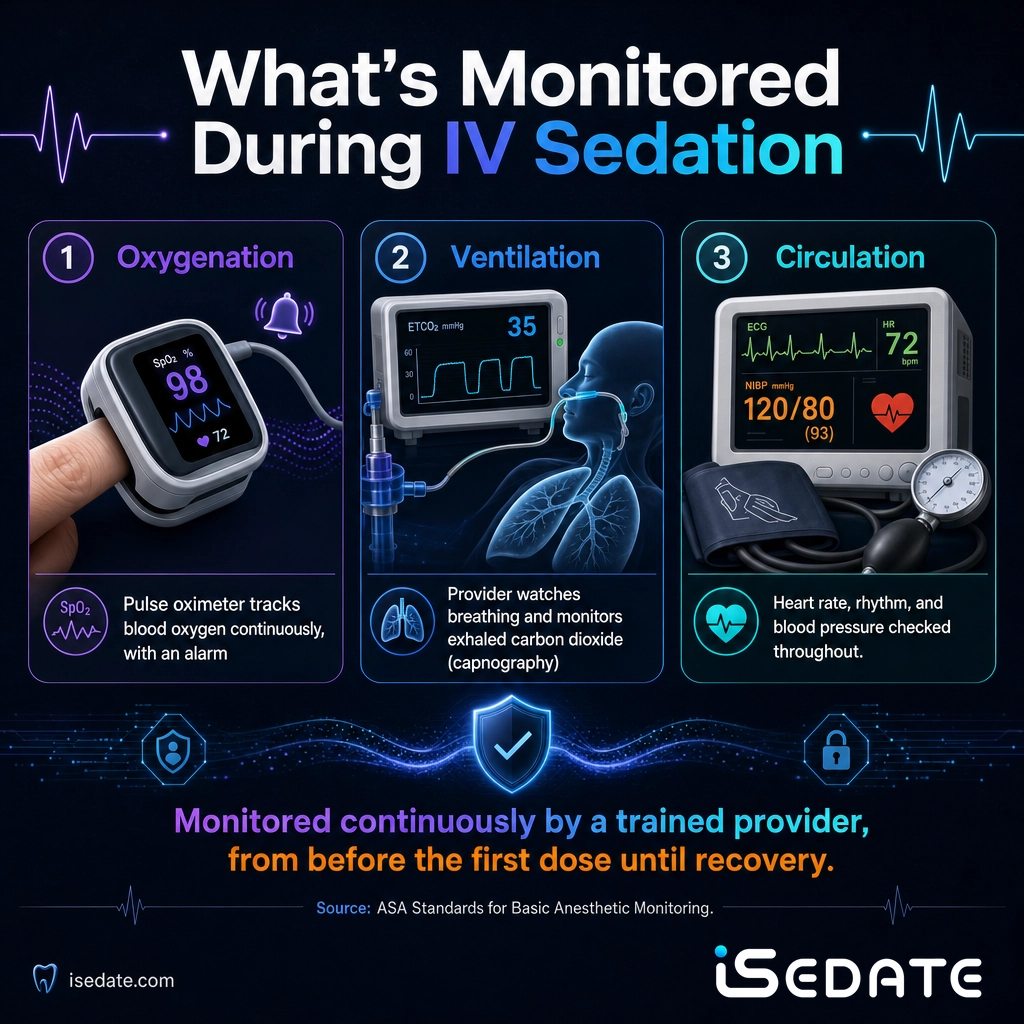
Under the ASA's basic monitoring standards, the provider tracks:
- Oxygenation. A pulse oximeter continuously measures the oxygen level in your blood, with an audible alarm.
- Ventilation (breathing). For moderate or deep sedation, the provider watches you breathe and monitors exhaled carbon dioxide (capnography) to catch slowed or paused breathing early.
- Circulation. Heart rate, heart rhythm, and blood pressure are checked at regular intervals.
Recovery from IV sedation is generally quick and usually faster than from general anesthesia. Most people wake up soon after the medication is stopped and go home the same day. Even so, the drugs linger in your system for the rest of the day.
Plan ahead: you cannot drive for 24 hours, you need a responsible adult to take you home and ideally stay with you, and you should take it easy the rest of the day. Common, usually mild side effects include drowsiness, headache, nausea or vomiting, dry mouth, and a small bruise where the IV was placed. Most of these fade within a day. Call your provider if you still feel very groggy after 24 hours or your side effects are not settling.
Source: OpenAnesthesia: ASA Standards for Basic Anesthetic Monitoring | Cleveland Clinic: Sedation Dentistry
Who Is a Candidate for IV Sedation
IV sedation suits a wide range of patients and procedures. It is a strong fit if you have significant dental or procedural anxiety, a sensitive gag reflex, a hard time getting numb, or a long or complex appointment where staying comfortable and still matters. It is also common for oral surgery, endoscopy and colonoscopy, and other minor outpatient procedures where a local anesthetic alone is not enough but general anesthesia is more than the procedure requires.
Your provider will review your health history before recommending IV sedation. Factors like certain heart or lung conditions, obstructive sleep apnea, pregnancy, some medications, and your age can change the safest approach. An honest, complete medical history is the single most useful thing you can bring to that conversation.
None of this is a decision you make alone or from a web page. The right level of sedation depends on your procedure, your health, and your provider's assessment. What is universal is the setup: IV sedation belongs in a monitored setting, delivered by someone trained to manage it and to step in if your breathing or circulation needs support.
Source: American Society of Anesthesiologists: IV/Monitored Sedation
For Providers: Why the Sedation Record Matters
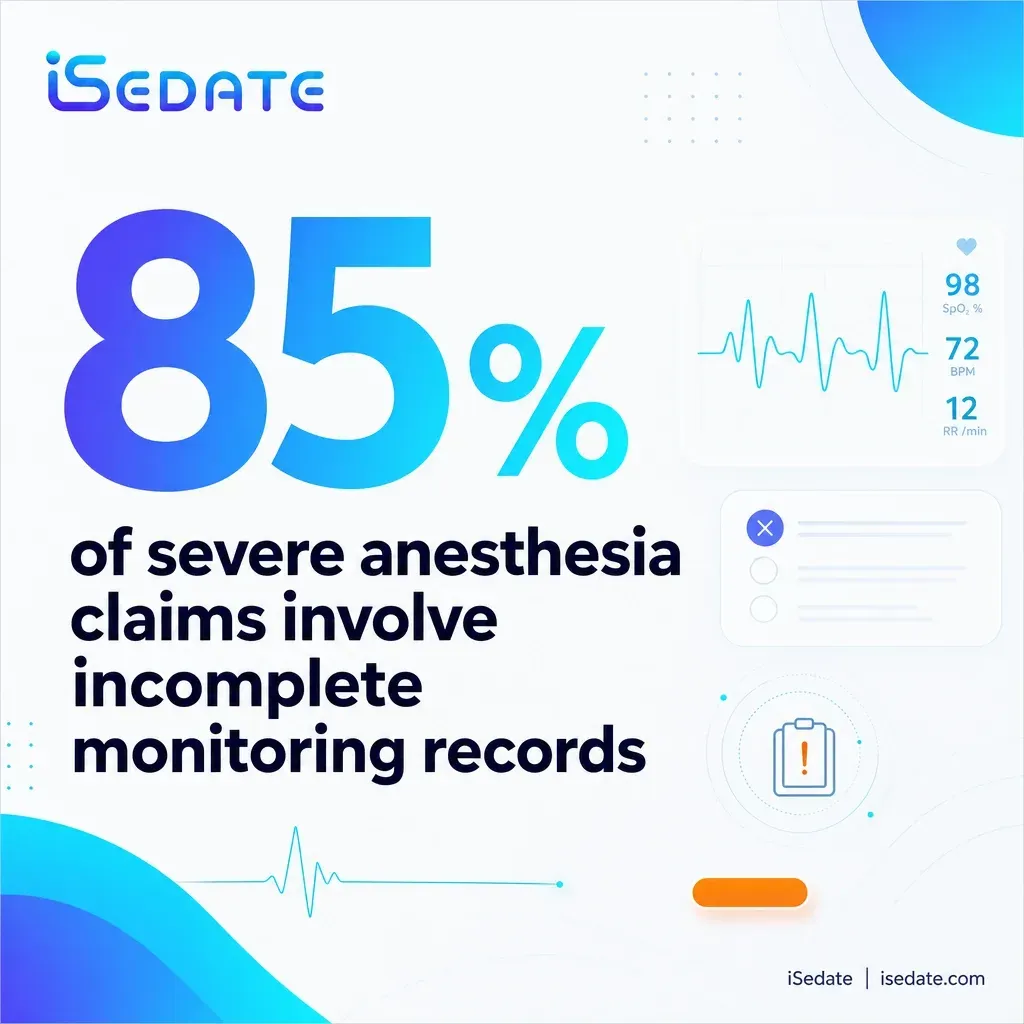
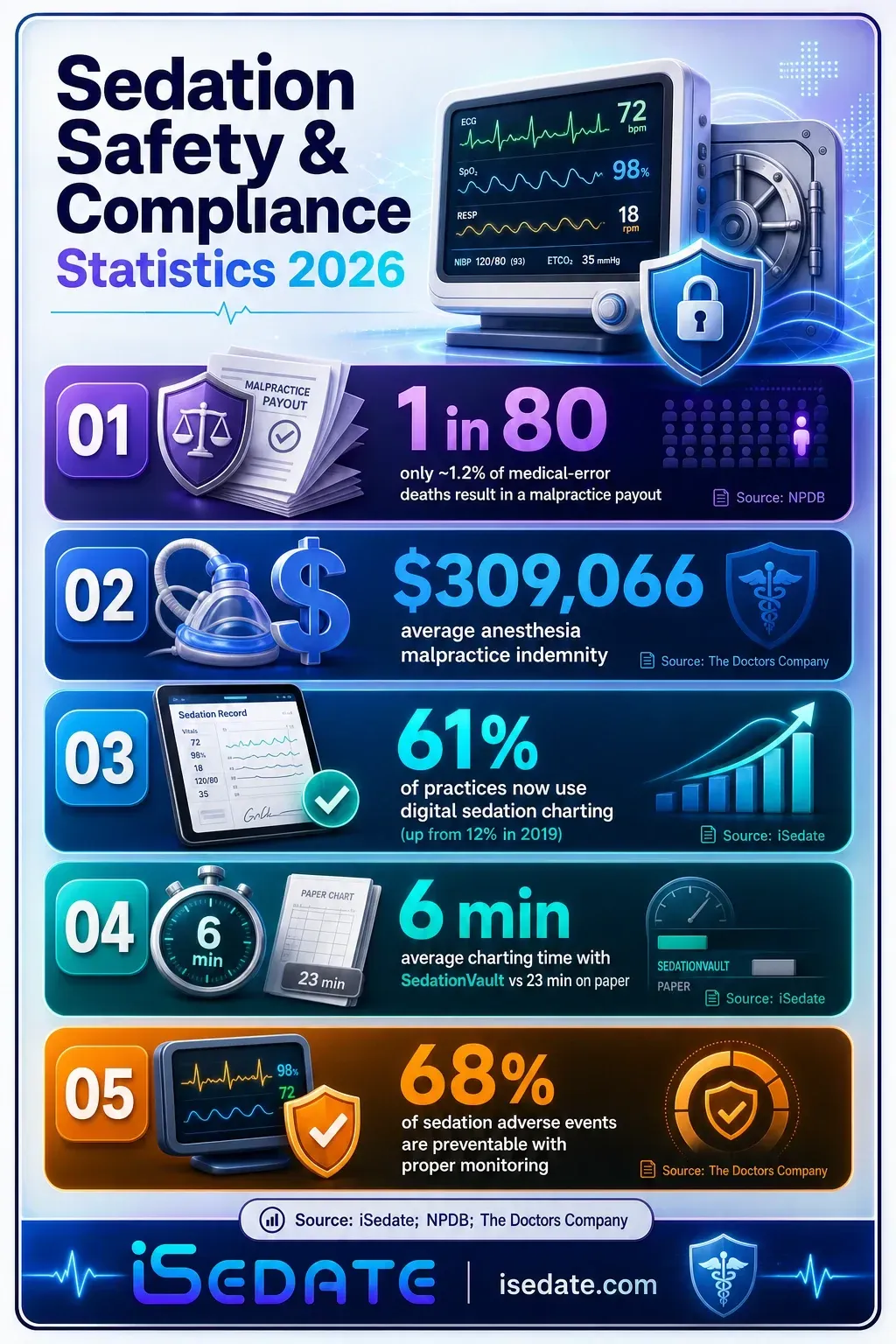
From the patient's chair, IV sedation is about comfort. From behind the chair, every minute of it is a documentation event. The dose given, the time it was given, the drug and concentration, and the vital signs at each interval are not just good practice; they are the record that proves the sedation was delivered safely and within the standard of care.
The same titration that makes IV sedation safe also makes it data-heavy: small, frequent doses, each one paired with a set of vitals, across the whole visit. Captured cleanly and timestamped as it happens, that record answers a board or a malpractice carrier instantly. Reconstructed from memory after the fact, it is the weakest part of the defense. Flawless charting is not paperwork; it is the difference-maker if a claim is ever filed.
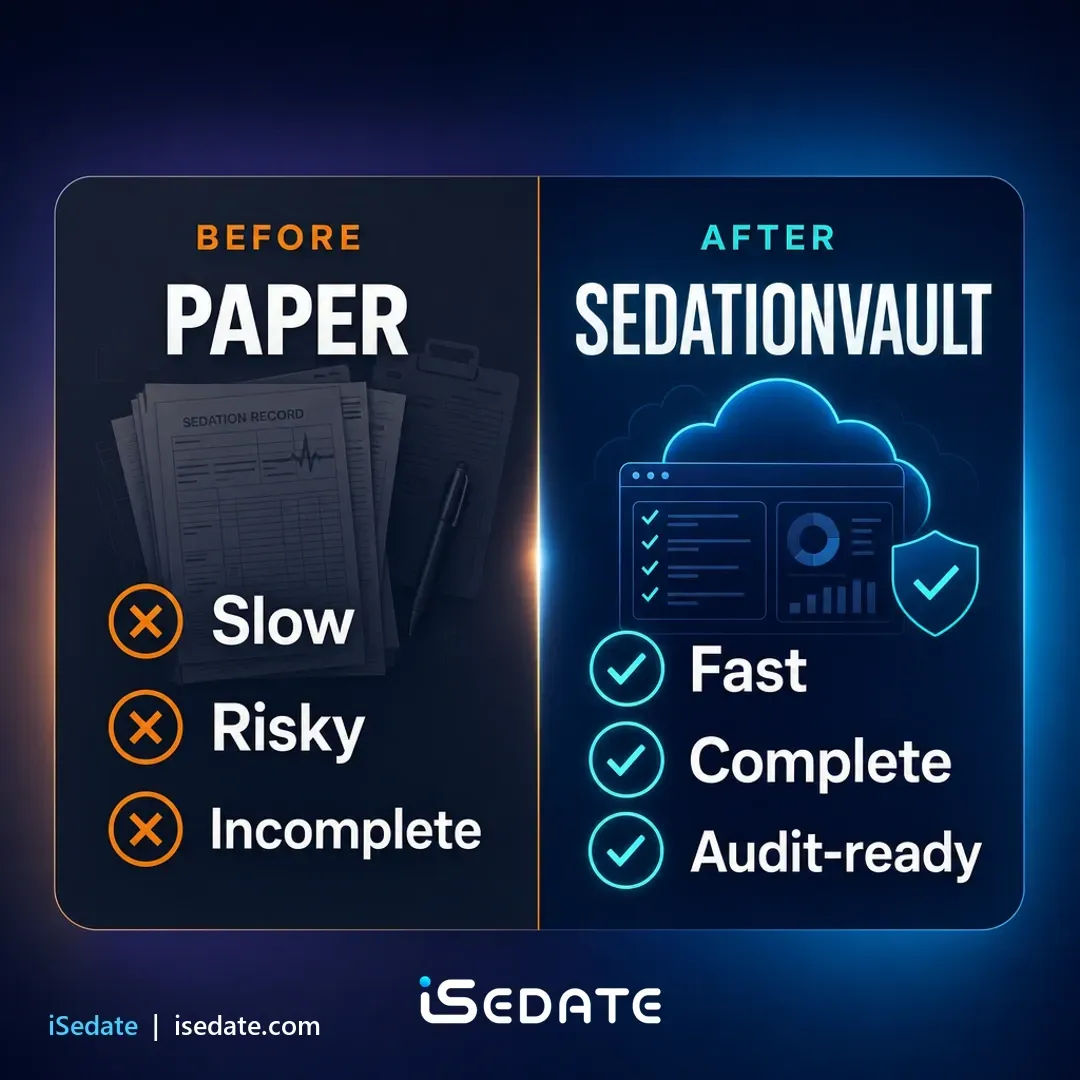
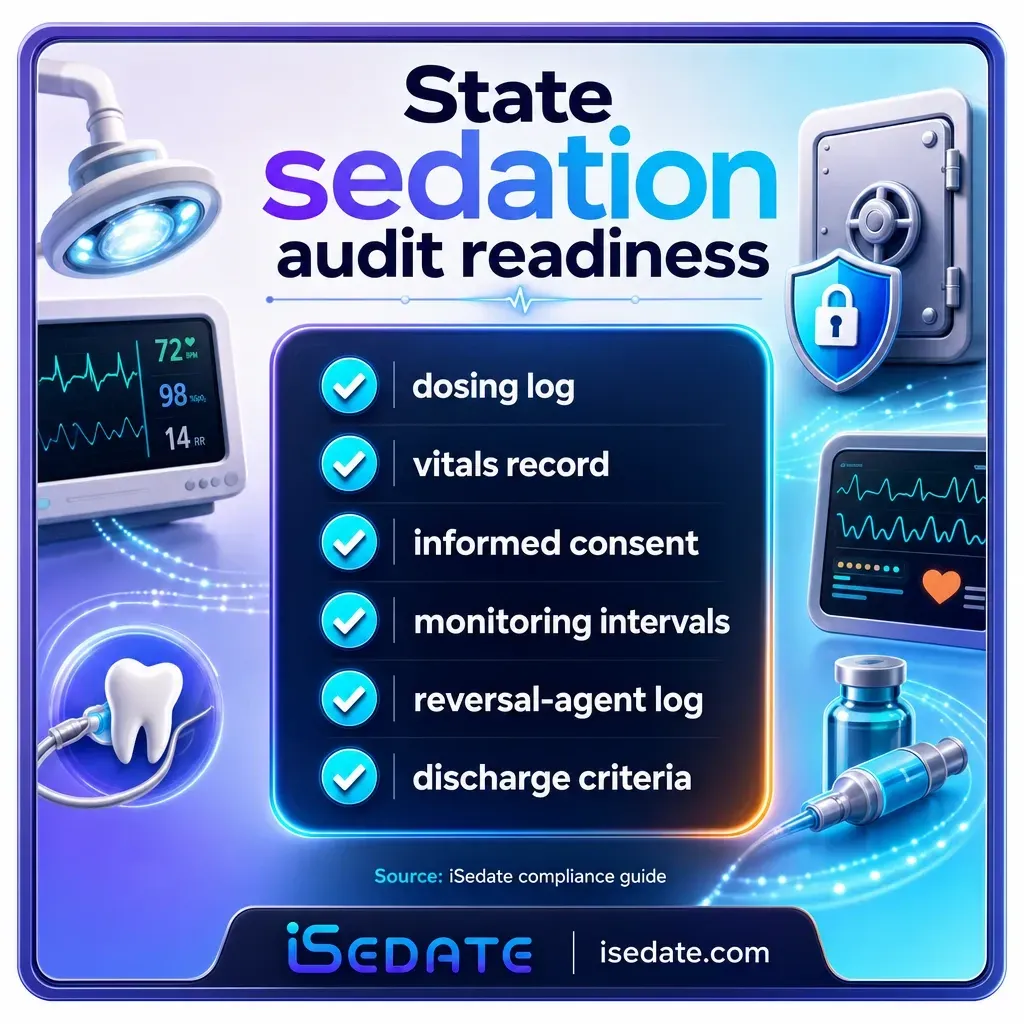
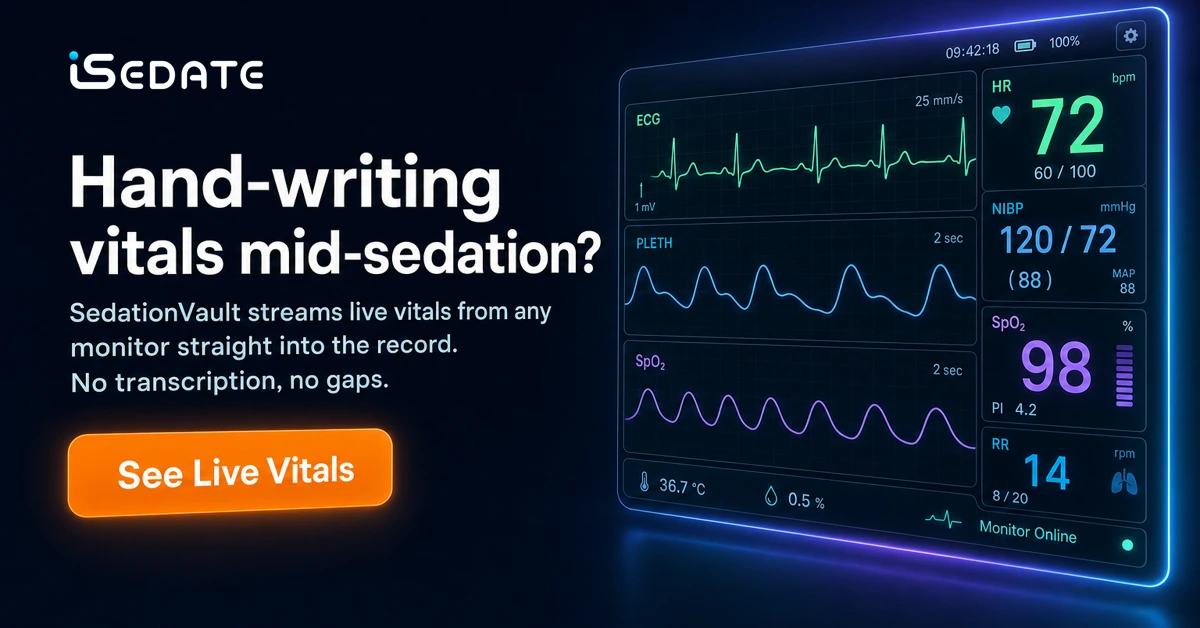
That is the job iSedate's SedationVault was built for. It charts the IV sedation visit in real time, integrates with any vitals monitor on the market to pull oxygen, heart rate, and blood pressure straight into the record, logs every dose and the drug inventory, and produces a one-click, audit-ready PDF. The sedation a patient received is documented as it happens, not guessed at later.
See IV sedation charting software in action
It pairs with purpose-built tools for the anesthesia record, the full sedation visit record, and dental sedation compliance, all in one HIPAA-minded, audit-ready system.
Frequently Asked Questions
What is IV sedation?
Are you asleep during IV sedation?
What is the difference between IV sedation and general anesthesia?
How long does it take to recover from IV sedation?
What drugs are used for IV sedation?
Related Reading
- IV sedation in dentistry: the process, risks, and benefits, the dental-specific companion to this guide.
- What drug is used for IV sedation in dentistry, a closer look at the agents and doses.
- IV sedation monitoring, compliance, and safety standards for providers.
- All IV sedation guides, and the full sedation dentistry blog.
Methodology and sources. The definition and administration of IV/monitored sedation, its uses, recovery, and risks are drawn from the American Society of Anesthesiologists' patient resource and the Cleveland Clinic's sedation guidance. The four sedation levels follow the ASA's Continuum of Depth of Sedation statement. Monitoring requirements reflect the ASA Standards for Basic Anesthetic Monitoring. Drug information comes from MedicineNet's conscious-sedation overview and the FDA-approved prescribing information for midazolam, including its boxed warning on opioid co-administration. All clinical details are general education, not medical advice; decisions about sedation belong to you and your qualified provider.
Sources: ASA: IV/Monitored Sedation | Cleveland Clinic: Sedation Dentistry | ASA: Continuum of Depth of Sedation | ASA Standards for Basic Anesthetic Monitoring | MedicineNet: Drugs Used for Conscious Sedation | FDA: Midazolam Prescribing Information