









Cost of Medical Errors Statistics (2026): US Healthcare
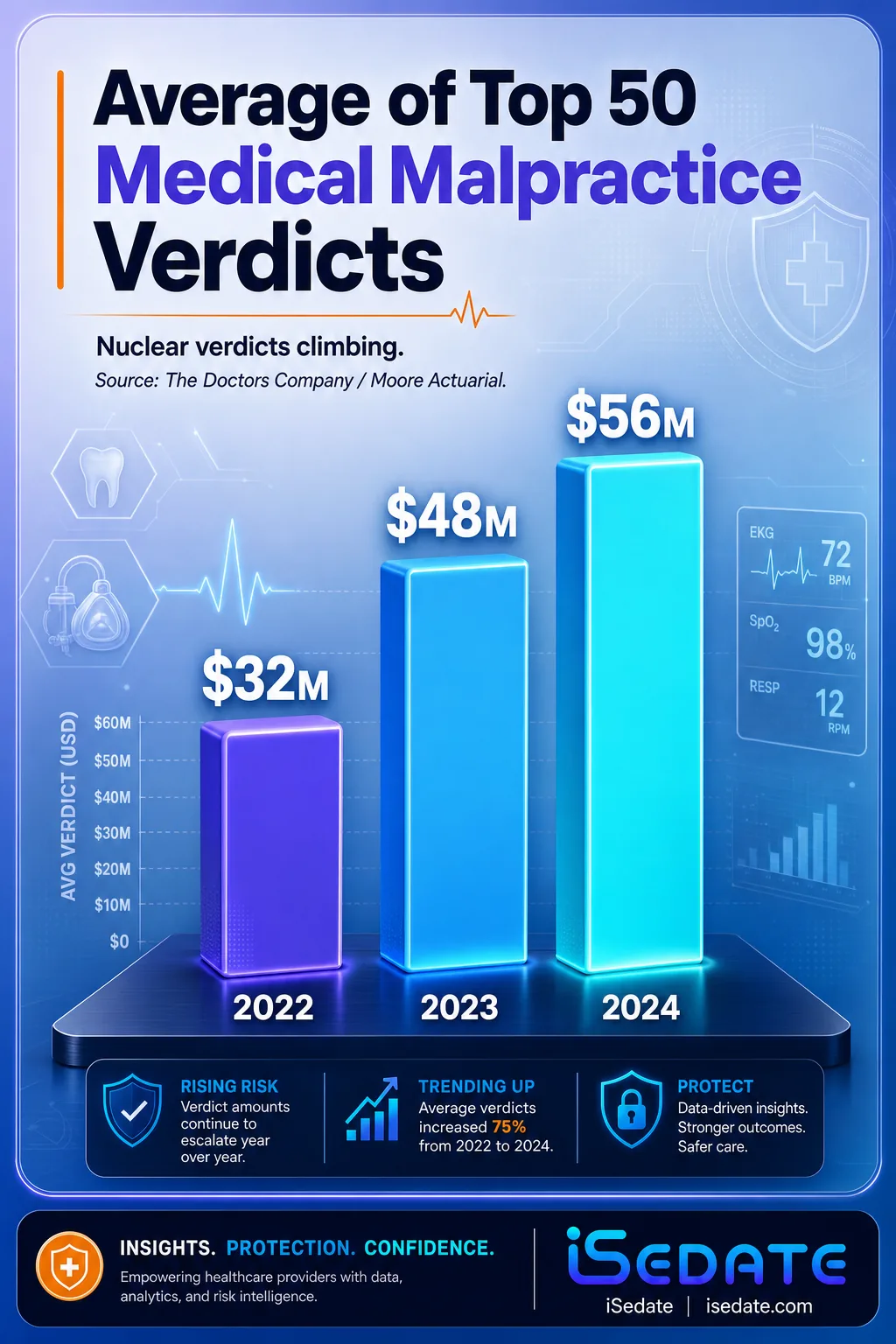
The average of the top 50 medical malpractice verdicts in the United States rose from $32 million in 2022 to $48 million in 2023 and reached $56 million in 2024. Behind those headline awards sits a far larger and older problem: the tens of billions of dollars that medical errors cost the healthcare system every year.
- An actuarial study put the annual cost of measurable medical errors at about $17.1 billion, while the Institute of Medicine estimated national adverse-event costs at up to $37.6 billion.
- Death estimates range from the IOM's 44,000 to 98,000 per year to a 2016 BMJ figure of 250,000 or more, cited as a leading cause of death.
- The average malpractice payment rose from about $369,000 (2012-2017) to roughly $458,000 (2022-2023) per National Practitioner Data Bank analysis.
- The top-50 verdict average climbed from $32M to $56M between 2022 and 2024, and claims over $2 million have risen more than tenfold since 1990.
- Economic and social inflation added an estimated $4 billion in medical malpractice losses over the decade ending in 2024.
- Defensive medicine adds an estimated $46 to $55 billion or more annually, and only a small fraction of error deaths ever result in a malpractice payment.
What's in This Guide
1 The National Cost of Medical Errors
Putting a single dollar figure on medical errors is difficult because definitions differ and studies measure different things. What the major estimates share is scale: the cost runs into the tens of billions annually.
The Institute of Medicine's landmark 1999 report, To Err Is Human, estimated national costs of adverse events at $37.6 billion, with preventable adverse events accounting for about $17 billion, roughly 4 percent of national health expenditures at the time. A later actuarial study in Health Affairs estimated the annual marginal cost of measurable medical errors at $17.1 billion, driven largely by post-surgical complications, healthcare-associated infections, and pressure ulcers, with never events alone adding about $3.7 billion.
Why the Estimates Diverge
The figures differ because they draw different boundaries. Some count only measurable, claims-based costs; others include lost productivity, mortality, and downstream care. A separate actuarial analysis for 2008 estimated total costs of medical injuries at about $80 billion, of which roughly 25 percent, or $19.5 billion, was tied to avoidable errors. No single number captures the full burden, so ranges are more honest than point estimates.
Source: AHRQ PSNet: The $17.1 Billion Problem (Health Affairs) | Institute of Medicine: To Err Is Human
See how sedation compliance records are built2 Deaths and Preventable Harm
The human cost is measured in deaths and injuries, and here too the estimates span a wide range that reflects how hard these events are to count.
The IOM's 1999 estimate of 44,000 to 98,000 annual deaths was itself a landmark. A 2016 BMJ analysis reframed the problem, estimating 250,000 or more deaths per year and describing medical error as the third leading cause of death, with some estimates reaching 400,000. Other reviews estimate that about 400,000 hospitalized patients experience preventable harm annually and that more than 200,000 deaths are due to preventable errors.
They do not, and the gap is stark. Only a small share of deaths from medical error ever result in a malpractice payment. In one recent reported year, the National Practitioner Data Bank recorded roughly 3,046 malpractice wrongful-death payments, set against conservative estimates of tens of thousands of preventable in-hospital deaths. The payout data captures a fraction of the harm, which means malpractice totals understate, rather than overstate, the true cost of errors.
Source: StatPearls: Medical Error Reduction and Prevention | Medical Laboratory Observer: BMJ medical-error mortality analysis
Generate audit-ready records Explore anesthesia record software3 Malpractice Payments and Nuclear Verdicts
When an error does become a paid claim, the amounts have been climbing steadily, and the largest awards are climbing fastest.
Actuarial analysis of National Practitioner Data Bank figures found the average payment per report held near $369,000 from 2012 to 2017, rose to about $424,000 in 2018 to 2019, and reached roughly $458,000 in 2022 to 2023. At the top end, the escalation is sharper. The average of the top 50 medical malpractice verdicts rose from $32 million in 2022 to $48 million in 2023 and $56 million in 2024.
Average of Top 50 Medical Malpractice Verdicts by Year
Claims exceeding $2 million have increased more than tenfold since 1990, and separate reinsurance data show verdicts of $10 million or more nearly doubling from 85 in 2013 through 2015 to 160 in 2022 through 2024. Because large verdicts influence what other cases settle for, the effect ripples across the entire claims population, not just the headline cases.
Two trends move at very different speeds. The average NPDB malpractice payment rose from about $369,000 (2012-2017) to $458,000 (2022-2023), an increase of roughly 24 percent over roughly a decade. Over a shorter, overlapping window, the top-50 verdict average rose from $32 million (2022) to $56 million (2024), an increase of 75 percent in just two years. The extreme tail is growing several times faster than the typical claim.
Formula: ($458,000 minus $369,000) / $369,000 = 24.1 percent growth in average payment; ($56M minus $32M) / $32M = 75.0 percent growth in top-50 verdict average.
Interpretation: the cost pressure in malpractice is concentrated in the largest awards, which is what drives premiums and settlement values system-wide. Calculation and interpretation original to iSedate, derived from NPDB figures and The Doctors Company data.
Source: The Doctors Company: Nuclear Verdicts and Rising Costs study | Moore Actuarial Consulting NPDB payment analysis
Explore the SedationVault platform4 Social Inflation and Rising Costs
A significant share of the recent cost increase is not clinical at all. Actuaries attribute much of it to inflation, including a social component that pushes claim costs up faster than general prices.
A 2025 study by Moore Actuarial Consulting for The Doctors Company estimated that economic and social inflation added about $4 billion in insured losses and expenses over the decade ending in 2024, representing 11 percent of booked losses. That was a $1.6 billion increase over the same firm's 2023 estimate for the decade ending in 2021. Social inflation occurs when an insurer's average claim amount grows faster than the overall inflation rate, forcing rate increases or reduced coverage.
The study points to third-party litigation financing, in which private investors fund lawsuits for a share of the recovery, as an emerging driver, projected to cost insurers between $13 billion and $25 billion over five years. Claim severity for hospitals and care facilities rose an average of about 5 percent annually from 2014 to 2023, with claims above $5 million roughly tripling.
Source: The Doctors Company: How Inflation Is Impacting Medical Malpractice Claims
Book a demo of SedationVault5 Defensive Medicine and Downstream Costs
The direct cost of errors and payouts is only part of the picture. The fear of litigation reshapes clinical behavior, and that carries its own price tag.
Defensive medicine, ordering extra tests and procedures mainly to guard against liability, is widely estimated to add $46 billion to $55 billion or more per year to U.S. healthcare spending. Medication errors alone harm at least 1.5 million people annually, with extra hospital treatment costs of at least $3.5 billion and broader morbidity and mortality costs estimated as high as $77 billion. Diagnostic errors have come to dominate malpractice litigation, accounting for more than a quarter of closed claims in one recent 20-year analysis.
The Common Denominator: Documentation
Across every category, from diagnostic errors to medication events to nuclear verdicts, the defensibility of care rests on the record. Rising award sizes raise the stakes on every claim, and the difference between a defended case and a paid one is frequently whether the record shows that care met the standard. For any provider, including office-based sedation practices, a complete and contemporaneous record is the most direct hedge against becoming a statistic in these totals.
Source: Academy of Managed Care Pharmacy: Medication Errors | The Doctors Company: Nuclear Verdicts and defensive medicine
Compare SedationVault plans and pricingCost of Medical Errors Statistics: Summary Table
| Statistic | Figure | Source | Year |
|---|---|---|---|
| Annual cost of measurable medical errors | $17.1 billion | Health Affairs (Van Den Bos et al.) | 2011 |
| National cost of all adverse events (IOM) | $37.6 billion | Institute of Medicine | 1999 |
| National cost of preventable adverse events (IOM) | ~$17 billion | Institute of Medicine | 1999 |
| Never-event excess costs | $3.7 billion | Health Affairs (Van Den Bos et al.) | 2011 |
| Total measurable errors cost (economic) | $19.5 billion | SOA / Milliman actuarial study | 2008 |
| Annual deaths from medical error (IOM) | 44,000-98,000 | Institute of Medicine | 1999 |
| Annual deaths from medical error (BMJ) | 250,000+ | BMJ (Makary and Daniel) | 2016 |
| Patients with preventable harm annually | ~400,000 | StatPearls / patient-safety literature | 2024 |
| Average NPDB payment per report | $369K (2012-17) | NPDB / Moore Actuarial | 2012-2017 |
| Average NPDB payment per report | $458K (2022-23) | NPDB / Moore Actuarial | 2022-2023 |
| Top-50 malpractice verdict average | $56 million | The Doctors Company | 2024 |
| Claims exceeding $2 million since 1990 | 10x+ increase | The Doctors Company | 2025 |
| Inflation-added malpractice losses | $4 billion (11%) | The Doctors Company / Moore Actuarial | Decade to 2024 |
| Projected 5-year litigation-financing cost | $13-25 billion | The Doctors Company | 2025 |
| Defensive medicine annual cost | $46-55 billion+ | Healthcare cost analyses | 2024-2026 |
| Medication-error morbidity/mortality cost | ~$77 billion | AMCP / patient-safety literature | 2024 |
| People harmed by medication errors annually | 1.5 million | AMCP / patient-safety literature | 2024 |
| Malpractice wrongful-death payments (one year) | ~3,046 | National Practitioner Data Bank | Recent |
Frequently Asked Questions
How much do medical errors cost the US each year?
How many people die from medical errors annually in the US?
What is the average medical malpractice payment?
What is a nuclear verdict in medical malpractice?
How much does defensive medicine add to healthcare costs?
Methodology and Sources
This article compiles statistics from primary and authoritative sources only. Figures are current as of 2026 and drawn from the most recent available data at the time of writing. Cost and death estimates vary widely across studies because definitions of medical error and measurement methods differ; ranges are preserved rather than reduced to single figures.
- Institute of Medicine, To Err Is Human (1999), for national adverse-event costs and early death estimates.
- Health Affairs (Van Den Bos et al.), The $17.1 Billion Problem, and the Society of Actuaries / Milliman 2008 measurable-errors study.
- BMJ (Makary and Daniel, 2016) and StatPearls, for mortality and preventable-harm estimates.
- The Doctors Company / Moore Actuarial Consulting, Nuclear Verdicts and Rising Costs (2025), and National Practitioner Data Bank figures for average payments and nuclear-verdict trends.
- Academy of Managed Care Pharmacy and patient-safety literature, for medication-error and defensive-medicine cost estimates.
Dollar figures reflect the source year and are not uniformly inflation-adjusted. Malpractice payment and verdict data reflect paid or awarded amounts, which capture only the fraction of medical errors that result in compensation. Derived percentages in the iSedate Analysis box are calculated from the cited figures and labeled as original to iSedate.
Media and press: Journalists and researchers are welcome to cite these statistics with attribution to the original primary sources named above. When referencing the iSedate Analysis, please attribute it to iSedate with a link to this page.