






Wisdom Tooth Extraction Statistics 2026: Costs, Impaction, Recovery & Complications
Wisdom tooth extraction is one of the most common surgical procedures in the country, with roughly 10 million third molars removed from about 5 million patients each year. In 2026, what a patient actually pays, and how the procedure goes, comes down to three variables: how the tooth is impacted, what anesthesia is used, and who performs it.
Key Takeaways
- A simple erupted extraction runs about $75 to $200 per tooth in 2026; a full bony impaction can reach $600+ per tooth (ADA CDT Fee Survey data).
- Impaction class is the single biggest cost driver: the same jaw and same tooth can differ by roughly $400 depending on how deeply it is buried.
- Sedation is the largest common add-on: IV sedation typically adds $250 to $500, general anesthesia $300 to $600+.
- Removing all four impacted teeth under sedation commonly totals $2,000 to $4,000.
- Dry socket affects roughly 1% to 5% of routine extractions but 20% to 35% of impacted lower third molar surgeries.
- Permanent paresthesia (nerve numbness) affects more than 11,000 extraction patients annually nationwide (American Journal of Public Health).
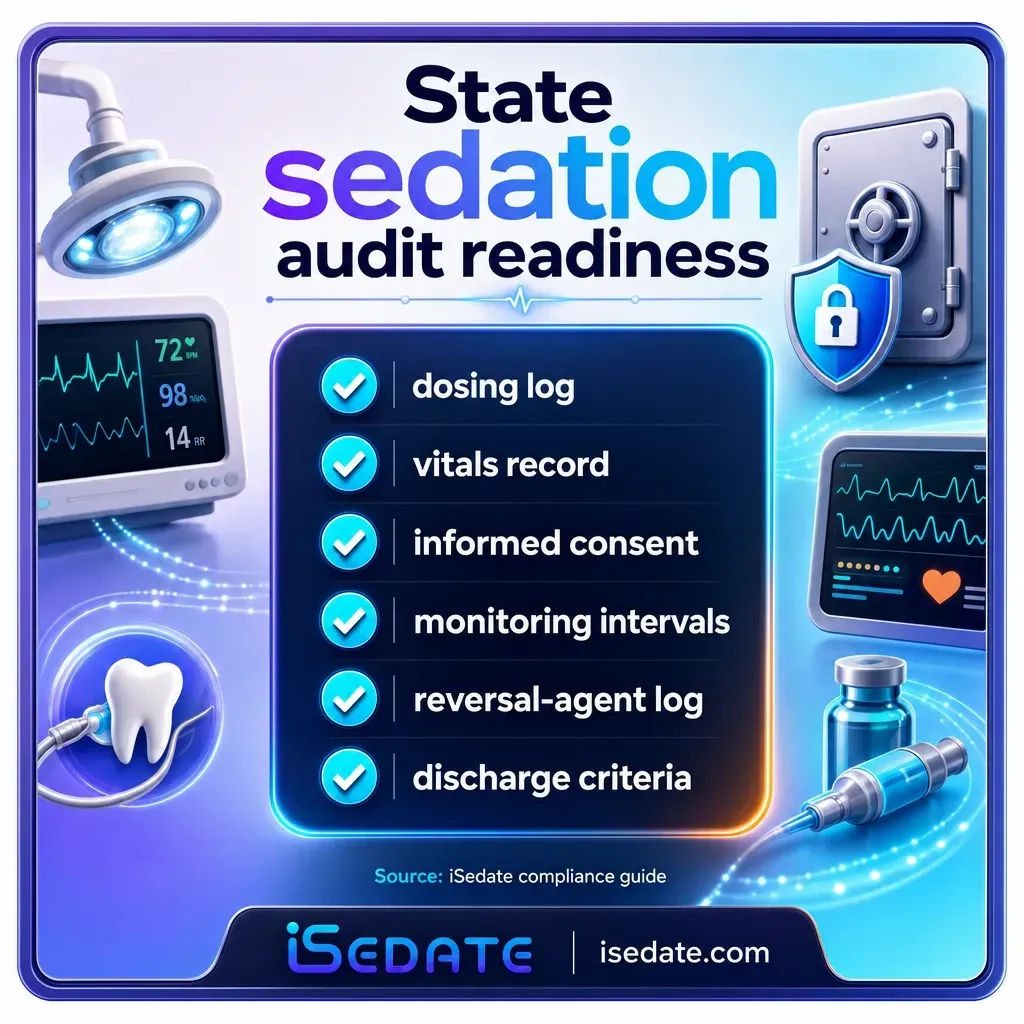
- Every one of these numbers, cost, sedation type, and complication, belongs in the record. A complete sedation chart is what makes the procedure both billable and defensible.
What's in This Guide
How Common Wisdom Tooth Extraction Is
The scale is hard to overstate. According to the American Association of Oral and Maxillofacial Surgeons, about 10 million wisdom teeth are removed from roughly 5 million patients in the United States each year, which places the procedure among the most frequently performed surgeries on adolescents and young adults. A Stanford-led analysis published in Frontiers in Dental Medicine used a private dental insurance claims database to model the lifetime cumulative incidence of third molar extraction, confirming just how routine the procedure has become across the insured population.
The typical patient is in their late teens or early twenties, when roots are not yet fully formed and extraction, if indicated, tends to be less complex. That timing is also why sedation matters so much: a large share of these patients are young, anxious, and having all four teeth removed in a single visit.
Source: American Association of Oral and Maxillofacial Surgeons | Frontiers in Dental Medicine (Schroeder et al., 2022)
See how SedationVault records every caseImpaction Class and What It Changes
Not every wisdom tooth extraction is the same procedure. The clinical and financial difference comes down to impaction: how the tooth sits in the gum and bone. The American Dental Association's CDT codes formalize this, and each step up in complexity adds surgical time, skill, and cost.

| Extraction Type | CDT Code | What It Involves | Typical 2026 Cost/Tooth |
|---|---|---|---|
| Simple erupted extraction | D7140 | Tooth fully erupted, removed without surgery | $75–$200 |
| Surgical extraction (erupted) | D7210 | Gum opened, bone removed, or tooth sectioned | $250–$600 |
| Soft tissue impaction | D7220 | Tooth covered by gum, not bone | $250–$450 |
| Partial bony impaction | D7230 | Tooth partially covered by bone | $350–$650 |
| Full bony impaction | D7240 / D7241 | Tooth fully encased in jawbone | $400–$800+ |
The takeaway is stark: a full bony impaction can cost roughly four to eight times as much as a simple erupted extraction of the very same tooth, purely because of how deeply it is buried. This is also why the oral surgeon determines the appropriate code only after reviewing pre-operative imaging, and why a lower tooth sitting near the inferior alveolar nerve often warrants a CBCT scan before surgery.
iSedate Analysis: The impaction cost multiplier
Formula: full bony impaction midpoint (~$600) ÷ simple erupted midpoint (~$140).
Comparing the midpoints of the ADA-aligned ranges above, a full bony impaction runs roughly 4x the cost of a simple erupted extraction for the same tooth. Across four teeth, that single clinical variable can swing a treatment plan by more than $1,800 before sedation is even added. The lesson for practices: impaction class, and the imaging that establishes it, must be documented precisely, because it drives both the clinical approach and the claim.
Sources: ADA CDT fee ranges; commercial 2026 pricing surveys. Calculation and interpretation original to iSedate.
Source: American Dental Association CDT code set
Generate audit-ready extraction reportsCost per Tooth in 2026
Pulling the commercial pricing data together, the 2026 picture is consistent across independent sources anchored to the ADA fee survey. Per-tooth cost rises predictably with impaction, and the all-four total depends heavily on how many teeth are impacted and whether sedation is used.
Typical 2026 Cost Per Tooth by Extraction Type (Midpoint)
Two other factors move the number. Provider type matters: oral surgeons typically charge 30% to 50% more than general dentists for the same erupted tooth, reflecting their surgical training for complex, nerve-adjacent, and sedation cases. Site of service matters too: 2026 CMS price transparency data shows a two-to-threefold billing differential between independent surgical centers and hospital outpatient departments. Dental insurance generally covers 50% to 80% of medically necessary surgical extractions, subject to an annual maximum that often falls between $1,000 and $2,000.
Source: American Dental Association Health Policy Institute
Compare SedationVault plans and pricingSedation and Anesthesia Choices
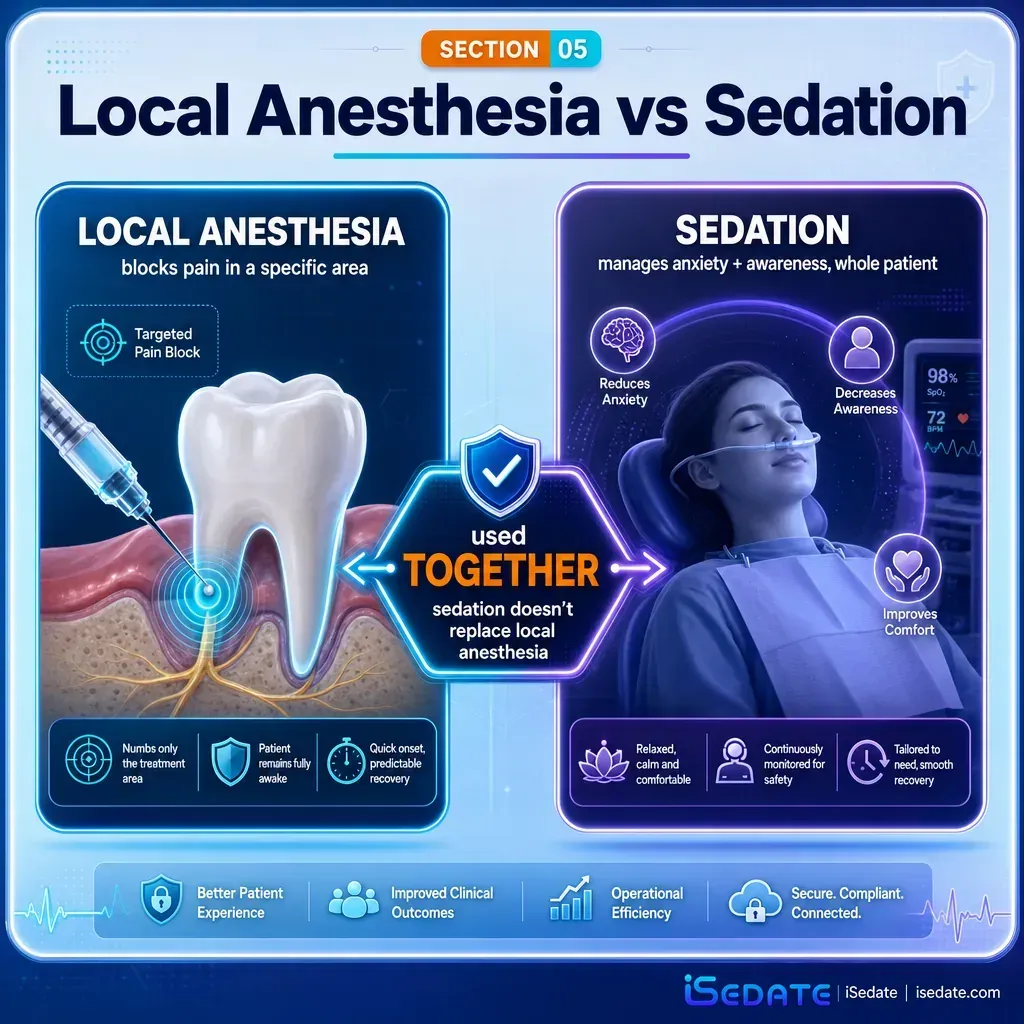
For most four-tooth impacted cases, sedation is not optional in practice, and it is the single largest add-on to the bill. It is also the part of the procedure with the highest clinical stakes, which is why the anesthesia record is the most scrutinized document in any adverse-event review.
The clinical choice moves along a spectrum: local anesthesia alone (least expensive, patient fully awake), nitrous oxide for mild anxiety, IV conscious sedation (the most common choice for impacted four-tooth cases), and general anesthesia for the most complex or anxious patients. Each deeper level of sedation raises both the monitoring requirement and the documentation burden, since vitals must be tracked continuously and recorded throughout the case.
Why the sedation record carries the case. When four impacted teeth come out under IV sedation, the practice is simultaneously performing surgery, administering anesthesia, and monitoring the patient. iSedate's SedationVault is built for exactly that moment: it feeds live vitals from compatible monitors (Edan, MindRay, Criticare, and more) directly into the sedation record, timestamps every reading, and captures the pre-sedation assessment and consent alongside it. The result is one complete chart per case rather than notes reconstructed afterward.
Source: American Dental Association CDT anesthesia codes | Journal of Oral and Maxillofacial Surgery (sedation safety data)
See IV sedation charting in actionComplication Rates: Dry Socket and Nerve Injury
Wisdom tooth surgery is safe, but it is not complication-free, and the most common complication scales sharply with impaction. Dry socket (alveolar osteitis), where the protective blood clot dislodges and exposes bone, is the headline risk.

Peer-reviewed studies put dry socket at roughly 1% to 5% for routine tooth extractions, but the rate climbs to between 20% and 35% following surgical removal of impacted mandibular third molars. Known risk factors include smoking, oral contraceptive use, difficult or prolonged extraction, and pre-existing infection. Nerve injury is rarer but more serious: the American Journal of Public Health reported that more than 11,000 people annually experience permanent paresthesia, lasting numbness of the lip, tongue, or cheek, as a consequence of nerve proximity during extraction.
Myth: "Dry socket and nerve injury are just bad luck." They are strongly patient- and technique-dependent, which is precisely why documentation matters. When a patient develops paresthesia or a serious dry socket, the first questions are what the pre-operative imaging showed, whether the nerve proximity was assessed and disclosed, and what technique was used. A complete record turns a known, consented-to risk into a defensible outcome. An incomplete one turns it into a dispute. The complication rate is clinical; the liability exposure is documentary.
Source: Prevalence and factors associated with dry socket (PMC) | American Journal of Public Health
Document every risk and consentRecovery Timelines
Recovery is usually smoother than patients fear, and the timeline is well characterized. Most people return to normal activities within three to five days, with the socket continuing to heal over one to two weeks and remodeling for several weeks after that.
Swelling and discomfort generally peak around the second or third day and then improve. Standard aftercare, biting on gauze to protect the clot, soft foods, avoiding straws and vigorous rinsing, and following prescribed pain management, measurably reduces the risk of dry socket. Clear, documented post-operative instructions are part of the record too: when a complication arises, evidence that the patient received and acknowledged aftercare guidance matters.
Source: Frontiers in Dental Medicine | American Association of Oral and Maxillofacial Surgeons
Book a SedationVault demoWisdom Tooth Extraction Statistics: Summary Table
| Statistic | Figure | Source | Year |
|---|---|---|---|
| Third molars removed annually (U.S.) | ~10 million | AAOMS | 2026 |
| Patients per year | ~5 million | AAOMS | 2026 |
| Most common extraction age range | 15–25 | AAOMS | 2026 |
| Simple erupted extraction cost/tooth | $75–$200 | ADA CDT fee data | 2026 |
| Impacted extraction cost/tooth | $225–$600+ | ADA CDT fee data | 2026 |
| Full bony impaction cost/tooth | $400–$800+ | Commercial pricing surveys | 2026 |
| All four impacted, under sedation | $2,000–$4,000 | Commercial pricing surveys | 2026 |
| Nitrous oxide add-on | $50–$200 | ADA CDT fee data | 2026 |
| IV sedation add-on | $250–$500 | ADA CDT fee data | 2026 |
| General anesthesia add-on | $300–$600+ | ADA CDT fee data | 2026 |
| Oral surgeon premium vs general dentist | 30%–50% | Commercial pricing surveys | 2026 |
| Insurance coverage (medically necessary) | 50%–80% | Commercial pricing surveys | 2026 |
| Dry socket, routine extractions | 1%–5% | PMC systematic data | 2024 |
| Dry socket, impacted lower third molars | 20%–35% | Peer-reviewed literature | 2018–2024 |
| Permanent paresthesia cases/year | 11,000+ | American Journal of Public Health | 2007 |
| Return to normal activity | 3–5 days | AAOMS / clinical literature | 2026 |
| Swelling peak | 48–72 hours | Clinical literature | 2026 |
Frequently Asked Questions
How much does wisdom tooth extraction cost in 2026?
How much does sedation add to wisdom tooth removal?
How common is dry socket after wisdom tooth extraction?
How long does recovery from wisdom tooth surgery take?
Is it cheaper to remove all four wisdom teeth at once?
Methodology & Sources
Cost figures reflect 2026 U.S. commercial pricing surveys anchored to the American Dental Association CDT fee data and CMS price transparency data, expressed as ranges because fees vary by geography, provider type, and case complexity. Procedure volume is from the American Association of Oral and Maxillofacial Surgeons. Cumulative incidence data is from Schroeder et al., "Estimated Cumulative Incidence of Wisdom Tooth Extractions in Privately Insured US Patients," Frontiers in Dental Medicine (2022). Dry socket incidence is drawn from peer-reviewed prevalence studies indexed in PubMed Central. Nerve injury and cost-of-complication figures are from the American Journal of Public Health (Friedman, Vol. 97). Recovery timelines reflect published clinical literature and AAOMS patient guidance. Where a figure derives from combining two sources, it is labeled as an iSedate Analysis with its inputs shown. Cost ranges are informational and not a quote; actual fees depend on the individual case.
Media and press usage: Journalists and researchers are welcome to cite the statistics in this article with attribution to the original primary sources named above, and to iSedate for any analysis labeled as original. A link back to this page is appreciated.
This article is an informational statistical overview and is not medical or financial advice. Cost figures are ranges, not quotes, and complication rates are population estimates, not individual predictions.