







Wrongful Death Lawsuit Statistics in Dentistry (2026): How These Cases Work
When a patient dies from a dental procedure, the legal claim that follows is a wrongful death lawsuit, a civil action distinct from the mortality statistics that describe how often such deaths occur. Understanding how these cases work, who can bring them, what damages they seek, and what evidence decides them, matters to every provider who administers sedation, because the sedation record sits at the center of nearly every such case.
- A wrongful death claim recovers the family's losses after a death; it is usually filed alongside a survival action recovering the harm the patient suffered before death.
- In dentistry, these cases most often arise from anesthesia and sedation complications, the category associated with the most severe dental malpractice outcomes.
- Damages fall into economic, non-economic, and (rarely) punitive categories, with expert economists often calculating lost future earnings.
- Most states set a wrongful death filing deadline of two to three years, typically from the date of death.
- Many states cap non-economic damages; Maryland, for example, caps medical malpractice non-economic damages at $875,000 and wrongful death at $1,093,750 for post-2023 cases.
- Documented dental anesthesia wrongful death outcomes in the public record have ranged from about $300,000 to over $400,000 in reported cases, with wide variation.
- Documented cases repeatedly cite failures in monitoring, emergency response timing, and record-keeping as central allegations.
What's in This Guide
1What a Wrongful Death Claim Is
A wrongful death lawsuit is a civil claim that arises when a person dies because of another party's negligent or wrongful act. It is a statutory creation, every U.S. state has enacted one, because the common law historically did not permit such suits. In a dental context, the claim alleges that a provider's departure from the standard of care caused a patient's death.
To prevail, a wrongful death plaintiff must prove the elements of the underlying claim, here, dental malpractice, wrapped inside the wrongful death action. That means establishing that the provider owed a duty of care, breached it, that the breach caused the death, and that compensable losses resulted. Because the standard of proof in civil court is the preponderance of the evidence, a lower bar than the criminal standard, a family may prevail civilly even where no criminal charges are brought or a criminal case fails.
In dentistry, the pathway to a wrongful death claim runs most often through anesthesia and sedation. Legal and clinical sources consistently identify anesthesia complications, whether from excessive dosing, inadequate monitoring, or delayed emergency response, as the mechanism behind the most catastrophic dental outcomes, including death. This makes sedation providers the dental practitioners most exposed to wrongful death claims, and it makes the sedation encounter the focal point of the resulting litigation. The underlying incidence of these deaths is covered in our review of dental sedation death statistics, and the settlement side in our analysis of anesthesia death settlement statistics.
Source: Wrongful Death vs. Medical Malpractice, FindLaw legal reference | Wrongful Death Law overview, Justia
See how iSedate's SedationVault supports the record
2Two Claims, One Death
A single death typically gives rise to two distinct legal claims, and understanding the difference is essential to understanding how these cases are structured and valued.
The wrongful death claim compensates the surviving family for their own forward-looking losses: the financial support the deceased would have provided, the loss of companionship and guidance, and funeral and burial costs. The survival action, brought on behalf of the estate, recovers the harm the deceased personally suffered between the injury and death, including conscious pain and suffering and pre-death medical expenses. Because they compensate different harms, the two are almost always brought together when they arise from the same act, and settlements are often allocated between them.
This distinction has practical consequences. In one documented dental anesthesia death, the settlement was allocated with the majority to the wrongful death claim and the remainder to the survival action, reflecting how the two claims divide a single recovery. The allocation matters because some states apply different damage caps, or different rules on punitive damages, to each. In several states, punitive damages are unavailable in a wrongful death claim but may be pursued through the survival action, which can shape how a case is framed.
Source: Filing a Wrongful Death Lawsuit for Medical Malpractice, legal reference
Explore anesthesia record software3The Structure of Damages
Wrongful death damages are not arbitrary; they follow a defined structure that determines what a family can recover and how it is calculated. That structure has three tiers.
Economic damages cover tangible losses: the income and financial support the deceased would have provided, funeral and burial expenses, and the monetary value of in-home services such as childcare and household work that a homemaker would have contributed. These are calculated, often with the help of forensic economists, based on the deceased's age, income, and life expectancy. Non-economic damages compensate the intangible but often larger losses, the loss of the deceased's society, companionship, comfort, guidance, and counsel. Punitive damages, meant to punish rather than compensate, are reserved for egregious conduct and are rare in malpractice-based wrongful death cases.
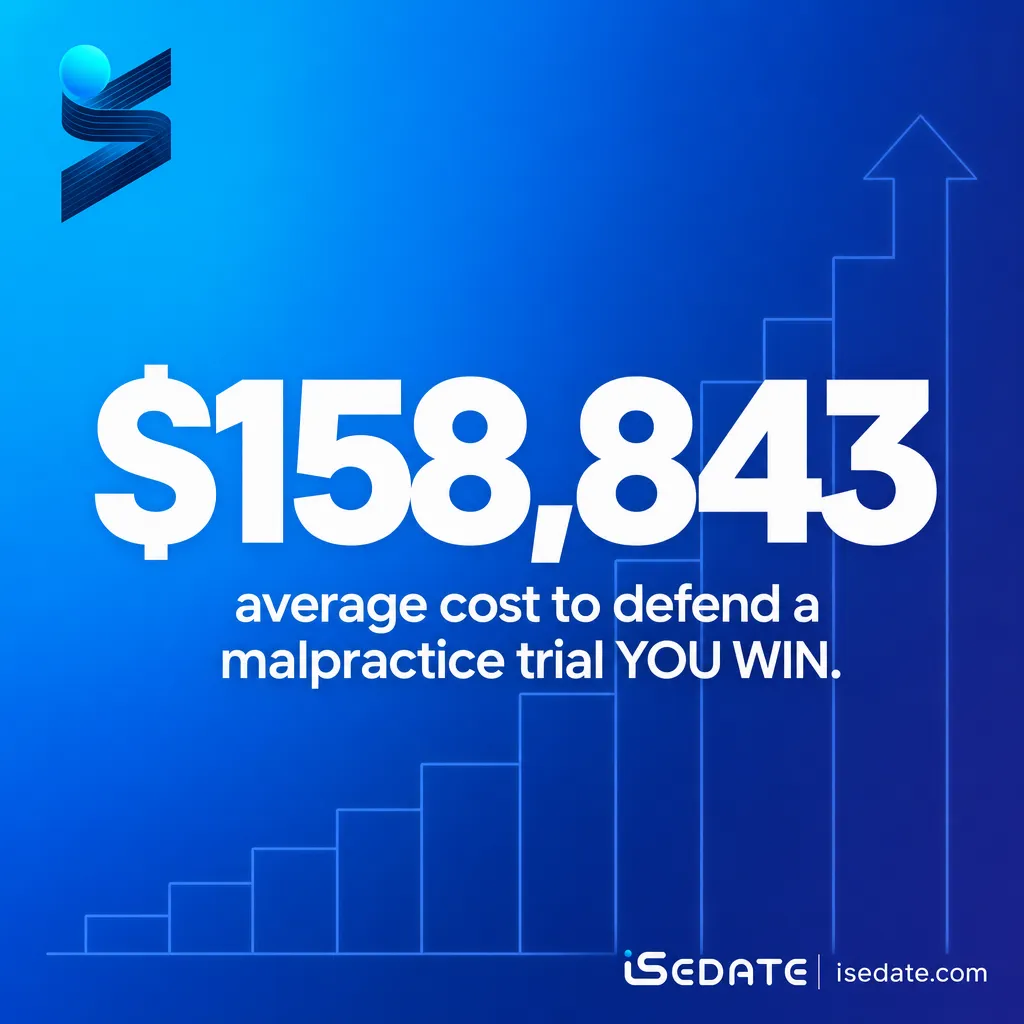
The relative weight of these categories depends heavily on who died. The wrongful death of a high-earning parent produces large economic damages; the death of a child or retiree produces smaller economic damages but potentially substantial non-economic ones. This is why there is no meaningful single average, the number depends on facts specific to the deceased and the surviving family, which is a point worth emphasizing against the tidy averages sometimes cited. The broader financial picture of defending any such claim is covered in our review of the cost of a dental malpractice lawsuit.
Source: Wrongful Death Claims overview, damages structure, legal reference
See IV sedation charting with continuous vitals4Caps and Filing Deadlines
Two statutory features shape almost every wrongful death case: damage caps that limit recovery, and statutes of limitation that limit the time to file. Both vary by state and both can be decisive.
Many states cap non-economic damages in medical malpractice cases, and those caps flow through to wrongful death claims arising from malpractice. Maryland, for instance, caps medical malpractice non-economic damages at $875,000 for cases filed on or after January 1, 2023, with a higher cap of $1,093,750 where there are two or more wrongful death beneficiaries. Other states, such as Pennsylvania, cap neither economic nor non-economic damages, while California's cap and others differ again. Critically, caps almost always limit only non-economic damages, leaving economic losses uncapped, which is why accurate documentation and calculation of economic damages becomes so important.
The statute of limitations adds a second constraint. Most states require a wrongful death claim to be filed within two to three years, usually measured from the date of death, though this can differ from the deadline for the underlying malpractice claim and can be affected by discovery rules. A California wrongful death claim, for example, generally must be filed within two years of death, while Maryland allows three. Missing the deadline typically bars the claim entirely, regardless of its merits, making the filing clock one of the most consequential features of these cases.
These statutory features also interact in ways that reward preparation. Because economic damages are typically uncapped and depend on detailed proof, and because the filing clock rewards early, well-documented investigation, the cases where the facts are clearly recorded tend to resolve more predictably for both sides. Ambiguity in the record, by contrast, tends to expand both the timeline and the uncertainty. The statutory structure, in other words, places a premium on documentation that is complete and contemporaneous, the same documentation that determines the underlying standard-of-care question.
Source: Maryland wrongful death and non-economic damage caps (statutory figures) | California wrongful death statute and deadline (CCP 377.60)
Compare plans and pricing5What Documented Cases Show
While no comprehensive registry of dental wrongful death outcomes exists, individual cases in the public record, court verdicts, settlements, and dental board findings, reveal consistent patterns in what these cases involve and how they resolve.
The documented cases share a recognizable profile. In one widely reported 2023 Arizona case, a 40-year-old man died from anesthesia complications during an implant procedure; the Maricopa County Medical Examiner attributed the death to a fatal brain injury from oxygen deprivation, and the Arizona State Board of Dental Examiners found multiple deviations from the standard of care in the administration of anesthesia. The family filed a wrongful death lawsuit that was later settled confidentially, and the parents subsequently campaigned for a state law requiring a separate licensed provider dedicated to anesthesia during procedures, a protocol not currently mandated in any U.S. state. The case illustrates how a single death can generate a civil suit, a board investigation, a permit action, and a legislative campaign simultaneously.
Reported verdicts and settlements in dental anesthesia wrongful death cases vary widely with the facts. Publicly reported examples have included a jury verdict of $401,275 in a case involving unsafe oral sedation of a medically complex patient, a $425,000 verdict in a general-anesthesia death, and a $300,000 settlement following a local-anesthesia overdose. These figures are illustrative of the range rather than representative averages, and each turned on its specific facts, the patient's medical history, the provider's conduct, and the state's legal framework. What recurs across them is the centrality of anesthesia administration, monitoring, and emergency response to the allegations.
Source: Settlement reached in dental patient wrongful death suit, DrBicuspid | Arizona State Board of Dental Examiners findings, Dimensions of Dental Hygiene
See how compliance documentation works
6Why the Record Decides These Cases
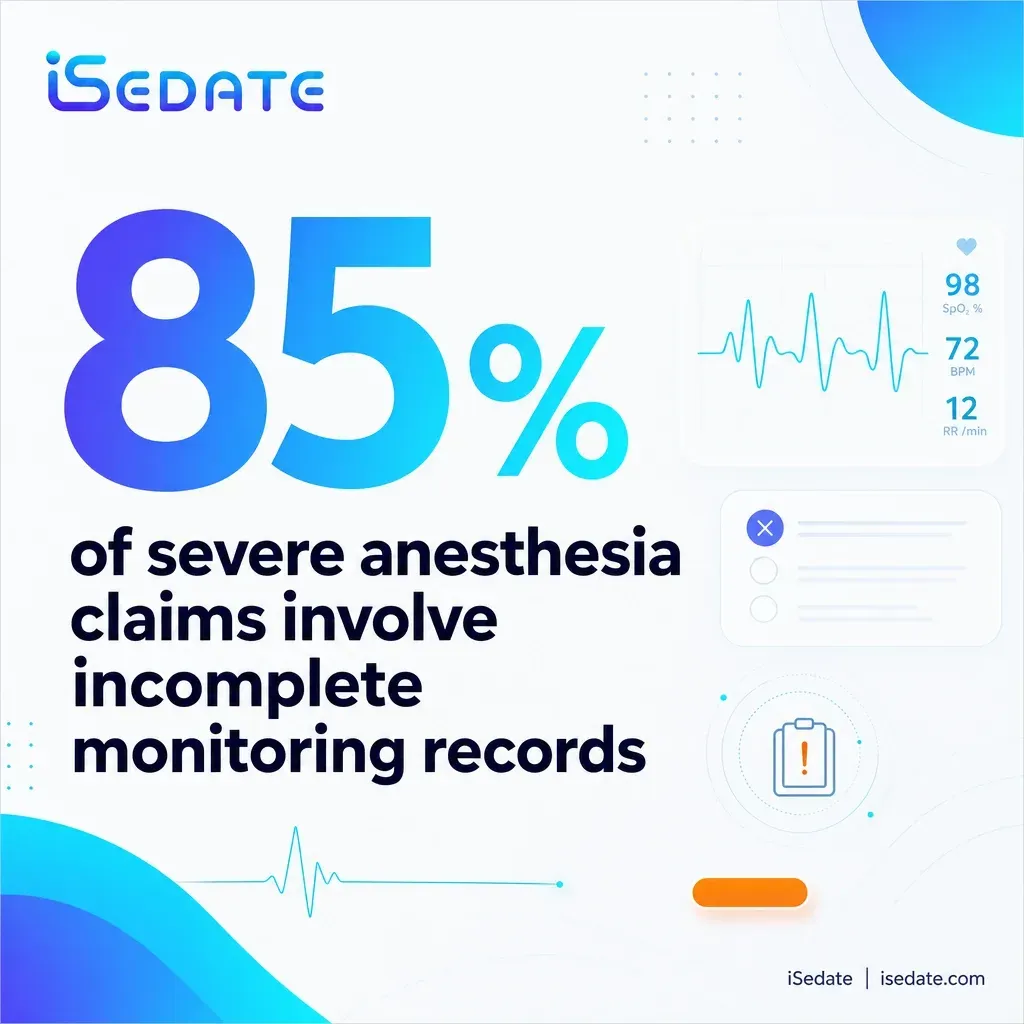
The common thread through wrongful death litigation in dentistry is evidence, and specifically the sedation and monitoring record. Because these cases turn on whether the standard of care was met during a sedation encounter, the contemporaneous record of that encounter is frequently the most important evidence in the case.
The documented cases make this concrete. Allegations in dental anesthesia wrongful death suits repeatedly center on documentable facts: whether the patient's medical history was properly evaluated and recorded, whether vital signs were monitored and at what intervals, whether a deterioration was recognized and how quickly emergency services were summoned, and whether the provider was authorized and equipped for the sedation performed. In one reported case, the time between the onset of a crisis and the call for emergency services became a central point of contention. Every one of these questions is answered, or left dangerously unanswered, by the record. How these monitoring and documentation failures appear across malpractice cases generally is examined in our review of standard of care violation statistics in sedation cases.
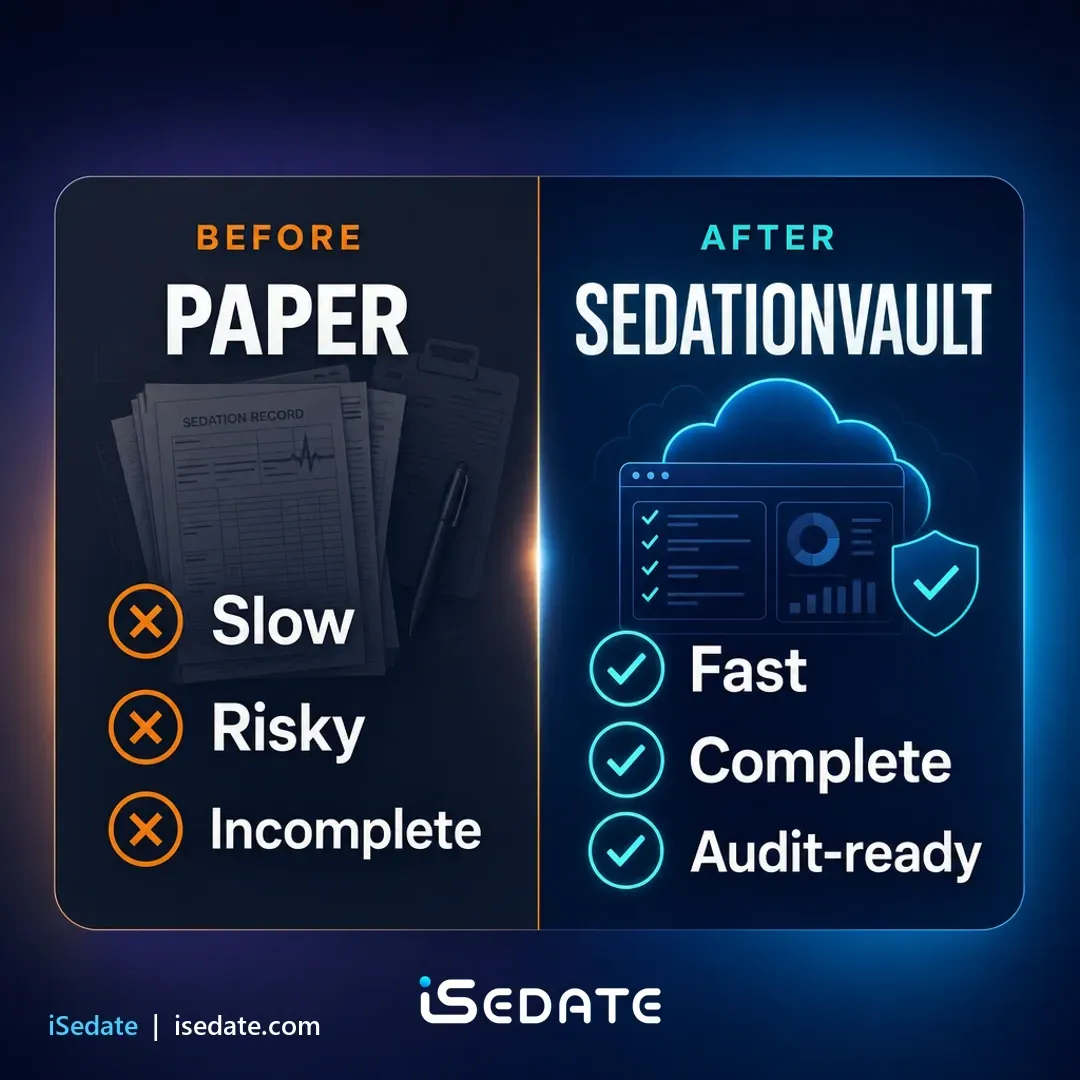
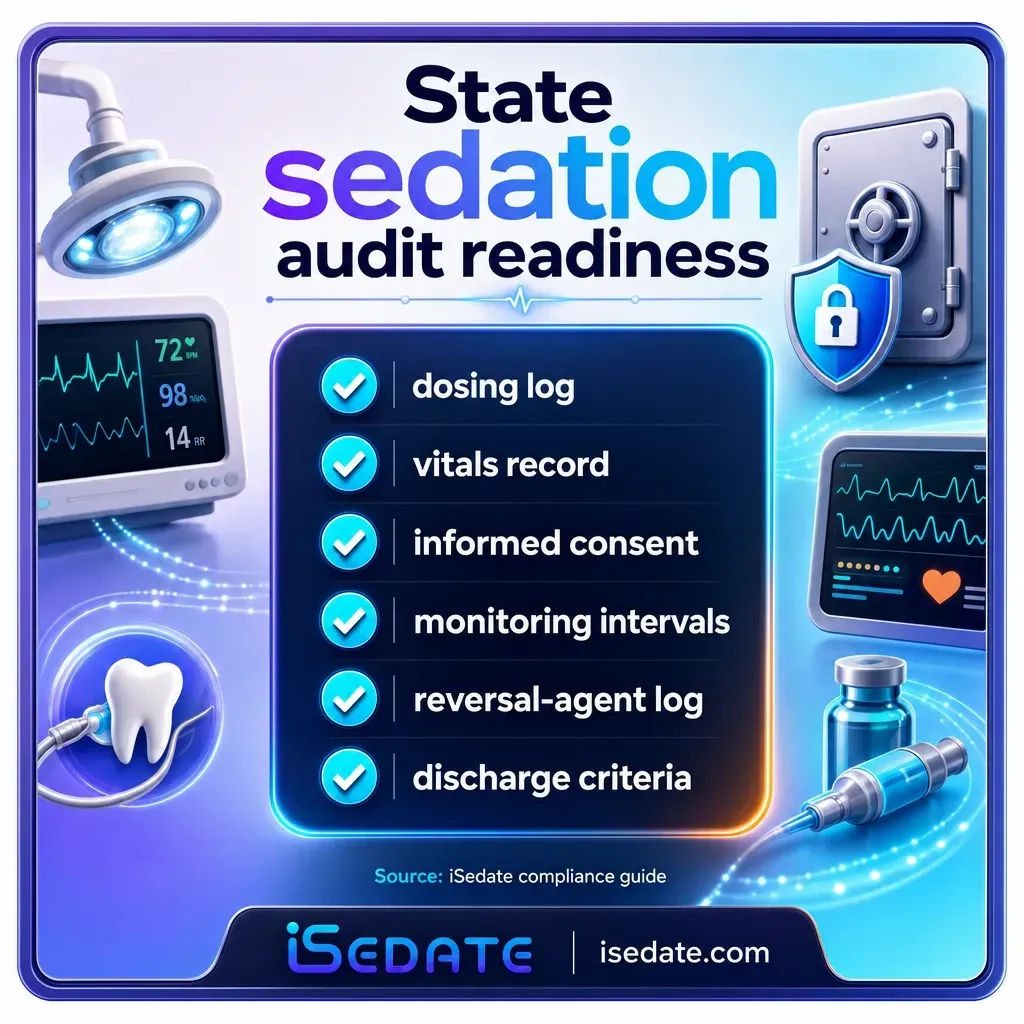
This is where iSedate's SedationVault fits the reality of wrongful death exposure. By pulling vitals directly from compatible monitors such as Edan, MindRay, and Criticare, timestamping every entry, and producing an audit-ready PDF, SedationVault creates the contemporaneous, tamper-evident record of exactly what these cases scrutinize: the monitoring data, the timeline, and the medications given. It does not change the clinical outcome or substitute for proper care, training, and emergency preparedness. What it does is ensure that when a provider met the standard of care, the record proves it, and that the monitoring timeline a reviewer will reconstruct exists in complete, contemporaneous form rather than as an after-the-fact recollection.
In wrongful death litigation arising from sedation, the central factual questions, was the patient monitored, was deterioration caught, was the response timely, was dosing appropriate, are all questions the sedation record answers directly. A complete, timestamped, monitor-linked record does not alter what happened, but it determines what can be proven about what happened. Where care met the standard, the record is the defense; where the record is absent or reconstructed, even good care becomes difficult to establish. In these cases, the documentation and the defense are nearly the same thing.
Contributing sources: documented dental anesthesia wrongful death case allegations; standard-of-care evidence in malpractice litigation.
Interpretation original to iSedate.
Source: Documented dental wrongful death case, monitoring and response allegations
See audit-ready PDF reportsEvery Statistic in One Table
| Statistic / Fact | Figure | Source | Year |
|---|---|---|---|
| States with a wrongful death statute | All 50 | Legal reference (Justia) | 2025 |
| Civil burden of proof | Preponderance of evidence | FindLaw | 2025 |
| Core elements to prove | Duty, breach, causation, damages | Legal reference (Nolo/AllLaw) | 2025 |
| Damage categories | Economic, non-economic, punitive | Legal reference | 2025 |
| Typical wrongful death filing deadline | 2–3 years from death | Legal reference (Justia) | 2025 |
| California wrongful death deadline | 2 years (CCP 377.60) | California statute | 2026 |
| Maryland non-economic malpractice cap | $875,000 | Maryland statute (post-2023) | 2023 |
| Maryland wrongful death cap (2+ beneficiaries) | $1,093,750 | Maryland statute (post-2023) | 2023 |
| Pennsylvania damage caps | None (economic or non-economic) | Pennsylvania statute | 2023 |
| Reported verdict, unsafe oral sedation death | $401,275 | Reported case (public record) | 2023 |
| Reported verdict, general anesthesia death | $425,000 | Reported case (public record) | 2023 |
| Reported settlement, local anesthetic overdose death | $300,000 | Reported case (public record) | 2023 |
| Arizona case: cause of death finding | Brain injury from oxygen deprivation | Maricopa County Medical Examiner | 2023 |
| Arizona case: board finding | Multiple standard-of-care deviations | AZ State Board of Dental Examiners | 2025 |
| States requiring separate anesthesia provider | 0 | DrBicuspid | 2025 |
Frequently Asked Questions
What is a wrongful death lawsuit in dentistry?
How much are dental wrongful death settlements?
Who can file a wrongful death lawsuit after a dental death?
What is the statute of limitations for a dental wrongful death claim?
How does documentation affect a dental wrongful death case?
This article draws on two kinds of sources. The legal framework, elements, damages categories, the wrongful death and survival action distinction, statutes of limitation, and damage caps, is drawn from published state statutes and established legal-reference sources; statutory figures such as the Maryland damage caps and California filing deadline are cited to the governing state law. The documented case facts are drawn from public records: dental trade press reporting, a county medical examiner's findings, and state dental board determinations, each a matter of public record. Reported verdict and settlement figures are specific documented outcomes attributed to their reporting source, not statistical averages; because no comprehensive registry of dental wrongful death outcomes exists, these illustrate the range of results rather than a representative mean, and law-firm-compiled averages are identified as such and treated cautiously. This is a sensitive subject presented factually to inform providers and the public. This article is not legal advice. Where iSedate derives an original interpretation, it is labeled as an iSedate Analysis.