







Cost of a Dental Malpractice Lawsuit (2026): Defense, Settlement, and Time
A malpractice lawsuit is expensive even when you win. Defending a claim that gets dropped still averages over $30,000, a successful trial defense runs more than $158,000, and a lost trial exceeds $236,000, before any settlement or award. With most claims taking years to resolve, the cost of a malpractice suit is measured in dollars, in time, and in the strength of the record that determines both.
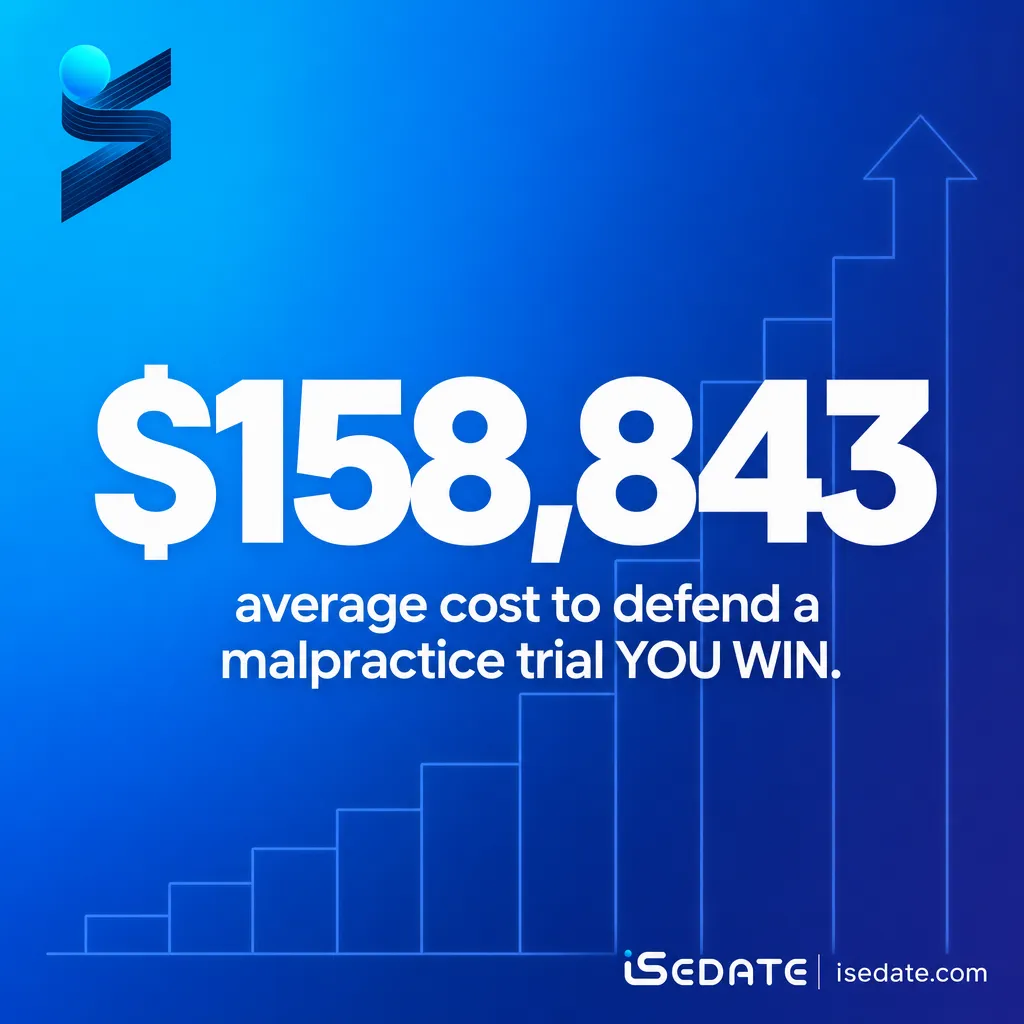
- Average defense cost by outcome (MPL Association, 2016–2018): $30,439 dropped/dismissed, $77,117 settled, $158,843 tried and won, $236,519 tried and lost.
- Roughly 70 percent of malpractice claims close without any indemnity payment, yet all of them incur defense costs (CRICO).
- Across peer-reviewed data, claims with an indemnity payment averaged $45,070 in defense costs versus $17,130 for claims with no payment (NEJM).
- Defense attorney fees are about 74 percent of all defense-related expenses (Journal of Law, Medicine & Ethics).
- About 65 percent of claims are dropped, dismissed, or withdrawn, and defendants win 89 percent of cases decided at trial (MPL Association).
- CRICO tracked $9.96 billion in total costs across 71,339 malpractice cases closed 2010–2019.
- Peer-reviewed research links better electronic documentation to faster claim resolution (Management Science, 2021).
What's in This Guide
1Defense Costs by How the Claim Ends
The single most useful way to understand malpractice lawsuit costs is to break defense expense down by how the claim resolves. The Medical Professional Liability Association's Data Sharing Project, which pools closed-claim data from member insurers, provides the authoritative figures for claims closed between 2016 and 2018.
The escalation is steep and instructive. A claim resolved early, dropped or dismissed, costs about $30,000 to defend. Push that same dispute to a settlement and the cost more than doubles. Take it all the way to trial and it multiplies again, whether the defendant wins or loses. The lesson is not simply that trials are expensive; it is that the cost of a claim is largely determined by how far it travels before it resolves, and early, clean resolution is dramatically cheaper.
These figures are defense costs alone. They do not include any settlement paid to the plaintiff or any judgment awarded at trial. A settled claim costs $77,117 to defend on top of whatever indemnity is paid, and a lost trial costs $236,519 to defend on top of the award. The total financial exposure of a malpractice claim is the defense cost plus the indemnity, and both scale with how far the case goes.
It is worth sitting with what this means for a sedation provider specifically. A sedation-related catastrophic claim is, by its nature, the kind of high-stakes case that tends to be contested all the way, because the injury is severe and the indemnity at stake is large. That is precisely the scenario where defense costs climb toward the six-figure trial tier rather than resolving early. The provider whose record allows a defensible sedation claim to be resolved quickly is avoiding not just the indemnity risk but the escalating defense cost that a drawn-out fight over an ambiguous record would generate. The most expensive claims to defend are the contested, severe ones, which is exactly the category sedation events fall into when they go wrong.
Source: MPL Association Data Sharing Project defense-cost data, via AMA | CRICO Comparative Benchmarking System, Harvard
See how iSedate's SedationVault builds a defensible record

2Even Winning Is Expensive
The most counterintuitive fact about malpractice litigation is that a defendant can win decisively and still absorb a large cost. The favorable-outcome statistics and the cost statistics have to be read together to see why.
The odds favor the defendant heavily. About 65 percent of claims never reach trial because they are dropped, dismissed, or withdrawn, and of the small share that do go to trial, defendants win 89 percent. Roughly 70 percent of all claims close with no payment to the plaintiff at all. By outcome, the malpractice system is far more favorable to providers than its reputation suggests.
And yet every one of those favorable outcomes carries a defense cost. The dropped claims average over $30,000. The trial victories average nearly $159,000. Winning is not free; it is merely less expensive than losing. This is the core financial reality of malpractice: the question is rarely whether a strong case will ultimately be vindicated, but how much it will cost to reach that vindication and how quickly.
This paradox, favorable odds paired with unavoidable cost, is what makes early resolution so valuable. If a provider could be certain a claim would ultimately be dropped or won, the rational goal would be to reach that outcome as cheaply and quickly as possible rather than to fight an expensive, protracted battle to prove a point. In practice, defense counsel and insurers make exactly this calculation on every claim, weighing the cost of continued defense against the cost and certainty of an early resolution. The stronger the record, the more attractive the early, low-cost resolution becomes, because a well-documented case can be shown to be defensible without the expensive machinery of a full trial. A weak or incomplete record, by contrast, forces the case further down the cost curve, because the ambiguity can only be resolved through discovery, depositions, and expert testimony, all of which consume the attorney hours that dominate defense cost.
Source: MPL Association claim-outcome data, via AMA
Explore anesthesia record software3What the Money Pays For
Understanding where defense dollars go clarifies why some claims cost so much more than others and where a strong record has the most leverage.
Defense attorney fees are the dominant expense, at about 74 percent of the total, with expert witnesses and other costs making up the remaining 26 percent. Because attorney time is the largest driver, the length and complexity of a case are what push costs up. A claim that can be resolved quickly, because the facts and the record are clear, consumes far less attorney time than one that drags through extended discovery, depositions, and expert battles.
Peer-reviewed analysis in the New England Journal of Medicine, examining 26,853 claims closed over an eleven-year span, found that claims resulting in an indemnity payment averaged $45,070 in defense costs versus $17,130 for claims with no payment. Even the claims that cost nothing in indemnity carry meaningful defense expense, and the paid claims cost more to defend precisely because they tend to be the contested, evidence-intensive ones where the record is fought over.
Source: Carroll et al., defense-expense composition, Journal of Law, Medicine & Ethics | Defense Costs of Medical Malpractice Claims, NEJM
See how compliance documentation works4Settlement Amounts and Odds
Defense cost is only half the financial picture. When a claim results in a payment, whether by settlement or verdict, that indemnity is a separate and often larger cost. The distribution of those payments matters as much as the average.
The disposition breakdown from the PIAA Data Sharing Project is telling: 64 percent of claims are dropped, withdrawn, or dismissed; 27 percent end in a plaintiff settlement; 6 percent end in a defense verdict; 1 percent end in a plaintiff verdict; and the remainder resolve through arbitration or mediation. Settlements, not trial verdicts, are how most paying claims resolve. A settlement is not an admission of wrongdoing; it is frequently a business decision to end an expensive, uncertain process.
The strategic point for a provider is that settlement decisions are made in the shadow of the record. A defense counsel weighing whether to settle or fight is assessing what the documentation can prove. A strong, complete record strengthens the option to fight a meritless claim to a favorable resolution; a weak record pushes toward settling to avoid the risk of a bad verdict on ambiguous facts. The record does not just affect trial outcomes; it shapes the settlement calculus that governs the far more common paying claim. For what those paying claims actually cost, see our review of anesthesia death settlement statistics and the broader medical malpractice settlement amount data.
Source: PIAA Data Sharing Project claim disposition data | MPL Association settled-claim indemnity data
Compare plans and pricing

5The Cost Measured in Time
Money is only part of what a lawsuit costs. Time, the years a claim hangs over a practice and the hours pulled away from patient care, is a real and often underestimated expense.
Malpractice claims routinely take multiple years to resolve, and dental cases have been reported to run around two years or more on average. During that time the provider carries the stress and distraction of open litigation, and every hour spent in depositions, meetings with counsel, and trial preparation is an hour not spent treating patients. The time cost is invisible in a defense-cost table but very real to the provider living through it.
Here the documentation connection becomes concrete and measurable. Peer-reviewed research published in Management Science found that better electronic documentation, specifically the electronic trace data that shows what was recorded and when, is associated with faster malpractice claim resolution. A clear, complete, contemporaneous record shortens the dispute, because there is less to fight about when the facts are documented. Faster resolution means lower attorney fees, since attorney time is the dominant cost, and less time lost from the practice.
The rising number of defendants per case compounds the time cost. CRICO has documented that the average number of defendants named per malpractice case has been increasing, partly because team-based care involves more clinicians and partly because plaintiffs add defendants to stack policy limits. More defendants means more separate legal teams, more coordination, and a longer, costlier process for everyone named, which is another reason a clear record that quickly establishes who did what carries value beyond any single provider's defense.
Source: CRICO on rising case complexity and cost | Electronic Trace Data and Legal Outcomes, Management Science
Book a demo to see the audit-ready record6How the Record Lowers Every Cost
Every cost driver in this article points in the same direction. Defense cost rises with how far a claim travels. Attorney fees, the largest expense, rise with case length and complexity. Settlement decisions turn on what the record can prove. Time-to-resolution falls with better documentation. The common thread is the record.
A complete, contemporaneous, monitor-linked sedation record acts on all of these levers at once. It makes a meritless claim easier to dismiss early, at the $30,000 tier rather than the $158,000 tier. It strengthens defense counsel's hand in settlement negotiations, improving the resolution of the claims that do pay. And, per the Management Science findings, it is associated with faster resolution, cutting both attorney fees and lost clinical time. The record is not one factor among many; it is the factor that touches every cost in the system. The evidence that documentation quality changes case outcomes is covered in our review of sedation documentation and malpractice statistics, and the dentistry-wide picture in dental anesthesia malpractice statistics.
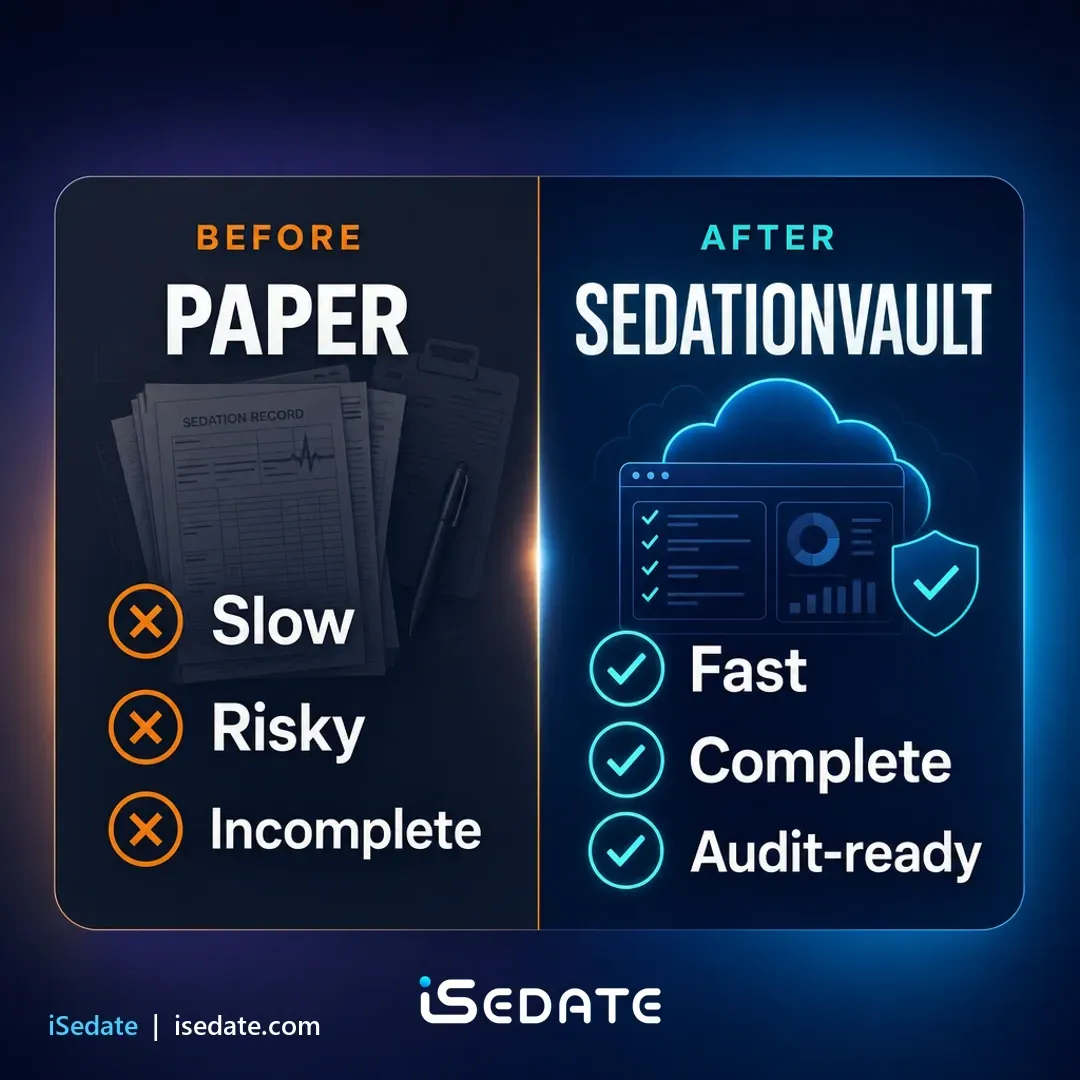
This is the premise behind iSedate's SedationVault. By pulling vitals directly from compatible monitors such as Edan, MindRay, and Criticare, timestamping every entry, and producing an audit-ready PDF, SedationVault produces exactly the kind of clear, contemporaneous documentation that lets a claim be resolved early and quickly. It cannot prevent a patient from filing a claim. What it can do is change which cost tier that claim lands in, and how long it takes to get there, which is where the real money in malpractice is won or lost.
Using MPL Association figures, moving a claim's resolution from the dropped/dismissed tier ($30,439) to a defended trial ($158,843) multiplies defense cost by roughly 5.2 times, and a lost trial ($236,519) by roughly 7.8 times, before any indemnity. Since attorney fees, about 74 percent of defense cost, scale with case length, and better documentation is associated with faster resolution, the record is a direct lever on where in that 5-to-8-times range a claim lands.
Formula: $158,843 ÷ $30,439 ≈ 5.2x; $236,519 ÷ $30,439 ≈ 7.8x.
Contributing sources: MPL Association Data Sharing Project defense-cost figures; Journal of Law, Medicine & Ethics attorney-fee share.
Calculation and interpretation original to iSedate.
Source: MPL Association defense-cost tiers, via AMA | Documentation and resolution time, Management Science
See audit-ready PDF reportsEvery Statistic in One Table
| Statistic | Figure | Source | Year |
|---|---|---|---|
| Defense cost, dropped/dismissed/withdrawn | $30,439 | MPL Association DSP | 2019 |
| Defense cost, settled claim | $77,117 | MPL Association DSP | 2019 |
| Defense cost, tried and won | $158,843 | MPL Association DSP | 2019 |
| Defense cost, tried and lost | $236,519 | MPL Association DSP | 2019 |
| Claims dropped/dismissed/withdrawn | 65% | MPL Association DSP | 2019 |
| Defendant win rate at trial | 89% | MPL Association DSP | 2019 |
| Claims closing with no indemnity payment | ~70% | CRICO CBS | 2021 |
| Mean defense cost, claim with payment | $45,070 | NEJM | 2012 |
| Mean defense cost, claim without payment | $17,130 | NEJM | 2012 |
| Attorney fees as share of defense expense | 74% | J Law Medicine & Ethics | 2012 |
| Average defense cost, all claims | ~$27,000 | J Law Medicine & Ethics (PIAA) | 2012 |
| Claims dropped/withdrawn/dismissed (disposition) | 64% | PIAA DSP | 2014 |
| Claims ending in plaintiff settlement | 27% | PIAA DSP | 2014 |
| Claims ending in plaintiff verdict | 1% | PIAA DSP | 2014 |
| Average indemnity, settled claims | $297,709 | MPL Association DSP | 2020 |
| Total CRICO cost, 2010–2019 | $9.96B | CRICO CBS | 2021 |
| Total CRICO cases, 2010–2019 | 71,339 | CRICO CBS | 2021 |
| Defense-cost multiple, trial vs dropped (derived) | ~5.2x | iSedate Analysis | 2026 |
Frequently Asked Questions
How much does it cost to defend a malpractice lawsuit?
Does it cost money to defend a malpractice claim even if you win?
How long does a malpractice lawsuit take to resolve?
What are the odds of winning a malpractice case at trial?
What drives the cost of defending a malpractice claim?
This article draws only on primary and Tier 1 sources: the Medical Professional Liability Association Data Sharing Project (formerly PIAA), which pools closed-claim data from member insurers and reports defense costs by claim outcome; peer-reviewed studies in the New England Journal of Medicine, the Journal of Law, Medicine & Ethics, and Management Science; and the CRICO Comparative Benchmarking System maintained by the Harvard-affiliated Risk Management Foundation. Defense-cost figures are averages that vary by state, specialty, and case complexity, and are reported in the base years of each study without adjustment to a common year. Dental-specific defense-cost data is more limited than aggregate medical malpractice data, so several figures describe medical malpractice claims broadly; these are labeled by source. Where iSedate derives an original calculation, it is labeled as an iSedate Analysis with its formula and inputs shown.