







Oral Sedation Safety Statistics (2026): Rates, Side Effects & Risk Factors
Oral sedation has a wide margin of safety in adults, with one large series registering side effects in just 2.2% of cases, but the data carries a sharp warning: serious events, though rare, cluster in young children, multi-drug regimens, and the unmonitored window after discharge. Safety tracks less with the drug and more with monitoring and dosing discipline.
Key Takeaways
- Adult oral sedation is broadly safe. A retrospective oral midazolam study registered side effects in 2.2% of occasions with 91.9% treatment completion.
- Oral midazolam had the fewest side effects among methods in a randomized trial, mainly mild drowsiness, versus 10% transient respiratory depression in the IV arm.
- Serious events concentrate in children. Mortality and serious morbidity with oral conscious sedation are reported especially in young children.
- Most serious events are respiratory and potentially avoidable.
- Polypharmacy is the key driver. Serious events were frequently associated with overdoses and interactions, especially with three or more drugs.
- Long-half-life drugs kill after discharge. Post-discharge deaths were tied to long-acting sedatives and unmonitored recovery.
What's in This Guide
1 Adult Oral Sedation Safety Data
For adults, the safety record of oral sedation is strong. A consensus workshop concluded that using oral medication to achieve anxiolysis in adults appears to have a wide margin of safety. The most detailed real-world data comes from a retrospective study of oral midazolam sedation: across 265 patients on 418 occasions, side effects were registered in just 2.2% of cases, and dental treatment was completed on 91.9% of occasions.
Comparative trials reinforce this. A randomized controlled trial of 90 adults comparing oral midazolam, nitrous oxide, and IV midazolam found that oral midazolam had the lowest incidence of side effects, primarily mild drowsiness. In the same trial, the IV arm delivered the fastest onset and greatest anxiety reduction but also the most adverse effects, with 10% of IV patients experiencing transient respiratory depression. The trade-off is consistent: oral sedation is gentler but slower and less deep.

Oral sedation is also used sparingly in general practice. In the oral midazolam study, sedation occurred at a rate of just 2.3 per 1,000 visits and 3.3 per 1,000 treated patients, with anxiety the most common reason. That rarity means many general dentists have limited hands-on experience, which raises the importance of standardized records and dosing protocols when it is used.
Source: Sedation of Adults With Orally Administered Midazolam in Dentistry: A Retrospective Study (PMC) | Safety and Efficacy of Different Sedation Protocols in Adults: An RCT (PMC)
See oral sedation record software2 The Most Common Side Effects
The side effects of oral sedation are, in most cases, direct extensions of the drug's intended action. In placebo-controlled clinical trials of triazolam involving 1,003 patients, the most troublesome side effects were drowsiness, dizziness, and light-headedness, all direct extensions of the pharmacologic activity of the drug. More serious reactions were rare.
Beyond the expected drowsiness and dizziness, oral sedation can produce nausea and vomiting, prolonged sedation, and, notably, paradoxical reactions, where a patient becomes agitated rather than calmed. In the oral midazolam adult study, paradoxical reactions were a recognized complication. Amnestic effects are also common and, for anxious dental patients, often intended: benzodiazepines produce anxiolysis and, in some cases, amnesia by design.
Myth: Oral sedation is too mild to be risky
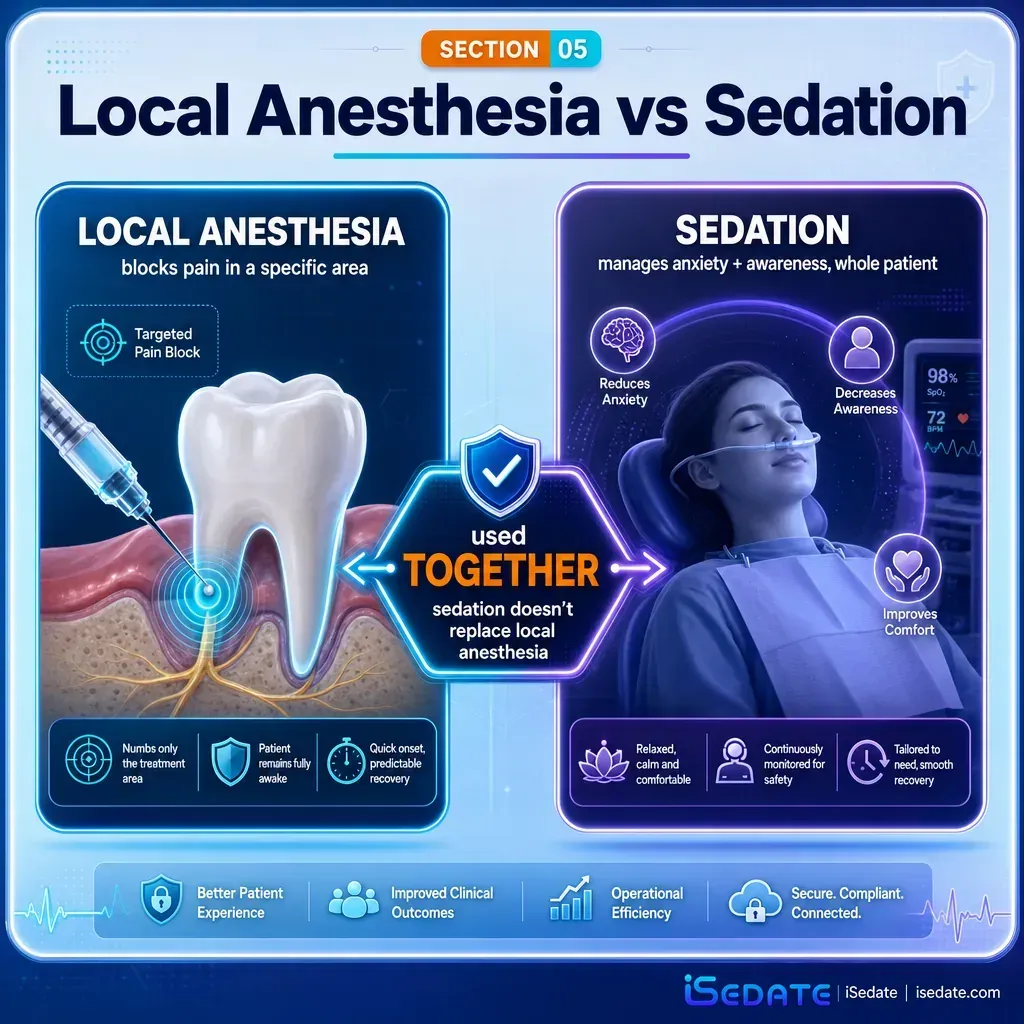
This is a dangerous oversimplification. While adult oral sedation has a wide safety margin, the oral route removes the direct vascular access and rapid titration that IV sedation allows, which cuts both ways. An oral dose cannot be dialed back once swallowed, and because oral drugs can extend their effect beyond the procedure, a patient who appears awake during treatment can become excessively sedated after stimulation stops. The perception of oral sedation as trivially safe is exactly what leads to under-monitoring.
Source: Balancing Efficacy and Safety in Oral Sedation in Dental Outpatients (ScienceDirect) | Sedation of Adults With Orally Administered Midazolam (PMC)
Standardize dosing and records3 Pediatric Oral Sedation Risk
The safety picture changes with age. The same workshop that affirmed adult safety noted that mortality and serious morbidity have been reported with oral conscious sedation, especially in young children. Most serious adverse events are related to potentially avoidable respiratory complications, a critical qualifier: the events that kill are usually preventable, not random.
Children are physiologically more vulnerable. Younger children are dosed by weight, and small errors in weight-based dosing carry proportionally larger consequences. They are also more susceptible to the effects of sedatives on respiratory drive, airway patency, and protective airway reflexes. Combined with the difficulty of assessing sedation depth in a child who cannot reliably report symptoms, this makes continuous physiologic monitoring more important in pediatric oral sedation, not less.
The demand context matters too. There is a strong need for both adult and pediatric sedation services, and the workshop called for airway-management courses for dentists providing conscious sedation and for state regulation of enteral sedation. The gap is not whether oral sedation should be used in children, but whether the monitoring and training around it match the risk.
Source: Balancing Efficacy and Safety in Oral Sedation (ScienceDirect) | Joint Statement on Pediatric Dental Sedation (ASA / AAP)
Capture weight and health history at intake4 What Causes Serious Events
The single most important dataset on oral sedation safety is a critical incident analysis of pediatric sedation events. Reviewing 95 incidents that met study criteria, all confirmed by four independent reviewers, the analysis found that 60 resulted in death or permanent neurologic injury. The conclusion was direct: serious events were frequently associated with drug overdoses and drug interactions, particularly when three or more drugs were used.
The analysis identified seven contributing causes of serious events: drug interactions, high dose or overdose, premature discharge, prescription or transcription errors, inadequate understanding of the medications used, administration by unsupervised technicians, and administration by parents or family members. Notably, the analysis found no correlation between drug class or route of administration and outcome, meaning adverse outcomes occurred across all drugs and routes, even agents like chloral hydrate thought to minimally affect respiration.
iSedate Analysis: The monitoring and documentation signal
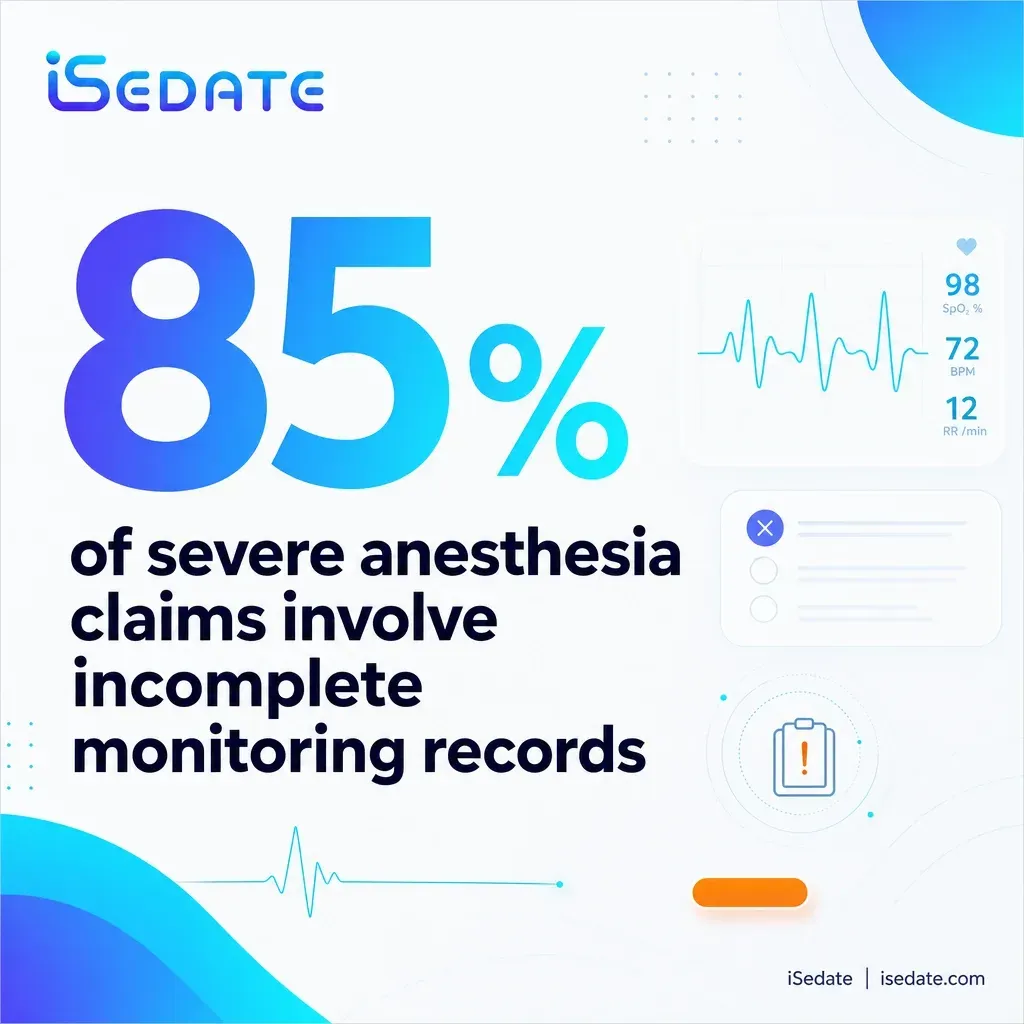
Two findings from the critical incident analyses converge on a single theme. First, inadequate and inconsistent physiologic monitoring, particularly failure to use or respond to pulse oximetry, was a major factor in poor outcomes across all venues. Second, adverse outcomes occurred more often in nonhospital-based facilities, where resuscitation and monitoring were more often inadequate. Together they mean the venue is a proxy for monitoring rigor, not an inherent risk.
Interpretation: since 60 of 95 serious events ended in death or permanent injury and monitoring failure was a common thread, the office-based setting can approach hospital-level safety when it adopts hospital-level monitoring and documentation, continuous pulse oximetry with a response protocol and a complete record. Sources: Cote et al. critical incident analysis (contributing factors and medications). Calculation and interpretation original to iSedate.
Source: Adverse Sedation Events in Pediatrics: Critical Incident Analysis of Contributing Factors (PubMed) | Adverse Sedation Events in Pediatrics: Analysis of Medications (PubMed)
See continuous monitoring in SedationVault5 The Post-Discharge Window
Perhaps the most sobering finding is where some oral sedation deaths occurred: not in the chair, but after the patient left. In the pediatric medication analysis, some injuries occurred on the way to a facility after sedatives were given at home, and some took place in automobiles or at home after discharge from medical supervision. Deaths and injuries after discharge were associated with medications with long half-lives.
The mechanism is straightforward and preventable. Long-acting oral sedatives can continue to deepen sedation after the stimulation of the dental procedure ends, so a patient judged ready for discharge may deteriorate once quiet and unmonitored. The analysis concluded that patients receiving medications with long plasma half-lives may benefit from a prolonged period of post-sedation observation, and that adverse events occurred when sedatives were administered outside the safety net of medical supervision.
Why objective discharge criteria matter
The workshop that reviewed adult and pediatric oral sedation specifically called for discharge criteria with objective, quantifiable measures of home readiness, rather than a subjective judgment that a patient "looks fine." Objective criteria depend on documented vital signs and sedation scores over time, so the office can confirm a patient is genuinely recovering, not temporarily alert between rising drug effects. A timestamped record of the recovery trend is what converts a discharge decision from a guess into a defensible determination.
iSedate's SedationVault is built to close exactly these gaps. SedationVault pulls live vitals from compatible monitors including Edan, MindRay, Criticare, and more into a continuous, timestamped record that runs through recovery, logs every drug and dose, and produces one-click audit-ready PDF reports. That gives providers the documented recovery trend that objective discharge criteria require and the pulse-oximetry response record the critical incident analyses found so often missing.
Source: Adverse Sedation Events in Pediatrics: Analysis of Medications (PubMed) | Balancing Efficacy and Safety in Oral Sedation (ScienceDirect)
Book a DemoOral Sedation Safety Statistics: Summary Table
| Statistic | Figure | Source | Year |
|---|---|---|---|
| Side effects, oral midazolam adults (418 occasions) | 2.2% | Oral midazolam retrospective study | 2024 |
| Treatment completion, oral midazolam | 91.9% | Oral midazolam retrospective study | 2024 |
| Oral sedation rate per visits | 2.3 per 1,000 visits | Oral midazolam retrospective study | 2024 |
| Side-effect ranking, oral midazolam vs methods | Lowest of 3 | Adult sedation RCT (n=90) | 2025 |
| Transient respiratory depression, IV arm | 10% | Adult sedation RCT (n=90) | 2025 |
| Triazolam trial patients | 1,003 | Triazolam clinical trials | Label data |
| Most common triazolam side effects | Drowsiness, dizziness, light-headedness | Triazolam clinical trials | Label data |
| Less-common triazolam effects | 0.5% to 0.9% | Triazolam clinical trials | Label data |
| Serious adult oral sedation events | Reported but rare | Oral sedation safety workshop | 2000s |
| Serious pediatric oral sedation events | Mortality/morbidity reported | Oral sedation safety workshop | 2000s |
| Critical-incident pediatric reports analyzed | 95 | Cote et al. critical incident analysis | 2000 |
| Reports ending in death or neurologic injury | 60 of 95 | Cote et al. medications analysis | 2000 |
| Death/injury associated with drug overdose | 28 of 95 | Cote et al. medications analysis | 2000 |
| Combination level linked to adverse outcomes | 3 or more drugs | Cote et al. medications analysis | 2000 |
| Correlation of drug class/route with outcome | None found | Cote et al. medications analysis | 2000 |
| Post-discharge deaths and long half-life drugs | Associated | Cote et al. medications analysis | 2000 |
| Minor adverse events, IV titration in special-needs adults | 6% | Special-needs sedation audit | 2013 |
Frequently Asked Questions
How safe is oral sedation for adults in dentistry?
What are the most common side effects of oral sedation?
Is oral sedation more dangerous for children than adults?
What causes serious oral sedation events?
Why is post-discharge monitoring important after oral sedation?
Methodology & Sources
Figures in this article are drawn from peer-reviewed retrospective studies, randomized controlled trials, systematic reviews, critical incident analyses, and professional consensus statements rather than secondary aggregators. Adult and pediatric data are reported separately because the safety profiles differ substantially, and older foundational studies, including the Cote et al. critical incident analyses, are included because they remain the most comprehensive systematic examination of serious oral and procedural sedation events and are still cited in current guidelines. Side-effect definitions vary between studies and are reported with their source context.
Primary sources: Sedation of Adults With Orally Administered Midazolam in Dentistry, retrospective study (PMC, 2024); Safety and Efficacy of Different Sedation Protocols in Managing Dental Anxiety in Adults, RCT (PMC, 2025); Balancing Efficacy and Safety in the Use of Oral Sedation in Dental Outpatients, consensus workshop (ScienceDirect); Effectiveness and Safety of Oral Sedation in Adult Patients, systematic review (PMC); Adverse Sedation Events in Pediatrics: A Critical Incident Analysis of Contributing Factors (Pediatrics / PubMed, 2000); Adverse Sedation Events in Pediatrics: Analysis of Medications Used for Sedation (Pediatrics / PubMed, 2000); Joint Statement on Pediatric Dental Sedation (American Society of Anesthesiologists / American Academy of Pediatrics); triazolam clinical trial label data. Older data is labeled by year.
Media & Press Use
Journalists, researchers, and educators are welcome to cite these statistics with attribution to iSedate and a link to this page. For the iSedate Analysis figure, please credit the calculation as original to iSedate. For interviews or additional data on oral sedation records and monitoring, contact iSedate at [email protected].