






Dental Anesthesiology Workforce Statistics (2026): Specialists, Training, and the Shortage
Dental anesthesiology became a recognized dental specialty only in 2019, and the specialist workforce remains small, on the order of a few thousand, trained through roughly nine three-year programs. Meanwhile a broad anesthesia shortage is projected to reach 8,450 by 2037 and is already affecting dentistry, with 98% of surveyed providers reporting regular shortages. The data below covers the specialty, the training pipeline, and the supply-demand gap shaping access to sedation care.
- Dental anesthesiology was recognized as a dental specialty in March 2019, the first new specialty in about 20 years.
- The American Dental Society of Anesthesiology reports on the order of 5,000 members, with fully trained specialists a smaller subset.
- Training is a minimum three-year (36-month) hospital-based residency, offered by only about nine accredited programs.
- In 2020 the U.S. had about 158,520 general dentists and roughly 42,597 specialists across all specialties.
- HRSA projects a shortage of about 8,450 anesthesiologists by 2037 amid an aging workforce.
- In one ASA survey, 98% reported regular anesthesia shortages and over 95% said shortages affected patient treatment.
- Deep sedation and GA must be delivered by a qualified anesthesia provider, with a second trained clinician present.
What's in This Guide
01 A Young Specialty
Dental anesthesiology is one of the newest recognized specialties in all of dentistry, which shapes everything about its workforce. Understanding its recent arrival explains why the specialist pool is still small relative to the demand for sedation and anesthesia.
In March 2019, the National Commission on Recognition of Dental Specialties and Certifying Boards formally recognized dental anesthesiology as a dental specialty, the 10th at the time and the first new one in roughly two decades. The specialty's official definition is notable for what it emphasizes: managing pain, anxiety, and overall patient health throughout the perioperative period, and it is expressly dedicated to patient safety and to access to care for all dental patients, including the very young and those with special health care needs. That mission ties the workforce directly to the populations covered in our special needs sedation dentistry statistics and dental anxiety and phobia statistics, the patients who most depend on advanced anesthesia care.

Source: Recognized Dental Specialties (National Commission) | Anesthesiology becomes latest recognized dental specialty (ADA)
See how SedationVault supports sedation teams
02 The Training Pipeline
The size of any specialist workforce is governed by its training pipeline, and dental anesthesiology's pipeline is deliberately rigorous and, as a result, narrow. This is the single biggest constraint on how fast the specialty can grow.
Dental anesthesiology residencies require a minimum of three years, 36 months, of hospital-based postdoctoral training completed after earning a DDS or DMD, covering pharmacology, internal medicine, emergency medicine, and both pediatric and adult anesthesiology. With only around nine accredited programs, the number of new specialists produced each year is small. The American Dental Society of Anesthesiology reports on the order of 5,000 members, though this figure includes members at various training levels, and the count of dentists who have completed the full three-year residency and hold specialty credentials is considerably smaller. The rigor is appropriate given the stakes of anesthesia, but it means the specialist workforce cannot expand quickly to meet rising demand.
A three-year, hospital-based residency offered at only about nine programs is a hard ceiling on supply. Even if demand for advanced sedation and anesthesia rises sharply, the number of new dentist anesthesiologists entering practice each year is limited by program capacity and faculty availability. This is the same dynamic driving the broader anesthesia shortage, and it means solutions have to come from more than just training additional specialists.

Source: Oral Health Workforce, Education, Practice and Integration (NCBI Bookshelf) | Dental anesthesiology (overview)
See how oral surgeons use SedationVault
03 Who Administers Dental Anesthesia
An important nuance is that dentist anesthesiologists are not the only providers who deliver sedation and anesthesia in dentistry. Understanding the mix of provider types clarifies how the workforce actually functions and why the specialist count alone does not tell the whole story.
Guidelines specify that deep sedation and general anesthesia must be administered by a qualified anesthesia provider, defined as a physician anesthesiologist, a certified registered nurse anesthetist, a dentist anesthesiologist, or a second appropriately trained oral surgeon, with a second clinician present to assist and monitor. In practice, two delivery models dominate. Many dentist anesthesiologists work as mobile providers, traveling to other dentists' offices to deliver anesthesia so treatment can happen in the patient's usual setting. Separately, oral and maxillofacial surgeons, numbering about 7,529 in 2020, commonly use a single-operator model in which the surgeon oversees both the procedure and the sedation with a trained team. This mix means access to sedation depends not just on dentist anesthesiologist numbers but on the whole provider ecosystem.

Source: The challenges facing the future of dental anesthesiology (DentistryIQ) | Oral Health Workforce (NCBI Bookshelf)
See the general anesthesia data
04 The Anesthesia Shortage
The dental anesthesia workforce does not exist in isolation, it sits inside a broader, well-documented national anesthesia shortage. That larger shortage is the force most likely to shape access to sedation care in the coming decade.
The Health Resources and Services Administration projects a shortage of about 8,450 anesthesiologists by 2037. The workforce is also aging: in 2020 the average anesthesiologist was about 52.6 years old and 45% were over 55, pointing to a significant retirement wave within the decade. On the supply side, the pipeline is constrained: in the 2025 residency Match, roughly 1,805 anesthesiology positions were offered to more than 3,000 applicants, leaving over 1,200 unmatched, a training-capacity bottleneck rather than a lack of interest. Rising demand compounds the gap, driven by an aging population needing more procedures under sedation or anesthesia. The result is a measurable, widening supply-demand imbalance across the entire anesthesia field.
It reaches dentistry directly. When anesthesia providers and drugs are in short supply, dental practices feel it, both in the availability of mobile anesthesia providers and in access to preferred sedation medications. Drug shortages in particular can force substitutions, and some alternative agents have narrower therapeutic margins, which changes the clinical risk profile of a case. Treating the shortage as someone else's problem misses that it can alter which patients a practice can serve and how safely.

Source: The Anesthesia Provider Shortage (HRSA projection, Medicus) | Anesthesia Workforce Shortage Poses Threat to Health Care (ASA)
See anesthesia record software
05 What the Shortage Means for Dentistry
The concrete effects of the shortage on dental practice are already measurable, and they point toward a clear strategic response. This is where workforce data becomes an operational reality for individual practices.
In an informal ASA member survey, 98% of respondents said they regularly experience anesthesia shortages at their institutions, and more than 95% said these shortages affect how they treat patients. In dentistry specifically, clinicians report that shortages force the use of alternative sedation drugs, some of which have narrower therapeutic indices, translating to quicker apneic events, more profound bradycardia, and prolonged sedations in the office. The strategic implication is consistent: as skilled providers and preferred drugs become scarcer, the practices best positioned to keep offering sedation safely are those with strong monitoring, efficient workflows, and rigorous documentation, the elements that let a lean team deliver safe sedation reliably.
Connect the workforce numbers to the practice level. A small specialist pool, a retirement wave, and a training bottleneck all point the same direction: skilled anesthesia capacity will stay scarce relative to demand. When a resource is scarce, the value of using it efficiently rises. For a sedation practice, that means the systems that let a qualified team work safely and quickly, continuous monitoring, streamlined charting, and audit-ready documentation, become competitive advantages, not just compliance tools. The workforce shortage does not just describe a labor market, it raises the return on every efficiency and safety system a practice puts in place.
Sources: HRSA workforce projections; ASA shortage survey; dental anesthesiology training data. Interpretation original to iSedate.

Source: Anesthesia Shortages Impact Dentistry (Dentistry Today)
Book a Demo
06 Summary Table: Every Statistic
| Statistic | Figure | Source | Year |
|---|---|---|---|
| Dental anesthesiology specialty recognition | March 2019 | National Commission (NCRDSCB) | 2019 |
| Time since prior new specialty | ~20 years | ADA / ACP | 2019 |
| Total recognized dental specialties | 12 | National Commission | 2024 |
| Dental anesthesiology residency length | 36 months (min) | CODA / ADEA | current |
| Accredited dental anesthesiology programs | ~9 | Specialty overviews | current |
| ADSA membership | ~5,000 | American Dental Society of Anesthesiology | current |
| U.S. general dentists | 158,520 | ADA (NCBI Bookshelf) | 2020 |
| U.S. dental specialists (all specialties) | ~42,597 | ADA (NCBI Bookshelf) | 2020 |
| Oral & maxillofacial surgeons | 7,529 | ADA (NCBI Bookshelf) | 2020 |
| Pediatric dentists | 8,561 | ADA (NCBI Bookshelf) | 2020 |
| Projected anesthesiologist shortage | 8,450 by 2037 | HRSA | 2037 proj. |
| Anesthesiologists over age 55 | 45% | Workforce analyses | 2020 |
| Unmatched anesthesiology applicants (2025 Match) | 1,200+ | Residency Match data | 2025 |
| ASA members experiencing shortages | 98% | ASA member survey | 2021 |
| Reporting shortages affect patient treatment | >95% | ASA member survey | 2021 |
07 Frequently Asked Questions
Is dental anesthesiology a recognized dental specialty?
How many dentist anesthesiologists are there?
How long is dental anesthesiology training?
Is there an anesthesia shortage affecting dentistry?
Who is qualified to administer deep sedation or general anesthesia in dentistry?
All figures trace to authoritative bodies (National Commission, ADA, ADEA, HRSA, ASA) and published workforce analyses. Specialist counts vary by source and definition (association membership versus board-certified specialists versus residency completers), so figures are presented with that context. Broader anesthesia-workforce figures include physician anesthesiologists and CRNAs, not only dentist anesthesiologists. Sources include:
- National Commission on Recognition of Dental Specialties and Certifying Boards (specialty recognition)
- ADA New Dentist Blog and ADA News (2019 recognition)
- "Oral Health Workforce, Education, Practice and Integration," Oral Health in America (NCBI Bookshelf)
- American Dental Society of Anesthesiology (membership); ADEA (training overview)
- HRSA anesthesiologist workforce projections (via Medicus Healthcare Solutions)
- American Society of Anesthesiologists workforce shortage statements and member survey
- "Anesthesia Shortages Impact Dentistry" (Dentistry Today); "The challenges facing the future of dental anesthesiology" (DentistryIQ)
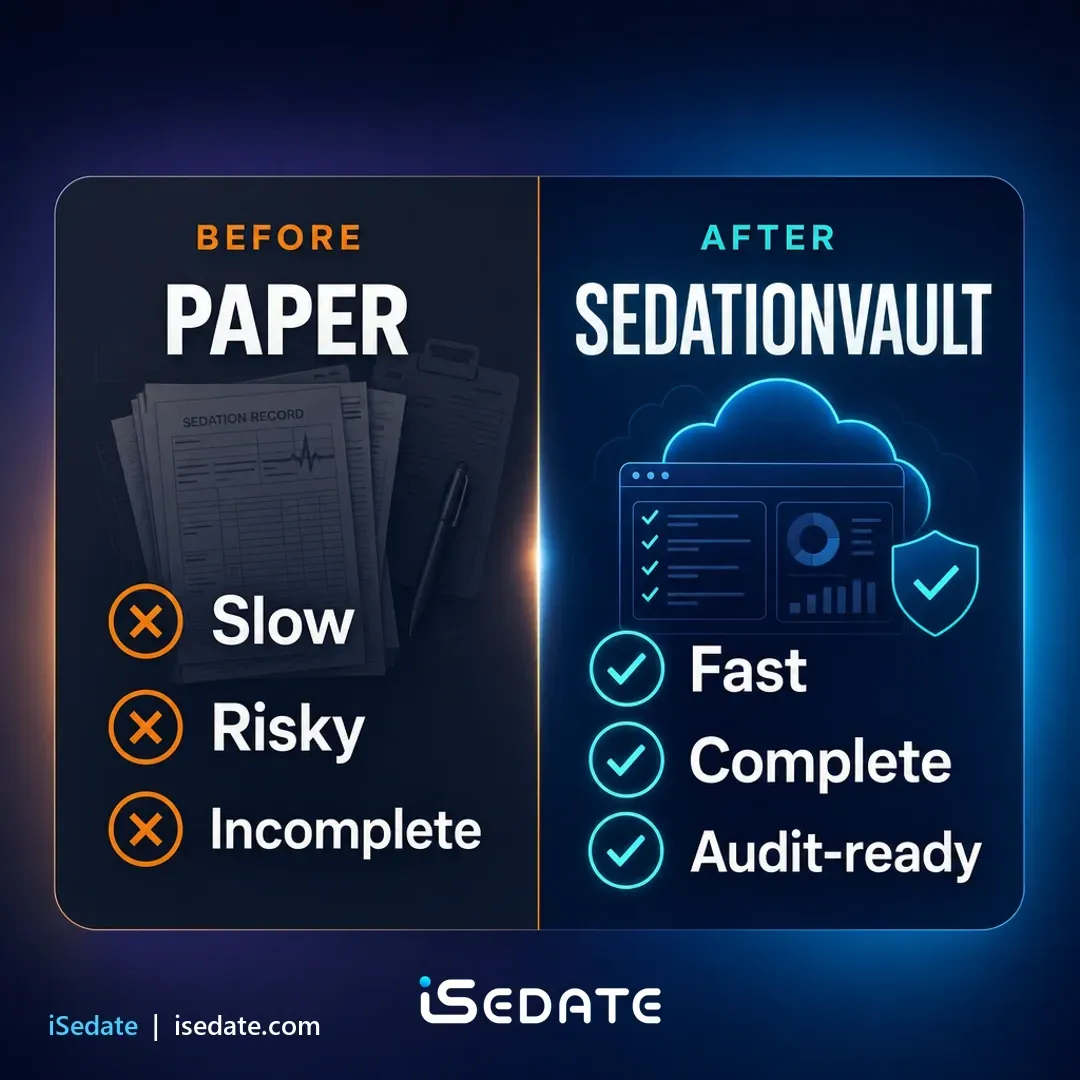
As skilled anesthesia capacity stays scarce, efficiency and safety systems become a practice's edge. iSedate's SedationVault captures live vitals and builds an audit-ready record for every sedation case, helping lean teams deliver safe sedation reliably. To see how it works in your practice, book a demo.