






General Anesthesia in Dentistry Statistics (2026): Usage, Safety, and Indications
General anesthesia is the deepest level of anesthesia in dentistry, reserved for the patients and procedures that lighter sedation cannot handle. Modern data shows it is remarkably safe in trained hands, with one review of over a million procedures finding just three deaths across 35 years, yet its risks are real and overwhelmingly about the airway. The statistics below cover how GA is defined, how safe it is, who needs it, and why airway management is everything.
- Under general anesthesia a patient is unconscious and cannot be aroused, often cannot maintain their own airway, and may need breathing support.
- A British Columbia review of over 1 million deep sedation or GA dental procedures (1984-2019) found only three deaths, all in the 1980s from a since-corrected cause.
- Historical dental anesthesia mortality estimates range from about 1.4 to 2.9 per million cases.
- One analysis put deaths from GA administration alone at under 1 in 3.5 million.
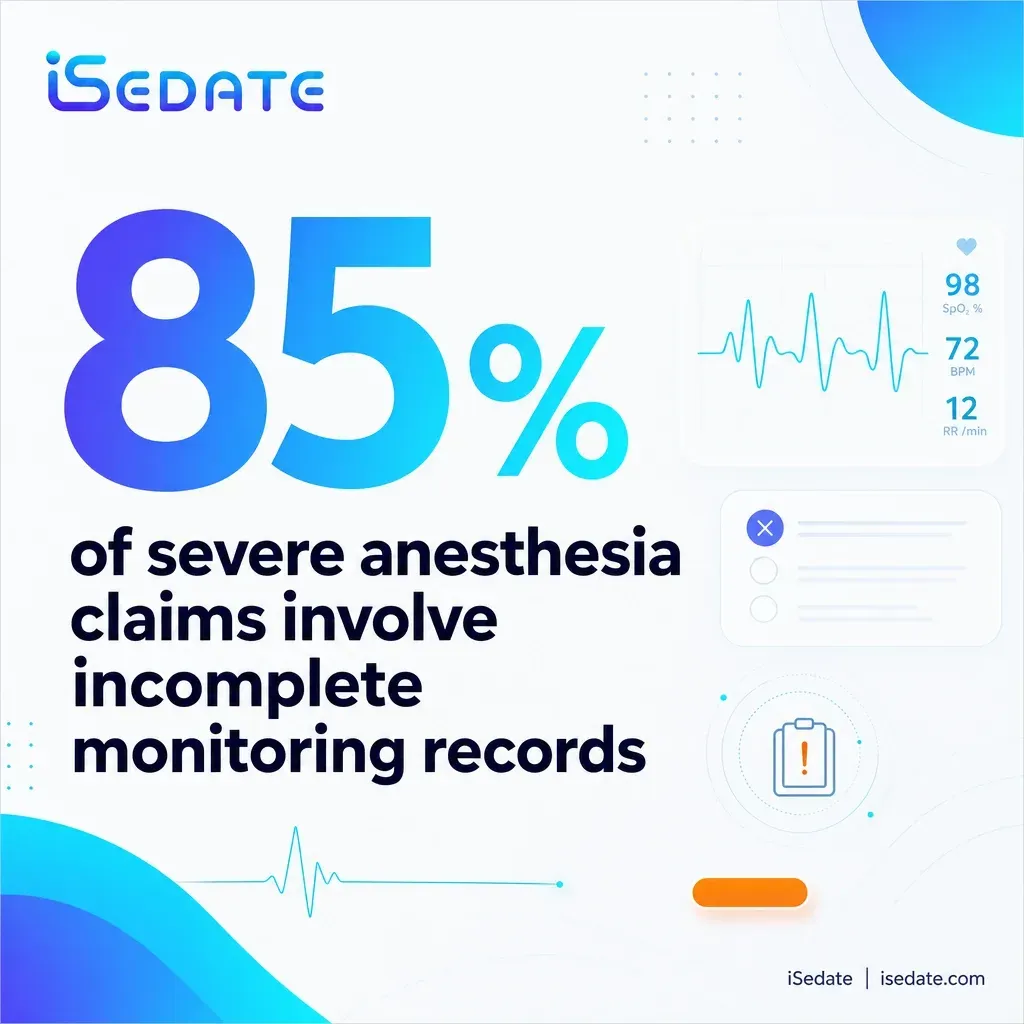
- Respiratory events were the largest class of anesthetic injury in ASA Closed Claims at about 34%, with roughly 85% resulting in death or brain damage.
- Leading GA indications in vulnerable adults were non-cooperation (65%), suspected pain, and dental phobia (37%).
- Safe GA requires a minimum team, continuous pulse oximetry, and immediately available airway and emergency equipment.
What's in This Guide
01 What General Anesthesia Is
General anesthesia sits at the far end of the sedation continuum, and understanding that continuum is the key to understanding GA. Sedation and general anesthesia are not different in kind so much as in depth, and the defining line is responsiveness and the airway.
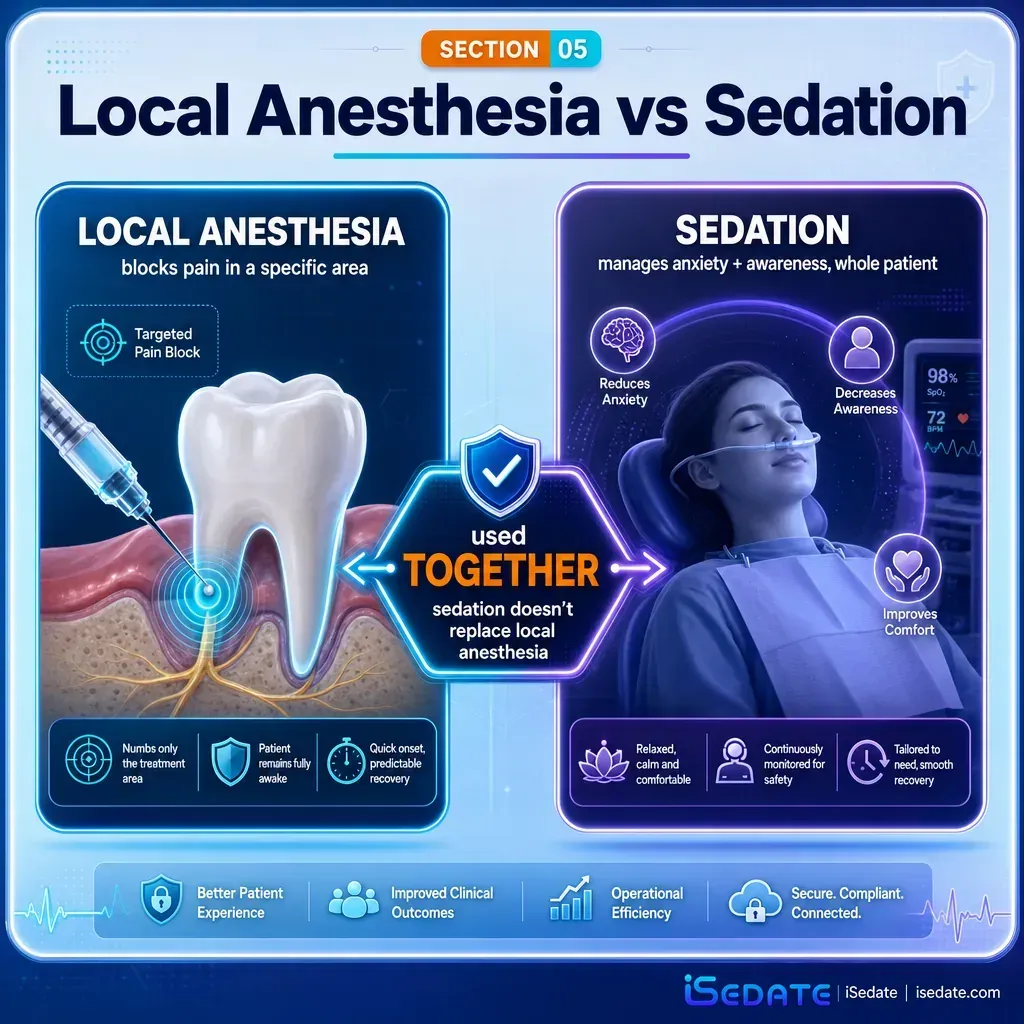
The ASA defines general anesthesia as a drug-induced loss of consciousness during which patients cannot be aroused, even by painful stimulation. At this depth, the ability to independently maintain breathing is often impaired, patients frequently require assistance to keep the airway open, and cardiovascular function may be affected. This is fundamentally different from sedation, where a patient stays responsive and generally protects their own airway. Because depth exists on a continuum, a patient can drift deeper than intended, which is why the ADA and ASA stress that providers must be able to rescue a patient from a level deeper than the one intended. For the full picture of the lighter levels, see our sedation dentistry statistics overview.

Source: ASA Statement on Sedation & Anesthesia in Dental Office-Based Settings
See anesthesia record software
02 The Safety and Mortality Data
The safety story of dental general anesthesia is genuinely reassuring, especially with modern technique, though it must be read with care. The best recent data comes from a large, long-span review.
A British Columbia study of more than one million dental procedures using deep sedation or general anesthesia between 1984 and 2019 found only three anesthesia-related deaths, all occurring in the 1980s and linked to a technique issue that has since been corrected, with no cases of severe morbidity. Historical mortality estimates converge in a similar low range: about 1.4 deaths per million in an Ontario study, and roughly 2.9 per million in another analysis. A long-span UK review of deaths from 1948 to 2016 concluded that when isolated to the administration, maintenance, and recovery from GA itself, the modern mortality rate is under 1 in 3.5 million. The consistent message is that dental general anesthesia, delivered with contemporary technique by trained anesthesia providers, is very safe.
It is not. The reassuring statistics come precisely from settings with trained anesthesia providers, proper monitoring, and airway readiness, and they describe rare but catastrophic outcomes when they do occur. An older analysis of dental office morbidity and mortality found that harm often clustered in young, healthy patients where multiple pharmacological agents were used with limited monitoring and resuscitative capacity. In other words, the low rate is earned through discipline, not granted by the technique. General anesthesia concentrates both the highest capability and the highest stakes.

Source: British Columbia 1M+ procedures study (Anesthesia Progress, via Dentistry Today) | Deaths associated with GA for dentistry 1948-2016 (NCBI)
See how SedationVault documents every case
03 Why the Airway Is Everything
If there is one theme that runs through every serious adverse outcome in anesthesia, it is the airway. General anesthesia's core danger is not exotic, it is the loss of the patient's ability to breathe and protect their own airway, and the data makes this unmistakable.
The ASA Closed Claims Project, which analyzes adverse anesthetic outcomes from liability insurance files, found that respiratory events were the single largest class of injury, accounting for about 34% of all claims, and that roughly 85% of those respiratory adverse outcomes resulted in death or brain damage. This is why airway assessment before anesthesia is described as vitally important, why tools like the Mallampati score are used to predict difficult airways, and why the ability to ventilate with a bag-valve-mask is considered the primary rescue skill. In the deep sedation and open-airway GA common in dental practice, recognizing and managing a compromised airway quickly is the difference between a non-event and a tragedy. Capnography and continuous oxygenation monitoring, discussed in our capnography and sedation safety statistics, are central to catching these events early.
Trace the logic across the sedation levels. Each step deeper, from moderate sedation to deep sedation to general anesthesia, increases the chance the patient cannot protect their own airway. At general anesthesia, that protection is often gone entirely. Since respiratory events cause about 34% of anesthetic injury claims and 85% of those end in death or brain damage, the single highest-value activity during GA is continuous airway and ventilation monitoring. The technique that removes the patient's own safeguards is precisely the one that most depends on the team's monitoring to replace them. Capability and vigilance are not separate variables, they rise together.
Sources: ASA Closed Claims Project airway analysis; ASA depth-of-sedation continuum. Interpretation original to iSedate.

Source: Airway Assessment for Office Sedation/Anesthesia (NCBI)
See live vitals charting
04 Who Needs General Anesthesia
General anesthesia is not a comfort upgrade, it is a necessity for specific populations who cannot otherwise receive dental care. Understanding who needs it clarifies why it exists despite its higher stakes.
The clearest indications come from studies of vulnerable adults. In one retrospective analysis, the reasons for dental treatment under GA were led by non-compliance at 65%, dental phobia at 37%, and urgent treatment need, with the largest patient group being people with disabilities, who made up 69.7% of those treated. The main clinical indication was suspicion of pain. Beyond vulnerable adults, general anesthesia is commonly needed for very young children requiring extensive treatment, for people with dementia or significant intellectual disability, and for complex or lengthy oral surgery. Notably, dental phobia severe enough to block care is a legitimate indication, which connects GA to the broader anxiety picture detailed in our dental anxiety and phobia statistics. For children specifically, the distinct pediatric considerations are covered in our pediatric sedation statistics.

Source: Dental care of adult vulnerable patients under GA (NCBI) | Outpatient dental care under GA for people with disabilities (NCBI)
See how oral surgeons use SedationVault
05 The Requirements for Safe GA
The gap between GA's excellent safety record and its catastrophic failure mode is bridged by requirements: training, personnel, monitoring, and setting. These are not bureaucratic formalities, they are the mechanism that produces the low mortality rate.
Guidelines require a minimum team, often at least three qualified individuals, continuous pulse oximetry, and immediately available emergency drugs and age-appropriate airway equipment, all checked and functional. Setting matters too: after decades of concern about deaths, the United Kingdom moved dental general anesthesia out of general and community dental practice in 2000, restricting it to hospital settings, a policy later credited as wise and lifesaving. This reflects a broad consensus that GA belongs where the personnel, equipment, and rescue capability match its risk. The requirements exist because the difference between safe and catastrophic GA is almost always whether the team was prepared and monitoring closely.
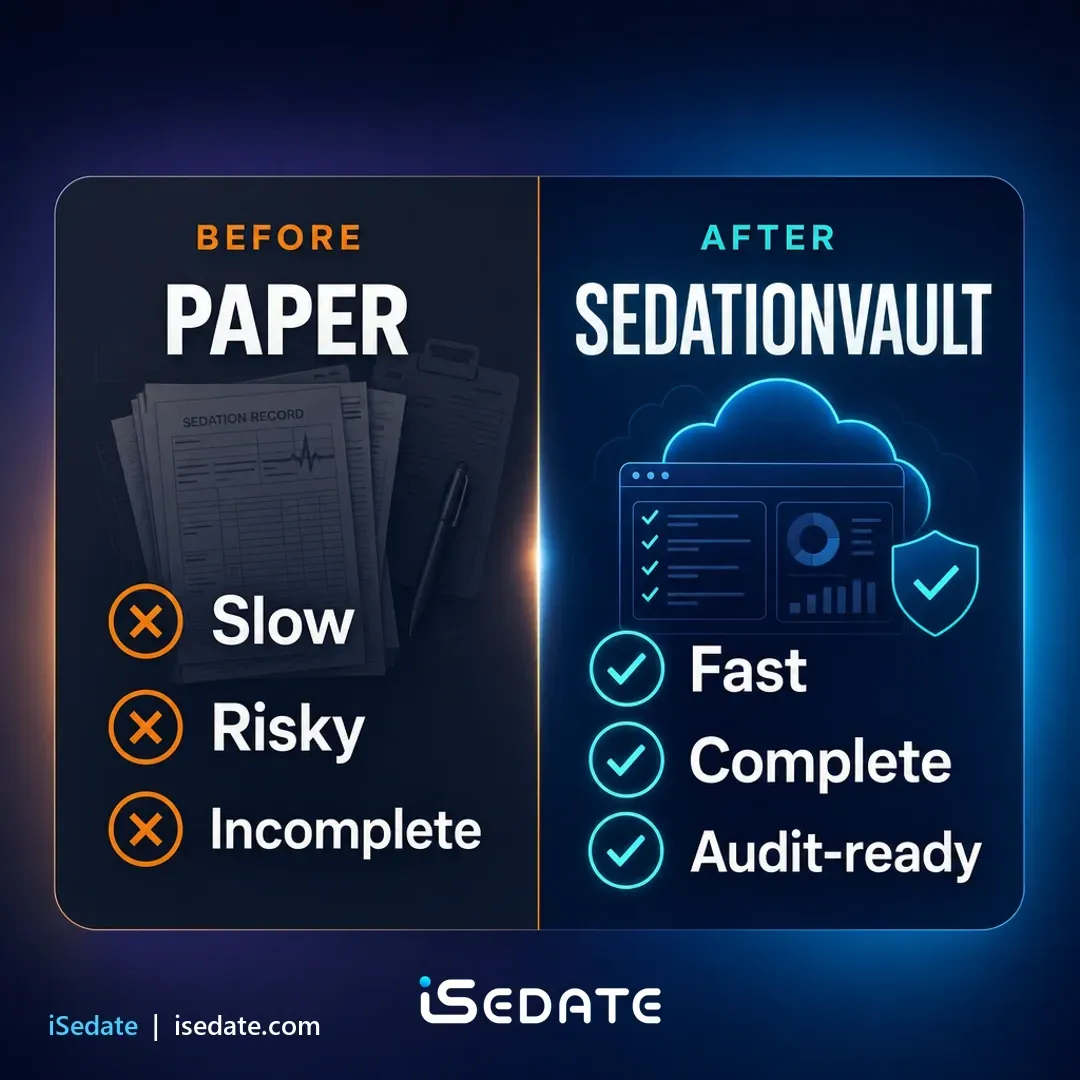
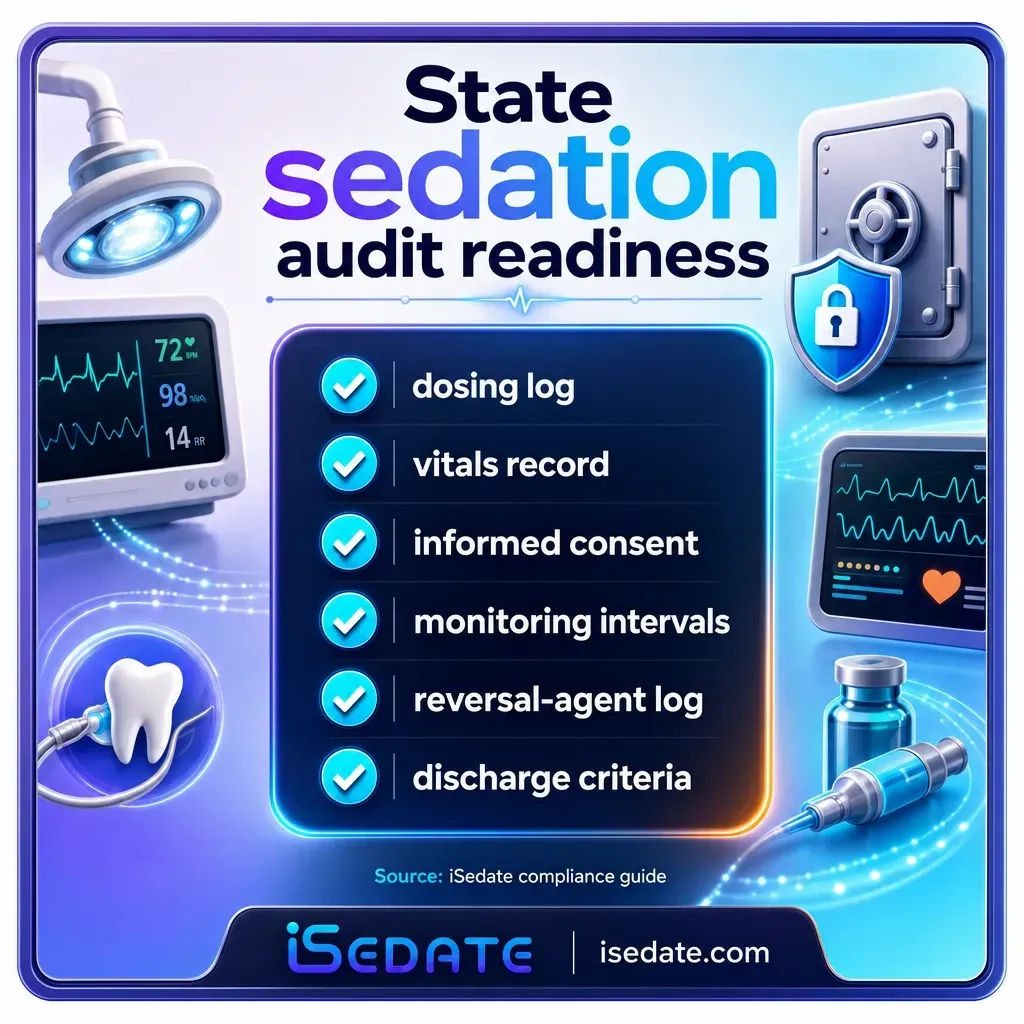
At the deepest anesthesia levels, complete and continuous documentation is inseparable from safety, capturing every vital sign, every intervention, and the patient's trajectory through the case. iSedate's SedationVault captures live vitals from compatible monitors, including Edan, MindRay, Criticare, and more (the Edan X10 is a common example), and builds a continuous, audit-ready record so the team can watch trends in real time and demonstrate the standard of care afterward. For the highest-stakes anesthesia, that record is both a safety tool and the documentation a defensible practice depends on.

Source: ADA Guidelines for the Use of Sedation and General Anesthesia by Dentists
Book a Demo
06 Summary Table: Every Statistic
| Statistic | Figure | Source | Year |
|---|---|---|---|
| Deaths in 1M+ BC deep sedation/GA procedures | 3 (all 1980s) | British Columbia study (Anesthesia Progress) | 2025 |
| Ontario dental anesthesia mortality | 1.4 per million | Nkansah et al. | 1997 |
| Dental anesthesia mortality estimate | 2.9 per million | Bennett et al. | 2015 |
| Deaths from GA administration alone | <1 in 3.5 million | UK 1948-2016 review | 2020 |
| Respiratory share of ASA closed claims injuries | ~34% | ASA Closed Claims Project | review |
| Respiratory adverse outcomes ending in death/brain damage | ~85% | ASA Closed Claims Project | review |
| Non-compliance as reason for GA | 65% | Helsinki Public Dental Service | review |
| Dental phobia as reason for GA | 37% | Helsinki Public Dental Service | review |
| People with disabilities among GA-treated adults | 69.7% | Vulnerable-adult GA study (NCBI) | 2021 |
| Suspicion of pain as main GA indication | 72.1% | Vulnerable-adult GA study (NCBI) | 2021 |
| Treated-tooth failure rate after GA | ~4-5% | Vulnerable-adult GA studies (NCBI) | 2021 |
| Minimum personnel for deep sedation/GA | 3 | ADA Guidelines | 2016 |
| Oxygenation monitoring requirement | Continuous pulse oximetry | ADA Guidelines | 2016 |
| UK community/general practice GA ban | Year 2000 | UK Department of Health | 2000 |
| Repeated GA in disabled adults (2nd treatment) | 17.2% | Repeated-GA risk factor study (NCBI) | 2022 |
07 Frequently Asked Questions
What is the difference between general anesthesia and sedation in dentistry?
How safe is general anesthesia for dental treatment?
When is general anesthesia needed for dental work?
What is the biggest risk of dental general anesthesia?
Where should dental general anesthesia be performed?
All figures trace to peer-reviewed studies and authoritative guidelines (ASA, ADA). Mortality figures come from different countries, eras, and methodologies, so they are presented as a range rather than a single rate. Some safety data reflects settings with trained anesthesia providers and should not be generalized to under-resourced settings. Sources include:
- British Columbia review of 1M+ deep sedation/GA dental procedures, 1984-2019 (Anesthesia Progress, 2025)
- "Deaths associated with GA for dentistry 1948-2016" (Heliyon / NCBI)
- Nkansah et al. (Ontario mortality) and Bennett et al. dental anesthesia mortality estimates
- ASA Closed Claims Project respiratory-event analysis; "Airway Assessment for Office Sedation/Anesthesia" (NCBI)
- "Outpatient dental care of adult vulnerable patients under general anaesthesia" and related NCBI studies
- ADA "Guidelines for the Use of Sedation and General Anesthesia by Dentists"; ASA office-based anesthesia statements
- "Morbidity and mortality from pharmacosedation and general anesthesia in the dental office" (PubMed)
General anesthesia carries the highest stakes and the greatest dependence on monitoring and documentation. iSedate's SedationVault captures live vitals and builds an audit-ready record for every case. To see how it works in your practice, book a demo.