







Oral Sedation Dentistry Statistics (2026): Usage, Effectiveness, and Safety
Oral sedation is the most accessible form of dental sedation: no needles, low cost, and treatment completion around 92% with side effects on just over 2% of occasions in adult studies. Its tradeoff is predictability, because a swallowed dose cannot be titrated and absorption varies from patient to patient. The data below covers how often it is used, how well it works, how safe it is, and the honest limitation that defines it.
- Adult oral midazolam sedation completed dental treatment on 91.9% of occasions in one retrospective study.
- Side effects were registered on only 2.2% of occasions, with vital signs generally staying in normal ranges.
- Sedation overall is used rarely in routine care, at about 2.3 sedations per 1,000 visits, and use varies widely between clinics.
- A systematic review found good satisfaction with midazolam 7.5 mg and reduced anxiety with alprazolam and clonidine.
- The defining limitation is unpredictability: prolonged onset, unreliable absorption, and the inability to titrate once dosed.
- Adverse effects and over-sedation risk rise with higher doses, so single-agent, weight-appropriate dosing is preferred.
- Oral sedation is best for mild-to-moderate anxiety and shorter procedures, not the deepest sedation needs.
What's in This Guide
01 What Oral Sedation Is and How Often It's Used
Oral sedation means giving a sedative medication by mouth, as a pill or liquid, typically 30 to 60 minutes before treatment. It is the simplest sedation route to deliver: no needles, no IV line, no specialized equipment. That accessibility makes it a common first option for anxious patients, even though sedation of any kind remains relatively uncommon in routine dentistry.
A retrospective record review of adults receiving oral midazolam in a dental care organization found sedation was used at a rate of about 2.3 per 1,000 visits and 3.3 per 1,000 treated patients, confirming that sedation is applied rarely and that its use varies widely between clinics. Among those sedated, the mean age was about 41 years, 67.7% were female, and anxiety was the most common reason. Because oral sedation needs no needles or equipment, it is the most widely available sedation option in general practice, serving as the entry point for many patients whose fear would otherwise keep them away, a demand pattern detailed in our dental anxiety and phobia statistics.

Source: Sedation of Adults with Orally Administered Midazolam in Dentistry (NCBI)
See oral sedation record software
02 Effectiveness and Completion Rates
For its intended purpose, mild to moderate anxiety and shorter procedures, oral sedation performs well. The clearest measure is whether treatment actually gets completed, and here the data is encouraging.
In the adult retrospective study, dental treatment was completed on 91.9% of occasions, with success related to the type of treatment performed. A separate systematic review of adult oral sedation, drawing on randomized trials totaling 327 patients, found good satisfaction with treatment after midazolam 7.5 mg or clonidine 150 micrograms, and reduced anxiety with alprazolam at 0.5 to 0.75 mg. The review noted that the overall evidence base is limited by study quality and varied comparisons, so results should be read as supportive rather than definitive. Still, the practical signal is consistent: for appropriate cases, oral sedation lets anxious patients get through treatment they might otherwise avoid.
Oral sedation trades some performance for simplicity. Compared with intravenous sedation, which has a rapid onset and can be adjusted during treatment, oral sedation has a slower onset and a fixed dose. In one head-to-head trial, oral midazolam had the slowest onset of the common methods at about 12.7 minutes, and the lowest satisfaction score, though also the mildest side effects. The full comparison is covered in our IV sedation dentistry statistics; the short version is that oral sedation wins on accessibility and gentleness, not on speed or depth.

Source: Effectiveness and safety of oral sedation in adults, systematic review (PubMed)
Compare with IV sedation data
03 Safety and Dosing
Oral sedation's safety profile is one of its main strengths. Because it produces lighter sedation and requires no invasive access, its complication rate is low when doses are appropriate.
In the adult oral midazolam study, side effects were registered on only 2.2% of occasions, and monitored vital signs, heart rate, oxygen saturation, and respiratory rate, generally remained within normal ranges. Dosing varied by setting, with a mean of 7.9 mg in primary dental clinics versus 6.8 mg in specialist clinics, and older patients over 70 received lower doses. The important caveat from the pediatric and dosing literature applies to everyone: the probability of adverse events and over-sedation increases with increasing doses. This is why single-agent, weight-appropriate dosing is safer than stacking agents, and why even a low-risk technique benefits from monitoring.
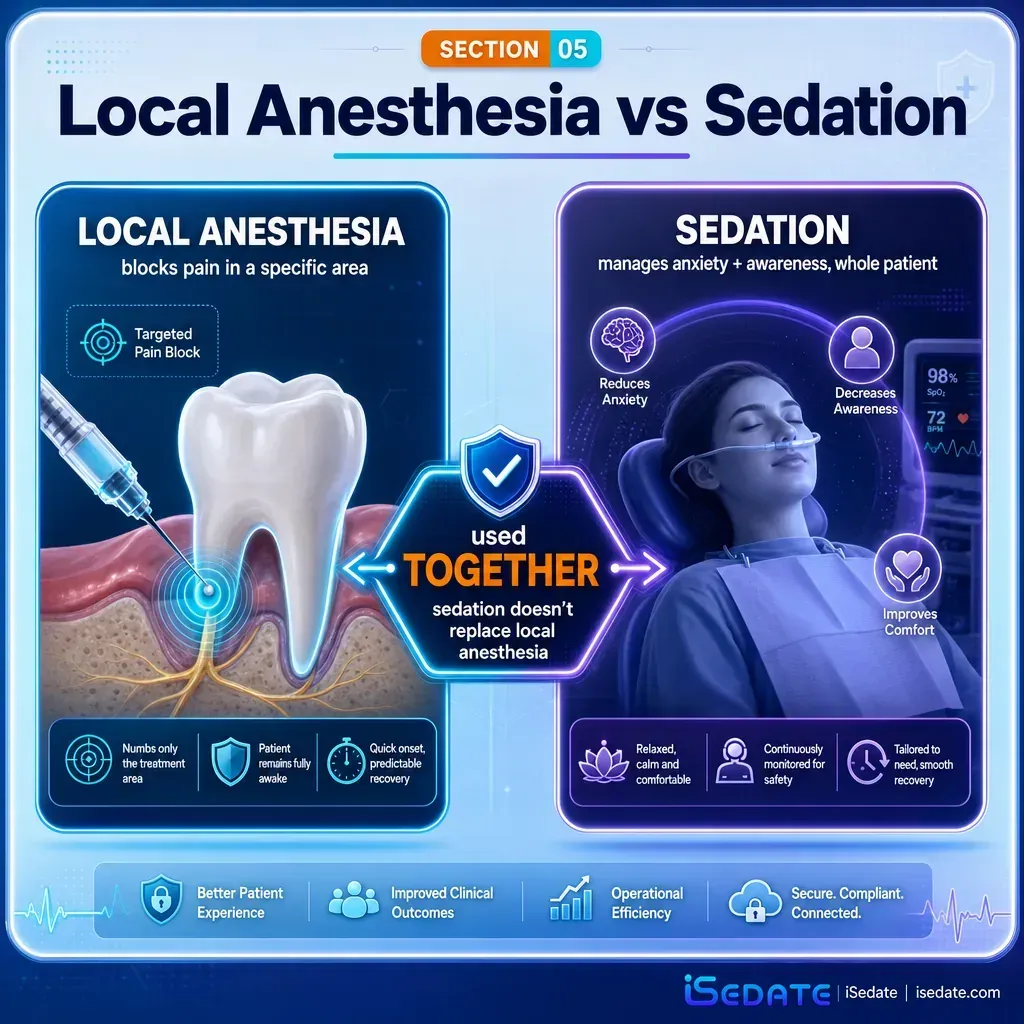
This is a dangerous assumption. Oral sedation is generally light and safe, but its effect is unpredictable, and an unexpectedly deep response can occur because absorption varies and the dose cannot be pulled back once swallowed. Guidance is clear that adverse events and over-sedation rise with dose, and that a sedation record capturing patient weight, medical conditions, and vital signs should be maintained. Lighter does not mean zero risk, and the same monitoring discipline that protects IV patients protects oral sedation patients from the rare but real over-sedation event.

Source: Adult oral midazolam study (NCBI) | Efficacy of oral midazolam sedation, dose-response (NCBI)
See how SedationVault records every case
04 The Predictability Tradeoff
Every strength of oral sedation comes paired with one defining weakness: unpredictability. Understanding this tradeoff is the key to using oral sedation well, and it is the honest heart of the oral-versus-IV question.
The clinical literature is consistent about oral sedation's disadvantages: a prolonged onset, an irregular and incomplete rate of absorption from the gastrointestinal tract, an inability to titrate, and sedation levels that cannot be easily changed once the medication is taken. Because the concentration of sedative in the blood is unpredictable, the provider cannot fine-tune the depth mid-procedure the way IV sedation allows. This is precisely why oral sedation is generally used as anxiolysis and for lighter sedation, and why it is not the tool for reaching or maintaining deep sedation. The tradeoff is real and unavoidable: simplicity and gentleness in exchange for control.
Here is the counterintuitive conclusion the data supports. Oral sedation cannot be titrated, so the provider cannot correct course by adjusting the dose. That makes early recognition of an unexpectedly deep response even more important, because the response, not the dose, is the only variable left to manage. In other words, the technique with the least dose control benefits the most from continuous vital-sign capture and a complete record, since watching the patient is the primary safety lever once the pill is swallowed. Simplicity in delivery does not mean simplicity in vigilance.
Source: Techniques to administer oral, inhalational, and IV sedation in dentistry (NCBI); adult oral midazolam study. Interpretation original to iSedate.

Source: Techniques to administer oral, inhalational, and IV sedation (NCBI)
See how dentists use SedationVault
05 Where Oral Sedation Fits
Putting the data together produces a clear picture of the right patient and procedure for oral sedation. It is not a lesser option, it is the correct option for a specific and common set of situations.
Oral sedation is the right fit for patients with mild to moderate anxiety, for shorter and less complex procedures, and especially for patients with needle phobia for whom IV access is itself a barrier. It is low cost, well accepted, and requires no special equipment, which is why it is so widely offered. For higher anxiety, longer or more complex treatment, or when predictable and adjustable depth is essential, IV sedation is generally the better choice. Matching the method to the patient is the whole game, and oral sedation covers a large, common segment of that spectrum. For the market and demand context behind all of these options, see our sedation dentistry statistics overview.
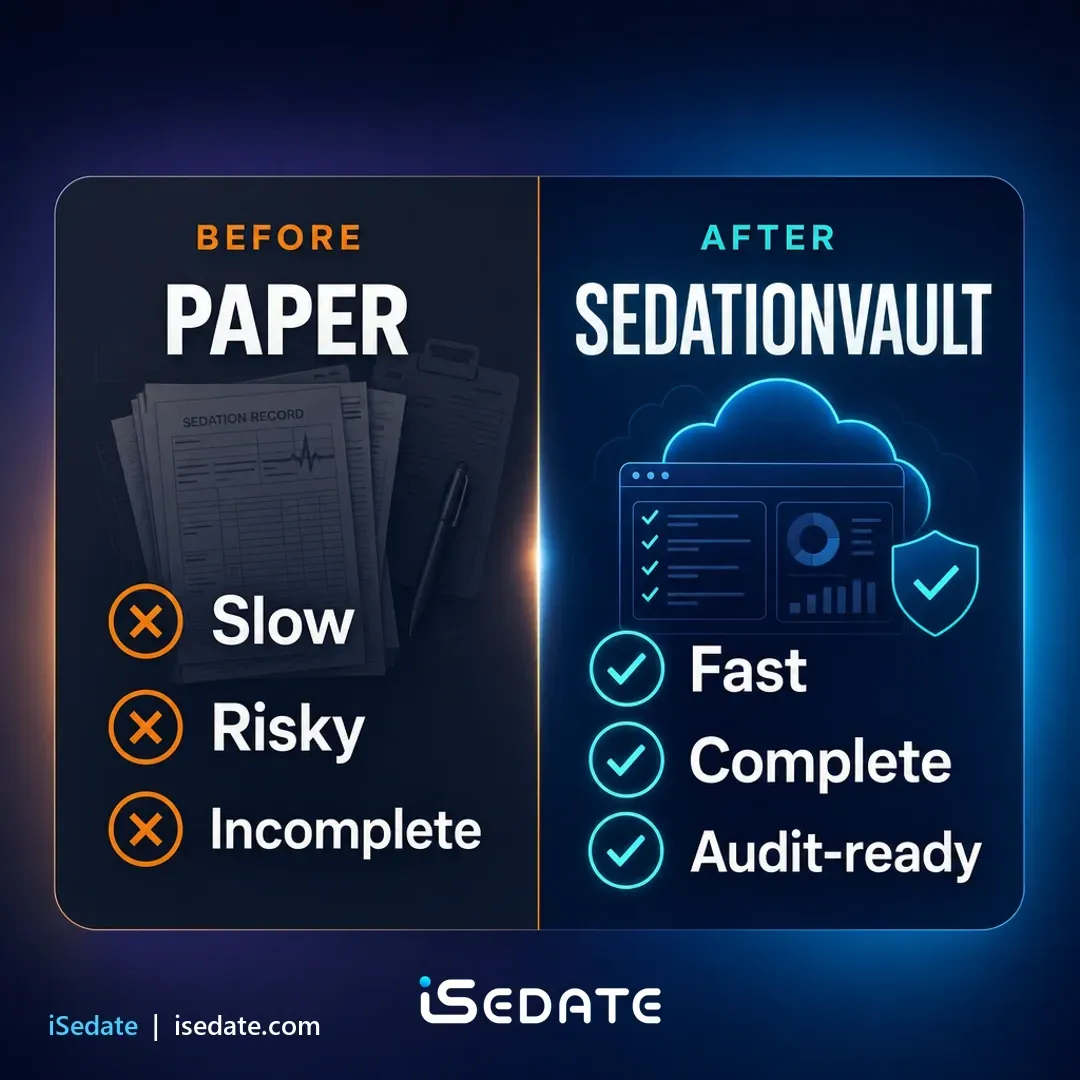
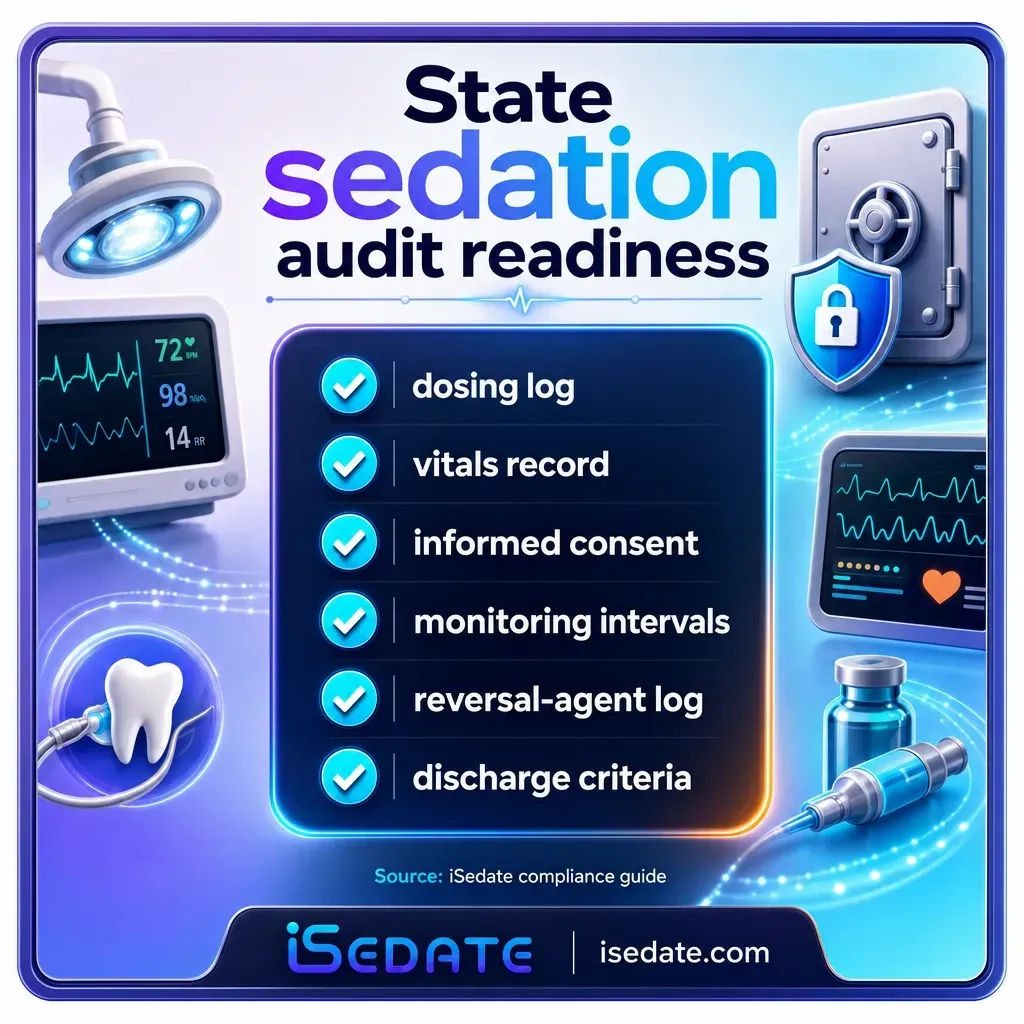
Oral sedation may be simple to administer, but it still calls for a proper record: patient weight, medical history, the agent and dose given, and vital signs across the visit. iSedate's SedationVault captures live vitals from compatible monitors, including Edan, MindRay, Criticare, and more (the Edan X10 is a common example), and builds a continuous, audit-ready record for every sedation case, oral included. Because oral sedation's depth is unpredictable, that record is not just paperwork, it is the safety documentation that catches the rare deep response and demonstrates the standard of care.

Source: The drugs and application methods in dental sedation
Book a Demo
06 Summary Table: Every Statistic
| Statistic | Figure | Source | Year |
|---|---|---|---|
| Dental treatment completed (adult oral midazolam) | 91.9% | Adult oral midazolam study (NCBI) | 2024 |
| Occasions with registered side effects | 2.2% | Adult oral midazolam study (NCBI) | 2024 |
| Sedations per 1,000 visits | 2.3 | Adult oral midazolam study (NCBI) | 2024 |
| Sedations per 1,000 treated patients | 3.3 | Adult oral midazolam study (NCBI) | 2024 |
| Sedated adults who were female | 67.7% | Adult oral midazolam study (NCBI) | 2024 |
| Mean age of sedated adults | ~41 years | Adult oral midazolam study (NCBI) | 2024 |
| Mean midazolam dose (primary clinics) | 7.9 mg | Adult oral midazolam study (NCBI) | 2024 |
| Mean midazolam dose (specialist clinics) | 6.8 mg | Adult oral midazolam study (NCBI) | 2024 |
| Midazolam dose with good satisfaction | 7.5 mg | Adult oral sedation systematic review | 2021 |
| Alprazolam anxiety-reduction dose | 0.5-0.75 mg | Adult oral sedation systematic review | 2021 |
| Clonidine satisfaction dose | 150 mcg | Adult oral sedation systematic review | 2021 |
| RCT patients in adult oral sedation review | 327 | Adult oral sedation systematic review | 2021 |
| Oral midazolam onset (vs IV/nitrous) | ~12.7 min | Sedation-comparison RCT (NCBI) | 2025 |
| Key limitation | Cannot titrate | Techniques review (NCBI) | 2016 |
| Absorption characteristic | Irregular / variable | Techniques review (NCBI) | 2016 |
07 Frequently Asked Questions
How effective is oral sedation in dentistry?
Is oral sedation safe?
What is the main disadvantage of oral sedation?
How common is oral sedation in dental practice?
What drugs are used for oral sedation in dentistry?
All figures trace to peer-reviewed studies and clinical reviews. Effectiveness and safety rates reflect the specific adult populations and agents studied and should not be generalized beyond comparable conditions. Pediatric dosing and outcomes are addressed separately, as they differ meaningfully from adult data. Sources include:
- "Sedation of Adults with Orally Administered Midazolam in Dentistry: A Retrospective Study" (Acta Odontologica Scandinavica / NCBI)
- "Effectiveness and safety of oral sedation in adult patients undergoing dental procedures: a systematic review" (BMJ Open / PubMed)
- "Techniques to administer oral, inhalational, and IV sedation in dentistry" (NCBI)
- "Efficacy of oral midazolam for minimal and moderate sedation: a systematic review" (dose-response data, NCBI)
- "The drugs and application methods in dental sedation" (review)
- Randomized controlled trial comparing oral midazolam, nitrous oxide, and IV sedation (NCBI, 2025)
Oral sedation is simple to give but still needs a complete, monitored record, precisely because its depth is unpredictable. iSedate's SedationVault captures live vitals and builds an audit-ready record for every sedation case. To see how it works in your practice, book a demo.