






Nitrous Oxide Sedation Statistics (2026): Prevalence, Success Rates, and Safety
Nitrous oxide is the most widely used inhalation sedation in dentistry, employed by an estimated 70% of sedation-using practices, with a meta-analysis success rate of 94.9% and one of the best patient safety profiles available. It is also the only sedation type with a meaningful occupational exposure dimension for staff. The data below covers how common it is, how well and how safely it works, and the exposure numbers every nitrous office should know.
- About 70% of dental practices that use any sedation employ nitrous oxide-oxygen, per an ADA survey.
- A meta-analysis of 1,293 patients found a cumulative success rate of 94.9% (95% CI: 88.8-98.9%).
- Patient adverse event rates are low, often around 2.5% to 4%, typically mild nausea.
- Modern delivery systems include at least 12 audio and visual safety features.
- Onset is within minutes and recovery is rapid thanks to lung elimination and end-of-visit 100% oxygen.
- Occupational exposure matters: NIOSH recommends limiting chronic staff exposure to about 25 ppm, yet uncontrolled exposures have exceeded 1,000 ppm.
- Scavenging plus high-volume suction and ventilation are needed to keep ambient nitrous within recommended levels.
What's in This Guide
01 How Common Nitrous Oxide Is
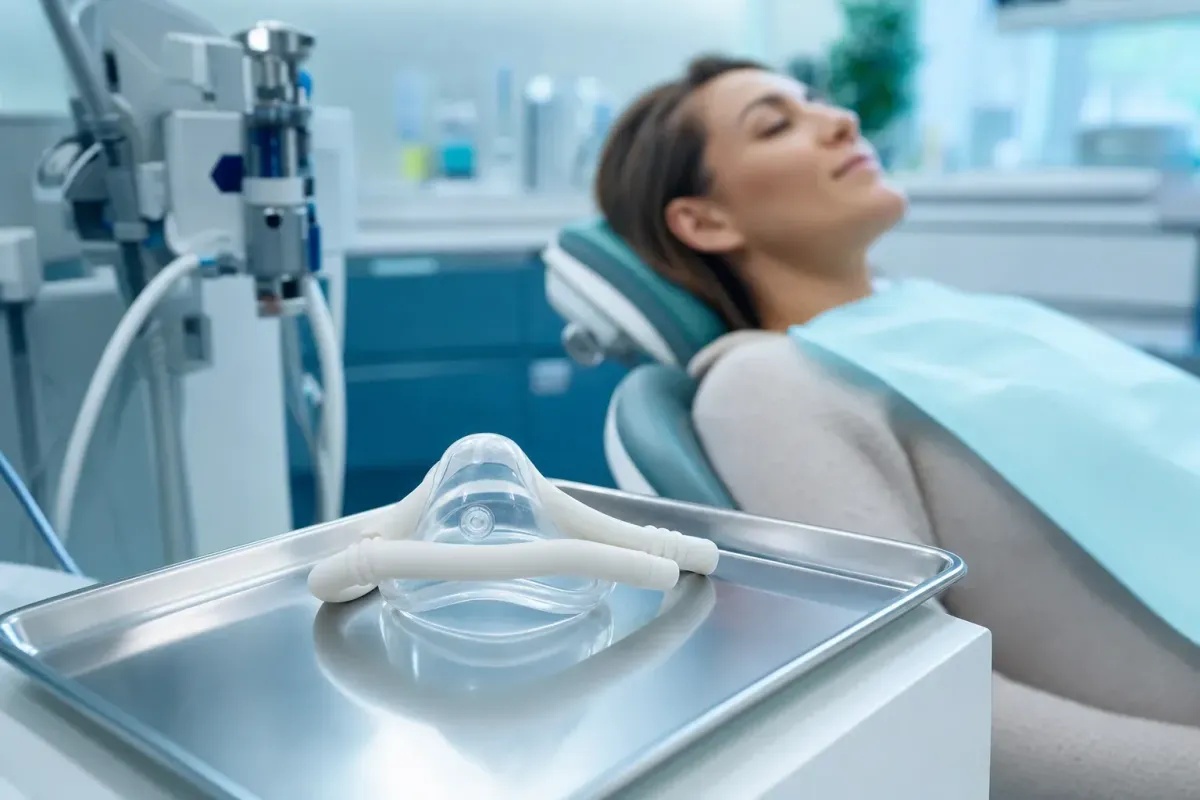
Nitrous oxide, often called laughing gas, is the workhorse of dental sedation. It is delivered as a nitrous oxide-oxygen mixture through a nasal mask, and its combination of speed, safety, and simplicity has made it the default inhalation option for generations of dentists.
An ADA survey estimated that roughly 70% of dental practices using any form of sedation employ nitrous oxide-oxygen sedation, making it the most common inhalation technique by a wide margin. Its appeal is easy to understand: it works within minutes, wears off within minutes, requires no needles or IV access, and carries a strong safety record. For the large population of patients with mild to moderate dental anxiety, detailed in our dental anxiety and phobia statistics, nitrous oxide is often the first and most appropriate step, gentle enough for routine use yet effective enough to get treatment done.

Source: Nitrous Oxide, ADA Oral Health Topics
See sedation record software
02 Success Rates and Effectiveness
Nitrous oxide's popularity is backed by strong effectiveness data. When measured across randomized trials, its success rate is high and consistent, especially for the mild-to-moderate anxiety it is designed to manage.
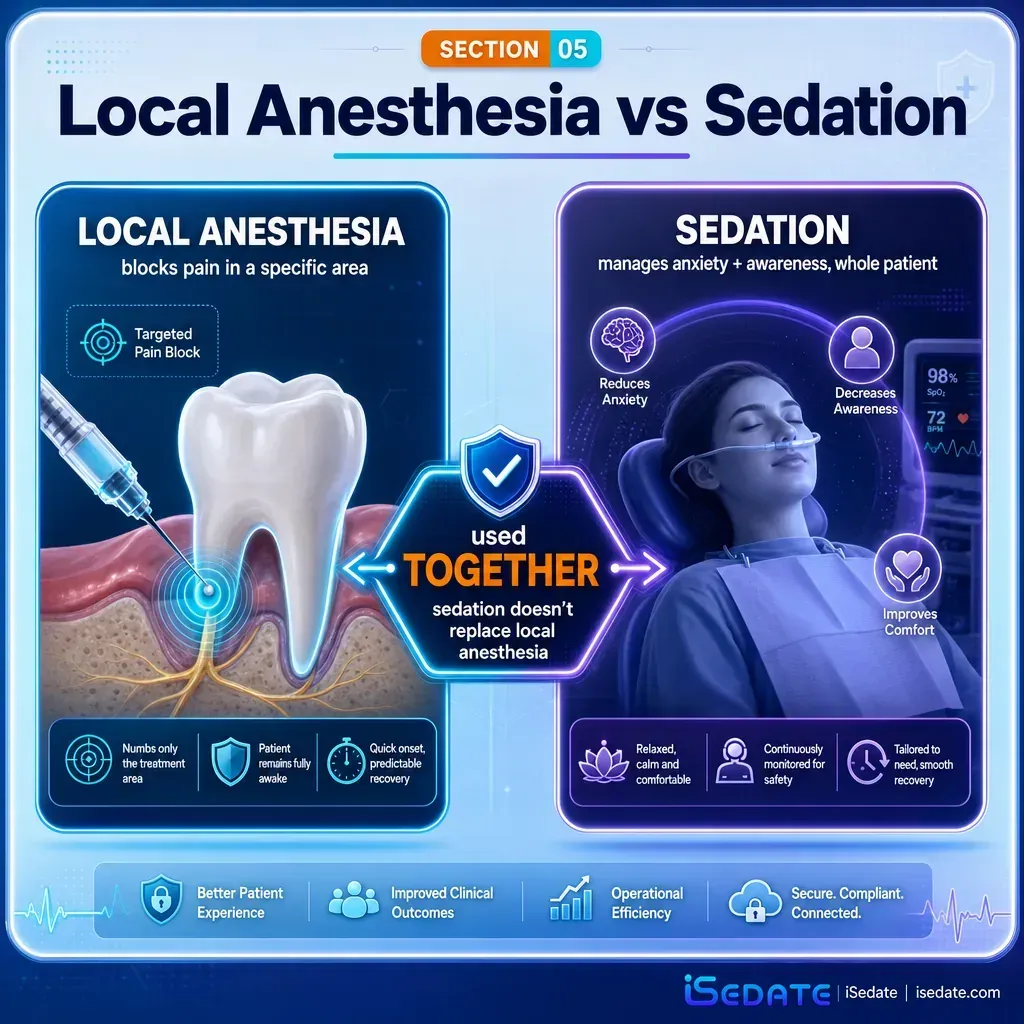
A systematic review and meta-analysis of nitrous oxide-oxygen inhalation sedation pooled 19 randomized and crossover trials covering 1,293 patients and found a cumulative mean success rate of 94.9%, with a 95% confidence interval of 88.8% to 98.9%. Effectiveness is strongest for mild to moderate anxiety and shorter procedures. Because nitrous provides both light sedation and a degree of analgesia, and because it complements local anesthesia rather than replacing it, it fits a broad range of routine dental treatment. Its main effectiveness limit is depth: it is an anxiolytic, not a route to deep sedation, so highly anxious patients or long, complex cases may still need oral or IV options.
Among the common sedation methods, nitrous sits between oral and IV on several measures. It has a faster onset than oral sedation and, unlike a swallowed pill, it can be titrated during treatment by adjusting the gas mixture. It does not reach the depth or produce the profound amnesia of IV sedation. In practice, this makes nitrous the middle option: more controllable than oral, gentler and lighter than IV. The fuller cross-method picture is in our oral sedation dentistry statistics and IV sedation dentistry statistics.

Source: Success rate of nitrous oxide-oxygen procedural sedation, meta-analysis (PubMed)
Compare with oral sedation data
03 Patient Safety and Recovery
For patients, nitrous oxide is about as safe as sedation gets. Its adverse event rate is low, its side effects are usually minor, and its recovery is fast and clean, which is a large part of why it is so widely trusted.
Across studies, patient adverse events with nitrous oxide are uncommon and generally minor, with reported rates often between about 2.5% and 4%, most commonly nausea. The delivery systems themselves are engineered for safety, incorporating at least 12 audio and visual safety features to help prevent the delivery of a hypoxic mixture and to maintain safe oxygen ratios. Recovery is a particular strength: because nitrous is eliminated through the lungs rather than metabolized, patients clear it quickly, and administering 100% oxygen at the end of the appointment speeds the return to baseline. This fast on-and-off profile is why patients can often drive themselves home, unlike after oral or IV sedation.
Not so. Nitrous is genuinely low-risk for patients, but safe use still depends on correct oxygen ratios, appropriate patient selection, and proper technique, and rare adverse events like nausea, oversedation, or diffusion hypoxia can occur. The same discipline that governs other sedation applies: monitor the patient, document the concentrations delivered and the patient's response, and maintain a complete record. A strong safety profile is the product of good practice, not a substitute for it.

Source: Nitrous oxide success and safety meta-analysis (NCBI) | ADA Oral Health Topics: Nitrous Oxide
See how SedationVault documents every case
04 Occupational Exposure: The Staff Side
Here is what sets nitrous oxide apart from every other sedation method: the risk is not only about the patient, it is also about the dental team breathing ambient gas day after day. This occupational dimension is unique to nitrous and deserves real attention.
The National Institute for Occupational Safety and Health recommends limiting chronic staff exposure to about 25 parts per million during administration, yet uncontrolled, unscavenged exposures have been measured above 1,000 ppm, and one study found a four- to eightfold increase in breathing-zone levels without scavenging. Chronic occupational exposure to unscavenged nitrous has historically been associated with reproductive effects, and with neurologic, kidney, and liver concerns, though authorities note that the risks with modern scavenging are less certain and a definitive safe ambient level has not been established. The consistent guidance from NIOSH, the ADA, and the AAPD is to keep ambient nitrous as low as practical using scavenging systems, high-volume suction, good ventilation, well-fitted masks, and periodic exposure monitoring.
Every sedation method has a patient safety profile. Nitrous oxide is the only common one that also has a staff safety profile, because the medication is a gas shared with the room. Consider the contrast: patient adverse events run around 2.5% to 4% and are usually trivial, while the occupational concern is chronic and cumulative, measured in parts per million over years. That means a nitrous practice has to manage two safety systems at once, clinical monitoring for the patient and environmental control for the team. It is a reminder that the safest-seeming techniques can carry the least obvious risks, and that documentation and protocol discipline protect everyone in the operatory, not just the person in the chair.
Sources: NIOSH nitrous oxide controls; ADA and AAPD occupational health policies; breathing-zone exposure study. Interpretation original to iSedate.

Source: Control of Nitrous Oxide in Dental Operatories (NIOSH/CDC) | Minimizing Occupational Health Hazards with Nitrous Oxide (AAPD)
See SedationVault for office managers
05 Where Nitrous Oxide Fits
Putting the data together, nitrous oxide occupies a clear and valuable position in the sedation toolkit. It is not the strongest option, and it is not meant to be, it is the fast, gentle, everyday choice for the most common anxiety cases.
Nitrous oxide is the right choice for patients with mild to moderate anxiety, for shorter and routine procedures, for children and adults alike, and for anyone who needs to drive themselves home afterward. Its titratability gives it more intraoperative control than oral sedation, while its gentleness and fast recovery make it lower-commitment than IV sedation. For the broader market and demand context behind all sedation options, see our sedation dentistry statistics overview. The through-line across every modality is the same: match the method to the patient, monitor throughout, and document completely.
Even the gentlest sedation deserves a complete record, and nitrous has the added dimension of concentrations delivered and patient response over time. iSedate's SedationVault captures live vitals from compatible monitors, including Edan, MindRay, Criticare, and more (the Edan X10 is a common example), and builds a continuous, audit-ready record for every sedation case, nitrous included. Consistent documentation supports patient safety, demonstrates the standard of care, and reinforces the protocol discipline that a nitrous practice needs on both the patient and the staff side.

Source: Nitrous oxide-oxygen procedural sedation success (JDAPM)
Book a Demo
06 Summary Table: Every Statistic
| Statistic | Figure | Source | Year |
|---|---|---|---|
| Sedation-using practices employing nitrous | ~70% | ADA survey | 2007 |
| Nitrous oxide-oxygen success rate (meta-analysis) | 94.9% | NOIS systematic review (JDAPM) | 2021 |
| Success rate confidence interval | 88.8-98.9% | NOIS systematic review (JDAPM) | 2021 |
| Patients pooled in the meta-analysis | 1,293 | NOIS systematic review (JDAPM) | 2021 |
| Trials pooled | 19 | NOIS systematic review (JDAPM) | 2021 |
| Typical patient adverse event rate | ~2.5-4% | Multiple studies | 2016-2021 |
| Delivery system safety features | 12+ | ADA | 2025 |
| NIOSH recommended exposure limit | 25 ppm | NIOSH/CDC | current |
| Uncontrolled exposure level exceeded | 1,000+ ppm | NIOSH/CDC | current |
| Breathing-zone increase, unscavenged vs scavenged | 4-8x | Occupational exposure study (NCBI) | study |
| Onset of effect | Within minutes | NOIS reviews | 2021 |
| Recovery | Rapid (lung elimination) | ADA / NOIS reviews | 2021 |
| Typical working concentration | ~30-70% N2O | Clinical reviews | 2021 |
| Mechanism | Anxiolysis + analgesia | Clinical reviews | 2021 |
| OSHA formal nitrous standard | None (guideline only) | ADA / OSHA | current |
07 Frequently Asked Questions
How common is nitrous oxide in dentistry?
How effective is nitrous oxide sedation?
Is nitrous oxide safe for dental patients?
How fast does nitrous oxide work and wear off?
Is nitrous oxide safe for the dental team?
All figures trace to peer-reviewed studies and authoritative bodies (ADA, NIOSH, AAPD). Patient adverse-event and success rates reflect the specific populations studied. Pediatric-specific nitrous data is addressed separately, as it differs from adult data. Occupational exposure guidance reflects current NIOSH recommendations; a formal OSHA standard for nitrous oxide does not exist. Sources include:
- "Success rate of nitrous oxide-oxygen procedural sedation in dental patients: systematic review and meta-analysis" (JDAPM, 2021)
- American Dental Association, Oral Health Topics: Nitrous Oxide (prevalence, safety features)
- NIOSH/CDC, "Control of Nitrous Oxide in Dental Operatories" (exposure limits and controls)
- AAPD, "Policy on Minimizing Occupational Health Hazards Associated with Nitrous Oxide"
- "Nitrous oxide and occupational exposure" breathing-zone study (NCBI)
- Hennequin et al., Kalinox 50% nitrous/oxygen premix efficacy and safety trial (Clinical Oral Investigations)
Nitrous oxide is gentle for patients and demands protocol discipline for staff, and both are served by complete records. iSedate's SedationVault captures live vitals and builds an audit-ready record for every sedation case. To see how it works in your practice, book a demo.