







Dental Sedation Permit & Licensing Statistics (2026): Levels, State Variation, and Trends
Dental sedation is regulated almost entirely at the state level, built around the ADA's four sedation depths but implemented through a patchwork of permits that vary widely from state to state. A 2025 study became the first to track permit trends across states, and it found regulations actively shifting as boards tighten oversight. The data below covers permit levels, how much requirements vary, renewal and inspection rules, and where the trends are heading.
- The ADA defines four sedation levels: minimal, moderate, deep sedation, and general anesthesia, plus five administration routes.
- State dental boards hold full authority over sedation licensing; federal agencies do not define levels or permits.
- Most states group deep sedation and general anesthesia under one permit due to similar training needs.
- Minimal sedation (anxiolysis) often requires no separate permit in many states.
- Parenteral (IV) moderate sedation commonly requires about 60 didactic hours plus 20 supervised patients.
- Most permits renew every 2 to 3 years, with ACLS or PALS required and inspections common for deeper levels.
- A 2025 study was the first to track permit trends across states, finding regulations actively shifting.
What's in This Guide
01 The Permit Framework
Sedation permitting starts from a shared national vocabulary but is implemented locally. Understanding the framework, the levels and routes that permits are built around, is the foundation for everything else.
The American Dental Association classifies sedation into four depths: minimal sedation, which maintains consciousness with unaffected airway function; moderate sedation, a depressed consciousness with purposeful responses; deep sedation, which further depresses consciousness with possible airway impairment; and general anesthesia, a complete loss of consciousness often requiring ventilatory support. The ADA also recognizes five administration routes: inhalation, enteral, parenteral, transdermal, and transmucosal. State boards build their permits on this framework, and most group deep sedation and general anesthesia under a single permit because the required training in airway management, monitoring, and emergency preparedness is similar. The distinction between levels is defined by the patient's physiologic response, not merely the drug or route, which mirrors the anesthesia continuum discussed in our general anesthesia in dentistry statistics.

See how SedationVault supports compliance
02 How Much States Vary
The single most important fact about sedation permitting is that it is not national, it is state by state, and the variation is substantial. This is where many practices encounter unexpected complexity, especially when providers move or practice across state lines.
Because state dental boards carry full authority over the licensing and regulation of dental anesthesia, the criteria for the same level of care can look similar in one state and significantly different in another. Some states allow dentists to perform IV moderate sedation with defined training, while others require more advanced education and facility inspections for that same level. Terminology varies too: what one state calls moderate sedation another may call conscious sedation, and permit structures differ, with some states using named classes (for example, Class II-Enteral, Class II-Parenteral, and a combined Class III) and others using numbered levels. This variation means a dentist must verify their specific state's rules before providing any level of sedation, and it complicates efforts to compare the workforce nationally, a challenge explored in our dental anesthesiology workforce statistics.
It generally does not. Because each state board sets its own requirements, terminology, and permit structure, a dentist who moves or practices across state lines typically must obtain a permit under the new state's rules, which may demand different training documentation, additional coursework, or a facility inspection. Assuming a permit transfers is a real compliance risk. The safe approach is to treat every state as its own system and verify the specific requirements with that state's dental board before providing sedation there.

Source: Anesthesia Privileges and Applications (Texas State Board of Dental Examiners) | Permit to Administer Anesthesia or Conscious Sedation (Wisconsin DSPS)
See the workforce data
03 Training and Requirements
Despite the variation, the training requirements share a common backbone rooted in ADA guidelines. Knowing the typical thresholds helps clarify what earning a permit actually involves.
Most state requirements are anchored to the ADA's Guidelines for Teaching Pain Control and Sedation to Dentists and Dental Students. For parenteral, or IV, moderate sedation, a common standard is roughly 60 hours of didactic instruction plus the supervised management of at least 20 patients, along with demonstrated competency in managing a compromised airway. Enteral (oral) moderate sedation typically requires fewer hours, often in the range of 16 to 24 hours plus a smaller number of case experiences. General anesthesia permits generally demand completion of an accredited advanced education program with a minimum of one year of anesthesia training. Across levels, current ACLS or PALS certification is a near-universal requirement, and a central competency is the ability to rescue a patient who slips into a deeper level of sedation than intended.
A theme running through nearly every state's rules is that a permit holder must be able to rescue a patient from one level deeper than they intended to provide. Because sedation is a continuum and individual responses vary, a patient given moderate sedation can unintentionally reach deep sedation. State regulations require that if this happens, the dentist stop the procedure until the patient returns to the intended level, and they must have the training and equipment to manage that deeper state safely. This is a core reason permits are tied to specific competencies, not just paperwork.

Source: Requirements for a moderate sedation permit (Virginia Administrative Code) | Moderate Sedation, 22 Tex. Admin. Code § 110.5 (Cornell LII)
See anesthesia record software
04 Renewal, Inspection, and Enforcement
A permit is not a one-time achievement, it is an ongoing obligation with renewal, continuing education, inspection, and enforcement components. This is where documentation and compliance meet the regulatory system most directly.
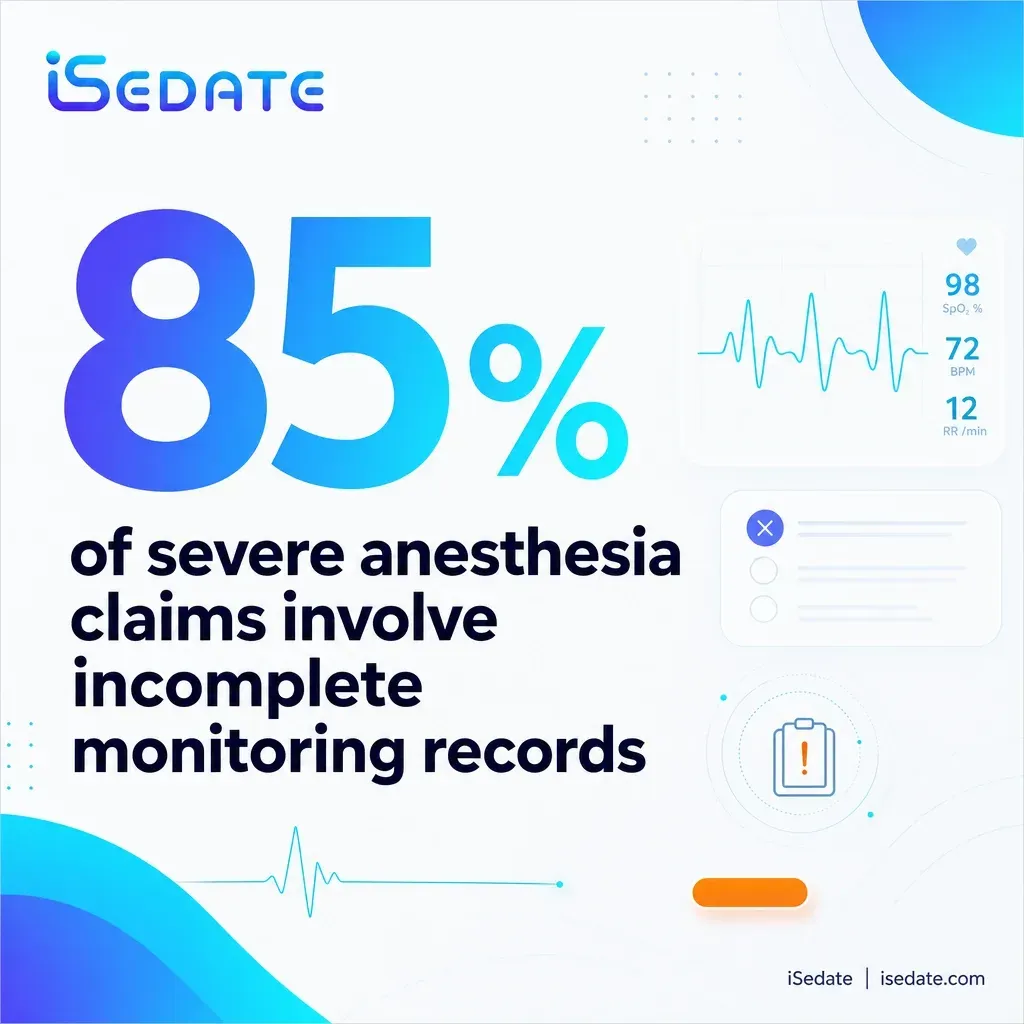
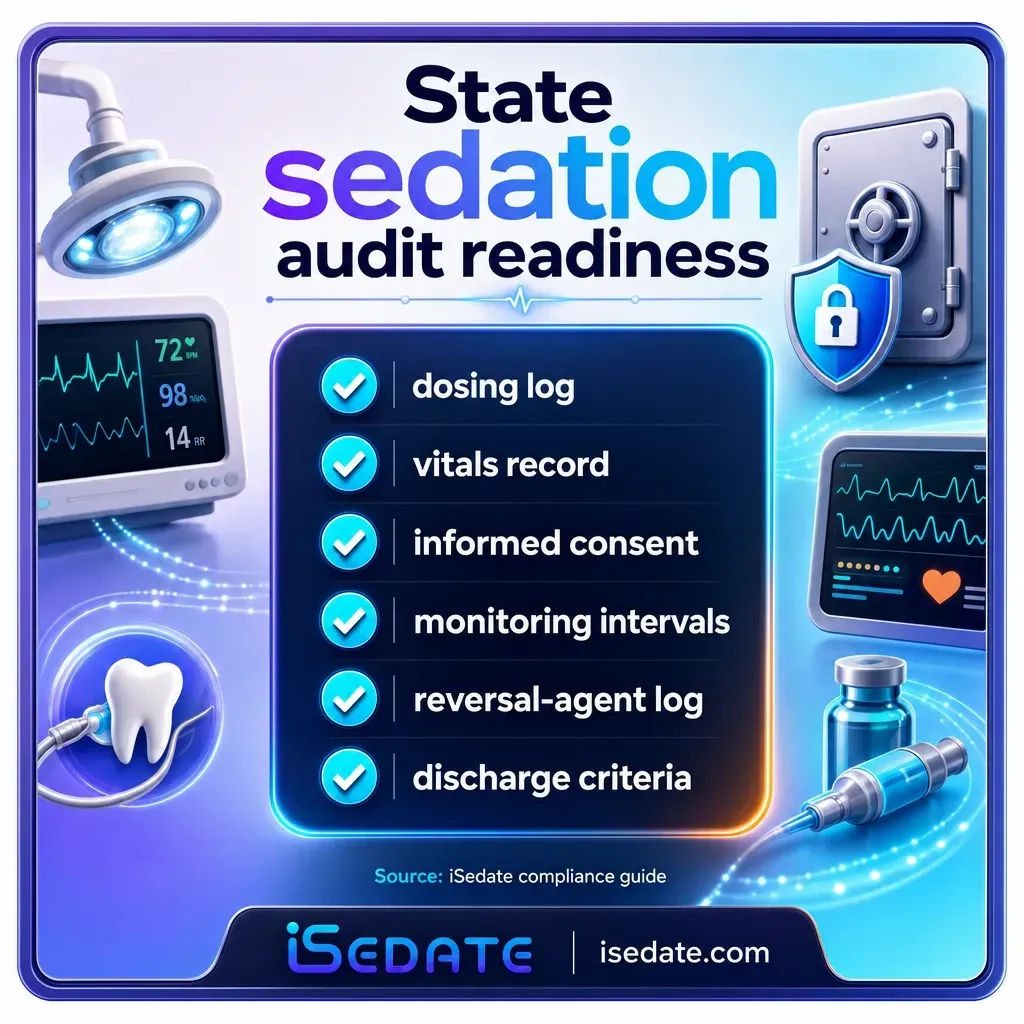
Most states require sedation permits to be renewed every two to three years, with continuing education directly related to anesthesia, airway management, pharmacology, or emergency care, and maintenance of current ACLS or PALS certification. Facility inspections are common, particularly for deep sedation and general anesthesia permits; some states, for example, require an inspection within a year of issuing a new higher-level permit. On the enforcement side, incomplete documentation is repeatedly cited as one of the most common violations nationwide, along with missing monitoring intervals or recovery criteria, lapsed life-support certification, and administering a deeper level of sedation than a permit authorizes. This enforcement reality connects directly to the board-audit and compliance data in our board audit and sedation compliance statistics, complete, contemporaneous records are the strongest protection against the most common violations.

Source: Anesthesia & Sedation Requirements (Iowa DIAL) | Administration of Anesthetic Agents for Dental Procedures (Washington DOH)
See secure, compliant records
05 The Trends: Tightening Oversight
Sedation regulation is not static. Recent research shows it is actively evolving, generally in the direction of more oversight, more specific requirements, and closer attention to higher-risk populations.
A 2025 study was the first to longitudinally analyze dental sedation permit trends across multiple U.S. states from 2015 to 2023, and it documented meaningful shifts, including California's rise in deep sedation and general anesthesia permits from 2.19% to 3.16% of dentists and the introduction of a specific minimal sedation permit there in 2023. The study also highlighted how incomplete and inconsistent state records make national comparison difficult, with only a handful of states able to provide complete multi-year data for each permit level. A clear direction of travel is tighter pediatric oversight: several states have recently introduced pediatric sedation endorsements with additional training and case-documentation requirements, reflecting heightened concern for the population detailed in our pediatric sedation statistics. The overall pattern is one of steadily tightening oversight in response to growth in sedation use and awareness of its risks.
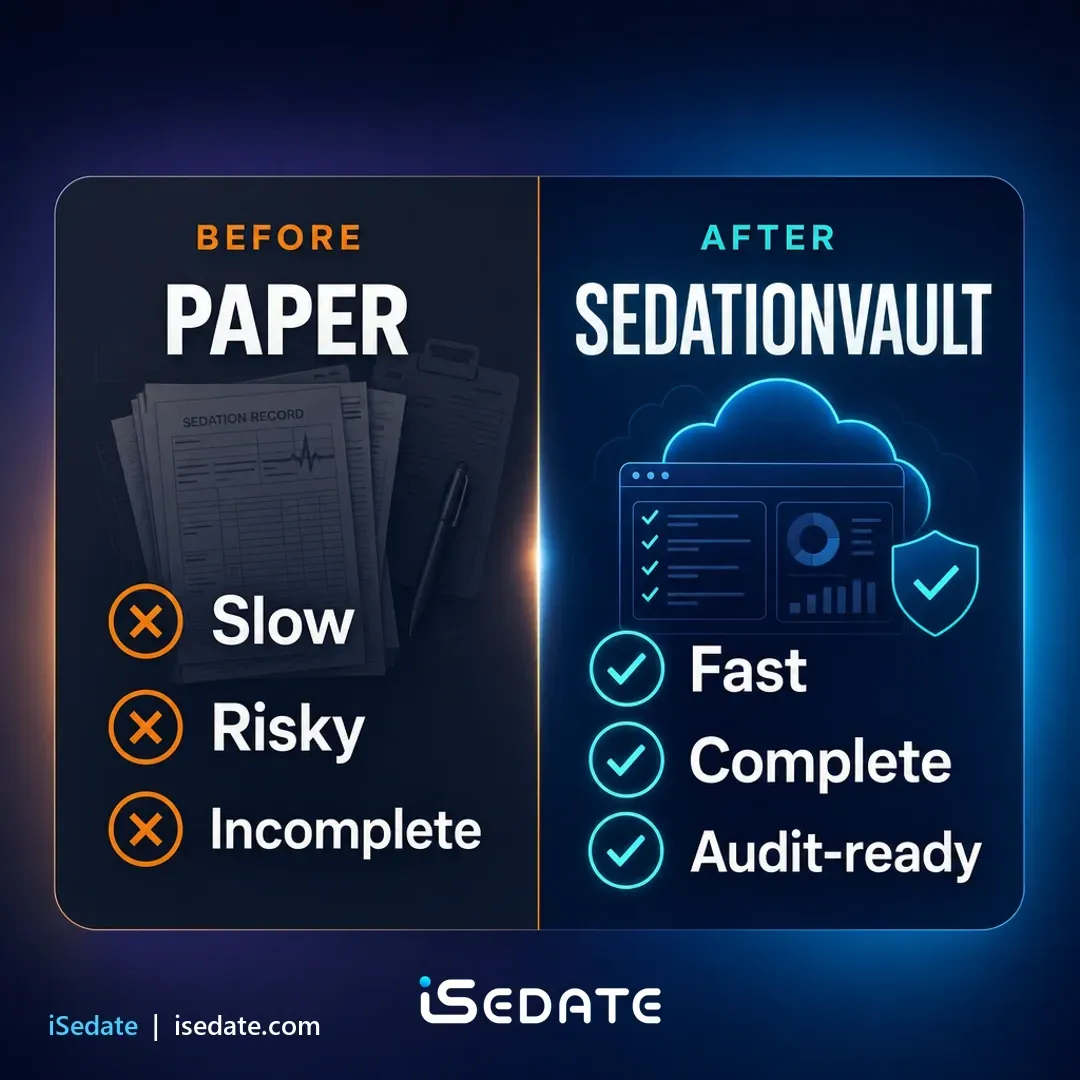
Look at what the trends have in common. New pediatric endorsements require documented case logs. Inspections check for required records. The most-cited violation is incomplete documentation. Renewal demands evidence of continuing education and current certification. Nearly every direction that sedation regulation is moving increases the amount and rigor of documentation a practice must produce and retain. That makes documentation capacity a strategic asset, not a clerical afterthought: the practices best positioned for tightening oversight are the ones for whom complete, audit-ready records are automatic rather than effortful. As regulation converges on documentation, the systems that produce it become the difference between friction and confidence at renewal, inspection, and audit.
Sources: 2025 multi-state permit trends study; state board regulations and inspection rules. Interpretation original to iSedate.

Book a Demo
06 Summary Table: Every Statistic
| Statistic | Figure | Source | Year |
|---|---|---|---|
| ADA sedation depth levels | 4 | ADA classification | current |
| ADA-recognized administration routes | 5 | ADA classification | current |
| Regulatory authority over sedation permits | State boards | State dental boards | current |
| Typical parenteral (IV) moderate didactic hours | ~60 | State regulations (VA, TX, IA) | current |
| Supervised patients for parenteral moderate permit | ~20 | State regulations (VA, TX, IA) | current |
| Enteral (oral) moderate didactic hours | ~16-24 | State regulations (WA, TX) | current |
| General anesthesia advanced training | ≥1 year | State regulations (IA) | current |
| Life support certification required | ACLS or PALS | State regulations | current |
| Typical permit renewal cycle | 2-3 years | Multi-state review | current |
| Minimal sedation permit requirement | Often none | State regulations (IA, WI) | current |
| States providing complete moderate-sedation data | 11 | Permit trends study | 2025 |
| States providing complete deep/GA data | 10 | Permit trends study | 2025 |
| States providing complete minimal-sedation data | 4 | Permit trends study | 2025 |
| California deep sedation/GA permit share change | 2.19% to 3.16% | Permit trends study | 2025 |
| Most cited sedation violation type | Incomplete documentation | Compliance reviews | current |
07 Frequently Asked Questions
Do dentists need a permit to provide sedation?
What are the levels of dental sedation permits?
How much do sedation permit requirements vary by state?
How often are sedation permits renewed and are offices inspected?
Are sedation permit rules changing?
All figures trace to state dental board regulations, ADA classifications, and a peer-reviewed permit-trends study. Because sedation licensing is state-specific, training hours, permit names, and renewal rules described here are common patterns and representative examples, not universal rules; every state sets its own requirements, and dentists must verify their own state's regulations. Sources include:
- "Trends in Dental Sedation Permits in Select U.S. States, 2015-2023" (Journal of the California Dental Association, 2025)
- ADA classification of sedation levels and administration routes; ADA Guidelines for Teaching Pain Control and Sedation
- State dental board regulations and applications: Texas (TSBDE), Virginia, Iowa, Washington, Wisconsin, California
- 22 Tex. Admin. Code § 110.5 (moderate sedation) via Cornell Legal Information Institute
- 18VAC60-21-290 (Virginia moderate sedation permit requirements)
As sedation oversight tightens, complete and audit-ready documentation is the strongest protection at renewal, inspection, and audit. iSedate's SedationVault captures live vitals and builds an audit-ready record for every sedation case. To see how it works in your practice, book a demo.