






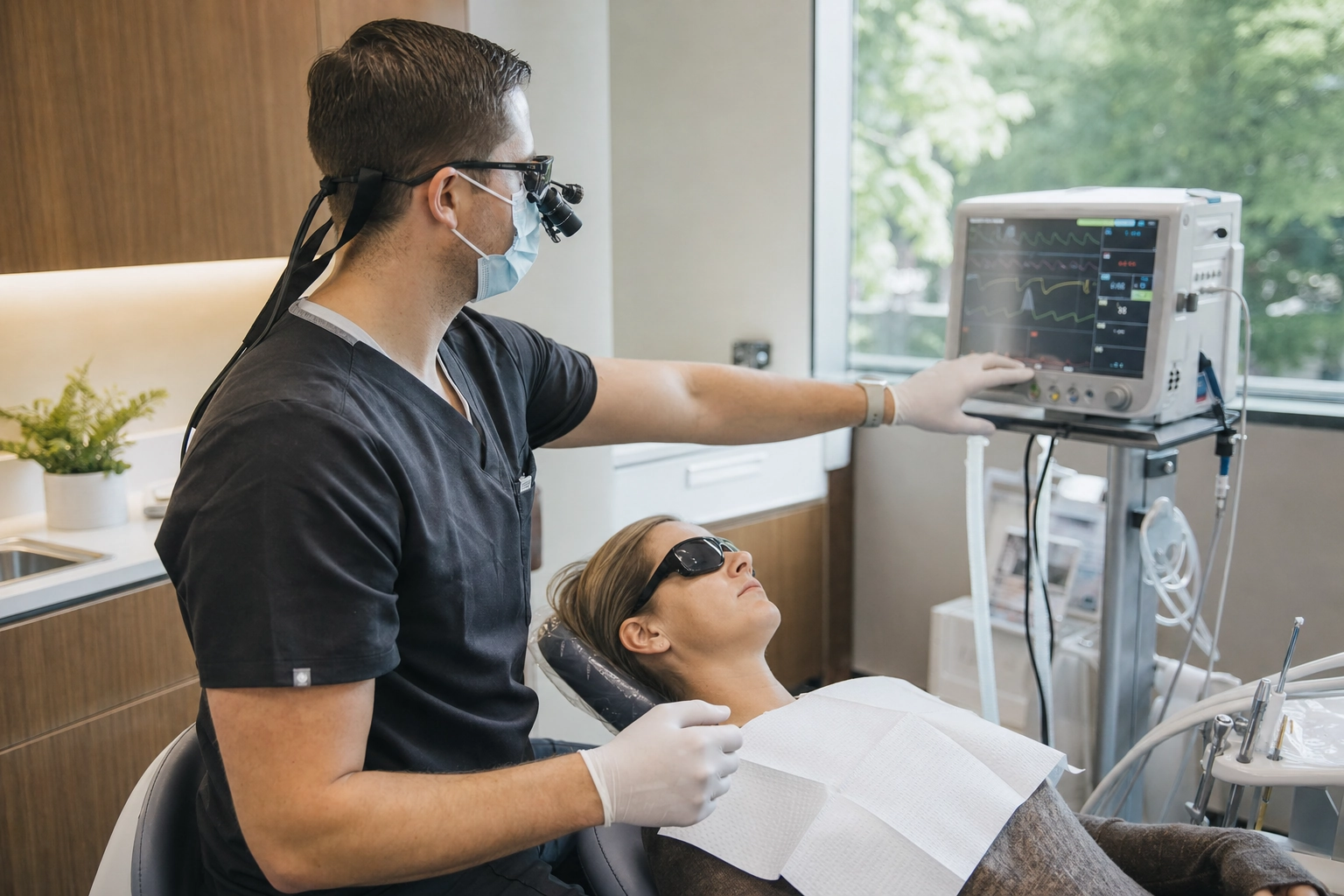
Wisconsin Sedation Dentistry Licensing & Permit Requirements
In Wisconsin, your dental license alone does not let you sedate a patient. Any dentist who provides moderate (conscious) sedation, IV sedation, deep sedation, or general anesthesia must first add the matching sedation specialty to their credential through the Dentistry Examining Board within the Department of Safety and Professional Services (DSPS), under Wisconsin Administrative Code Chapter DE 11. Getting the permit means clearing the training, certification, and clinical-case bar for your class. Keeping it means your anesthesia records survive a board review. This guide walks both halves: how a Wisconsin dentist earns a sedation permit, and what it takes to keep it.
Recent Updates
Last UpdatedNovember 16, 2026
- Verified every permit class, training figure, and record rule against Wis. Admin. Code Chapter DE 11 and the Wisconsin DSPS Dentistry Examining Board.
- Confirmed the top-tier permit name: Wisconsin calls it the Class III moderate or deep sedation permit (covers general anesthesia).
- Added the verified renewal answer: a sedation permit renews automatically at license renewal with no separate sedation CE required.
- Replaced general board links with the specific requirements, application, and adverse-occurrence pages a dentist actually needs.
Key Takeaways
- Wisconsin adds sedation to a dental credential in three classes under Chapter DE 11: Class II - Enteral (oral moderate sedation), Class II - Parenteral (IV moderate sedation), and Class III (moderate or deep sedation and general anesthesia). Nitrous oxide alone needs no permit.
- Most general dentists work at Class II - Enteral Conscious Sedation; oral surgeons and sedation-trained dentists add Class II - Parenteral. Class III is largely the province of dental anesthesiologists and oral and maxillofacial surgeons.
- The jump to IV: Class II - Enteral needs an 18-hour program and 20 cases (3 live in person); Class II - Parenteral needs a 60-hour program and 20 individually managed in-person cases. Both require current ACLS or PALS.
- Wisconsin requires a time-oriented anesthesia record with vitals recorded in 5-minute intervals for moderate, deep, and general sedation (DE 11.09(9)), a tighter cadence than many states.
- The permit renews automatically at license renewal with no extra sedation CE, but the board can review your records, and incomplete records are where permits get challenged.

What This Guide Covers
- Who issues sedation permits in Wisconsin
- The three Wisconsin permit classes
- How to earn or upgrade each permit
- How to apply: forms, portal, and fees
- What the permit requires you to monitor
- Records and reporting tied to your permit
- Renewal, CE, and keeping the permit
- Staying audit-ready
- Frequently asked questions
- Related guides and neighboring states
- Sources
Who issues sedation permits in Wisconsin
Sedation dentistry in Wisconsin is regulated by the Dentistry Examining Board, which sits within the Department of Safety and Professional Services (DSPS). The board, not any national association, licenses dentists, grants every sedation permit, reviews anesthesia records, and takes disciplinary action. The rules live in Wisconsin Administrative Code Chapter DE 11, "Anesthesia and Sedation", and every requirement below traces to a section of that chapter. Chapter DE 11 was reorganized by the Register of April 2024, No. 820, so when you cite a subsection, check the current numbering against the live code.
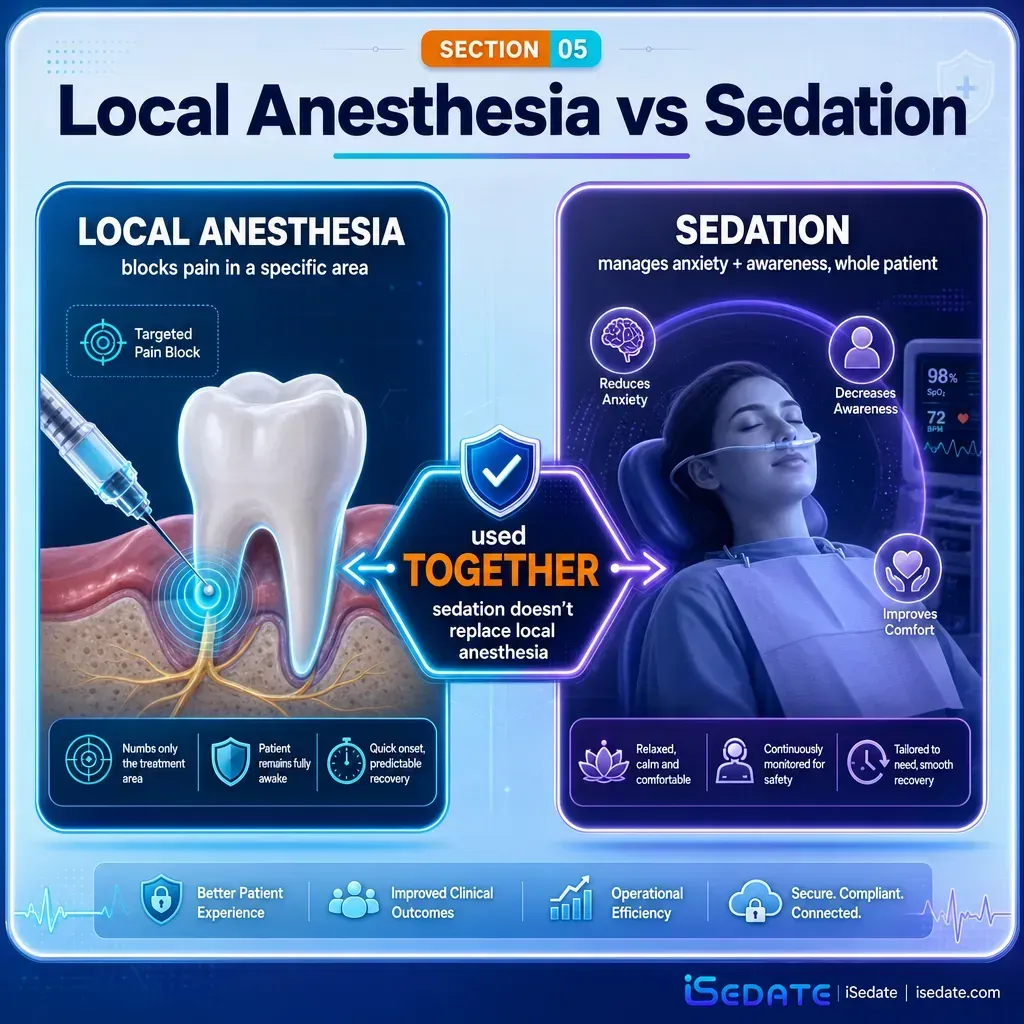
Wisconsin treats sedation as a specialty added to your dentist credential, not a standalone license. A dentist who wants to sedate applies to add the Class II - Enteral, Class II - Parenteral, or Class III specialty to an existing Wisconsin dental license. Minimal sedation does not require a board permit; moderate sedation, deep sedation, and general anesthesia all do.
Important
The ADA writes a standard; the board writes the law. The American Dental Association publishes sedation guidelines that Wisconsin and most states lean on, but the ADA is a private professional association, not a government agency. It does not license you, audit you, or discipline you. Your permit, your record reviews, and any sanctions all come from the Dentistry Examining Board under Chapter DE 11. Federal layers that do apply sit elsewhere: the DEA governs your controlled-substance logs, and HIPAA governs patient-record privacy. Treat the ADA guidelines as best practice and Chapter DE 11 as the rule you are held to.
Source: Wisconsin DSPS Dentistry Examining Board, Dentist profession page | Wis. Admin. Code Ch. DE 11
The three Wisconsin permit classes
Wisconsin names its sedation permits by class, and the class reflects how deeply the patient is sedated and by which route, not just which drug is used. Here is the ladder, from the lightest form up to the top tier.
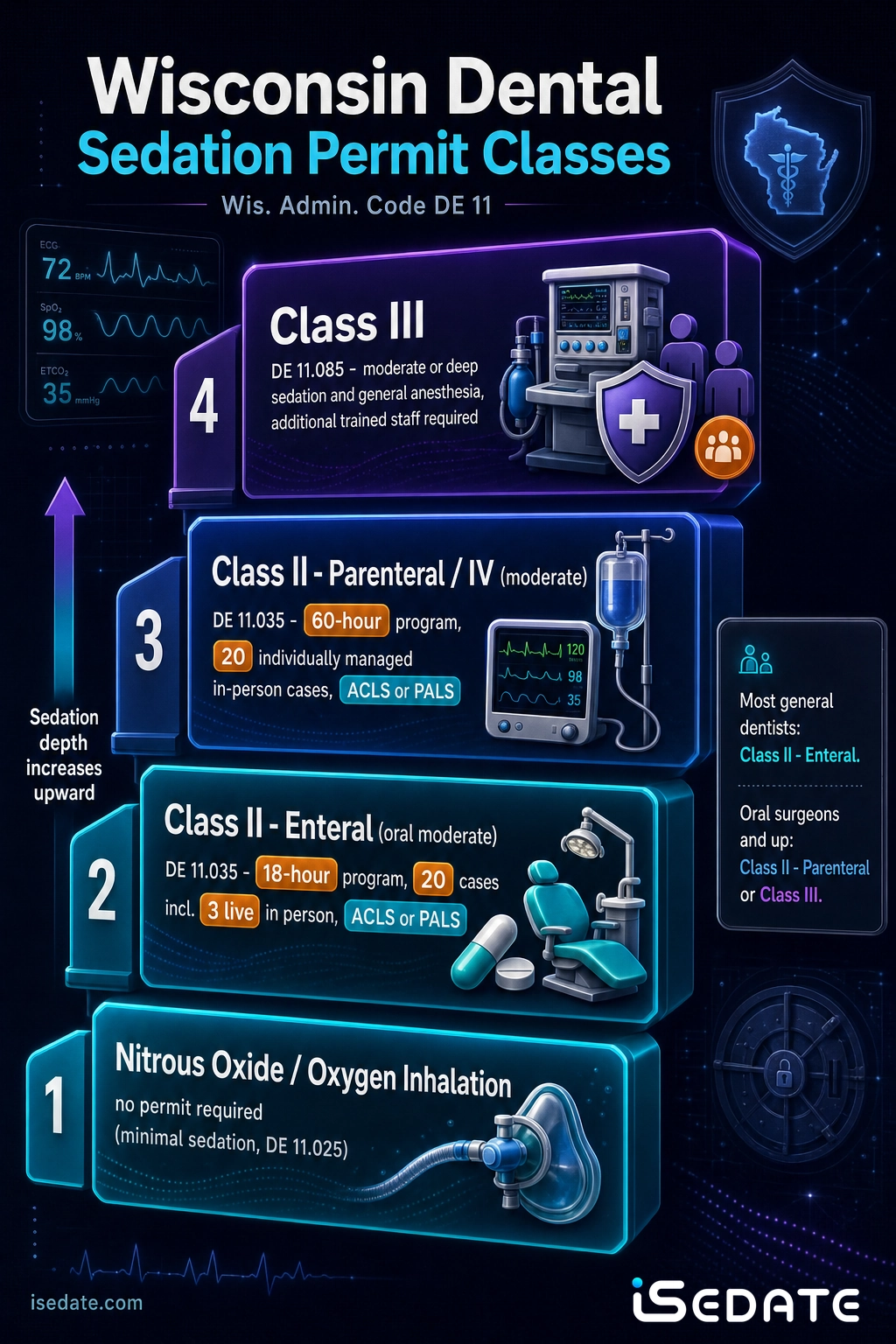
Nitrous oxide and oxygen inhalation (no permit required). The entry point. Nitrous oxide on its own is minimal sedation, where the patient stays fully responsive, and minimal sedation does not require a board permit under Wis. Admin. Code DE 11.025(1). It is still governed by the standard of care. If nitrous is combined with a sedative and the patient drifts deeper, DE 11.03 requires the dentist to stop until the patient returns to a level the dentist is permitted to provide.
Class II - Enteral permit. Authorizes moderate, or "Conscious Sedation," by the enteral route, meaning oral or other non-injection routes. The patient responds purposefully to verbal or tactile stimulation and keeps their own airway. This is the workhorse permit for general dentists who provide real oral conscious sedation.
Class II - Parenteral permit. Authorizes moderate sedation that includes the parenteral route, that is, IV sedation and other injected routes. Because IV titration carries a faster onset and higher risk, the Parenteral permit sits above the Enteral permit and carries a heavier training and clinical-case bar. A Parenteral permit holder does not also need the Enteral permit. This is where oral surgeons and sedation-trained dentists typically operate.
Class III permit. The top tier. The Class III moderate or deep sedation specialty covers moderate or deep sedation, general anesthesia, and conscious sedation by both the parenteral and enteral routes, where the patient may not be easily aroused or may be unconscious and need airway support. A Class III holder needs no other sedation permit. In practice this class is largely held by dental anesthesiologists and oral and maxillofacial surgeons, and its extra staffing rules sit in DE 11.085.
Wisconsin Sedation Permit Classes at a Glance
- Nitrous oxide / minimal sedation: no board permit (DE 11.025(1)).
- Class II - Enteral: oral moderate (conscious) sedation.
- Class II - Parenteral: IV and other parenteral moderate sedation.
- Class III: moderate or deep sedation and general anesthesia.
- Governing chapter: Wis. Admin. Code DE 11 (DE 11.025, 11.035, 11.085, 11.09).
Source: DSPS Conscious and Deep Sedation Specialties | Wis. Admin. Code DE 11.035
How to earn or upgrade each permit
Each class has its own bar to clear: a training path, current life-support certification, and, for the education route, a count of managed clinical cases. You move up the ladder by meeting the next class's requirements and applying to the board. The figures below come from Chapter DE 11 and the board's specialty page.
| Permit | Route / depth | Education route | Clinical cases | Life support |
|---|---|---|---|---|
| Nitrous oxide (no permit) | Inhalation, minimal | Standard of care | Not applicable | Standard of care |
| Class II - Enteral (DE 11.035(1)) | Enteral (oral), moderate | 18-hour board-approved program | 20 cases, incl. 3 live in person | ACLS or PALS |
| Class II - Parenteral (DE 11.035(2)) | Parenteral / IV, moderate | 60-hour board-approved program | 20 individually managed, all in person | ACLS or PALS |
| Class III (DE 11.085) | Deep sedation / general anesthesia | OMS residency, ABOMS, ADBA, or dental-anesthesiology residency | Via the qualifying residency / board route | ACLS or PALS; added staff required |
Class II - Enteral: oral conscious sedation
To add a Class II - Enteral permit, the education route requires a board-approved program of at least 18 hours in the administration and management of moderate sedation, plus 20 clinical cases, of which at least 3 must be live in-person experiences (the rest may be simulation or video), under DE 11.035(1). One case must cover returning a patient from deep to moderate sedation. You may instead qualify through board certification or an accredited residency. This permit lets you provide genuine oral Conscious Sedation but stops short of IV.
Class II - Parenteral: adding IV sedation
Upgrading to a Class II - Parenteral permit is the biggest step a general dentist or oral surgeon takes. The education route requires a board-approved program of at least 60 hours plus 20 individually managed clinical cases, and all 20 must be completed in person, under DE 11.035(2). The clinical requirement jumps from the enteral permit's 3 live cases to 20 fully in-person cases, because IV titration demands hands-on competence a classroom cannot replicate.
Life support: ACLS or PALS for every class
Every sedation class requires current certification in Advanced Cardiovascular Life Support (ACLS) or Pediatric Advanced Life Support (PALS) from an American Heart Association-compliant course, under DE 11.025. PALS is required if you treat patients 12 and under; a dentist treating both children and adults may satisfy the rule with PALS. Auxiliary staff must hold basic life support certification under DE 11.085(1).
Source: Wis. Admin. Code DE 11.035 | DE 11.025 (life support certification)
How to apply: forms, portal, and fees
You add a sedation specialty to an existing Wisconsin dental credential, so the application runs through the DSPS, not a separate licensing body. The board's Conscious and Deep Sedation Specialties page lays out the documents by class. Every applicant submits verification of any existing sedation credential and proof of current ACLS or PALS. The education route is documented on Form 2758, the Anesthesia or Conscious Sedation Education Verification Form, which a third party completes, with patient information redacted from any anesthesia records you submit.
Applications are filed online through the state's LicensE credentialing portal. On an existing dentist credential you open My Licenses, choose "Add Specialty," enter your certification and license history, select your sedation class, answer the declarations, upload the supporting documents, and pay the fee. After you submit, you receive a reference number for status lookups, and review typically takes around 10 days. The board does not publish a fixed sedation fee on the rules page, so confirm the current application fee on the DSPS Credential Fees and Renewal Dates page before you file. Veterans fee waivers and initial-credential fee reductions may apply.
iSedate Pro Tip
Gather your Form 2758 and life-support cards before you open the application. The most common delay is a missing education-verification form or an expired ACLS or PALS card. Having the third-party verification completed and your certification current when you submit keeps the application out of "pending applicant input," where it waits on you.
Source: DSPS Conscious and Deep Sedation Specialties (application and forms)

What the permit requires you to monitor
A permit is permission plus obligation. Once you hold a moderate sedation permit, DE 11.09(3) requires the dentist to continuously monitor and evaluate the patient across a broad set of parameters, and the same list applies to moderate sedation, deep sedation, and general anesthesia alike:
- Consciousness: level of consciousness, continually assessed.
- Oxygenation: blood oxygen saturation by pulse oximetry, plus the color of mucosa, skin, or blood.
- Ventilation: chest excursions, end-tidal carbon dioxide, and breath sounds auscultated with a precordial or pretracheal stethoscope.
- Circulation: heart rate and rhythm by electrocardiogram, plus blood pressure and respiration rate.
- Temperature: body temperature whenever agents that can trigger malignant hyperthermia are administered.
Wisconsin's monitoring list is notably thorough: electrocardiogram, end-tidal carbon dioxide, and a precordial or pretracheal stethoscope are all named for moderate sedation, not reserved for deep sedation alone. For the full clinical breakdown of what to monitor and chart at each depth, see our companion guide on Wisconsin Sedation Vitals Monitoring, Charting & Reporting Requirements, and the national overview in our Sedation Dentistry Licensing & Permit Requirements by State hub.
Source: Wis. Admin. Code DE 11.09(3)
Records and reporting tied to your permit
Holding a permit also means holding a set of documentation duties, and those duties are exactly what a board review examines.
The time-oriented anesthesia record. Under DE 11.09(9), a time-oriented anesthesia record must be maintained for moderate sedation, deep sedation, and general anesthesia. It must include the date, the names of all drugs administered, their dosages, the methods of administration, and the monitored physiological parameters. Heart rate, respiratory rate, blood pressure, pulse oximetry, and end-tidal carbon dioxide must be recorded in 5-minute intervals, and the record must state the duration of the procedure and the individuals present.
Staffing you must be able to prove. For general anesthesia and deep sedation, DE 11.085(3) requires two additional individuals present during the procedure, and where the dentist also performs the procedure, one auxiliary staffer must be designated only to monitor the patient under DE 11.085(4). Because the record must list the individuals present under DE 11.09(9), the anesthesia record is where you demonstrate that the required staffing was actually in the room.
Adverse-occurrence reporting. Sedation-related adverse occurrences are reported under DE 11.10, and the board provides Form 2764, the procedure for reporting adverse occurrences related to anesthesia administration. Rule violations can lead to disciplinary action by the Dentistry Examining Board. The specific triggers, timelines, and penalty schedule are administered by the DSPS, so confirm the current reporting window and process with the board.
Myth, Busted
Myth: You have to complete separate sedation CE every renewal to keep a Wisconsin sedation permit.
Fact: Once granted, the permit renews automatically at the time of your dental license renewal with no further sedation education required.
You still meet the general dentist CE requirement and keep ACLS or PALS current, but there is no standalone sedation-CE hurdle to re-clear each cycle.
Source: Wis. Admin. Code DE 11.09(9) | DE 11.10 (adverse occurrences)
Renewal, CE, and keeping the permit
This is the part most dentists get wrong in both directions. Wisconsin does not make you re-qualify your sedation permit every cycle: once granted, it renews automatically when you renew your dental license, and the board does not require additional sedation education to keep it. What you do owe is the general dentist continuing-education requirement, which the board sets at 30 credit hours per two-year cycle, at least 25 of them clinical, with CPR and AED certification current. The renewal period runs from October 1 of an odd-numbered year through September 30 of the next odd-numbered year.
The practical takeaway: keep your ACLS or PALS certification and your general CE current, and the permit itself rides along with your license. Where dentists actually lose ground is not CE, it is the records a board review pulls.
Source: DSPS Dentist profession page (CE and renewal)
Staying audit-ready
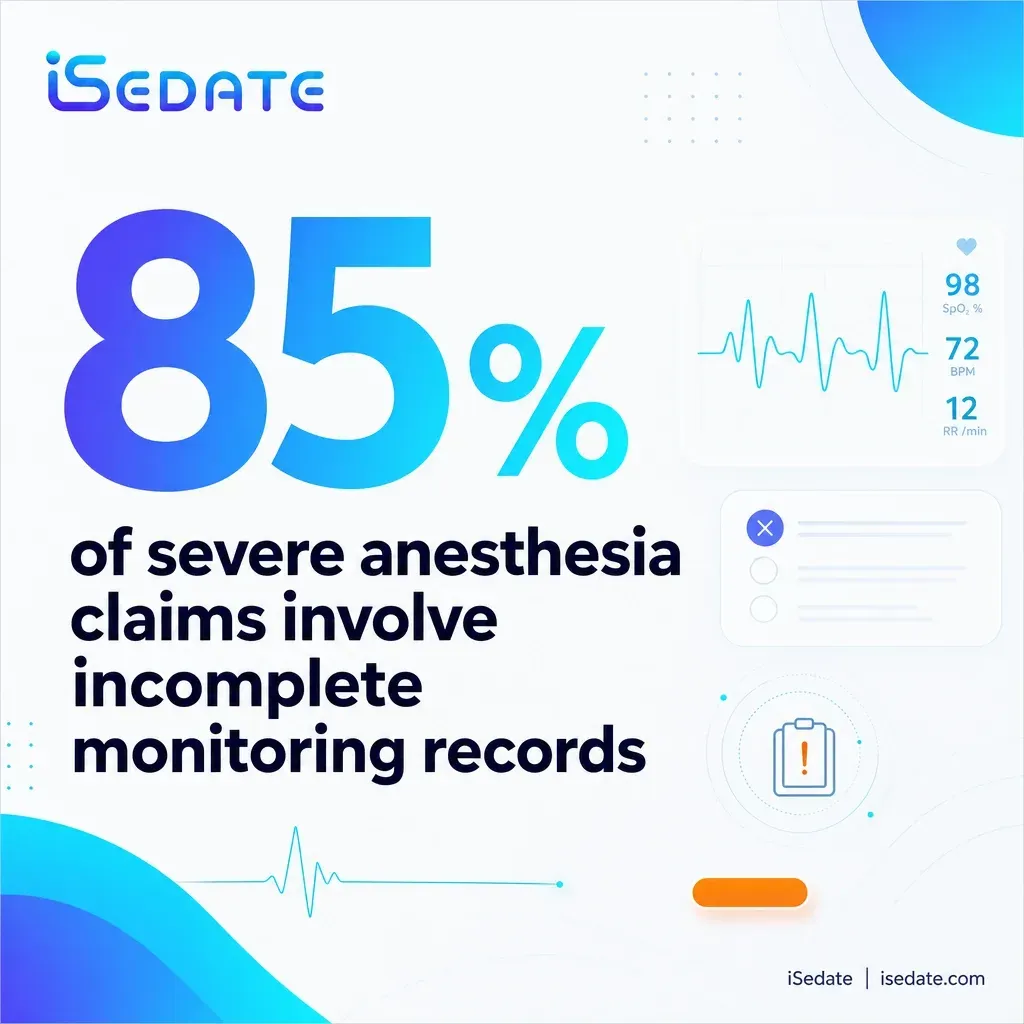
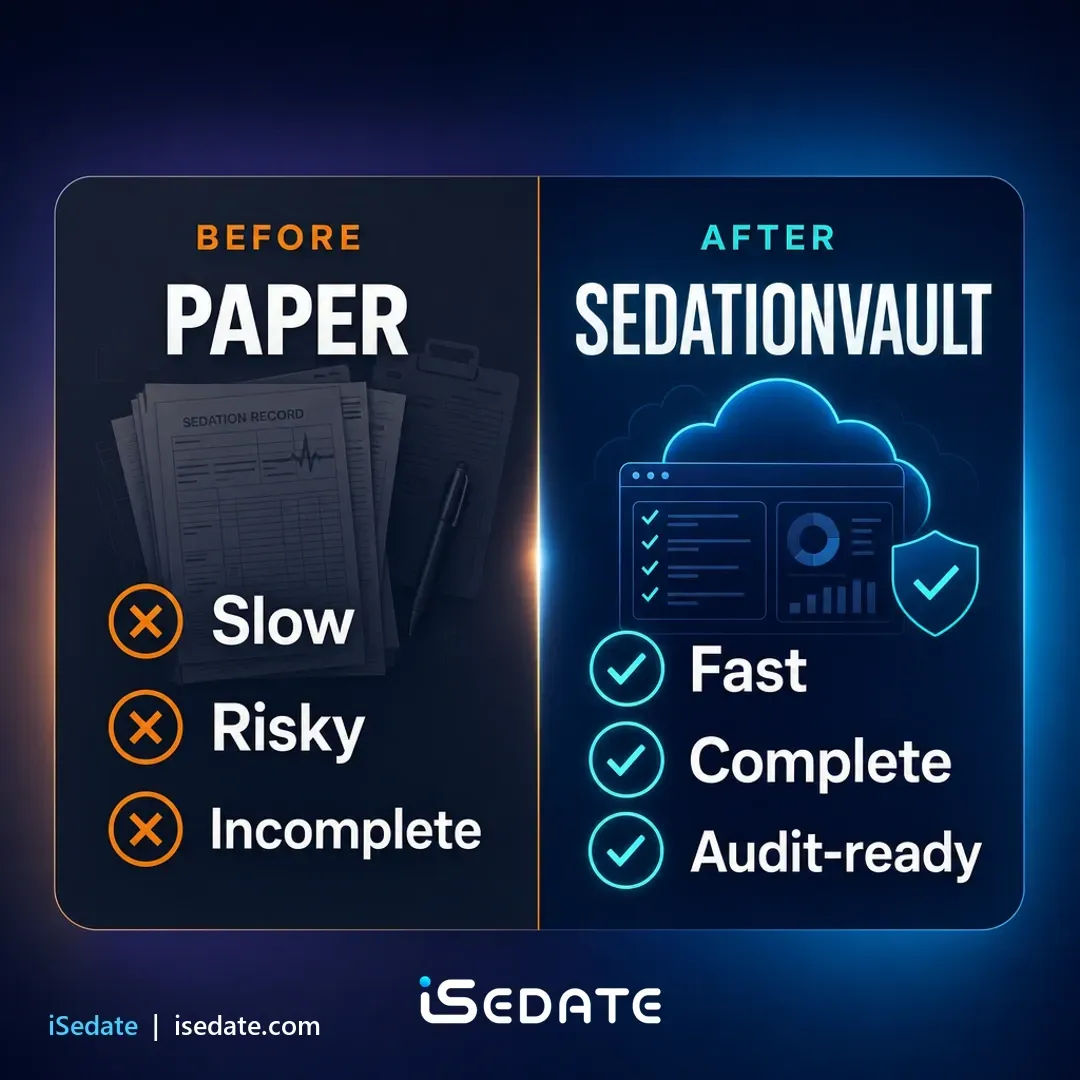
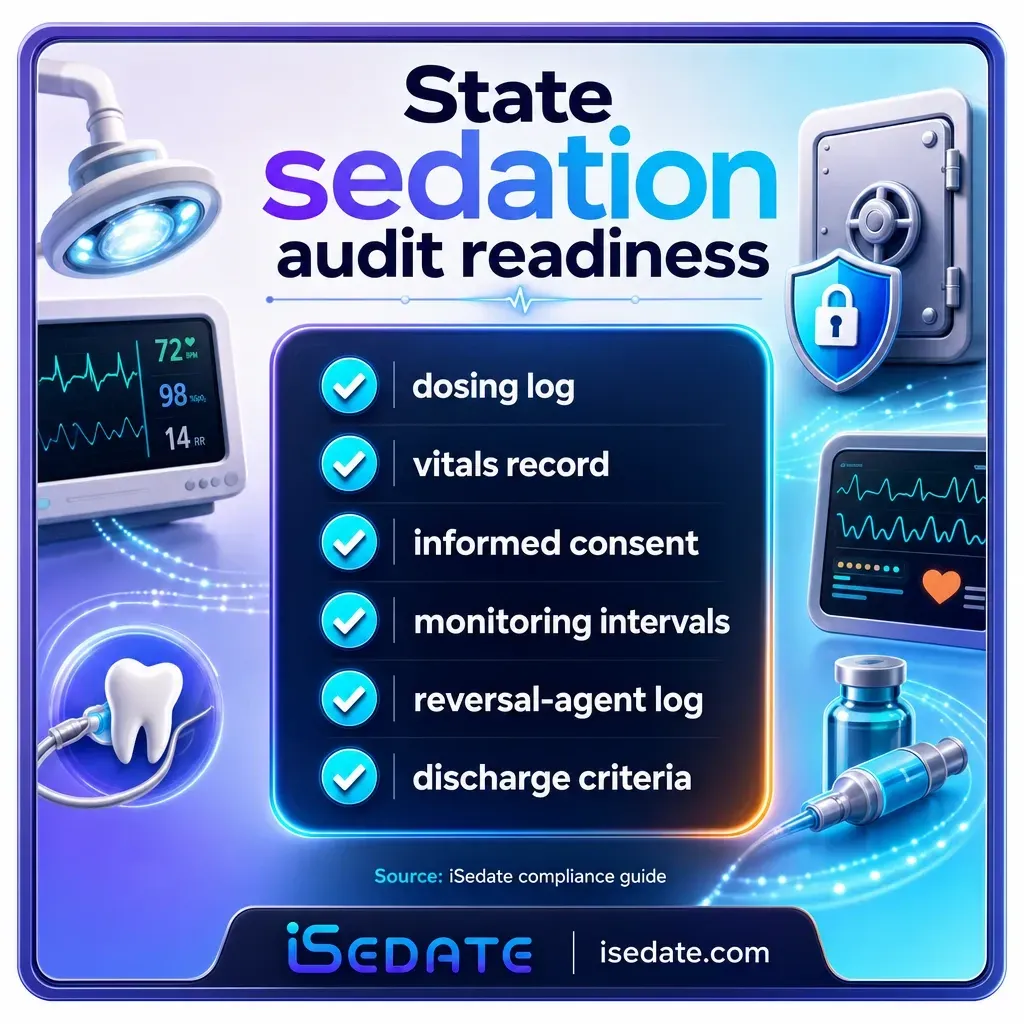
Everything above points to one truth: earning the permit is a one-time hurdle, but keeping it clean is a daily documentation discipline. A vitals log written by hand every 5 minutes, between titrating a drug and watching an airway, is exactly where records go incomplete, and incomplete records are what a board review and a malpractice claim both attack. Wisconsin's 5-minute cadence doubles the number of hand-written readings compared with a 10-minute state, which only widens the window for a missed interval.
SedationVault removes that failure point. It captures live patient vitals from any connected monitor and logs each drug automatically into a time-oriented, Wisconsin-ready anesthesia record, holding the 5-minute interval that DE 11.09 demands and keeping the procedure-duration and personnel fields the rule requires, so the record writes itself while you focus on the patient. When the board asks for the file, a complete record is a one-click export, not a scramble through paper. See how it maps to Wisconsin's rules on our dental sedation compliance and anesthesia record software pages.
Book a Demo of SedationVault See SedationVault PricingFrequently asked questions
What sedation permits does Wisconsin require for dentists?
How many training hours do you need for an IV sedation permit in Wisconsin?
Do you have to renew a Wisconsin sedation permit or take sedation CE?
Does nitrous oxide require a sedation permit in Wisconsin?
Related guides and neighboring states
Licensing is one half of the picture; the records that keep your permit are the other. For the clinical detail on what Wisconsin requires you to chart at each depth, read our sibling guide on Wisconsin Sedation Vitals Monitoring, Charting & Reporting Requirements.
Licensed in a neighboring state, or planning to expand? See our permit guides for nearby states, and the full national overview:
- Iowa Sedation Dentistry Licensing & Permit Requirements
- Illinois Sedation Dentistry Licensing & Permit Requirements
- Michigan Sedation Dentistry Licensing & Permit Requirements
- Minnesota Sedation Dentistry Licensing & Permit Requirements
- Sedation Dentistry Licensing & Permit Requirements by State (all 50)
Sources
- Wisconsin DSPS, Dentistry Examining Board, Dentist profession page (board, CE, renewal)
- DSPS Conscious and Deep Sedation Specialties (permit classes, required documents, application)
- DSPS Form 2758, Anesthesia or Conscious Sedation Education Verification Form
- Wis. Admin. Code Chapter DE 11, "Anesthesia and Sedation"
- DE 11.025 (permit application; ACLS/PALS certification)
- DE 11.035 (Class II education programs: hours and clinical cases)
- DE 11.085 (deep sedation / general anesthesia; additional-staffing requirement)
- DE 11.09 (monitoring and the time-oriented anesthesia record, incl. the 5-minute interval)
- DE 11.10 (adverse-occurrence reporting)
- Wisconsin Register, April 2024, No. 820 (reorganization of Chapter DE 11)
- DOCS Education sedation courses (where dentists take board-approvable sedation training; not a statute source)
This guide summarizes Wisconsin sedation permit rules for general information and is not legal advice. Permit classes, training programs, clinical-case counts, life-support certification, staffing, monitoring, and recordkeeping are drawn from Wis. Admin. Code Chapter DE 11 and the Wisconsin DSPS as cited. Because DE 11 was reorganized in April 2024, confirm the current subsection numbering, the exact application forms, and the current fee schedule directly with the Dentistry Examining Board before you act.