






Local Anesthesia in Dentistry Statistics (2026): Usage, Agents, and Safety
Local anesthesia is the single most common drug administration in dentistry, with more than 300 million cartridges given each year in the U.S. alone and nearly 2 billion worldwide. Lidocaine remains the gold standard, articaine is a fast-rising second, and the whole category has an excellent safety record. Yet failure rates for lower-jaw blocks can reach 30% or more. The data below covers usage, agents, success and failure, and safety.
- Dentists administer more than 300 million local anesthetic cartridges per year in the U.S., and about 1.96 billion worldwide.
- Lidocaine is the gold standard and most-used agent, at roughly 1 billion cartridges worldwide.
- Articaine is second at about 600 million cartridges; about 60% of U.S. dentists use it for most injections.
- Inferior alveolar nerve block failure runs about 5% to 30% routinely, and higher in inflamed teeth.
- In symptomatic irreversible pulpitis, block failure can reach 30% to 80%.
- Buffering anesthetic has been associated with a 2.29 times greater likelihood of successful anesthesia.
- Serious adverse events are rare; lidocaine and articaine showed lower odds of serious events in FDA data.
What's in This Guide
01 The Foundation of Dental Pain Control
Local anesthesia is so routine in dentistry that its scale is easy to overlook. It is the backbone of pain control, the enabling technology behind nearly every filling, extraction, and root canal performed without pain.
Dentists in the United States administer more than 300 million local anesthetic cartridges annually, with another approximately 30 million in Canada and about 1.96 billion worldwide. Modern dental anesthesia began with cocaine in 1885 and procaine in 1905, but the field was transformed in 1948 with lidocaine, the first amide-type local anesthetic, which quickly became and remains the gold standard. Today the ester-type anesthetics have been almost entirely replaced by amides in dental cartridges, and in North America ester local anesthetics are no longer marketed in dental cartridge form. This makes local anesthesia by far the most frequent drug administration in all of dentistry.

Source: Dental Pain Control and Local Anesthesia: A 40-Year Journey (Dentistry Today)
See how SedationVault documents care
02 The Most Common Agents
While many local anesthetics exist, dental practice is dominated by a small number of amide agents. Knowing which agents lead, and why, explains a great deal about modern dental pain control.
Lidocaine leads globally with roughly 1 billion cartridges used per year and is regarded as the standard against which all newer agents are measured, prized for its long track record of safety and efficacy. Articaine is the fast-rising second choice at about 600 million cartridges worldwide; in a U.S. survey of dentists, 97.6% had experience with articaine and about 60% reported using it for most of their injections. Articaine's popularity comes from its chemistry: high lipid solubility from its thiophene ring lets it diffuse through bone more readily than other agents. The other common amides are mepivacaine and prilocaine, with bupivacaine used when a long duration is needed, while benzocaine, an ester, is still widely used as a topical agent before injection.
Most dental anesthetic cartridges combine the anesthetic with epinephrine, a vasoconstrictor. Local anesthetics tend to widen blood vessels, which speeds their absorption into the bloodstream and shortens their effect. Epinephrine counteracts this by constricting vessels at the injection site, which prolongs and deepens the anesthesia and reduces the risk of systemic toxicity. This is why formulations such as lidocaine with 1:100,000 epinephrine are standard.

Source: Survey investigation of articaine use in the United States (JADA) | Local Anesthetic Drugs Used in Dentistry (StatPearls, NCBI)
See anesthesia record software
03 Success and Failure Rates
Local anesthesia is highly effective, but it is not infallible, and its reliability varies dramatically by location in the mouth and by the condition of the tooth. This is one of the most clinically important and underappreciated areas of the data.
The inferior alveolar nerve block, the standard technique for anesthetizing lower teeth, is also the least reliable common injection, with routine failure rates reported from about 5% to 30%. In teeth with symptomatic irreversible pulpitis, the inflamed nerves are far harder to numb, and failure rates climb to a reported 30% to 80%. Lower teeth are inherently more difficult than upper teeth because the denser mandibular bone resists diffusion. Buffering the anesthetic solution has been associated with a 2.29 times greater likelihood of success. When a block does not fully work, supplemental techniques, buccal infiltration with articaine, intraligamentary injection, or intraosseous injection, are used to achieve profound anesthesia. Head-to-head, articaine and lidocaine perform similarly for mandibular blocks, with articaine sometimes slightly better for infiltration.
Not necessarily. Lip numbness confirms the soft tissue is anesthetized, but it does not guarantee pulpal anesthesia, the deep numbness needed for pain-free drilling or extraction. This gap is exactly why inferior alveolar nerve blocks can appear to work yet still leave a patient feeling pain during the procedure, especially in inflamed teeth. Confirming true pulpal anesthesia before starting, and having supplemental techniques ready, is a core part of predictable, comfortable dentistry.

Source: Efficacy of lidocaine and articaine for IANB in irreversible pulpitis, RCT (NCBI)
See how dentists use SedationVault
04 Safety and Complications
Given that local anesthesia is administered nearly two billion times a year worldwide, its safety record is remarkable. Serious complications are rare, but understanding the real risks is essential to using it well.
An analysis of the FDA Adverse Event Reporting System found that serious adverse events from dental local anesthetics are uncommon, and that lidocaine (odds ratio 0.59) and articaine (odds ratio 0.63) were associated with lower odds of serious adverse events than some other formulations. The most important safety principle is dose: local anesthetic toxicity is dose-related, so knowing and respecting maximum safe doses for each patient, especially children, is essential. Notably, research has repeatedly found that many dentists struggle with dose calculation, a training gap rather than a drug problem. Other recognized complications include temporary paresthesia, a persistent numbness or altered sensation, which is rare and has been associated more with certain higher-concentration formulations. Overall, the profile is one of a very safe intervention whose small risks are managed through correct dosing and technique.
Consider what scale does to a "rare" event. At nearly 2 billion cartridges a year worldwide, even a complication occurring in a tiny fraction of cases still represents a meaningful absolute number of patients. That is not an argument against local anesthesia, which is extraordinarily safe per dose, but it is the reason systematic safeguards matter: correct dose calculation, awareness of maximum limits, and clear documentation of what was administered. When a procedure is performed billions of times, the discipline applied to each individual case is what keeps the rare events rare. Small per-case diligence, multiplied across enormous volume, is the entire safety story.
Sources: FDA Adverse Event Reporting System analysis; dental local anesthesia usage data. Interpretation original to iSedate.

Source: Adverse events of local anesthetics in the FDA reporting system (ScienceDirect)
See secure, compliant records
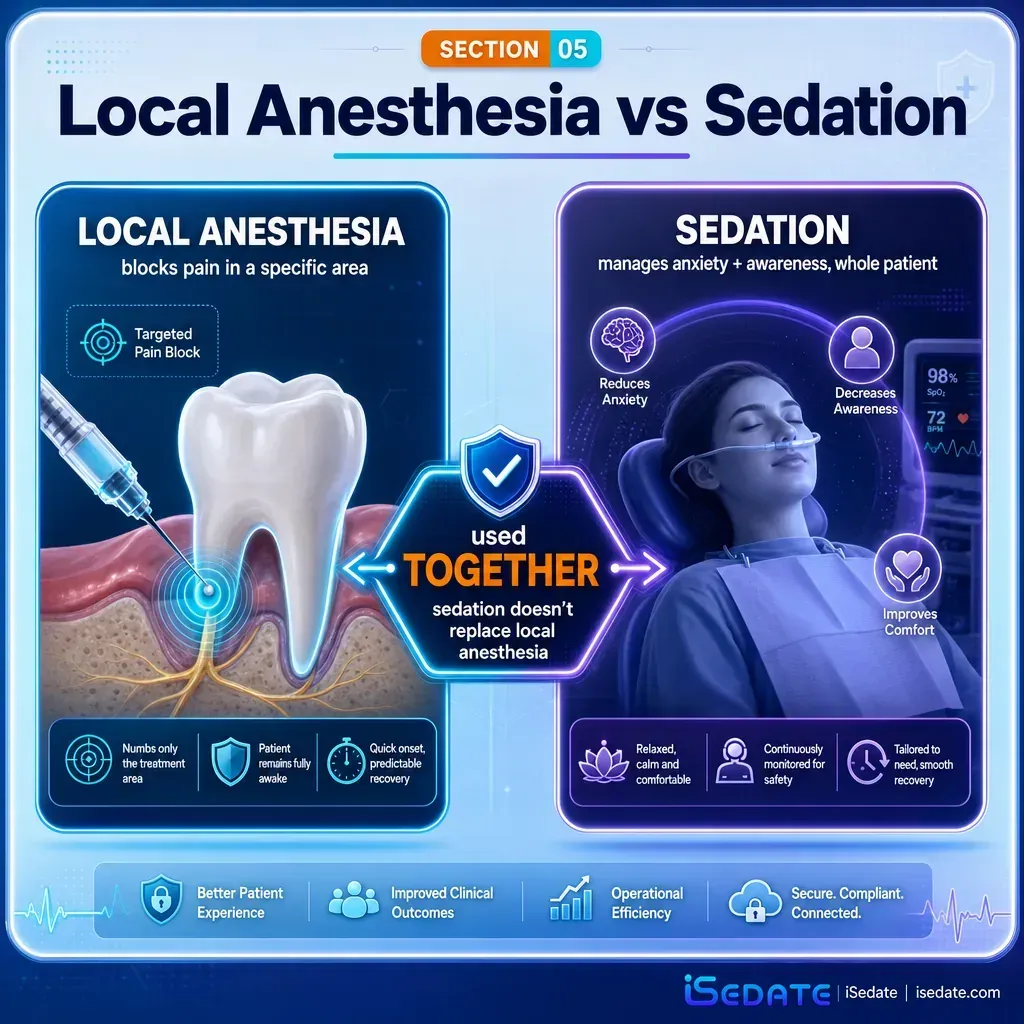
05 Local Anesthesia and Sedation
Local anesthesia and sedation are often confused, but they do different jobs, and understanding how they fit together clarifies the whole landscape of dental pain and anxiety control.
Local anesthesia numbs a specific area to block pain, while sedation reduces anxiety and alters awareness across the whole patient. They are complementary, not interchangeable: a sedated patient still needs local anesthesia for pain control, because most sedation does not by itself block the pain of drilling or extraction. This is why even patients receiving nitrous oxide or oral sedation, covered in our nitrous oxide sedation statistics and oral sedation dentistry statistics, typically also receive local anesthesia. For anxious patients specifically, described in our dental anxiety and phobia statistics, combining effective local anesthesia with appropriate sedation is what makes comfortable treatment possible. The full range of options sits within our sedation dentistry statistics overview.
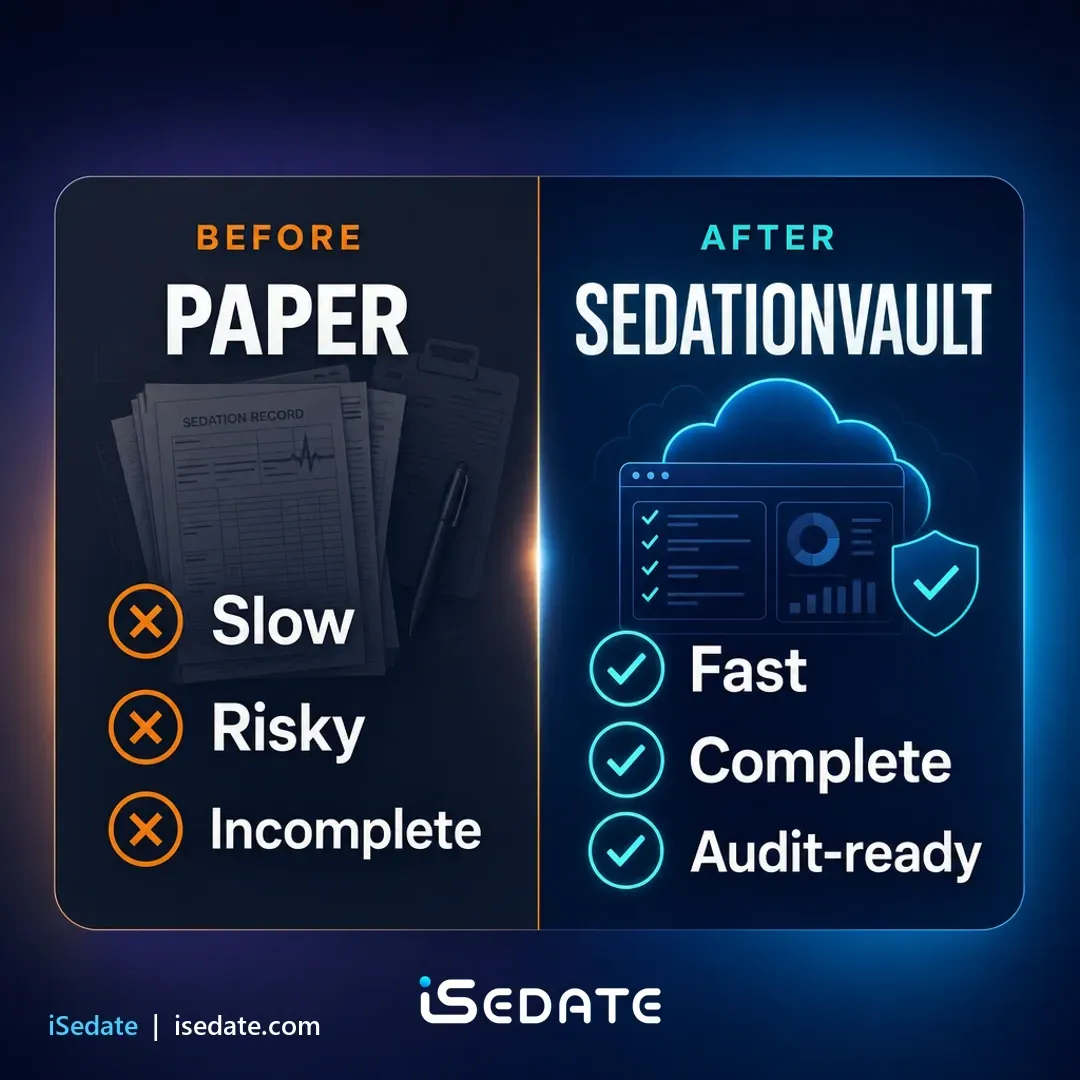
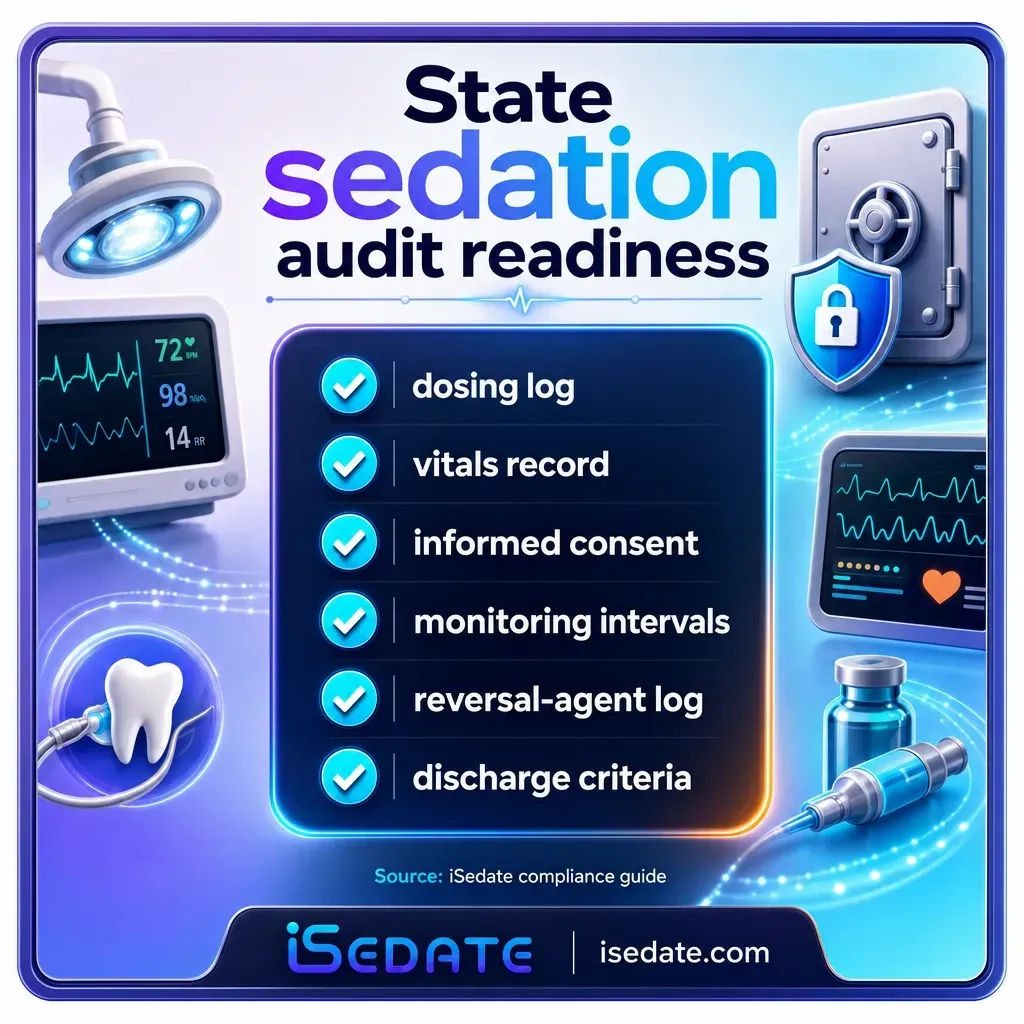
Every anesthetic given, local or sedative, is part of the patient's care record, and complete documentation matters for safety and defensibility alike. iSedate's SedationVault captures live vitals from compatible monitors, including Edan, MindRay, Criticare, and more (the Edan X10 is a common example), and builds a continuous, audit-ready record for every sedation case. Accurate records of agents, doses, and patient response support both safer care in the moment and the standard-of-care documentation a practice depends on.

Source: Local Anesthesia Techniques in Dentistry and Oral Surgery (StatPearls, NCBI)
Book a Demo
06 Summary Table: Every Statistic
| Statistic | Figure | Source | Year |
|---|---|---|---|
| U.S. local anesthetic cartridges per year | 300M+ | Malamed (Dentistry Today) | 2026 |
| Canada cartridges per year | ~30 million | Malamed (Dentistry Today) | 2026 |
| Worldwide cartridges per year | ~1.96 billion | Malamed (Dentistry Today) | 2026 |
| Lidocaine cartridges worldwide | ~1 billion | Malamed (Dentistry Today) | 2026 |
| Articaine cartridges worldwide | ~600 million | Malamed (Dentistry Today) | 2026 |
| U.S. dentists using articaine for most injections | ~60% | JADA articaine survey | 2023 |
| U.S. dentists with articaine experience | 97.6% | JADA articaine survey | 2023 |
| IANB failure rate (routine) | 5-30% | JADA / clinical reviews | 2019 |
| IANB failure rate (irreversible pulpitis) | 30-80% | Clinical trial reviews (NCBI) | 2025 |
| Buffering success improvement | 2.29x | Malamed (Dentistry Today) | 2026 |
| Articaine pulpal success (irreversible pulpitis) | ~76-97% | IANB RCTs (NCBI) | 2023 |
| Serious AE odds ratio, lidocaine | 0.59 | FDA FAERS analysis | 2024 |
| Serious AE odds ratio, articaine | 0.63 | FDA FAERS analysis | 2024 |
| Topical anesthesia use (pediatric specialists) | 98.6% | Pediatric LA survey (NCBI) | 2024 |
| Common epinephrine concentration | 1:100,000 | StatPearls (NCBI) | 2025 |
07 Frequently Asked Questions
How much local anesthesia is used in dentistry?
What is the most common local anesthetic used in dentistry?
How often does dental local anesthesia fail?
Is dental local anesthesia safe?
Why does the dentist inject epinephrine with the anesthetic?
All figures trace to peer-reviewed studies, authoritative references (StatPearls/NCBI, JADA), and recognized expert sources. Usage-volume figures are widely cited estimates from the local anesthesia literature. Failure rates vary substantially by technique, operator, and tooth condition, so they are presented as ranges. Efficacy figures for irreversible pulpitis come from specific randomized trials and reflect that difficult clinical scenario. Sources include:
- Malamed, "Dental Pain Control and Local Anesthesia: A 40-Year Journey" (Dentistry Today, usage and buffering data)
- "Survey investigation of articaine use in the United States" (JADA, 2023)
- "Local Anesthetic Drugs Used in Dentistry" and "Local Anesthesia Techniques in Dentistry and Oral Surgery" (StatPearls, NCBI)
- Randomized controlled trials of lidocaine vs articaine for IANB in irreversible pulpitis (NCBI)
- Analysis of local anesthetic adverse events in the FDA Adverse Event Reporting System (ScienceDirect)
- "The Use of Local Anesthesia in Pediatric Dentistry" survey (NCBI)
Whether the pain control is local anesthesia, sedation, or both, complete records protect patients and practices. iSedate's SedationVault captures live vitals and builds an audit-ready record for every sedation case. To see how it works in your practice, book a demo.