







Arizona Sedation Dentistry Licensing & Permit Requirements
In Arizona, you cannot sedate a patient on your dental license alone. A dentist who administers oral sedation, IV or moderate (conscious) sedation, or general anesthesia must first hold the matching permit from the Arizona State Board of Dental Examiners, issued by code section under the Arizona Administrative Code, Title 4, Chapter 11, Article 13. Earning the permit means meeting the training, resuscitation, and live-patient requirements for your level, and for general anesthesia it means passing an on-site evaluation of your office. Keeping it means your records survive that evaluation at renewal. This guide walks both halves: how an Arizona dentist gets a sedation or anesthesia permit, and what it takes to keep one.
Recent Updates
Last UpdatedNovember 16, 2026
- Verified every permit section, training-hour, and live-patient figure against the Arizona State Board of Dental Examiners' current anesthesia and sedation rules (A.A.C. Title 4, Chapter 11, Article 13).
- Added the continuing-education and renewal requirements under R4-11-1306: 30 CE hours every five years and a minimum of 10 qualifying sedation cases per calendar year.
- Corrected the oral-sedation requirement: Arizona sets one 30-hour education standard and accepts any of several resuscitation credentials, rather than a separate pediatric-only PALS track.
- Replaced third-party statute links with the Board's own official pages for its rules, applications, and forms.
- Flagged that the Board's anesthesia and sedation rules are under active review (a 2024 supplemental rulemaking), so confirm current figures before you file.
Key Takeaways
- Arizona issues its permits by code section under Article 13: Section 1303 (oral sedation), Section 1302 (parenteral and moderate conscious sedation, including IV), Section 1301 (general anesthesia and deep sedation), and Section 1304 (records when a physician-anesthesiologist or CRNA provides the anesthesia). Nitrous oxide needs no permit.
- The jump to IV: a Section 1302 permit requires 60 didactic hours and hands-on administration to at least 20 patients (A.A.C. R4-11-1302); oral sedation under Section 1303 requires 30 clock hours of board-recognized education.
- Section 1301 general anesthesia and deep sedation is the only permit that requires an on-site evaluation of your office before it issues (R4-11-1301(D)), and initial applicants need an advanced pain-control program of at least one calendar year.
- Permits renew on a five-year continuing-education cycle (30 CE hours), and holders must complete at least 10 qualifying cases a year to stay competent and current (R4-11-1306).
- The on-site evaluation reads your controlled-substance log and your anesthesia records; incomplete records are where permits are challenged and renewals fail.
What This Guide Covers
- Who issues sedation permits in Arizona
- The Arizona permit levels
- How to get or upgrade each permit
- Continuing education and renewal
- What the permit requires you to monitor
- Reporting obligations tied to your permit
- On-site evaluations and record reviews
- Keeping the permit: audit-ready records
- Frequently asked questions
- Sources
Who issues sedation permits in Arizona
Sedation dentistry in Arizona is regulated by the Arizona State Board of Dental Examiners, the state agency that licenses dentists and issues every sedation and anesthesia permit. The Board, not any national body, decides who may sedate, conducts the on-site evaluations, and takes disciplinary action. The rules live in the Arizona Administrative Code, Title 4, Chapter 11, Article 13, "General Anesthesia and Sedation," under statutory authority in A.R.S. Title 32, Chapter 11, and every requirement below traces to a section of that article.
The state Board holds the authority, not the ADA. The American Dental Association publishes sedation guidelines that Arizona and most states lean on, and its standards are a genuine national baseline. But the ADA is a professional association, not a government agency. It does not license you, evaluate your office, or discipline you. Your permit, your on-site evaluation, and any sanctions all come from the Arizona State Board of Dental Examiners under Article 13. The federal layers that do apply sit elsewhere: the DEA governs your controlled-substance records, and HIPAA governs your patient data. Treat the ADA guidelines as best practice and Article 13 as the law you are held to.
To apply, you work through the Board's own process. For general anesthesia and deep sedation, that process includes scheduling an on-site evaluation of your office, described below. The current Board applications and forms and the fee schedule, set in part under A.A.C. R4-11-406, are maintained by the Board and change periodically, so confirm the exact forms and current fees with the Board before you file. The Board also has its anesthesia and sedation rules under active review, so verify the current rule text rather than an older copy.
Source: Arizona State Board of Dental Examiners, statutes and rules
The Arizona permit levels
Arizona names its permits by the section of the code that governs each one, and the level reflects how deeply the patient is sedated, not just which drug or route is used. Here is the full ladder, each rung with its governing section of Article 13.
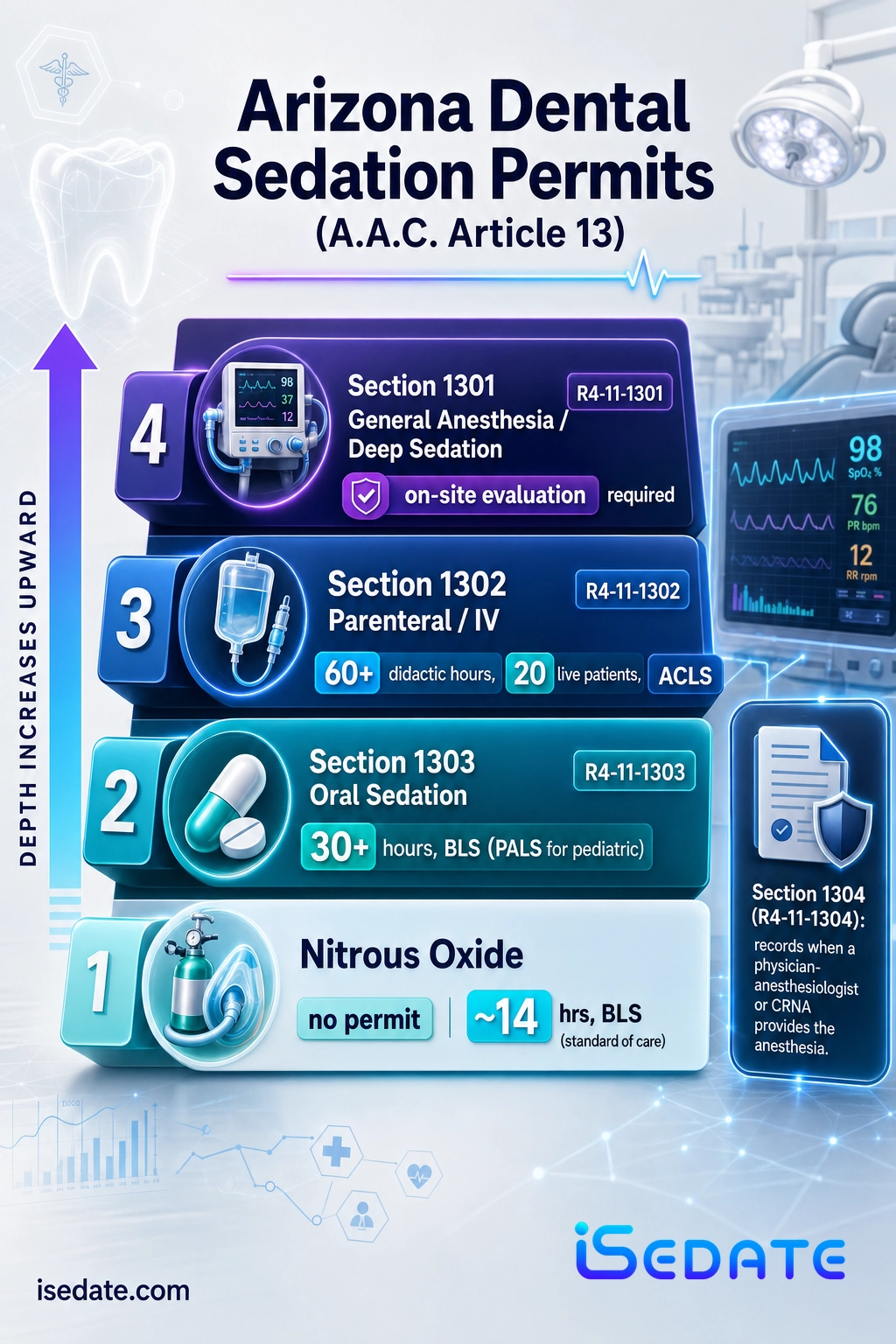
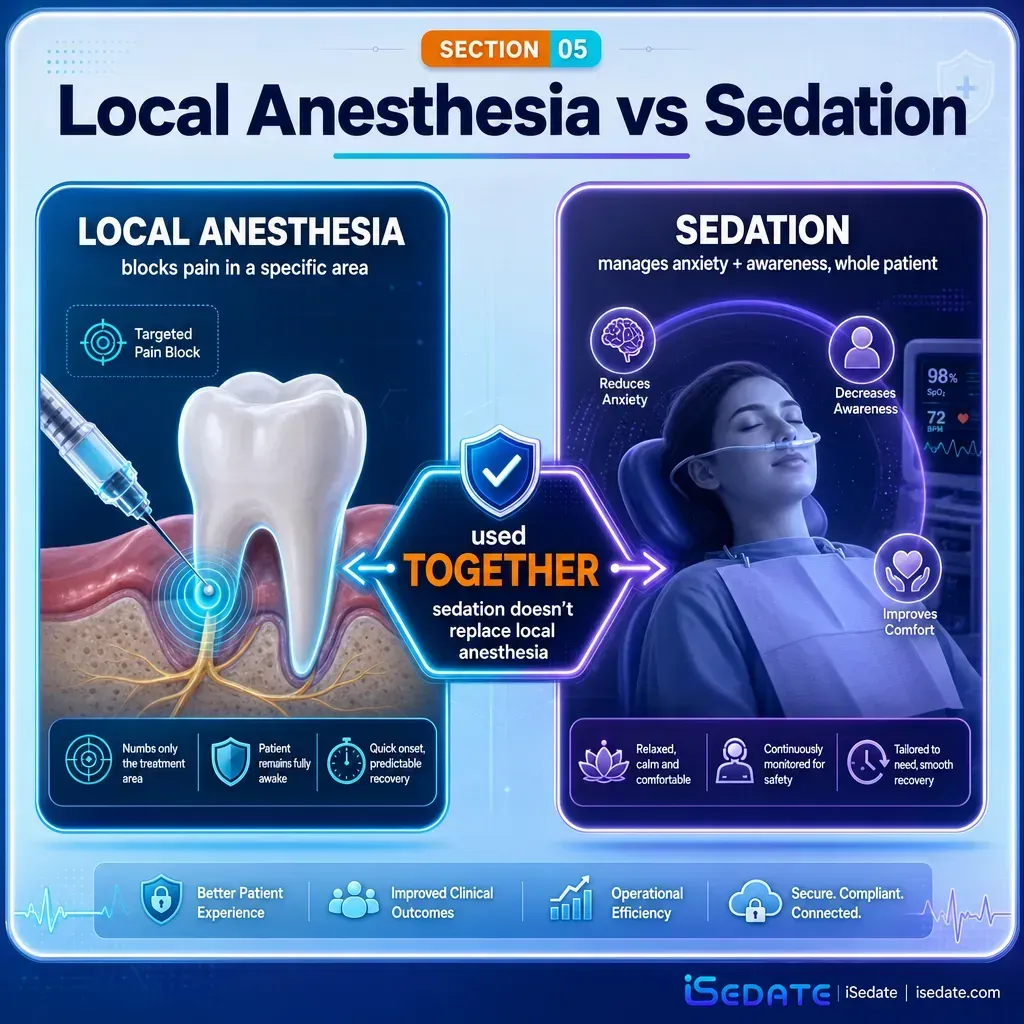
Nitrous oxide inhalation (no permit). Nitrous oxide and oxygen inhalation analgesia, the lightest form of anxiety control, where the patient stays fully responsive, does not require a sedation permit in Arizona and is handled under the standard of care.
Section 1303 permit, oral sedation (A.A.C. R4-11-1303). Authorizes oral sedation, the common starting point for general dentists who offer oral conscious sedation. It is the most accessible permit and the usual first step for a practice adding real sedation.
Section 1302 permit, parenteral and moderate sedation (A.A.C. R4-11-1302). Authorizes moderate (conscious) sedation by the parenteral route, that is, IV sedation and other injected routes. Because IV sedation carries a higher risk and a faster onset, Section 1302 sits above the oral permit and carries heavier training, monitoring, and record requirements. This is where oral surgeons and sedation-trained dentists typically operate.
Section 1301 permit, general anesthesia and deep sedation (A.A.C. R4-11-1301). The top tier. It authorizes deep sedation and general anesthesia, where the patient is not easily aroused or is unconscious and may need airway support. Section 1301 is largely the province of dental anesthesiologists and oral and maxillofacial surgeons. It carries the most detailed equipment, supervision, and record requirements in Article 13, and it is the only permit that requires an on-site evaluation of the office.
Section 1304 permit (A.A.C. R4-11-1304). Governs the records a dentist must keep when a physician-anesthesiologist or a certified registered nurse anesthetist (CRNA) provides the general anesthesia or sedation in the dental office. It is a recordkeeping permit for the host dentist rather than a training permit for the provider.
Myth, Busted
Myth: A dentist can start running IV sedation while the permit paperwork is still in process, as long as the training is done.
Fact: You must hold the Section 1302 permit before administering parenteral sedation. Finishing the coursework is not the permit, and a provider sedating ahead of issuance is practicing outside the permit.
The same rule holds at every level: the matching permit must be in hand before the first dose, never after.
Source: A.A.C. Title 4, Chapter 11, Article 13 (Arizona State Board of Dental Examiners)
How to get or upgrade each permit
Each permit has its own bar to clear: a set amount of training, a resuscitation credential, and, for parenteral sedation, a count of managed live patients. You move up the ladder by meeting the next level's requirements and applying to the Board. The figures below come from Article 13.
| Permit | Route / depth | Training | Live patients | Resuscitation |
|---|---|---|---|---|
| Nitrous oxide (no permit) | Inhalation, lightest | Standard of care | Not applicable | Staff CPR (standard of care) |
| Section 1303, oral sedation | Oral conscious sedation | 30 clock hours of board-recognized education (or a qualifying residency) | Not required for initial education route | CPR-HCP, ACLS, PALS, or advanced airway (one of) |
| Section 1302, parenteral / IV | Parenteral / moderate | 60 didactic hours of basic parenteral sedation | Hands-on administration to at least 20 patients | ACLS, PALS, or advanced airway (one of), plus staff CPR |
| Section 1301, GA / deep | General anesthesia / deep sedation | Advanced pain-control program of at least one calendar year | On-site evaluation required (see below) | See R4-11-1301; confirm with the Board |
Nitrous oxide and oral sedation
Nitrous oxide alone needs no permit in Arizona; it is handled under the standard of care with a staff member CPR-certified. The Section 1303 oral sedation permit requires 30 clock hours of board-recognized undergraduate, graduate, or post-graduate education in oral sedation, completed within the three years before applying and covering basic oral sedation, pharmacology, physical evaluation, medical emergency management, documentation, and monitoring (A.A.C. R4-11-1303(C)). A qualifying post-doctoral residency can satisfy the education another way. For resuscitation, the applicant confirms a current credential, any one of a healthcare-provider CPR course, ACLS, PALS, or a recognized advanced airway management course, completed within the prior two years, and at least one staff member present during sedation must hold current CPR. These are the most accessible permits and the usual first step for a general practice adding real oral conscious sedation.
Section 1302: adding IV sedation
Upgrading to a Section 1302 parenteral and moderate sedation permit is the biggest step a general dentist or oral surgeon takes. Under R4-11-1302(C), it requires 60 didactic hours of basic parenteral sedation and hands-on administration of parenteral sedative medications to at least 20 patients, completed within the three years before applying. A dentist trained earlier can qualify through an alternative path, an affidavit of at least 25 patients sedated within the past year or 75 within the last five years. The live-patient count is substantial because IV titration demands hands-on competence a classroom cannot replicate.
Section 1301: general anesthesia and deep sedation
The Section 1301 permit for general anesthesia and deep sedation is the top tier, and it is the one permit that requires an on-site evaluation of your office before it issues (R4-11-1301(D)). Initial applicants must complete an advanced graduate or post-graduate pain-control program of at least one calendar year. For most general dentists this level is out of scope: general dentistry typically operates at nitrous and oral conscious sedation, oral surgeons may hold the parenteral permit, and Section 1301 belongs to dental anesthesiologists and oral and maxillofacial surgeons. Because the Board administers these requirements and updates them periodically, confirm the current training, experience, and resuscitation requirements for Section 1301 directly with the Board.
For every level, the application forms, the fee schedule under A.A.C. R4-11-406, and any exam requirement are set by the Board and updated periodically. Do not rely on a number you read on a continuing-education provider's page. Confirm the exact forms and current fees with the Board before you file.
Source: A.A.C. R4-11-1302 and R4-11-1303 (Arizona State Board of Dental Examiners) | DOCS Education Arizona sedation courses (where to take the required class)
Continuing education and renewal
A permit is not a one-time achievement. Arizona ties every sedation and anesthesia permit to a continuing-education cycle and a minimum annual caseload, so the Board can see you are still competent at the level you hold. Under R4-11-1306, the requirements run on a five-year clock.
- Section 1301 and 1302 holders: 30 clock hours of continuing education every five years in general anesthesia, parenteral sedation, or the pharmacology of related drugs; proof of resuscitation coursework (such as ACLS, PALS, or advanced airway management) completed within the two years before renewal; and at least 10 general anesthesia, deep sedation, or parenteral sedation cases per calendar year. Up to six hours of the resuscitation coursework can count toward the 30-hour requirement.
- Section 1303 holders: 30 clock hours of continuing education every five years in oral sedation, medical emergencies, or the pharmacology of oral sedation drugs; proof of resuscitation coursework (healthcare-provider CPR, ACLS, PALS, or advanced airway management) within the prior two years; and at least 10 oral sedation cases per calendar year.
iSedate Charting Advice
Log your case count as you go. The 10-cases-a-year minimum is easy to clear and easy to under-document. When your sedation visits are captured in a dated, exportable record, your annual case count and your renewal competency evidence are already assembled, not reconstructed from memory the month renewal is due.
Source: A.A.C. R4-11-1306, Education and Continued Competency (Arizona State Board of Dental Examiners)

What the permit requires you to monitor
A permit is permission plus obligation. Once you hold a Section 1301 general anesthesia and deep sedation permit, R4-11-1301(B)(2)(a) requires specific monitoring equipment to be present and in use, and R4-11-1301(H) requires continuous supervision of the patient:
- Electrocardiograph monitor for continuous cardiac tracing.
- Pulse oximeter for oxygen saturation, and a blood pressure monitoring device with a stethoscope.
- Cardiac defibrillator or AED and supplemental oxygen, with supplemental oxygen used for the entire procedure under R4-11-1301(G).
- Continuous supervision from initiation of anesthesia until termination, and until oxygenation, ventilation, and circulation are stable.
For the full clinical breakdown of what to monitor and chart at each depth, including the itemized anesthesia record that R4-11-1301(E) requires, see the companion guide on Arizona sedation vitals monitoring, charting, and reporting requirements, and the national overview in our Sedation Dentistry Licensing & Permit Requirements by State hub.
Source: A.A.C. R4-11-1301(B), (G), (H) (Arizona State Board of Dental Examiners)
Reporting obligations tied to your permit
Holding a permit also means holding a set of documentation and reporting duties, and these are exactly what an on-site evaluation examines.
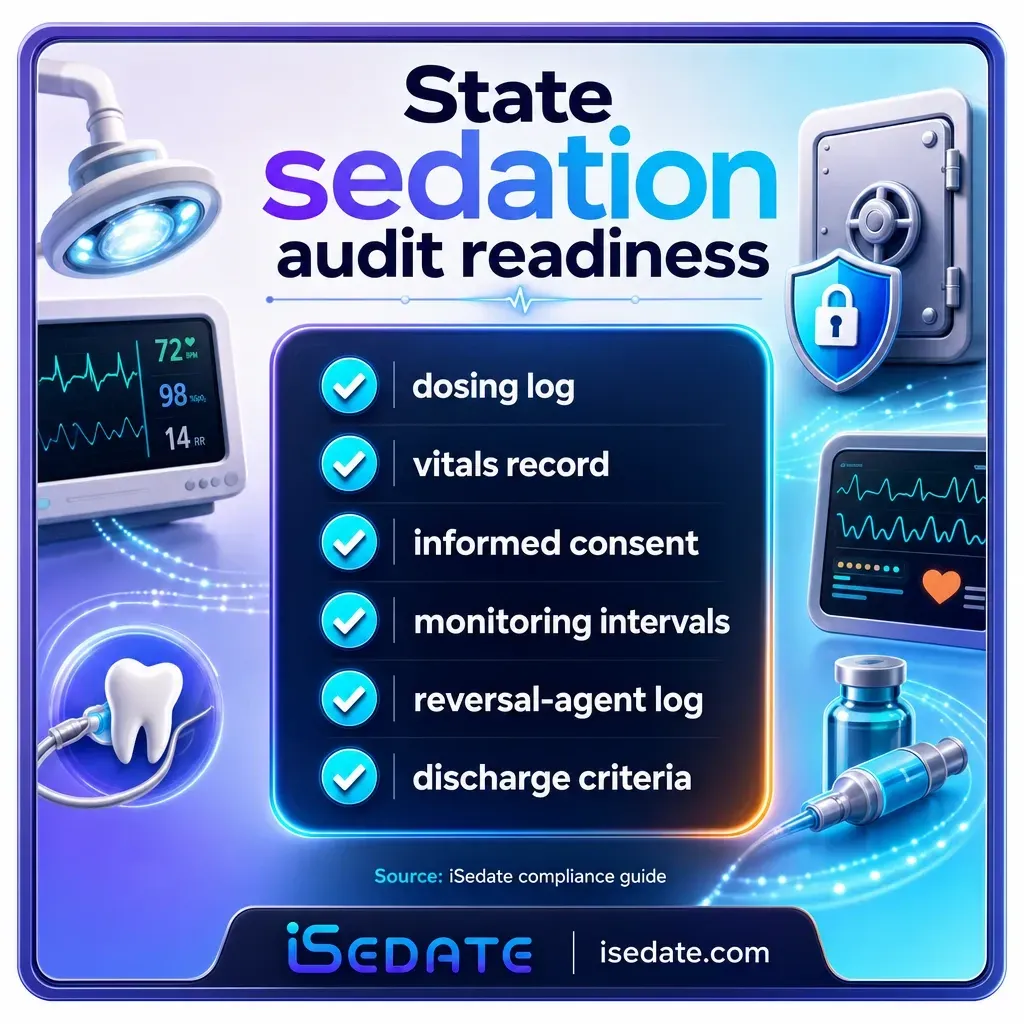
The anesthesia record. Under R4-11-1301(E), a Section 1301 permit holder must keep an anesthesia record for every general-anesthesia or deep-sedation procedure that documents pre-operative and post-operative ECG; pulse oximetry and blood pressure and vital signs at the pre-operative, intra-operative, and post-operative phases; all medications with dosage, time intervals, and route and site; the type and gauge of catheter or portal; NPO status or time of last intake; the consent form; and the time of discharge, discharge status, and escort.
Each level keeps a record. Oral sedation under R4-11-1303 and parenteral or moderate sedation under R4-11-1302 each require their own sedation record for every procedure. When a physician-anesthesiologist or CRNA provides the anesthesia, the host dentist keeps records under the Section 1304 permit.
Adverse-event reporting. Under R4-11-1305, a death or an incident requiring emergency medical response during administration of, or recovery from, general anesthesia, deep, moderate, or minimal sedation must be reported to the Board, with Board guidance indicating a report within 10 days. Rule violations can lead to permit denial, suspension, or revocation and to A.R.S. Title 32 disciplinary penalties; the specific penalty schedule is set by the Board, so confirm the current reporting triggers and timelines directly with the Board.
Source: A.A.C. R4-11-1301(E) and R4-11-1305 (Arizona State Board of Dental Examiners)
On-site evaluations and record reviews
This is where a permit is kept or lost. The Section 1301 general anesthesia and deep sedation permit carries the heaviest scrutiny, because that is where the risk is, and Arizona scrutinizes it in person. Under R4-11-1301(D), an applicant schedules an on-site evaluation at which the office administers anesthesia under observation. An initial evaluation is conducted by two Board-member or designee dentists; a renewal evaluation by one. The evaluators review the equipment, the personnel, and the patient administration, ask oral emergency and medication questions, and examine the controlled-substance logs and patient records, plus competency records at renewal.
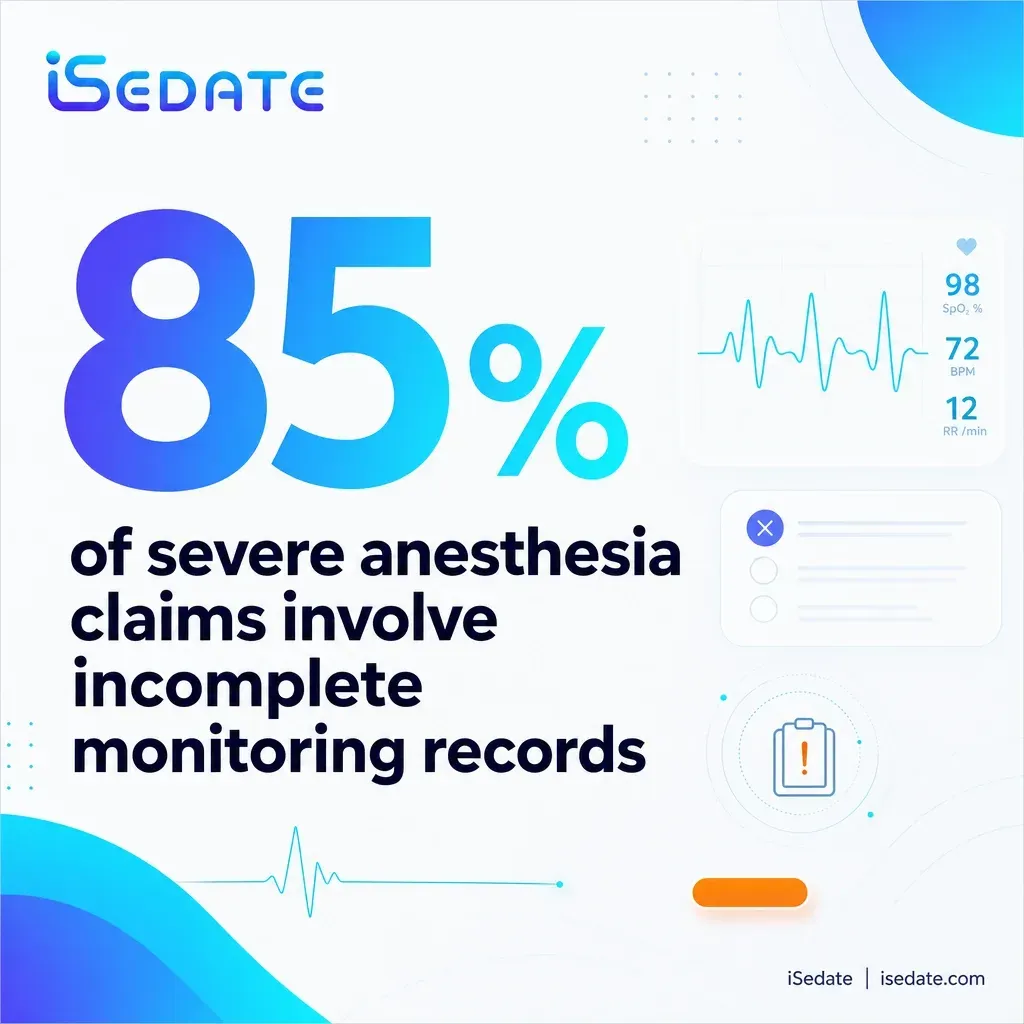
The outcomes make the stakes concrete. An evaluation can result in a Pass, a Conditional Approval, or a Category 1, 2, or 3 Failure, with a re-evaluation required after 30, 60, or 90 days depending on the category. When an evaluator opens your file, they are checking the record, not your intentions. If the anesthesia record is incomplete or the controlled-substance log does not reconcile, the dentist may have sedated correctly and still fail on the paperwork, and a Category Failure sends the office back for re-evaluation.
Source: A.A.C. R4-11-1301(D) (Arizona State Board of Dental Examiners)
Keeping the permit: audit-ready records
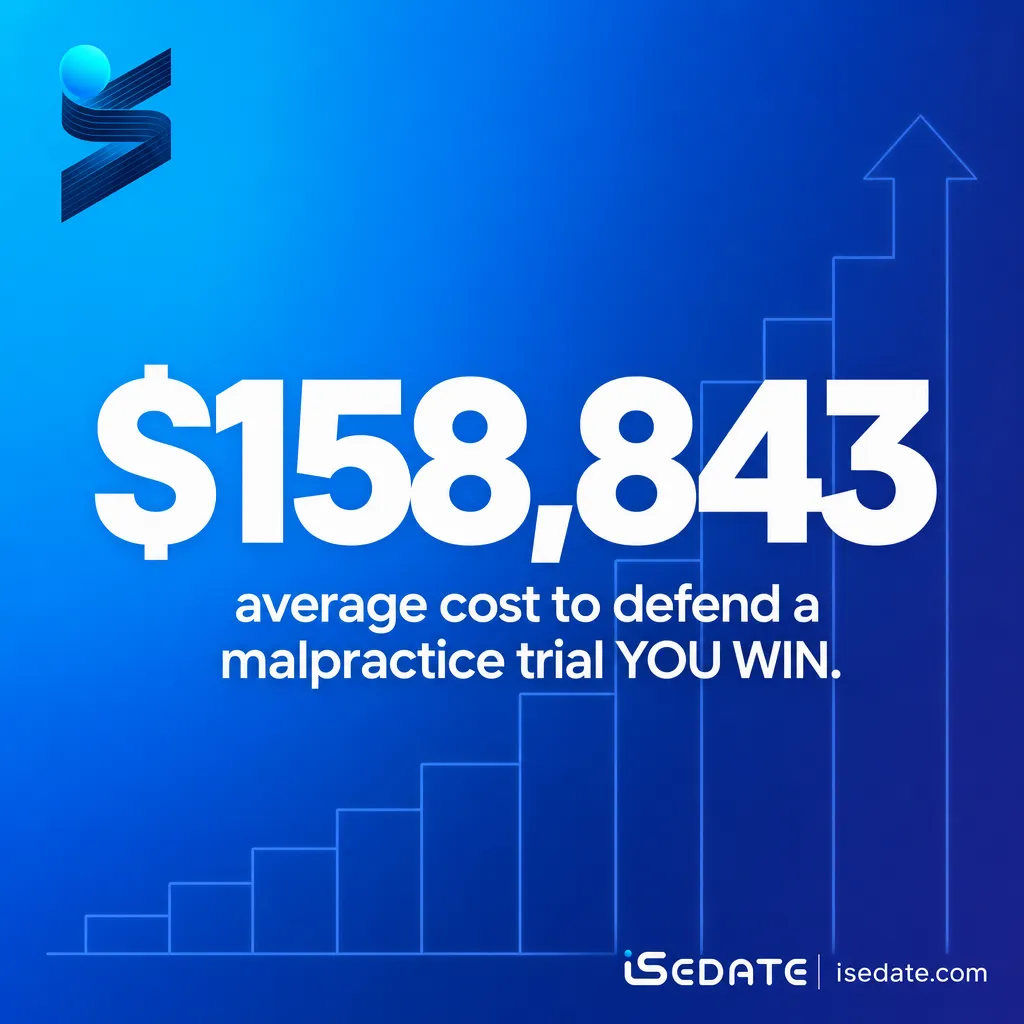
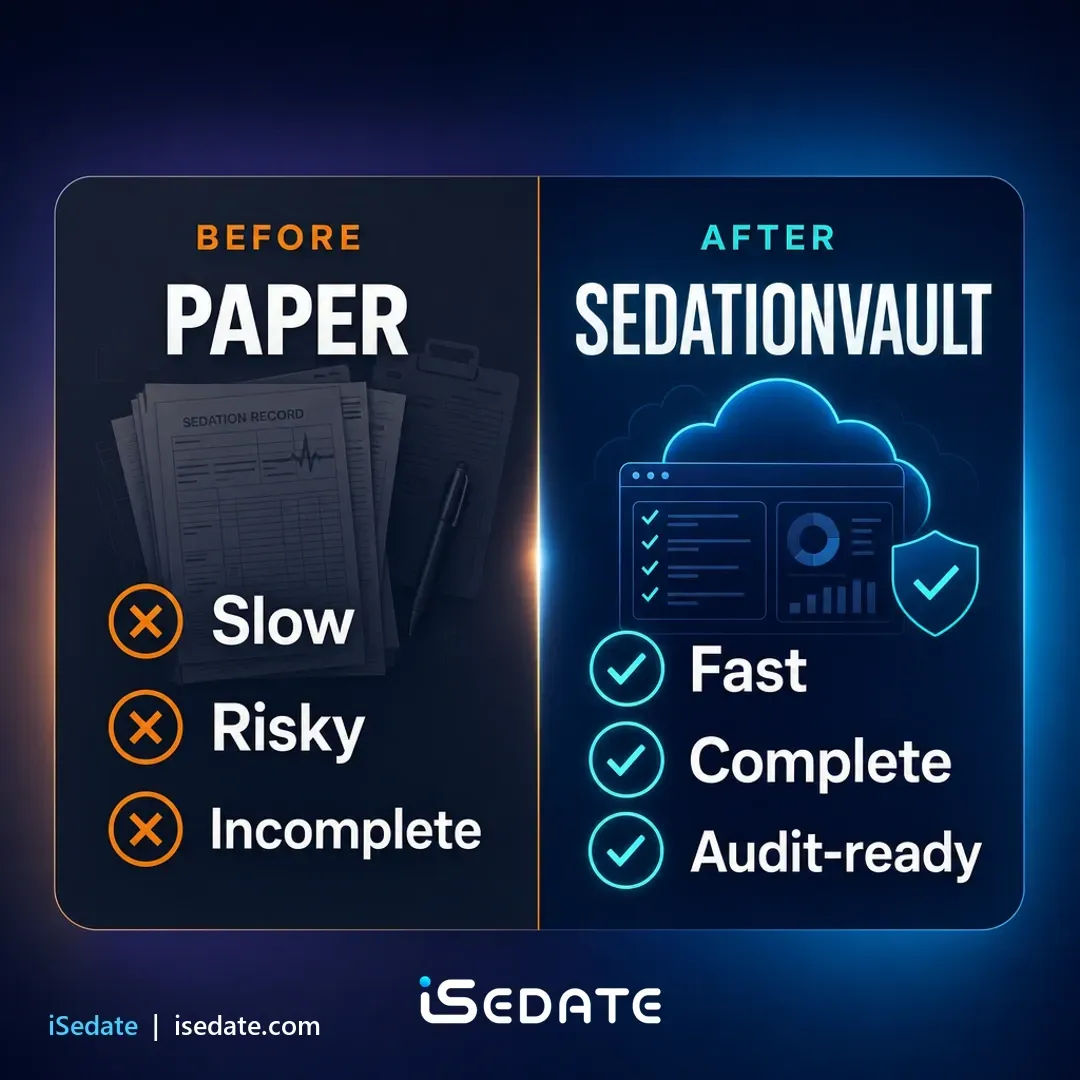
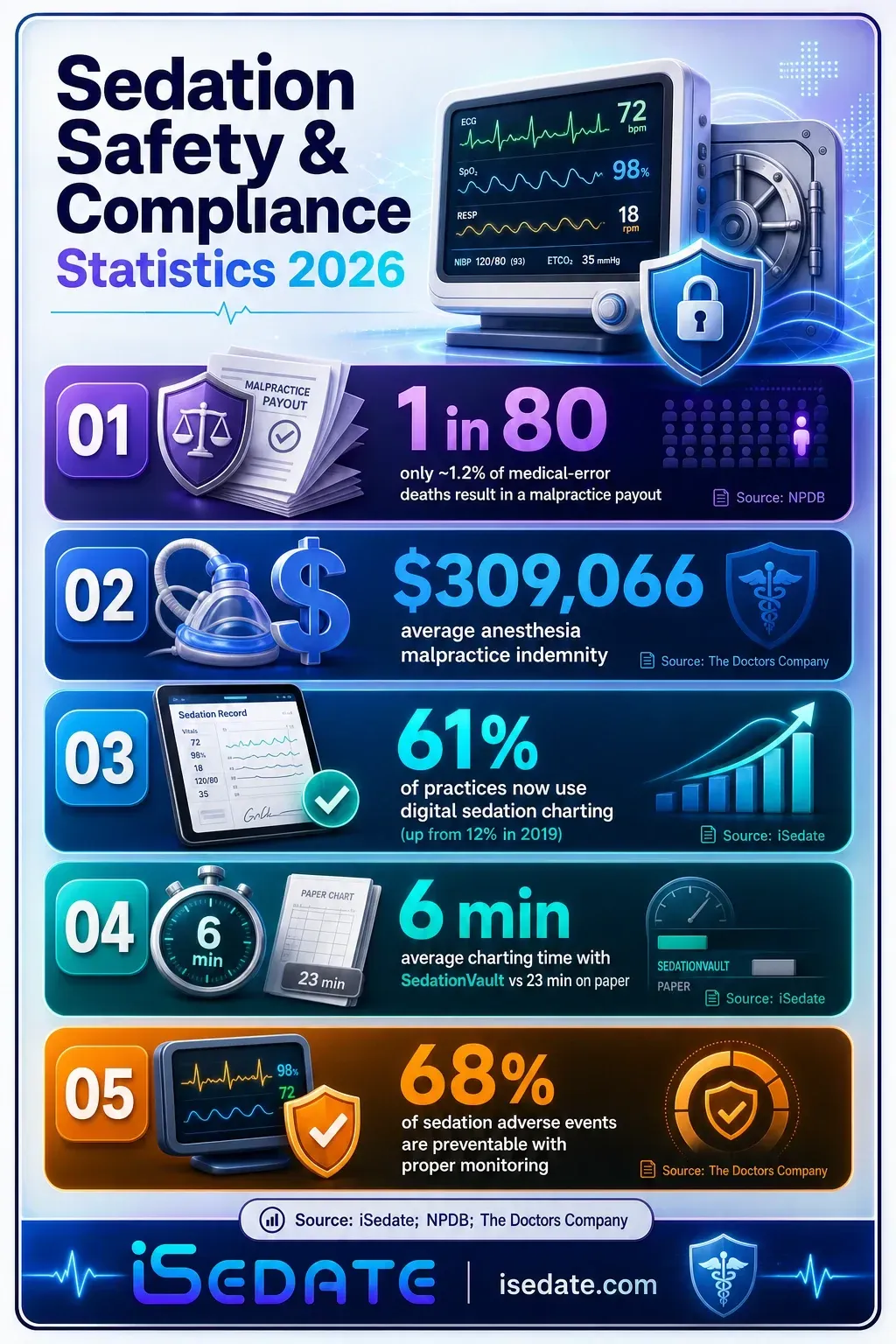
Everything above points to one truth: getting the permit is a one-time hurdle, but keeping it is a daily documentation discipline that an Arizona on-site evaluator will look at directly. A manual record kept by hand, between titrating a drug and watching an airway, is exactly where entries go incomplete, and incomplete records are what a renewal evaluation and a malpractice claim both attack.
SedationVault by iSedate removes that failure point. It captures live patient vitals and the drug log automatically into a time-oriented, Arizona-ready anesthesia record that holds the pre-operative, intra-operative, and post-operative readings and the medication time intervals R4-11-1301(E) demands, so the record writes itself while you focus on the patient. When the Board arrives for an on-site evaluation, a complete record is a one-click PDF export, not a scramble through paper. See how it maps to Arizona's rules on the dental sedation compliance and anesthesia record software pages.
Book a demo of SedationVault See SedationVault pricingFrequently asked questions
What sedation permits does Arizona require?
How many hours do you need for an IV sedation permit in Arizona?
How is an Arizona general anesthesia permit evaluated?
How often do Arizona sedation permits renew, and what continuing education is required?
Does nitrous oxide require a sedation permit in Arizona?
Licensed in a neighboring state? Related guides
If you practice across state lines, each state sets its own permit structure. See our same-silo guides for Arizona's neighbors, and the national overview:
- California Sedation Dentistry Licensing & Permit Requirements
- Nevada Sedation Dentistry Licensing & Permit Requirements
- New Mexico Sedation Dentistry Licensing & Permit Requirements
- Utah Sedation Dentistry Licensing & Permit Requirements
- Colorado Sedation Dentistry Licensing & Permit Requirements
- Sedation Dentistry Licensing & Permit Requirements by State (all 50 states)
Sources
- Arizona State Board of Dental Examiners, statutes and rules (A.A.C. Title 4, Chapter 11, Article 13, General Anesthesia and Sedation, covering R4-11-1301 through R4-11-1306 and the permit fees in R4-11-406)
- Arizona State Board of Dental Examiners, applications and forms (permit applications and fee confirmation)
- DOCS Education, Arizona sedation certification courses (where to take a qualifying course; not a statute source)
This guide summarizes Arizona sedation permit rules for general information and is not legal advice. Permit structure, training hours, live-patient counts, resuscitation requirements, continuing education, monitoring, recordkeeping, and the on-site evaluation are drawn from A.A.C. Title 4, Chapter 11, Article 13 as cited; R4-11-1301 was amended effective September 12, 2022, and the Board's anesthesia and sedation rules are under active review. The exact fee amounts (R4-11-406), the Board's current phone number, the exact application form names, and the specific disciplinary penalty schedule are set by the Arizona State Board of Dental Examiners and should be confirmed directly with the Board before you act. Requirements current as of November 2026.