







Vermont Sedation Dentistry Licensing & Permit Requirements
In Vermont you cannot sedate a patient on your dental license alone. Before the first dose, a dentist who provides minimal, moderate, deep sedation, or general anesthesia must hold the matching specialty from the Vermont Board of Dental Examiners, under the board's rules effective October 15, 2025, Part 8. Vermont keeps it simple: two sedation specialties plus a nitrous oxide carve-out. Earning one means meeting a training and resuscitation standard for your level. Keeping it means your sedation records survive a board review, measured against the ADA guideline Vermont adopts by reference. This guide covers both halves, with every official application, rule, and contact linked so you never have to go looking.
Recent Updates
Last UpdatedNovember 16, 2026
- Confirmed the current qualification requirements against the Vermont Office of Professional Regulation's own Conscious Sedation Specialty application instructions (March 2026), including the 60-hour training and 20-patient parenteral experience route.
- Added direct links to the board's dentist application instructions, the conscious sedation specialty instructions, and the full 2025 administrative rules.
- Verified the board's current address and phone, the biennial renewal cycle (Part 10-1), and the hospital-setting exception (Part 8-3(a)).
- Vermont uses two sedation specialties under its 2025 rules: a Minimal and Moderate Sedation Specialty (Part 8-4) and a Deep Sedation and General Anesthesia Specialty (Part 8-5).
- Nitrous oxide alone, or a single oral dose at or below the FDA maximum with no titration, needs no specialty (Part 8-3(b)). Dental therapists are not eligible for either specialty.
- One conscious sedation qualification route requires at least 60 hours of didactic and clinical training and supervised parenteral conscious sedation for no fewer than 20 patients, plus ACLS or PALS and the AAOMS checklist or AAOMS/ADBA certification.
- Vermont sets its sedation standard of care by reference to the current ADA guideline (Part 8-6), so the monitoring and record duties are the ADA's, enforced by the Vermont board, not the ADA.
- Keeping the specialty is a documentation discipline: the license renews biennially, facilities owe annual emergency training (Part 8-8), and any incident report hands the patient's record to the board (Part 11-1(d)).

What This Guide Covers
- The quick answer: do you need a permit?
- Who issues sedation specialties in Vermont
- The two Vermont sedation specialties
- How to qualify for each specialty
- How to apply: forms, fees, and timeline
- What the specialty requires you to monitor
- Reporting, renewal, and continuing education
- Inspections and record reviews
- Keeping the specialty: audit-ready records
- Related guides and neighboring states
- Frequently asked questions
- Sources
The quick answer: do you need a permit?
Yes, with one narrow exception. Any Vermont dentist who provides minimal, moderate, deep sedation, or general anesthesia must first hold the matching specialty from the Vermont Board of Dental Examiners. The exception is nitrous oxide used alone, or alongside a single oral dose that does not exceed the FDA maximum recommended dose, with no titration. That lightest level needs no specialty under Part 8-3(b). The moment you titrate, combine agents, or go past that single-dose boundary, you are into specialty territory. A second exception covers dentists working in a hospital setting under physician, CRNA, or hospital-credentialed supervision (Part 8-3(a)), which rarely applies to an office-based practice.
A quick terminology note. Vermont calls these credentials "specialties," while many dentists search for a "sedation permit." They are the same thing in practice, and this guide uses "specialty" to match Vermont's own language.
Who issues sedation specialties in Vermont
Sedation dentistry in Vermont is regulated by the Vermont Board of Dental Examiners, which sits within the Office of Professional Regulation (OPR) at the Vermont Secretary of State. The board, not any national body, decides who may sedate, runs the record reviews, and takes disciplinary action. Its rules live in the administrative rules effective October 15, 2025, Part 8, "Dentist Sedation and Anesthesia Specialties."
At-a-Glance: Vermont Sedation Specialties
- Regulator: Vermont Board of Dental Examiners, Office of Professional Regulation (OPR)
- Governing rules: Administrative Rules of the Board of Dental Examiners, effective October 15, 2025, Part 8
- Specialties: Minimal and Moderate Sedation (Part 8-4); Deep Sedation and General Anesthesia (Part 8-5)
- No specialty needed: Nitrous oxide alone or a single oral dose at or below the FDA maximum, no titration (Part 8-3(b))
- Resuscitation: Current ACLS or PALS, matched to patient age
- Standard of care: The current ADA sedation guideline, adopted by reference (Part 8-6)
- Applications: OPR Online Services System; 3 to 5 business days to process
- Board office: 89 Main Street, 3rd Floor, Montpelier, VT 05620; (802) 828-1505
Myth, Busted
Myth: The ADA is a federal authority whose rules override the state, so meeting the ADA guideline is all that matters.
Fact: The ADA is a professional association, not a government agency. In Vermont, Part 8-6 of the 2025 board rules adopts the current ADA guideline by reference, which gives that standard the force of a board rule, but the Vermont Board of Dental Examiners is the body that issues your specialty, reviews your records, and imposes discipline.
Treat the ADA guideline as the standard you must meet, and the Vermont board as the body that holds you to it. The federal layers that do apply, separately, are the DEA's controlled-substance rules and HIPAA, not the ADA.
Source: Vermont Board of Dental Examiners (OPR) | 2025 Board rules, Part 8
The two Vermont sedation specialties
Vermont's structure is two specialties plus a nitrous carve-out. The level reflects how deeply the patient is sedated, not just which drug or route is used. Here is the full picture, each with its governing section of the 2025 rules.
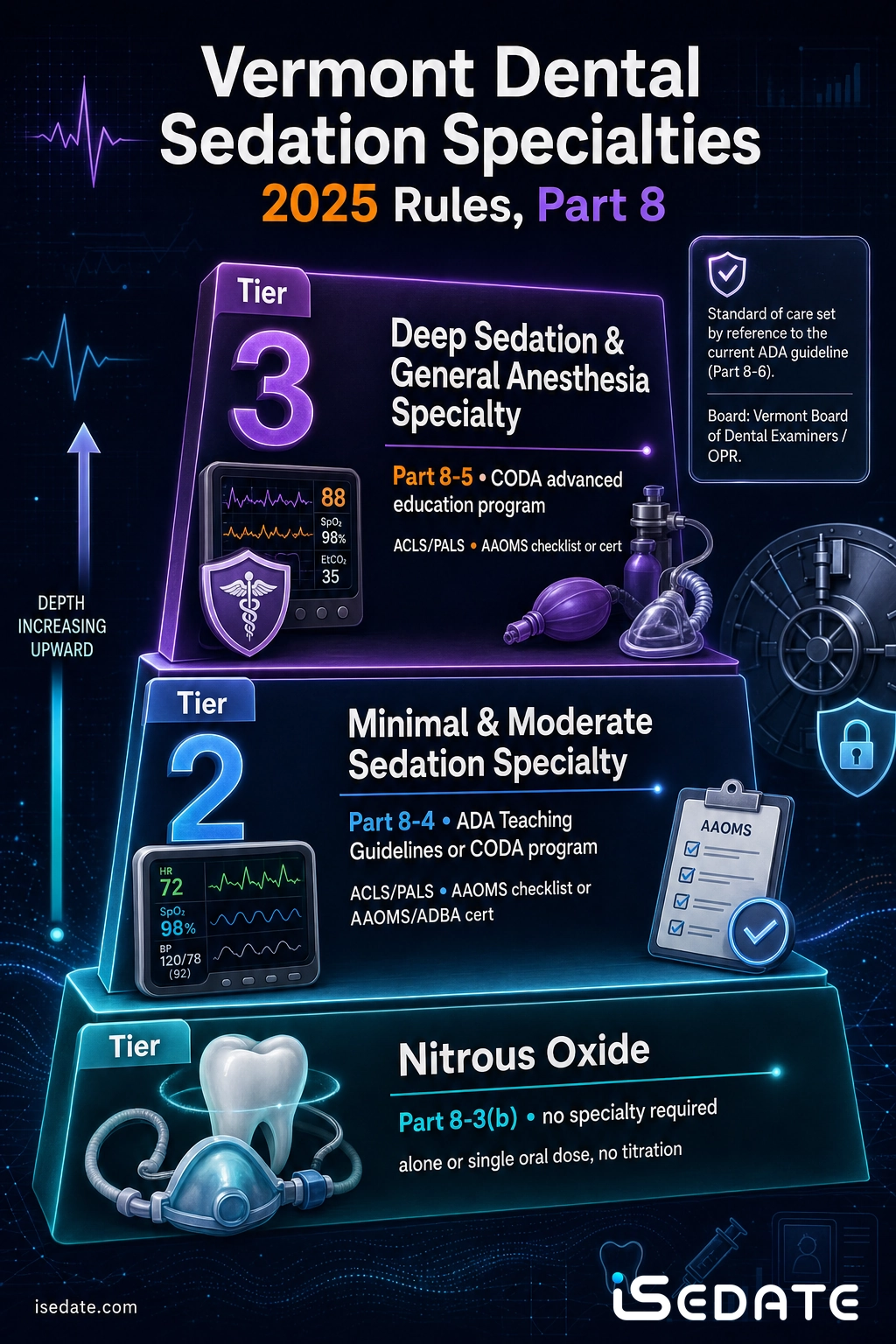
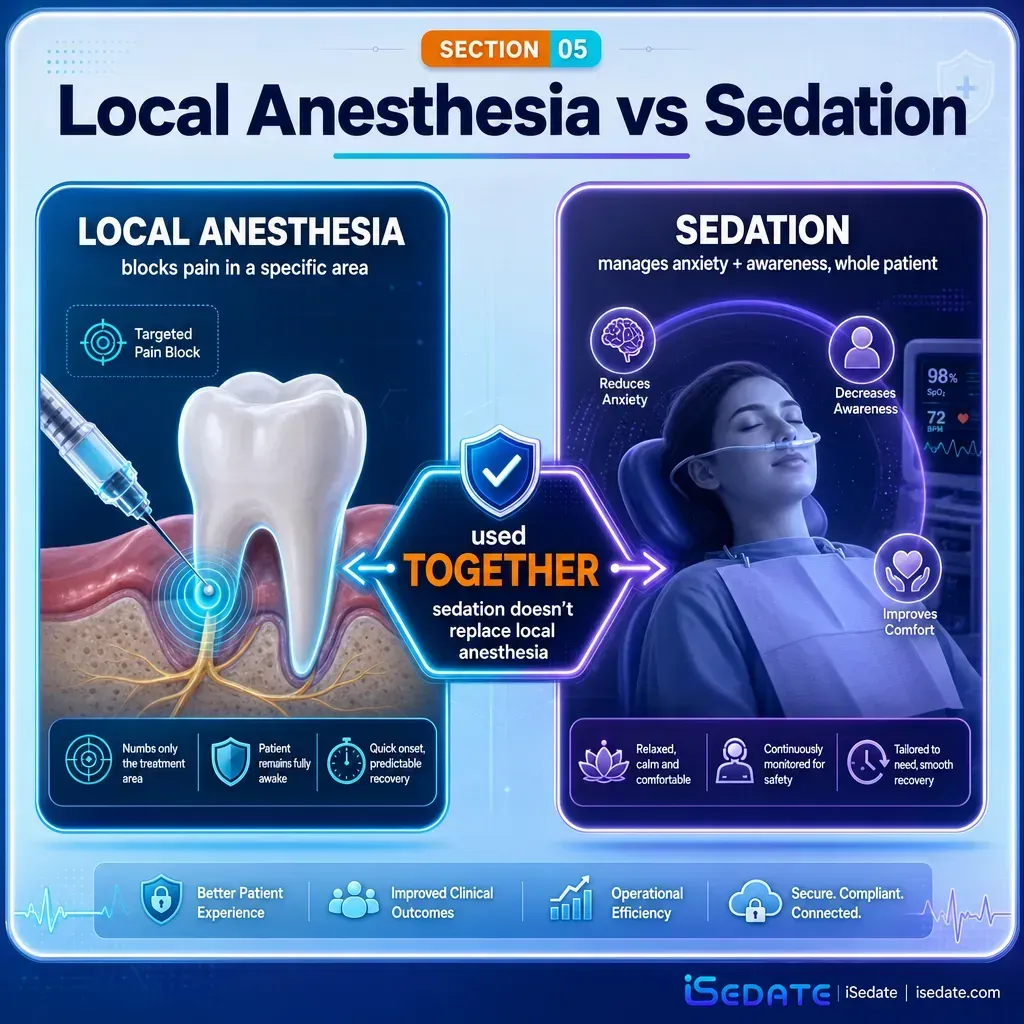
Nitrous oxide, no specialty required (Part 8-3(b)). Nitrous oxide used alone, or with a single oral dose that does not exceed the FDA maximum recommended dose and with no titration, does not require a sedation specialty. This is the lightest form of anxiety control, where the patient stays fully responsive. Titration of oral medication is specifically excluded from this exception.
Minimal and Moderate Sedation Specialty (Part 8-2(a), 8-4). Vermont combines minimal sedation (anxiolysis) and moderate sedation, commonly called Conscious Sedation, into one specialty. It authorizes light oral sedation through genuine moderate sedation, where the patient responds purposefully to verbal or tactile stimulation and keeps their own airway. This is the workhorse specialty for general dentists who offer real conscious sedation. Vermont does not split enteral and parenteral (IV) routes into separate permit tiers the way some states do, so this one specialty carries the moderate-sedation standard across routes, applied through the ADA guideline the state adopts.
Deep Sedation and General Anesthesia Specialty (Part 8-2(b), 8-5). The top tier. It authorizes deep sedation and general anesthesia, where the patient is not easily aroused or is unconscious and may need airway support. This specialty is largely the province of dental anesthesiologists and oral and maxillofacial surgeons. Its training pathway is the most demanding, and it carries capnography and continuous ECG monitoring under the ADA standard the state incorporates. For a general dentist, this level is usually out of scope.
| Specialty | Depth / route | Training pathway | Resuscitation | Qualification check |
|---|---|---|---|---|
| Nitrous oxide (Part 8-3(b)) | Nitrous alone or single oral dose, no titration | No specialty required | Not specified here | None required |
| Minimal & Moderate Sedation (Part 8-4) | Minimal and moderate (conscious) sedation | 60-hour conscious sedation program with 20 parenteral patients, or a CODA program meeting the ADA teaching guidelines | ACLS or PALS (age-appropriate) | AAOMS self-inspection checklist, or AAOMS/ADBA certification |
| Deep Sedation & GA (Part 8-5) | Deep sedation / general anesthesia | CODA-accredited advanced education program | ACLS or PALS (age-appropriate) | AAOMS self-inspection checklist, or AAOMS/ADBA certification |
Source: 2025 Board rules, Part 8-2 through 8-5
How to qualify for each specialty
Each specialty has its own bar: a defined education pathway, resuscitation certification, and a self-inspection or board-certification check. The requirements below come straight from Part 8-4 and Part 8-5 and from the board's own application instructions.
The Minimal and Moderate Sedation Specialty
Part 8-4 qualifies you one of two ways: a comprehensive moderate-sedation training program consistent with the ADA Guidelines for Teaching Pain Control and Sedation to Dentists and Dental Students, or a CODA-accredited dental training program with comprehensive training in administering and managing moderate sedation. On top of that, you need current ACLS or PALS matched to the age of your patients, and you must either comply with the AAOMS self-inspection and assessment checklist for moderate sedation or hold board certification through AAOMS or ADBA.
The board's conscious sedation specialty instructions spell out what "comprehensive" means for the training route. A qualifying conscious sedation training program, offered under a dental school or a CODA-accredited program, must include at least 60 hours of didactic and clinical study, cover physical evaluation, venipuncture, and technical administration, document airway-management competency, train you to monitor and interpret vital signs, and include supervised experience managing parenteral conscious sedation for no fewer than 20 patients. It must run as an organized sequence under one entity and be completed in under two calendar years. A CODA-accredited pathway or an endorsement from a substantially equivalent jurisdiction can satisfy the requirement instead.
The Deep Sedation and General Anesthesia Specialty
Part 8-5 raises the education bar to a CODA-accredited advanced education program that provides comprehensive training in administering and managing deep sedation and general anesthesia, alongside current ACLS or PALS and the same AAOMS checklist or AAOMS/ADBA certification requirement. The advanced-education pathway is the defining difference: deep sedation and general anesthesia call for formal residency-level training rather than a continuing-education course, which is why this specialty sits mostly with dental anesthesiologists and oral surgeons.
iSedate Pro Tip
The required sedation course must be CODA-accredited or meet the ADA teaching guidelines. If you are planning the training route rather than a residency, confirm a provider's accreditation before you enroll, and keep your completion certificate, patient-case log, and airway-competency letter together, because the application asks you to upload them. Continuing-education providers such as DOCS Education's Vermont course listings are one place to find qualifying sedation courses, but verify the specific program meets Vermont's requirements before relying on it.
Source: 2025 Board rules, Part 8-4, 8-5 | VT conscious sedation specialty instructions
How to apply: forms, fees, and timeline
Applications run through the Office of Professional Regulation Online Services System, not a paper packet. If you already hold a Vermont dental license, you add the credential with the "Add Specialty" option inside your online account. The steps the board lays out in its dentist application instructions are straightforward:
- Submit the online application and pay the non-refundable application fee.
- Upload documentation of your qualifying sedation training, your current ACLS or PALS certification, and either the AAOMS self-inspection checklist or your AAOMS/ADBA board certification.
- Have official transcripts or program verifications sent to the office directly from the institution, by mail or email.
The office asks for 3 to 5 business days to process a complete application, and supporting documents can be mailed or emailed to the licensing unit. Fees are set by the board and change periodically, so confirm the current specialty fee with the Vermont Board of Dental Examiners before you file rather than relying on an older figure.
Source: VT dentist application instructions

What the specialty requires you to monitor
A specialty is permission plus obligation. Once you hold one, your monitoring duties come from the standard of care in Part 8-6, which adopts the current ADA sedation guideline, and for children the AAPD guideline, by reference. Under that incorporated standard, moderate sedation requires you to watch four systems continually:
- Consciousness: level of sedation and responsiveness, continually assessed.
- Oxygenation: oxygen saturation monitored continuously by pulse oximetry, with the color of mucosa, skin, or blood evaluated.
- Ventilation: chest excursion and ventilation evaluated continually, with capnography at deeper levels.
- Circulation: blood pressure and heart rate evaluated continually, with continuous ECG added for deep sedation and general anesthesia.
Because Part 8-6 adopts the ADA guideline "most current at the time of practice," your monitoring obligations update automatically to the newest ADA version, including the update adopted in October 2025. For the full clinical breakdown of what to monitor and chart at each depth, see the companion guide on Vermont sedation vitals monitoring, charting, and reporting requirements.
Source: 2025 Board rules, Part 8-6
Reporting, renewal, and continuing education
Holding a specialty brings documentation and renewal duties, and these are exactly what a board review examines.
Incident reporting. Under Part 8-7 and Part 11-1(d), a dentist must report sedation and anesthesia incidents and adverse outcomes to the board, and the report includes a copy of the patient's medical record of the procedure. In other words, when something goes wrong, your contemporaneous chart goes straight to the board as part of the report. The exact report contents and timelines beyond that are administered by the board, so confirm the current reporting triggers with OPR.
Renewal. A Vermont dental license renews on a biennial (two-year) cycle under Part 10-1, and your sedation specialty is tied to that license. You keep both current at renewal by meeting the continuing-education requirements in Part 10 and keeping your ACLS or PALS certification active. The exact number of sedation-specific CE hours is set by board rule and updated periodically, so confirm your current CE requirement with the board rather than relying on a third-party figure.
Annual office training. Separately from license renewal, Part 8-8 requires every facility that provides moderate or deep sedation to give all clinical personnel annual emergency office-procedures training. This is a yearly duty, not a biennial one.
Source: 2025 Board rules, Part 8-7, 8-8, 10-1, 11-1(d)
Inspections and record reviews
This is where a specialty is kept or lost. Qualification itself builds in an audit expectation: Part 8-4(c) and Part 8-5(c) require compliance with the AAOMS self-inspection and assessment checklist for the specialty, so your office and records are expected to meet a defined standard from the start. Vermont's routine state office-inspection schedule, if any, is administered by the board, so confirm the current cadence with OPR rather than assuming one.
Important
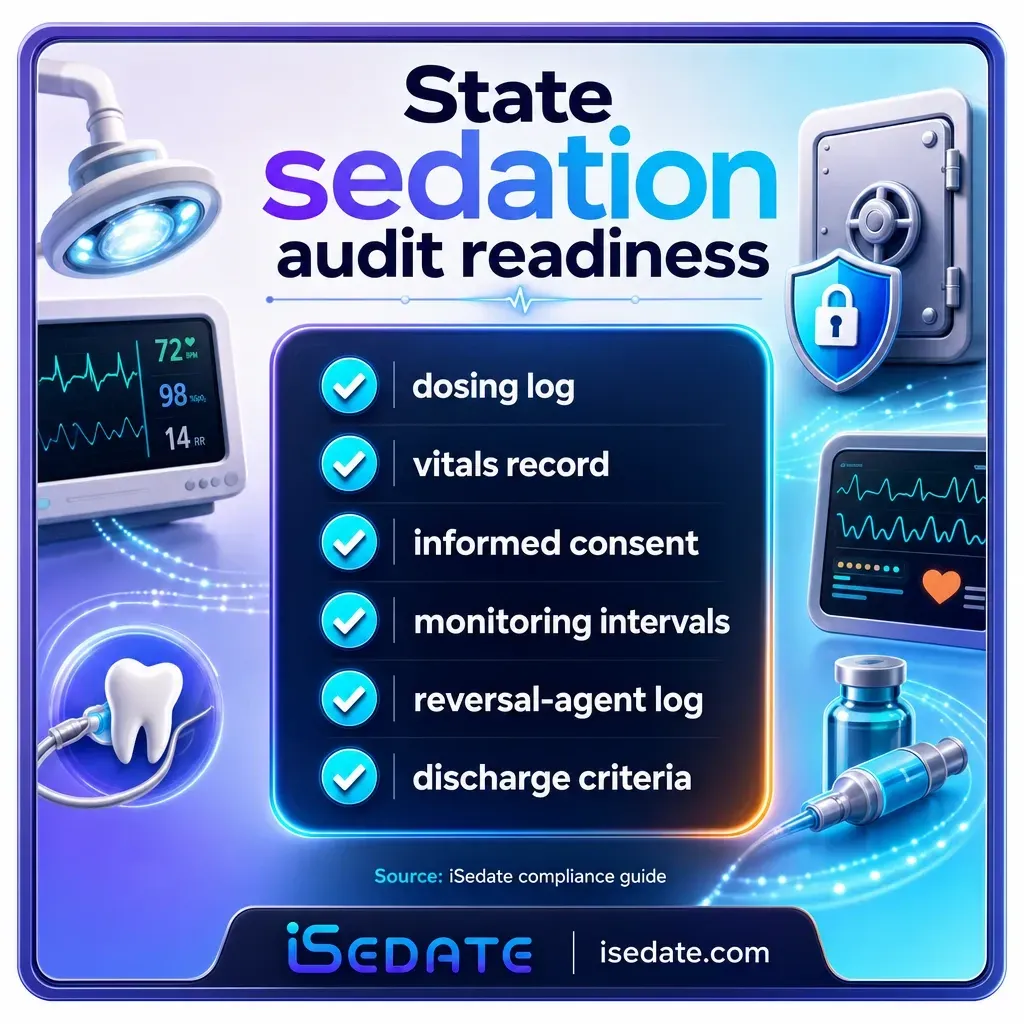
A reviewer checks the record, not your intentions. Because Vermont's standard of care is the full ADA guideline adopted by reference, a review turns on whether your time-oriented anesthetic record is complete, contemporaneous, and consistent with that standard. Under Part 11-1(d), any incident report already puts the patient's record in the board's hands. The sedation can be clinically correct and a thin record can still fail the review.
Source: 2025 Board rules, Part 8-4(c), 8-5(c), 11-1(d)
Keeping the specialty: audit-ready records
Everything above points to one truth: earning the specialty is a one-time hurdle, but keeping it is a daily documentation discipline. A vitals log written by hand during a live case, between titrating a drug and watching an airway, is exactly where records go incomplete, and incomplete records are what a board review and a malpractice claim both attack. In Vermont, where the governing standard is the full ADA time-oriented record, that bar is high.
SedationVault removes that failure point. It captures live patient vitals and the drug log automatically into a time-oriented anesthetic record built to the ADA standard Vermont adopts, so the record writes itself while you focus on the patient. When the board asks for the file, whether in a routine review or as part of a Part 11-1(d) incident report, a complete record is a one-click export, not a scramble through paper. See how it maps to the Vermont standard on the dental sedation compliance and anesthesia record pages.
Book a demo of SedationVault See SedationVault pricingRelated guides and neighboring states
Licensed in a neighboring state, or comparing rules across the region? Each state runs its own board and its own permit structure, so the requirements shift as you cross a border. See our guides for Massachusetts sedation licensing and permit requirements, New Hampshire sedation licensing and permit requirements, and New York sedation licensing and permit requirements, or start from the full Sedation Dentistry Licensing & Permit Requirements by State hub.
The Data Behind These Rules
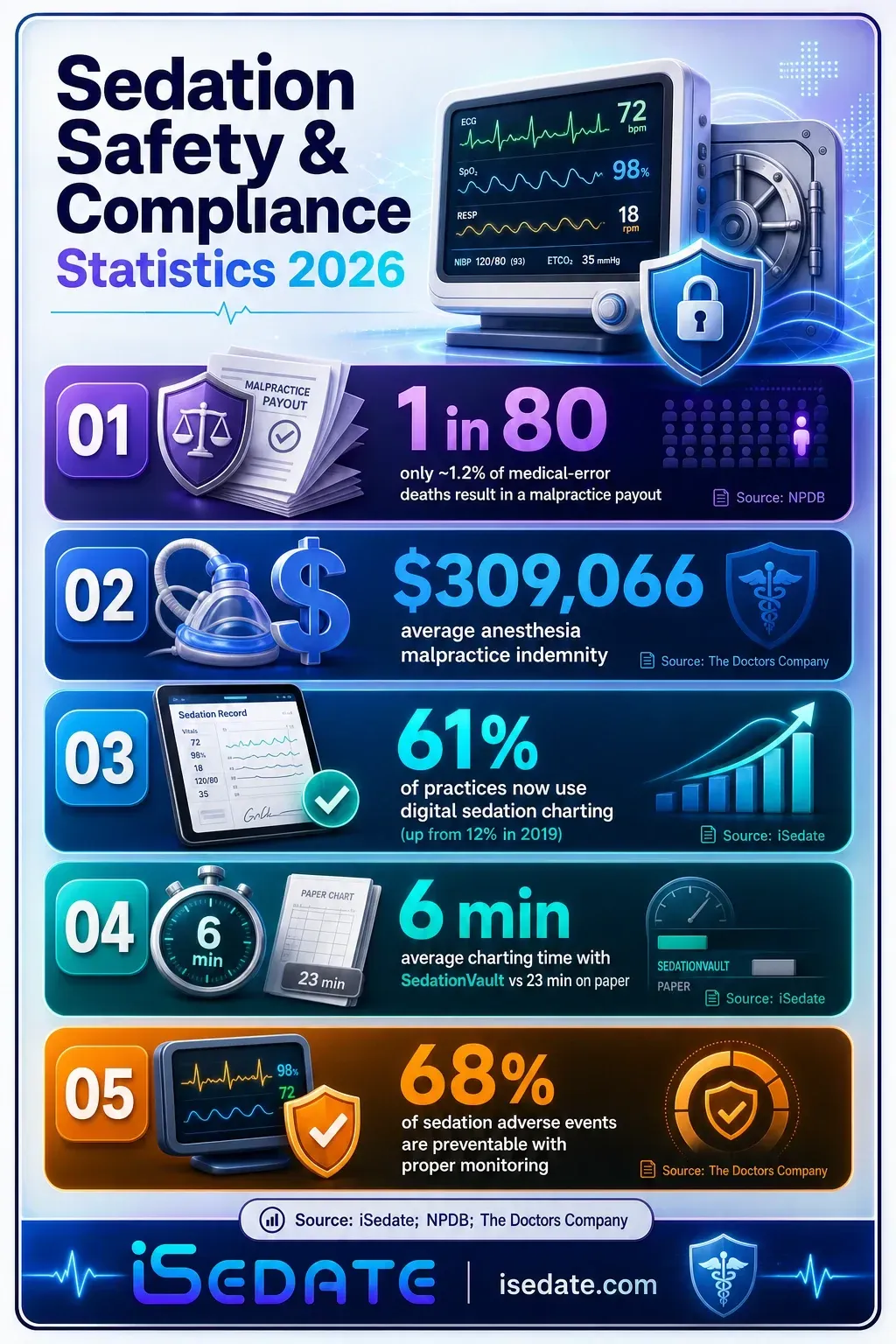
The requirements on this page are the law. These research roundups are the data that explains why they exist and what happens when a practice gets charting or permitting wrong:
Frequently asked questions
Do you need a permit to provide sedation in Vermont?
What sedation specialties does Vermont offer?
How many training hours does Vermont require for conscious sedation?
How do you apply for a Vermont sedation specialty?
How often do you renew a Vermont sedation specialty?
Does the ADA license sedation dentists in Vermont?
Sources
- Vermont Board of Dental Examiners, Office of Professional Regulation (board documents, forms, and applications)
- Administrative Rules of the Board of Dental Examiners, effective October 15, 2025 (Part 8: Sedation and Anesthesia Specialties; Part 10: Renewal and CE; Part 11: Duties)
- Vermont Dental Examiners Conscious Sedation Specialty Instructions (training hours, parenteral patient count, qualification routes)
- Vermont Dentist Application Instructions (application process, Add Specialty, fees, timeline)
This guide summarizes Vermont sedation specialty rules for general information and is not legal advice. The two specialties, training pathways, resuscitation requirements, monitoring, and recordkeeping are drawn from the 2025 Board of Dental Examiners rules, Part 8, and the board's own application instructions, as cited, with the standard of care set by reference to the current ADA guideline under Part 8-6. The exact application fee, the routine office-inspection schedule, the sedation-specific continuing-education hours, and the exact penalty schedule are set by the Vermont Board of Dental Examiners and should be confirmed directly with the board before you act. Requirements current as of November 2026.