






Wyoming Sedation Dentistry Licensing & Permit Requirements
In Wyoming, your dental license alone does not let you provide moderate or deeper sedation. A dentist who administers moderate sedation, deep sedation, or general anesthesia must first hold the matching permit from the Wyoming Board of Dental Examiners, under the board's Chapter 5 rules. The office itself also needs a facility permit. Getting the permit means meeting the board's training, experience, and resuscitation requirements for your level. Keeping it means your facility passes inspection and your anesthesia record survives a board review. This guide walks both halves, and links the official board pages so you never have to guess.
Recent Updates
Last UpdatedNovember 16, 2026
- Rechecked every Wyoming permit rule against the Board of Dental Examiners' current pages and the state administrative-rules source.
- Added the Facility Permit requirement and the board-approved Sedation Facility Inspector process, which the earlier version did not cover.
- Clarified that specific course-hour and clinical-case counts are set by the board and should be confirmed in Chapter 5, rather than quoting a figure that can drift.
- Wyoming regulates sedation under the Board of Dental Examiners' Chapter 5. Nitrous oxide and minimal sedation within the dosage limits need no sedation permit.
- The board issues two sedation permits: a Moderate Sedation permit and a Deep Sedation / General Anesthesia permit, both under §5-6.
- Moderate ("conscious") sedation is the workhorse permit for general dentists. It requires board-approved training, documented clinical experience, and current resuscitation certification.
- From the moderate level up, §5-6 requires vitals recorded at least every five minutes, plus a recorded capnograph and EKG.
- Every sedation office needs a Facility Permit and is re-inspected every five years. Incomplete records are where permits get challenged.

What This Wyoming Permit Guide Covers
- Who issues sedation permits in Wyoming
- The Wyoming sedation levels
- How to get each permit, plus the facility permit
- What the permit requires you to monitor
- What your anesthesia record must capture
- Inspections and keeping the permit
- Keeping the record audit-ready
- Frequently asked questions
- Related guides and neighboring states
- Sources
Who issues sedation permits in Wyoming
Sedation dentistry in Wyoming is regulated by the Wyoming Board of Dental Examiners, the state agency that licenses dentists and issues every sedation and anesthesia permit. The board, not any national body, decides who may sedate, approves the facility inspectors, and takes disciplinary action. The board's authority to regulate general anesthesia and parenteral sedation comes from state statute (Wyo. Stat. § 33-15-130), and the operating detail lives in the board's rules, Agency 034, Chapter 5, "Anesthesia Administration and Sedation Permit Procedures."
The ADA Sets the Standard, the Board Enforces It
The American Dental Association publishes sedation guidelines that Wyoming and most states lean on, but the ADA is a professional association, not a government agency. It does not license you, inspect you, or discipline you. Your permit, your facility inspection, and any sanctions all come from the Wyoming Board of Dental Examiners under Chapter 5. The real federal layers that sit on top are separate: the DEA (controlled-substance records), HIPAA (patient privacy), and your accreditation body if you have one. Treat the ADA guidelines as best practice and Chapter 5 as the rule you are held to.
To apply, you work through the board's own application process for your permit level, and the office clears a facility inspection before anyone is sedated. The applications, the facility-permit forms, and the current fee schedule are published and maintained by the board, and they change periodically, so pull the current versions straight from the board's sedation and anesthesia permit page before you file.
Source: Wyoming Board of Dental Examiners, Sedation & Anesthesia Permits | Board Rules, Chapter 5
The Wyoming sedation levels
Wyoming organizes its requirements by the depth of sedation, not just which drug or route is used. Here is the full ladder, lightest to deepest, with whether each one needs a permit.
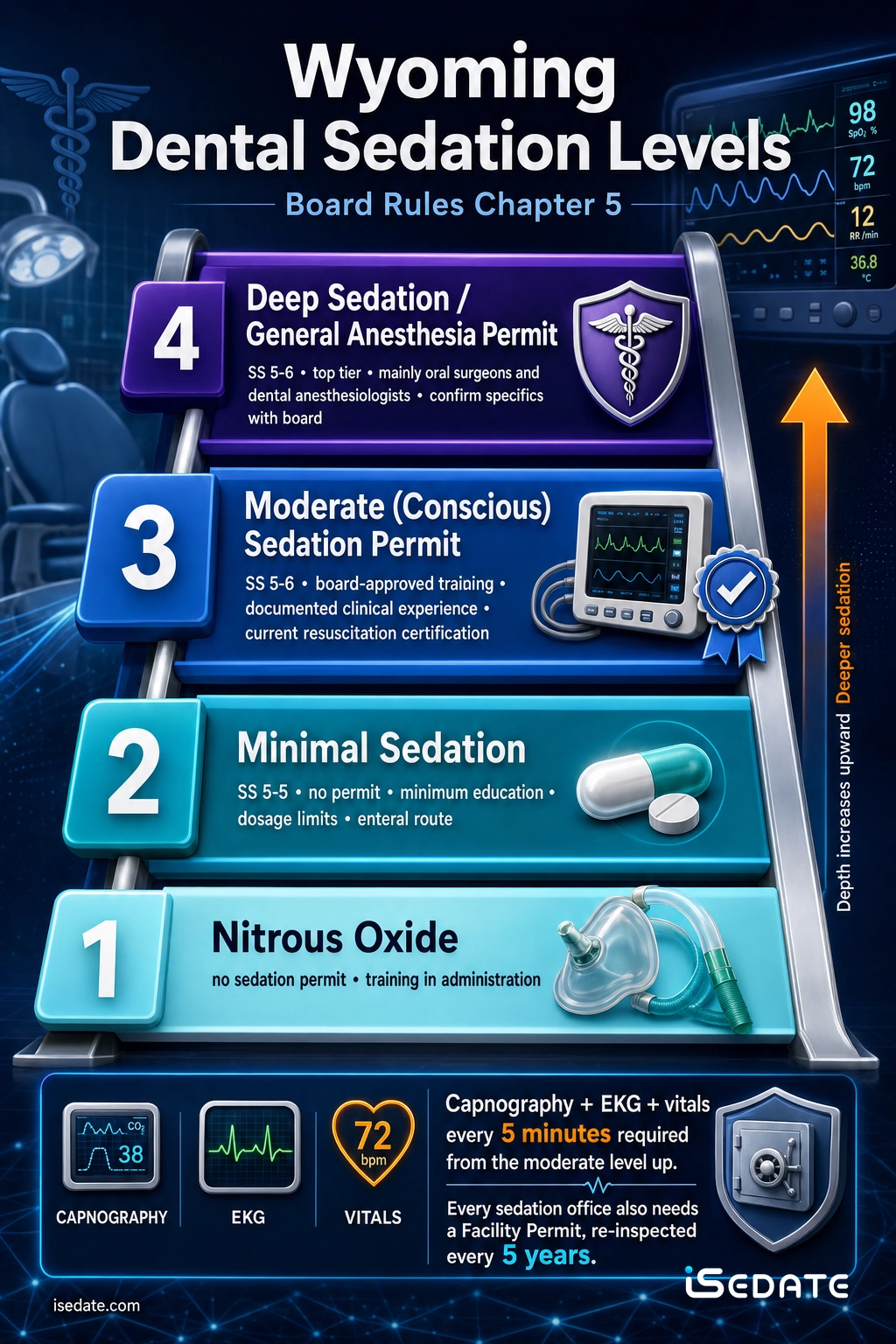
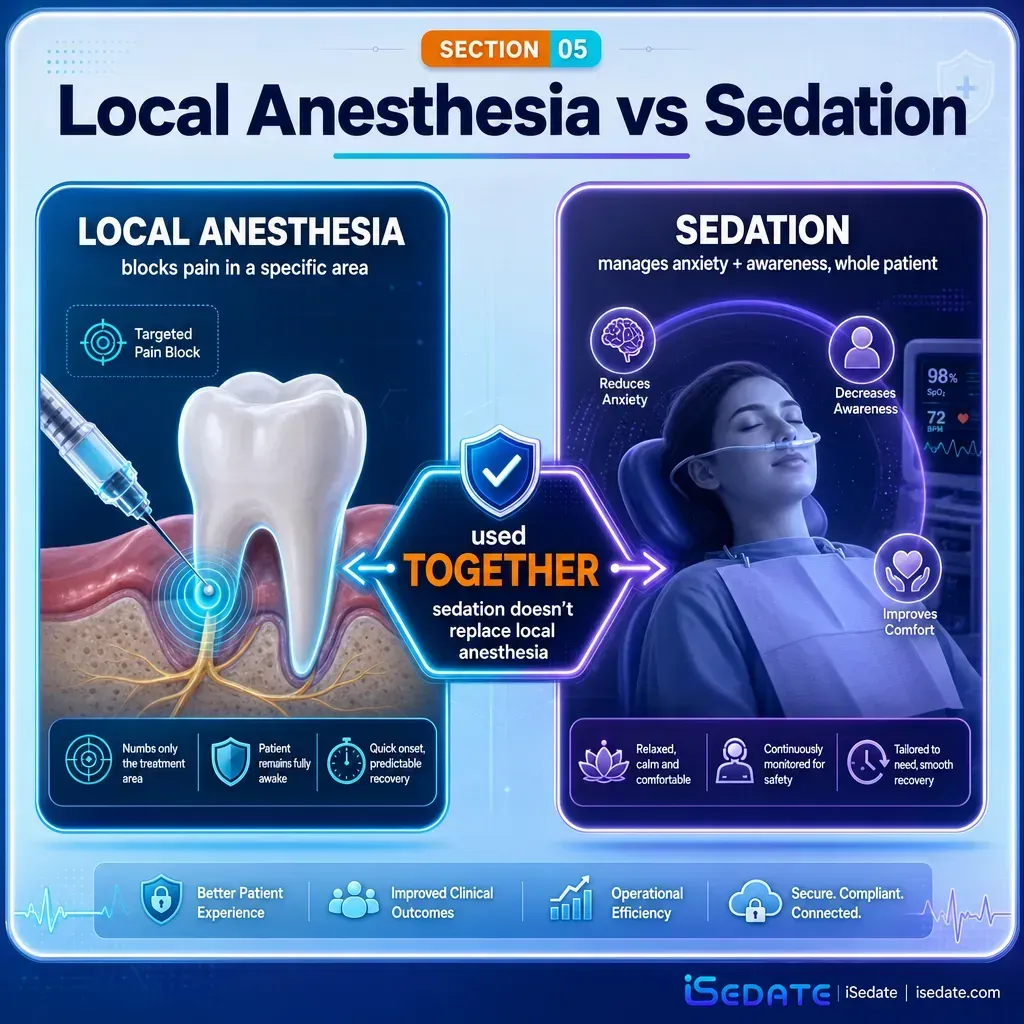
Nitrous oxide and oxygen inhalation. The lightest form of anxiety control, where the patient stays fully responsive. Wyoming treats nitrous as a standard of care that calls for training in its administration, but no sedation permit.
Minimal sedation (§5-5). Minimal sedation, or anxiolysis, is typically a single enteral drug where the patient responds normally to verbal command. Within the dosage limits set in §5-5, Wyoming does not require a sedation permit for adult minimal sedation, though minimum education applies and the dosage ceilings matter: combine agents or push past them and you can cross into moderate sedation, which does need a permit. This is the common starting point for a general practice adding light oral sedation.
Moderate sedation permit (§5-6). This authorizes moderate sedation, long known as conscious sedation, where the patient responds purposefully to verbal or tactile stimulation and keeps their own airway. It is the workhorse permit for dentists doing real oral or IV sedation, and in Wyoming it carries the full §5-6 monitoring and record standard, including a recorded capnograph and EKG.
Deep sedation and general anesthesia permit (§5-6). The top tier. It authorizes deep sedation and general anesthesia, where the patient is not easily aroused or is unconscious and may need airway support. In practice this level is largely the province of dental anesthesiologists and oral and maxillofacial surgeons rather than general dentists. The training and clinical requirements beyond the moderate standard are set by the board under §5-6, so work directly from Chapter 5 and the board if you are pursuing it.
Source: Board Rules, Chapter 5 (§5-5, §5-6)
How to get each permit, plus the facility permit
Each level has its own bar to clear before the board will issue the permit, and the office carries a separate requirement of its own. Here is how the pieces fit together.
| Level | Route / depth | Permit? | What it takes |
|---|---|---|---|
| Nitrous oxide / oxygen | Inhalation, lightest | No sedation permit | Training in administration (confirm current requirement with the board) |
| Minimal sedation (§5-5) | Minimal / anxiolysis, enteral | No sedation permit | Minimum education; stay within the §5-5 dosage limits |
| Moderate ("conscious") sedation permit (§5-6) | Moderate sedation, oral or IV | Yes | Board-approved sedation training, documented clinical experience, current resuscitation certification, then facility inspection |
| Deep sedation / GA permit (§5-6) | Deep sedation / general anesthesia | Yes | Board-set training and clinical requirements beyond the moderate standard (confirm with the board) |
The moderate sedation permit
This is where Wyoming sets a serious bar, because moderate sedation can deepen unexpectedly and the dentist has to be ready to manage the airway. To qualify, the board looks for three things: completion of a board-approved sedation training course, documented clinical experience managing live sedation cases, and current resuscitation certification. Under §5-6(d), all dental personnel involved must hold current BLS, and the permit holder is expected to maintain advanced resuscitation training on top of that.
The board sets the exact figures: the number of didactic course hours, the number of supervised live-patient cases, and the required resuscitation level. Those numbers are periodically revised, so do not rely on a count you read on a continuing-education provider's page. Confirm the current course-hour and clinical-case requirements directly in Chapter 5 and with the Wyoming Board of Dental Examiners before you enroll or apply. Board-approved sedation training is offered through recognized continuing-education providers; the board's continuing education page is the place to confirm what counts.
Wyoming Sedation Permits at a Glance
- Moderate Sedation permit: to administer moderate ("conscious") sedation.
- Deep Sedation / General Anesthesia permit: to administer deep sedation and/or general anesthesia.
- Facility Permit: required for any dental office where sedation is performed, held by a designated responsible dentist.
- Sedation Facility Inspector: inspections are done by a board-approved inspector; an initial inspection uses two, a re-inspection uses one.
The facility permit and inspection
Separate from your personal sedation permit, the office itself needs one. Any dental office where sedation is performed must hold a Facility Permit, applied for by a designated responsible dentist. Before the facility is cleared, a board-approved Sedation Facility Inspector reviews the equipment, emergency medications, and documentation against §5-6. An initial inspection uses two inspectors; later re-inspections use one. If the responsible dentist changes, the new one files a transfer application rather than starting over.
Source: Wyoming Board of Dental Examiners, Facility Permit & Inspections

What the permit requires you to monitor
A permit is permission plus obligation. Once you hold a moderate sedation permit, §5-6 requires you to monitor and record the patient's physiology throughout the case across several systems:
- Circulation: blood pressure and heart rate, recorded before and after anesthesia and at least every five minutes during it.
- Oxygenation: oxygen saturation, recorded at least every five minutes.
- Ventilation: ventilation status, with a capnograph (end-tidal carbon dioxide) listed as required equipment under §5-6(b) and recorded in the anesthesia record under §5-6(c).
- Cardiac rhythm: an EKG, likewise listed as required equipment and recorded in the anesthesia record.
Wyoming requires the capnograph and the EKG from the moderate level upward, which is stricter than many states that reserve those monitors for deep sedation and general anesthesia. For the full clinical breakdown of exactly what to monitor and chart at each depth, see the companion guide, Wyoming Sedation Vitals Monitoring, Charting & Reporting Requirements.
Source: Board Rules, Chapter 5 §5-6
What your anesthesia record must capture
Holding a permit also means holding a set of documentation duties, and those are exactly what a board inspection examines. Under §5-6, a documented anesthesia record must be maintained for every moderate or deeper administration, and it has to carry the full picture of the case.
Wyoming Anesthesia Record: Required Fields
- Medical history and age, and an ASA physical-status classification.
- A pre-procedure airway assessment, respiratory rate, and temperature.
- The medications administered, and the times anesthesia commenced and ended.
- Parenteral access site and method, and any IV fluids, if used.
- Blood pressure, heart rate, and oxygen saturation at least every five minutes, plus the recorded capnograph and EKG.
- The patient's response, including any complications.
- The recovery start time, the discharge time, and the patient's condition at discharge with the permit holder's authorization.
iSedate Insight
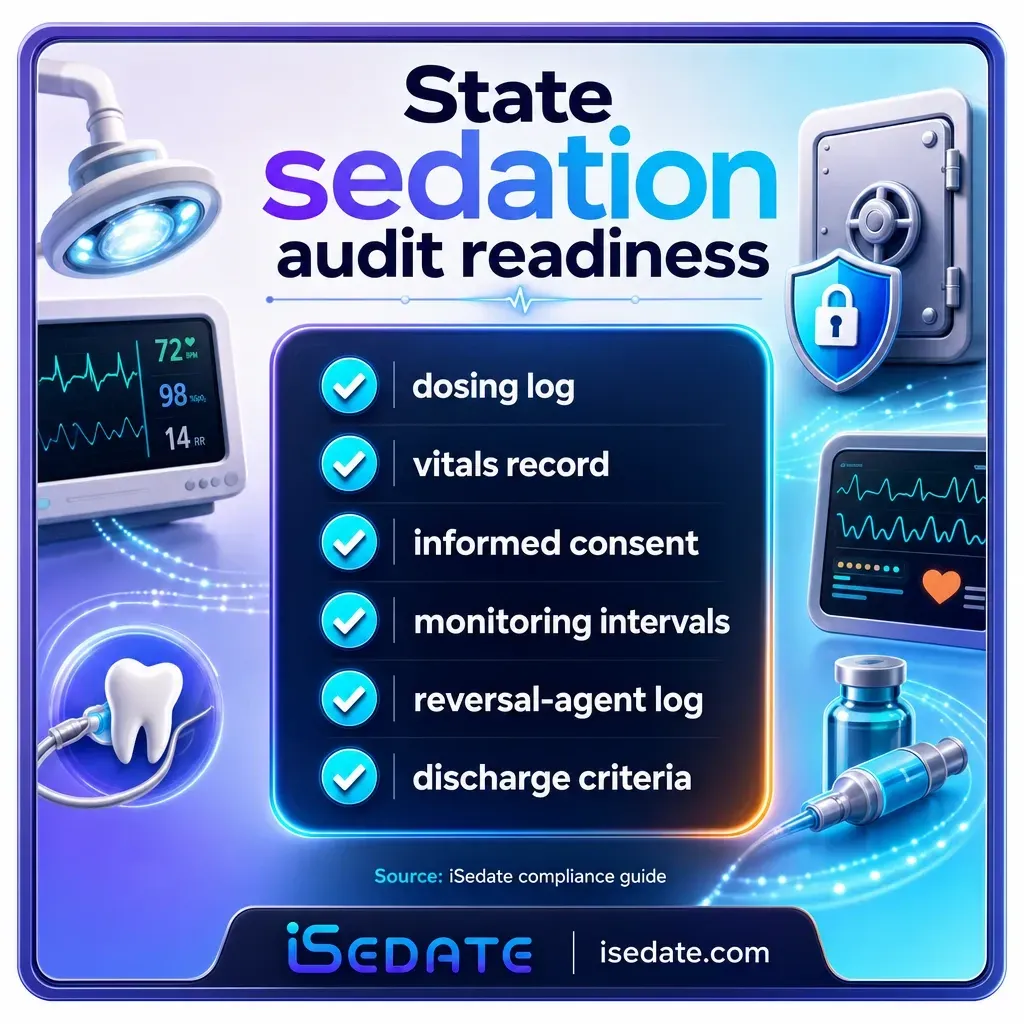
Read the two lists above together and the pattern is clear: a Wyoming board review does not turn on whether the sedation went well. It turns on whether the record is complete, contemporaneous, and intervaled correctly. A chart missing its five-minute entries, its capnograph or EKG trace, its start and end times, or its discharge authorization is a documentation deficiency even when the clinical care was flawless. The dentist did the sedation right and lost on the paperwork.
Source: Board Rules, Chapter 5 §5-6
Inspections and keeping the permit
This is where a permit is kept or lost. Wyoming does not leave the review to chance. Every permitted sedation facility is re-inspected on a fixed cycle, with a board-approved inspector checking the office's equipment, emergency medications, and documentation against §5-6, then reporting findings to the board.
Myth, Busted
Myth: If the sedation case went perfectly, the records are a formality.
Fact: Under Wyoming's Chapter 5, an incomplete anesthesia record is itself a deficiency, independent of the clinical outcome.
Inspections and malpractice claims both start from the chart, not the memory of the appointment. A missing five-minute interval or an absent discharge authorization is a finding on its own.
Keep your license current, keep your resuscitation certification current, and keep your facility permit and inspection on schedule, and the permit renews with the license. Let any of them lapse and the permit is at risk. The exact renewal cycle, continuing-education expectations, and fees are set by the board and change over time, so confirm them on the board's renewal and relicensure page rather than relying on a figure that may be out of date.
Source: Wyoming Board of Dental Examiners, Facility Inspections
Keeping the record audit-ready
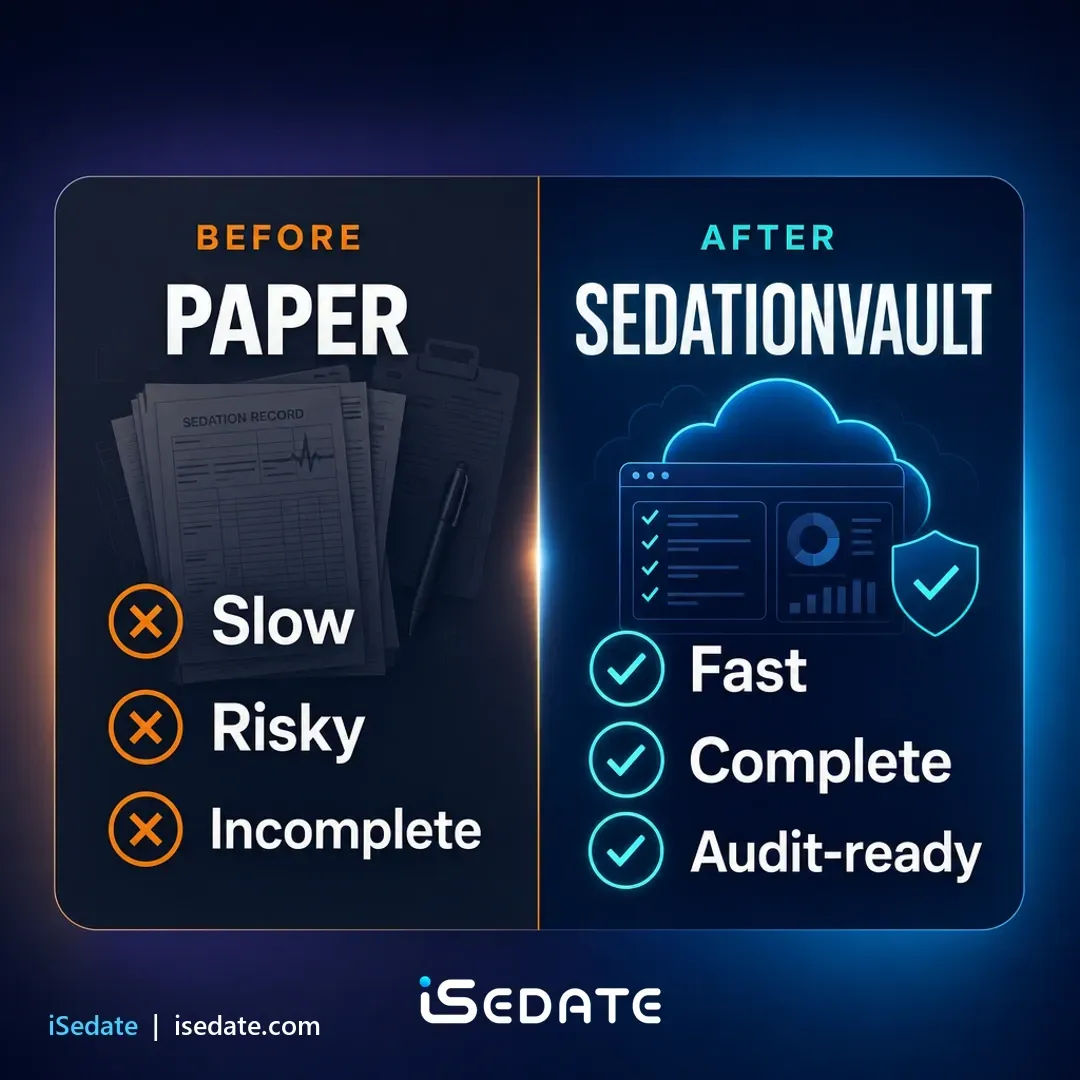
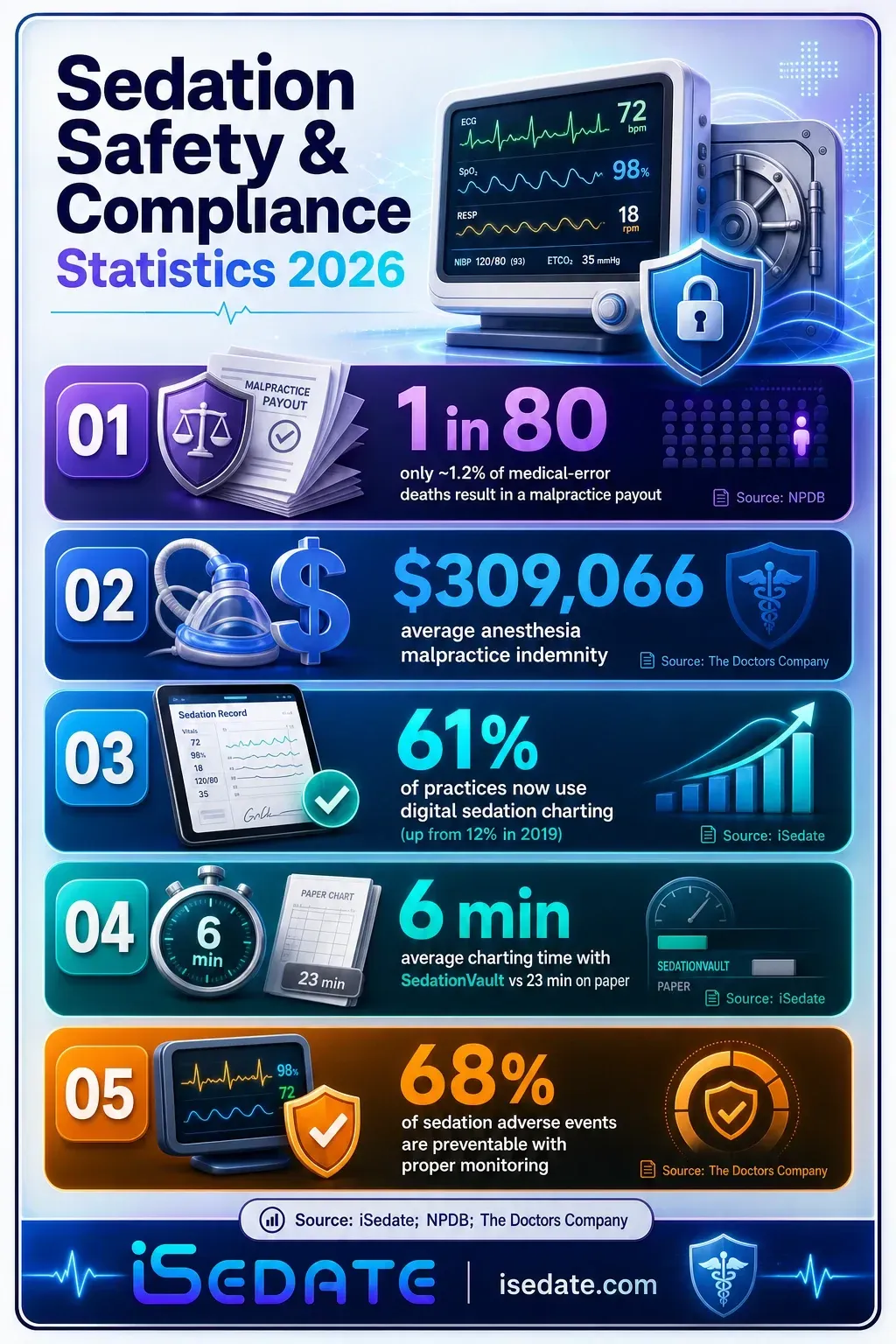
Everything above points to one truth: getting the permit is a one-time hurdle, but keeping it is a daily documentation discipline, re-checked every five years on inspection. A vitals log written by hand every five minutes, between titrating a drug and watching an airway, with a capnograph and EKG trace that also have to make it onto the record, is exactly where charts go incomplete. Incomplete charts are what a board inspection and a malpractice claim both attack.
SedationVault removes that failure point. It captures live patient vitals and the drug log automatically into a time-oriented, Wyoming-compliant anesthesia record, holding the five-minute interval that §5-6 demands, so the record builds itself while you focus on the patient. When the board's inspector asks for the file, a complete record is a one-click export, not a scramble through paper. See how it maps to the rules on the dental sedation compliance and anesthesia record software pages.
Book a Demo of SedationVault See SedationVault PricingFrequently asked questions
What sedation permits does Wyoming offer?
What does it take to qualify for a Wyoming moderate sedation permit?
Does my office need a separate facility permit?
How often is a Wyoming sedation facility inspected?
Do I need a permit for nitrous oxide or light oral sedation?
Related guides and neighboring states
This guide is one spoke of our national, state-by-state series. For the companion clinical guide to charting the vitals these permits require, see Wyoming Sedation Vitals Monitoring, Charting & Reporting Requirements, and for the full map, the hub, Sedation Dentistry Licensing & Permit Requirements by State.
Licensed in a neighboring state, or practicing across state lines? See our guides for Colorado Sedation Dentistry Licensing & Permit Requirements, Idaho Sedation Dentistry Licensing & Permit Requirements, Montana Sedation Dentistry Licensing & Permit Requirements, Nebraska Sedation Dentistry Licensing & Permit Requirements, South Dakota Sedation Dentistry Licensing & Permit Requirements, and Utah Sedation Dentistry Licensing & Permit Requirements.
Sources
- Wyoming Board of Dental Examiners, Dentists & Sedation Providers (permit levels, facility permit, inspector process, applications)
- Wyoming Board of Dental Examiners, Laws & Rules
- Wyoming Administrative Rules, Agency 034, Chapter 5: Anesthesia Administration and Sedation Permit Procedures (monitoring, records, §5-5, §5-6)
- Wyoming Legislature, Wyo. Stat. § 33-15-130 (statutory authority for sedation and anesthesia permits)
- Wyoming Board of Dental Examiners, Renewal & Relicensure
- Wyoming Board of Dental Examiners, Continuing Education
This guide summarizes Wyoming sedation permit rules for general information and is not legal advice. The permit levels, the facility permit, the monitoring and record standard, and the five-year inspection cycle are drawn from the Wyoming Board of Dental Examiners' current pages and Board Rules Chapter 5 as cited. The exact course-hour and clinical-case counts, the required resuscitation level, application forms, fees, the board's phone number, the renewal cycle, continuing-education hours, the penalty schedule, and the Deep Sedation / General Anesthesia training specifics are set by the Wyoming Board of Dental Examiners and should be confirmed directly with the board before you act.