







Idaho Sedation Dentistry Licensing & Permit Requirements
In Idaho, you cannot sedate a patient on your dental license alone. Any dentist who provides moderate sedation, deep sedation, or general anesthesia must first hold the matching permit from the Idaho State Board of Dentistry, issued under IDAPA 24.31.01. Getting the permit means meeting the training requirements for your level and clearing a site evaluation. Keeping it means your sedation records survive a board review and your continuing education stays current on a five-year clock. This guide walks both halves: how an Idaho dentist gets a sedation or anesthesia permit, what it costs, and what it takes to keep it.
Recent Updates
Last UpdatedNovember 16, 2026
- Verified every rule citation against the current IDAPA 24.31.01 (effective July 1, 2024) and the Idaho State Board of Dentistry pages.
- Added the current sedation permit fee of 300 dollars (effective July 1, 2026) from the Board's published fee schedule.
- Added the application, site-evaluation, and "use of other anesthesia personnel" steps, with direct links to the Board's official forms.
- Replaced general references with direct links to the original Board rule, application, and statute pages.
- Idaho issues four sedation and anesthesia permits under IDAPA 24.31.01.002.05: Moderate Enteral, Moderate Parenteral, Deep Sedation, and General Anesthesia. Nitrous oxide and narrow minimal sedation need no permit.
- Moderate sedation requires Board-approved moderate sedation training completed within the five years before applying. Deep Sedation and General Anesthesia require a CODA-accredited advanced education program within the preceding five years.
- The Moderate Parenteral permit (which covers IV) is also the permit required to sedate children under 16 or under 100 pounds.
- The sedation permit application fee is 300 dollars effective July 1, 2026, and the permit renews every five years with at least 25 sedation CE hours. The dental license renews separately with 30 CE hours.
- The sedation record must live in the patient's dental record and be held at least seven years. Incomplete records are where permits are challenged.

What We Cover in This Guide
- Who issues sedation permits in Idaho
- The Idaho sedation permit levels
- How to get or upgrade each permit
- Fees, the application, and site evaluation
- What your permit requires you to monitor
- Using an anesthesiologist, CRNA, or another dentist
- Reporting and recordkeeping obligations
- Renewal, CE, and reinstatement
- Record reviews and keeping your permit
- Keeping audit-ready sedation records
- Frequently asked questions
- Related guides and neighboring states
- Sources
Who issues sedation permits in Idaho
Sedation dentistry in Idaho is regulated by the Idaho State Board of Dentistry, which sits within the Division of Occupational and Professional Licenses (DOPL). The Board licenses dentists and issues every sedation and anesthesia permit. The Board, not any national body, decides who may sedate, runs the record reviews, and takes disciplinary action. The rules live in IDAPA 24.31.01, with the current version effective July 1, 2024, and every requirement below traces to a section of that chapter. You can reach the Board's office at (208) 334-2369 to confirm anything that is set by Board standard rather than printed in the rule text.
Who Holds You Accountable
The ADA writes the standard, the Board writes the law. The American Dental Association publishes sedation guidelines, updated in 2025, that Idaho incorporates by reference in IDAPA 24.31.01. But the ADA is a professional association, not a government agency. It does not license you, audit you, or discipline you. Your permit, your record reviews, and any sanction all come from the Idaho State Board of Dentistry. Federal rules layer on top for narrow pieces (the DEA governs your controlled-substance records and HIPAA governs patient privacy), but the permit itself is Idaho's. Treat the ADA guidelines as best practice and the Board's rule as the law you are held to.
Source: Idaho State Board of Dentistry (DOPL) | IDAPA 24.31.01
The Idaho sedation permit levels
Idaho names its permits by depth and route, and the level reflects how deeply the patient is sedated, not just which drug is used. Two lighter categories sit below the permit line, and four permits sit above it. Here is the full ladder, each with its governing section of IDAPA 24.31.01.
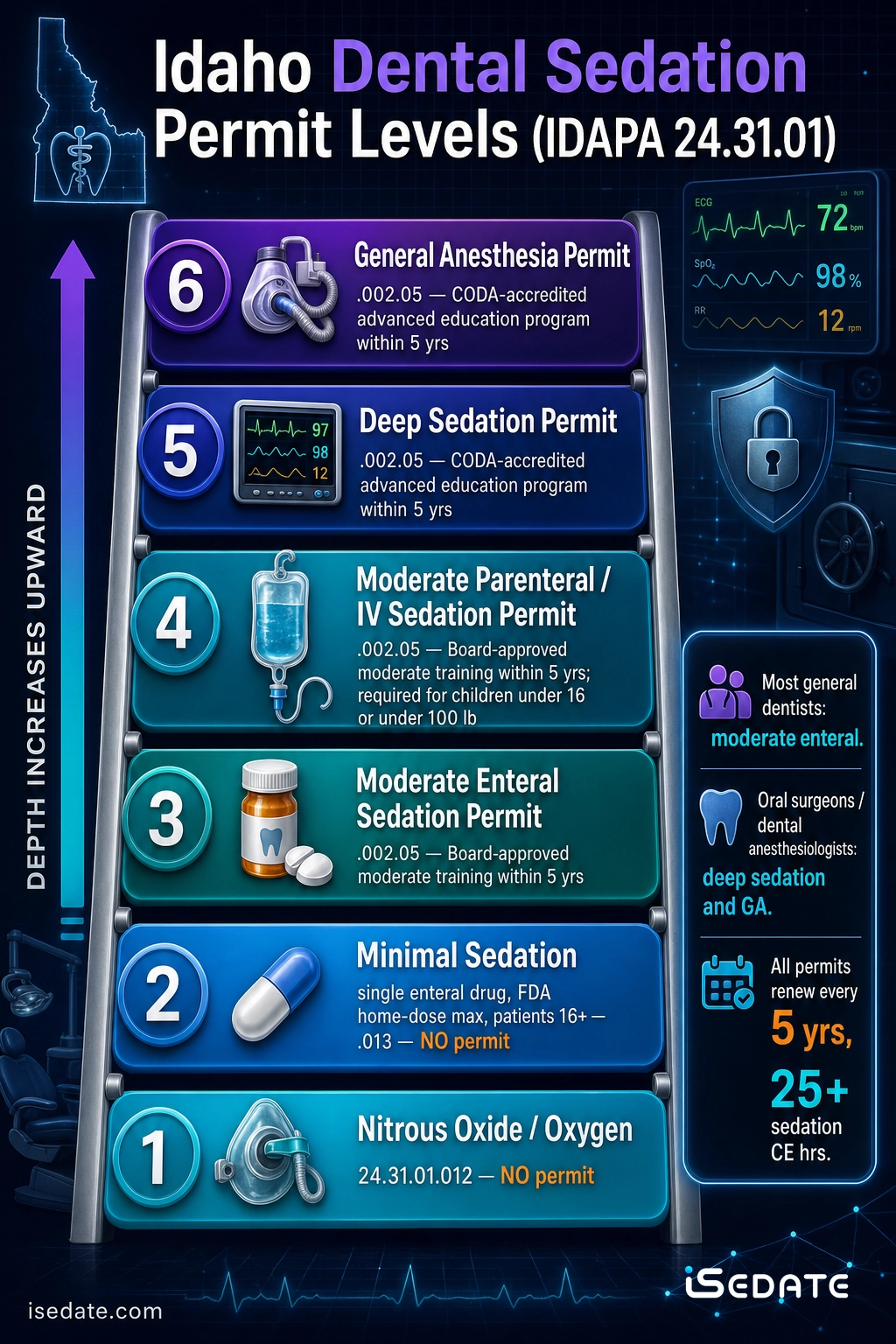
Nitrous oxide and oxygen (IDAPA 24.31.01.012). The lightest form of anxiety control, where the patient stays fully responsive. It requires no sedation permit, though nitrous for a child under 16 or under 100 pounds is handled differently under the rules.
Minimal sedation (IDAPA 24.31.01.013). For patients 16 and older, a single enteral drug given within the maximum FDA dose for unmonitored home use requires no permit. Step beyond that single-drug, home-dose ceiling and you are into permitted territory.
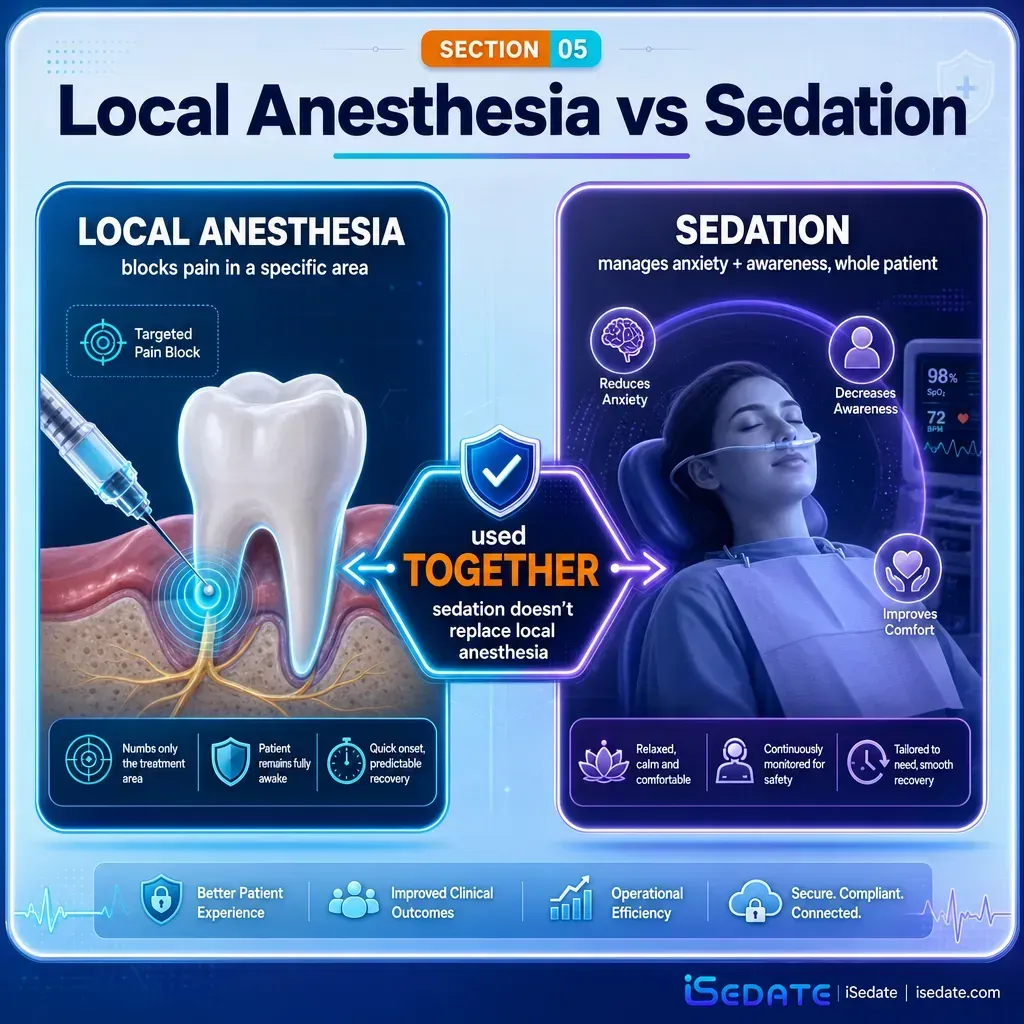
Moderate Enteral Sedation Permit (IDAPA 24.31.01.002.05). Authorizes moderate sedation by the enteral route or a combined inhalation-enteral route, meaning oral sedation and oral-plus-nitrous. The patient responds purposefully and keeps their own airway. This is the workhorse permit for dentists who do real oral Conscious Sedation, the common term for moderate sedation.
Moderate Parenteral Sedation Permit (IDAPA 24.31.01.002.05). Authorizes moderate sedation by any route, including the parenteral (IV) route. Because the IV route carries a higher risk and a faster onset, it sits above the enteral permit. Idaho also makes this the permit required to sedate children under 16 or under 100 pounds, a distinct Idaho rule worth noting if you treat young patients.
Deep Sedation Permit and General Anesthesia Permit (IDAPA 24.31.01.002.05). The top tiers, each authorizing its level by any route, where the patient is not easily aroused or is unconscious and may need airway support. These permits are largely the province of dental anesthesiologists and oral and maxillofacial surgeons, and they require the most advanced training pathway. If you are pursuing deep sedation or general anesthesia, work directly from the Board's rule, as its training specifics run beyond the scope of this guide.
Myth, Busted
Myth: If you are already a licensed Idaho dentist, you can offer sedation whenever a patient asks for it.
Fact: Your dental license does not include sedation privileges. Under IDAPA 24.31.01.002.05, you must hold the matching sedation or anesthesia permit before administering moderate sedation or deeper.
The only exceptions are nitrous oxide and the narrow minimal-sedation category, which sit below the permit line. Everything above them requires the permit first.
Source: IDAPA 24.31.01.002.05, .012, .013
How to get or upgrade each permit
Each permit has its own bar to clear, and Idaho defines that bar by the training pathway you complete. You move up the ladder by meeting the next level's requirements and applying to the Board. The requirements below come straight from IDAPA 24.31.01.
| Permit | Route / depth | Training pathway (per rule) | Renewal |
|---|---|---|---|
| Moderate Enteral (24.31.01.002.05) | Enteral or inhalation-enteral | Board-approved moderate sedation training within 5 years of applying | 5 years, 25+ sedation CE hrs |
| Moderate Parenteral (24.31.01.002.05) | Any route, incl. IV | Board-approved moderate sedation training within 5 years of applying | 5 years, 25+ sedation CE hrs |
| Deep Sedation (24.31.01.002.05) | Deep sedation, any route | CODA-accredited advanced education program within 5 years | 5 years, 25+ sedation CE hrs |
| General Anesthesia (24.31.01.002.05) | General anesthesia, any route | CODA-accredited advanced education program within 5 years | 5 years, 25+ sedation CE hrs |
The moderate permits
To hold either moderate permit, the rule requires completion of Board-approved training in moderate sedation within the five years before you apply (§ 002.05). The practical difference between the two is the route: the enteral permit stops at oral and oral-plus-nitrous sedation, while the parenteral permit adds the IV route and the heavier competency that comes with titrating a drug into a vein.
The rule sets the training standard but leaves the exact hours to the Board and the approved course. Sedation CE providers describe the moderate pathways in concrete terms. DOCS Education, a national sedation CE provider, lists roughly 24 classroom hours plus three documented live patient cases and ACLS for adult oral moderate sedation, and about 60 didactic hours plus clinical management of at least 20 live patients and ACLS for IV moderate sedation. Treat those figures as a planning guide, not as the Idaho rule: the exact hours, live-case counts, and resuscitation certifications are set by the approved training standard and the Board, and they can change. Confirm the exact requirement with the Idaho State Board of Dentistry before you enroll.
Deep sedation and general anesthesia
The two top permits take a different route entirely. Rather than a continuing-education course, § 002.05 requires completion of a CODA-accredited advanced education program (the kind of residency training a dental anesthesiologist or oral and maxillofacial surgeon completes) within the five years preceding the application. This is the single biggest jump on the ladder, and it is why deep sedation and general anesthesia are concentrated among specialists.
State Law
Source: IDAPA 24.31.01.002.05 | DOCS Education, Idaho sedation training pathways
Fees, the application, and site evaluation
Once your training is in hand, the permit itself comes down to an application, a fee, and a site evaluation. The Board publishes the forms, so you do not have to guess at the process.
Idaho Permit Fee
How to Apply for an Idaho Sedation Permit
- Complete the training for your level (Board-approved moderate sedation course, or a CODA-accredited advanced education program for deep sedation and general anesthesia).
- File the Board's form: the official Application for Sedation Permit with the non-refundable fee, plus a sedation-permit verification if you already hold one in another state.
- Pass a site evaluation: the Board's Sedation Permit Site Evaluation Form confirms your facility, equipment, and emergency drugs meet the standard for your level.
- Pay the fee: 300 dollars for the sedation permit as of July 1, 2026, confirmed on the Board of Dentistry fee schedule. Renewals and re-applications are managed through the DOPL online licensing portal linked from that page.
Do not administer sedation at a permitted level until the permit is actually issued. The rule is explicit that the permit must be in hand first, so build your scheduling around the Board's processing time rather than your course completion date. Fees and forms change, so verify the current version on the Board's page before you file.
Source: Idaho State Board of Dentistry fee schedule | Application for Sedation Permit

What your permit requires you to monitor
A permit is permission plus obligation. Once you hold a sedation permit, § 002.05 requires you to be trained to a level consistent with the Board's requirements, and under § 200.14 the qualified sedation provider must monitor the patient's condition until the patient is discharged. The specific parameters follow the Board's monitoring standard, which is built to track the ADA sedation guidelines Idaho incorporates by reference: oxygen saturation by pulse oximetry, heart rate and blood pressure, ventilation, and level of consciousness, with the monitoring load increasing as sedation deepens.
Because Idaho sets the detailed parameters and intervals in a Board standard rather than printing them in the rule text, confirm the current monitoring standard with the Board. For the full clinical breakdown of what to monitor and chart at each depth, see the companion guide on Idaho sedation vitals monitoring, charting, and reporting requirements, and the national overview in our Sedation Dentistry Licensing & Permit Requirements by State hub.
Source: IDAPA 24.31.01.002.05 | Use of Other Anesthesia Personnel (Section 200.14)
Using an anesthesiologist, CRNA, or another dentist
Not every dentist who treats a sedated patient has to hold the permit personally. Idaho allows a dentist without a sedation permit to perform the dental procedure while a qualified outside provider delivers the sedation, as long as the arrangement meets the Board's conditions.
Under the Board's Use of Other Anesthesia Personnel rules, a dentist who does not hold a sedation permit may operate on a patient sedated by an anesthesiologist, a certified registered nurse anesthetist (CRNA), or another dentist who holds the matching permit. The operating dentist must notify the Board in writing, have the same personnel, facilities, equipment, and drugs available that a permitted dentist would, and the sedation record still belongs in the patient's dental record. In other words, bringing in an anesthesia provider does not remove the documentation duty; it just shifts who administers the drugs.
Source: Idaho Board of Dentistry: Use of Other Anesthesia Personnel (Section 200.14)
Reporting and recordkeeping obligations
Holding a permit also means holding a set of documentation and reporting duties, and these are exactly what a board review examines.
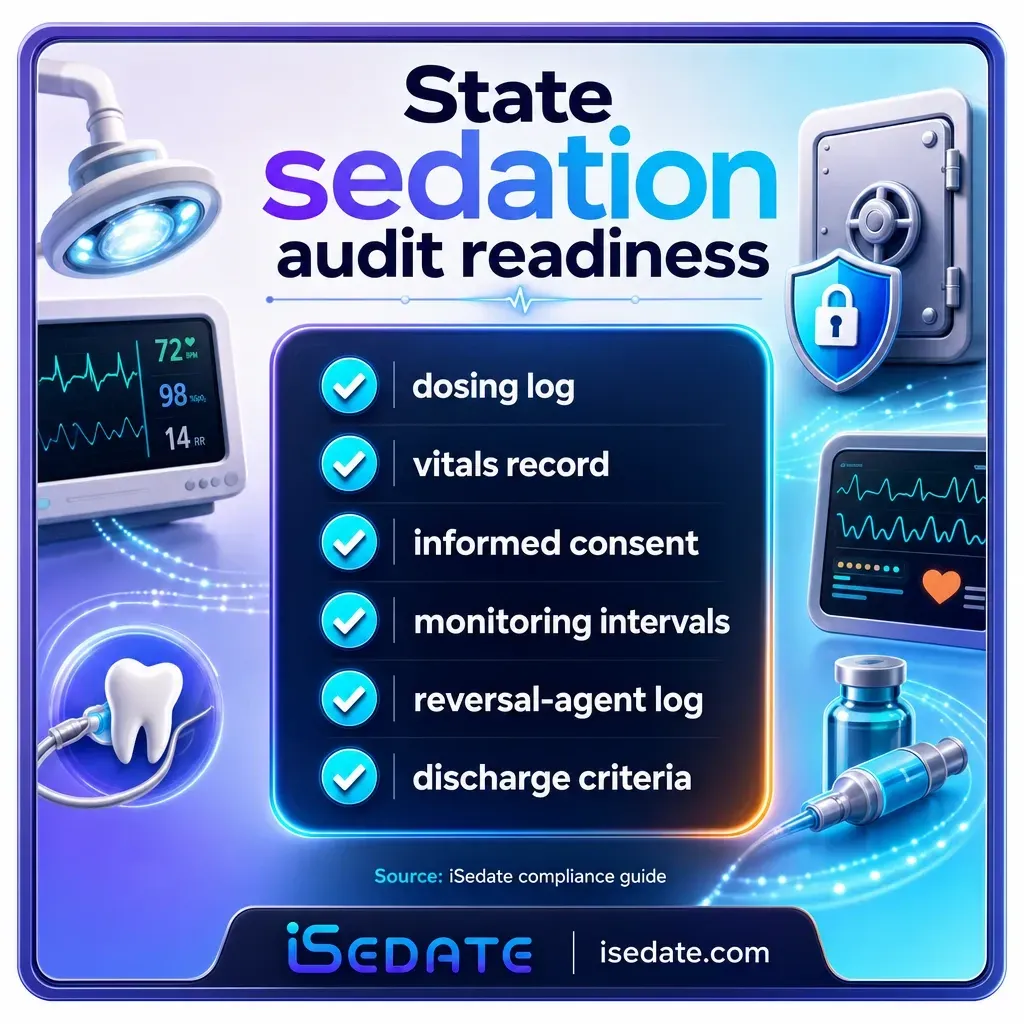
The sedation record lives in the dental record. Under § 200.14, the sedation record must be maintained in the patient's dental record and is the responsibility of the treating dentist, and under § 200.08 that record is kept for at least seven years. Even when a separate qualified provider administers the sedation, the operating dentist owns the record.
State Law
Adverse-event reporting runs on a seven-day clock. Under § 200.15, a dentist must report in writing, within seven days, any patient death or any transport of a patient to a hospital or emergency room for treatment that exceeds 24 hours. This is one of the few sedation timelines Idaho states directly, so build it into your office emergency protocol.
State Law
Required emergency medications. Under § 200.10, every anesthetic site must stock the Board's required emergency medications. Keeping that stock current and documented is part of staying ready for both a sedation emergency and a site review.
Source: IDAPA 24.31.01.200.15, .200.10, and .200.14
Renewal, CE, and reinstatement
Your sedation permit renews on its own clock, separate from your dental license. Under § 002.05, an Idaho sedation permit renews every five years and requires at least 25 continuing-education credit hours in sedation, which may include training in medical and office emergencies. That is separate from your dental license renewal, which carries 30 hours of oral-health or health-related continuing education under § 002.06.
Idaho continuing-education clocks (hours per cycle)
If a permit lapses and you need reinstatement, § 002.05 lets you apply within five years of the cancellation or surrender, but you must meet the facility and personnel requirements again and show an average of roughly five sedation CE hours per year for the period since the permit was canceled. A complete renewal must also reach the Board before the permit expires, so a long gap is costly to close and a missed deadline can cancel the permit outright.
Confirm your current renewal cycle, the exact CE breakdown, the late-renewal grace period, and any resuscitation-certification requirement directly with the Idaho State Board of Dentistry so your permit never lapses at renewal.
Source: IDAPA 24.31.01.002.05 and .002.06
Record reviews and keeping your permit
This is where a permit is kept or lost. The permits that authorize moderate and deeper sedation carry the heaviest scrutiny, because that is where the risk is. The Board can review a permit holder's records, and reinstating a canceled permit requires meeting the Board's facility and personnel requirements again (§ 002.05), which tells you how seriously the Board treats the standing of an active permit. The routine on-site inspection cadence for permit holders is set by the Board, so confirm the current schedule with the Idaho State Board of Dentistry.
iSedate Pro Tip
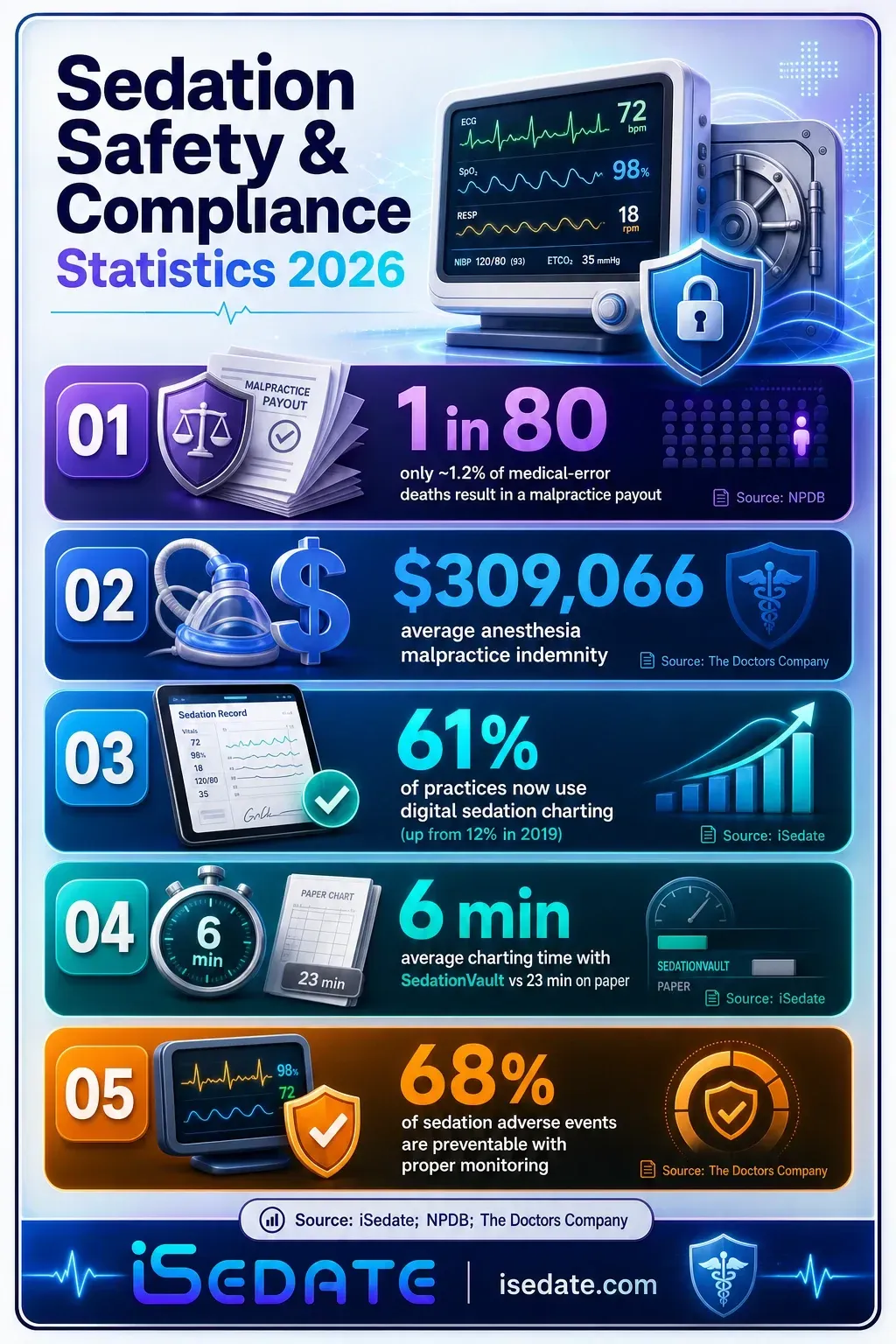
Treat the record, not the intention, as what gets reviewed. A board review turns on whether your sedation record is complete, contemporaneous, housed in the patient's dental record, and retained the full seven years. The sedation can be flawless and the file can still fail if the record has gaps, which is also the exposure a malpractice claim is built on. Fixing a record after the fact is the one thing you cannot do, so the discipline has to be live.
Source: IDAPA 24.31.01.002.05 and .200.08 | Idaho State Board of Dentistry
Keeping audit-ready sedation records
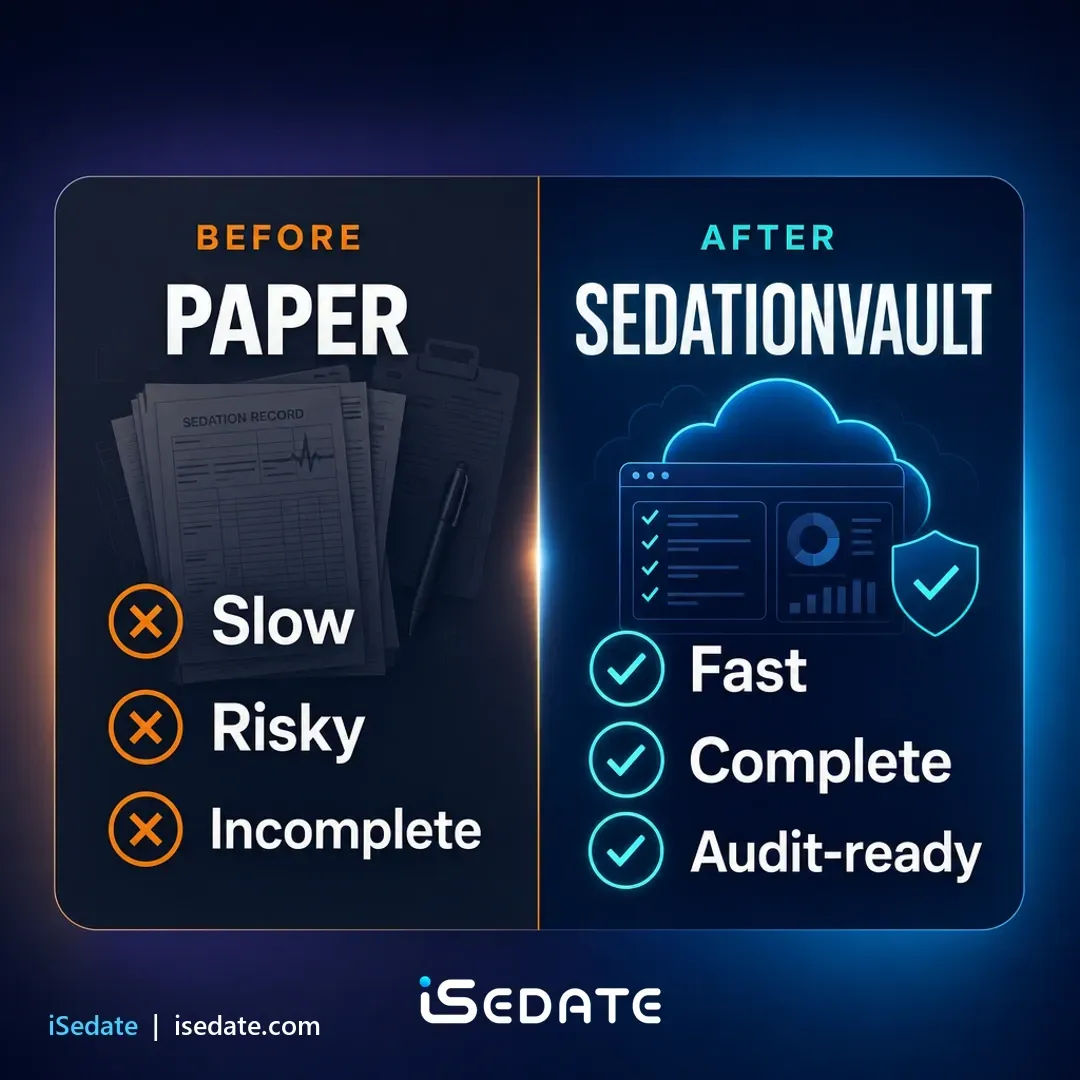
Everything above points to one truth: getting the permit is a one-time hurdle, but keeping it is a daily documentation discipline. A vitals log written by hand during a live case, between titrating a drug and watching an airway, is exactly where records go incomplete, and incomplete records are what a board review and a malpractice claim both attack.
SedationVault by iSedate removes that failure point. It captures live patient vitals and the drug log automatically into a time-oriented sedation record that lives in the patient's dental record the way § 200.14 requires, built to track the Board's monitoring standard, so the record writes itself while you focus on the patient. When the Board asks for the file, a complete record is a one-click export, not a scramble through paper. See how it maps to Idaho's rules on the dental sedation compliance and anesthesia record software pages.
Book a Demo of SedationVault See SedationVault PricingFrequently asked questions
Do you need a permit to sedate patients in Idaho?
What sedation permits does Idaho offer?
How do you get a moderate or IV sedation permit in Idaho?
How much does an Idaho sedation permit cost?
How often do you renew an Idaho sedation permit?
How long must Idaho sedation records be kept?
Related guides and neighboring states
Permit levels, training windows, and record rules differ from state to state. Licensed in a neighboring state, or practicing across a border? See our sedation licensing guides for each one, and the full national overview:
- Montana Sedation Dentistry Licensing & Permit Requirements
- Nevada Sedation Dentistry Licensing & Permit Requirements
- Oregon Sedation Dentistry Licensing & Permit Requirements
- Utah Sedation Dentistry Licensing & Permit Requirements
- Washington Sedation Dentistry Licensing & Permit Requirements
- Wyoming Sedation Dentistry Licensing & Permit Requirements
- Sedation Dentistry Licensing & Permit Requirements by State (all 50)
For the Idaho clinical companion, see Idaho Sedation Vitals Monitoring, Charting & Reporting Requirements.
Sources
How We Verified This Guide
- Idaho State Board of Dentistry (Division of Occupational and Professional Licenses) (board, fee schedule, apply/renew portal)
- IDAPA 24.31.01: Rules of the Idaho State Board of Dentistry (current, effective 7-1-2024)
- Idaho Board of Dentistry: Application for Sedation Permit
- Idaho Board of Dentistry: Sedation Permit Site Evaluation Form
- Idaho Board of Dentistry: Use of Other Anesthesia Personnel (Section 200.14)
- DOCS Education, Idaho sedation training pathways (continuing-education provider, cited only for the commonly described training-hour figures, which should be confirmed with the Board)
- ADA Guidelines for the Use of Sedation and General Anesthesia by Dentists (adopted October 2025), the national professional standard Idaho incorporates by reference and the Board's monitoring standard tracks.
This guide summarizes Idaho sedation permit rules for general information and is not legal advice. The permit levels, training pathways, renewal cycle, continuing-education hours, reporting duties, and record rules are drawn from IDAPA 24.31.01 as cited. The 300 dollar fee is from the Board's published fee schedule effective July 1, 2026. The specific training-hour and live-patient figures are described by a continuing-education provider, not the rule text, and should be verified. The routine inspection schedule, the exact penalty schedule, the Board's detailed monitoring standard and intervals, and the enumerated contents of the required sedation record are set by the Idaho State Board of Dentistry and should be confirmed directly with the Board, at (208) 334-2369, before you act.