






Sedation Dentistry Techniques and Best Practices
Sedation dentistry is practiced across every dental specialty, and the difference between a safe, defensible case and a preventable adverse event is almost never the drug itself. It is the technique matched to the patient, the monitoring that catches trouble early, and the record that proves what happened. This guide walks through the four levels of sedation, the core techniques used in dental offices, and the best practices that leading sedation providers follow at each step, from patient selection and consent through monitoring, documentation, emergencies, and discharge.
Key Takeaways
- Sedation is a continuum, not four separate states. A patient can drift deeper than intended, so every technique must be backed by the ability to rescue the patient from one level deeper than the target.
- The level of sedation is independent of the route. Oral, inhaled, and intravenous drugs can all reach moderate or deep sedation, so monitoring and permits track the deepest plausible depth, not the plan.
- Patient selection using the ASA Physical Status classification, an airway exam, and OSA screening prevents more complications than any single piece of equipment.
- Capnography detects apnea and hypoventilation before oxygen saturation drops. One 2025 study found it warned a median of 35 seconds earlier than pulse oximetry.
- The 2025 ADA sedation and anesthesia guidelines (the first comprehensive update in nearly a decade) tightened documentation, added BMI to baseline vitals, and recommend supplemental oxygen from moderate sedation through general anesthesia.
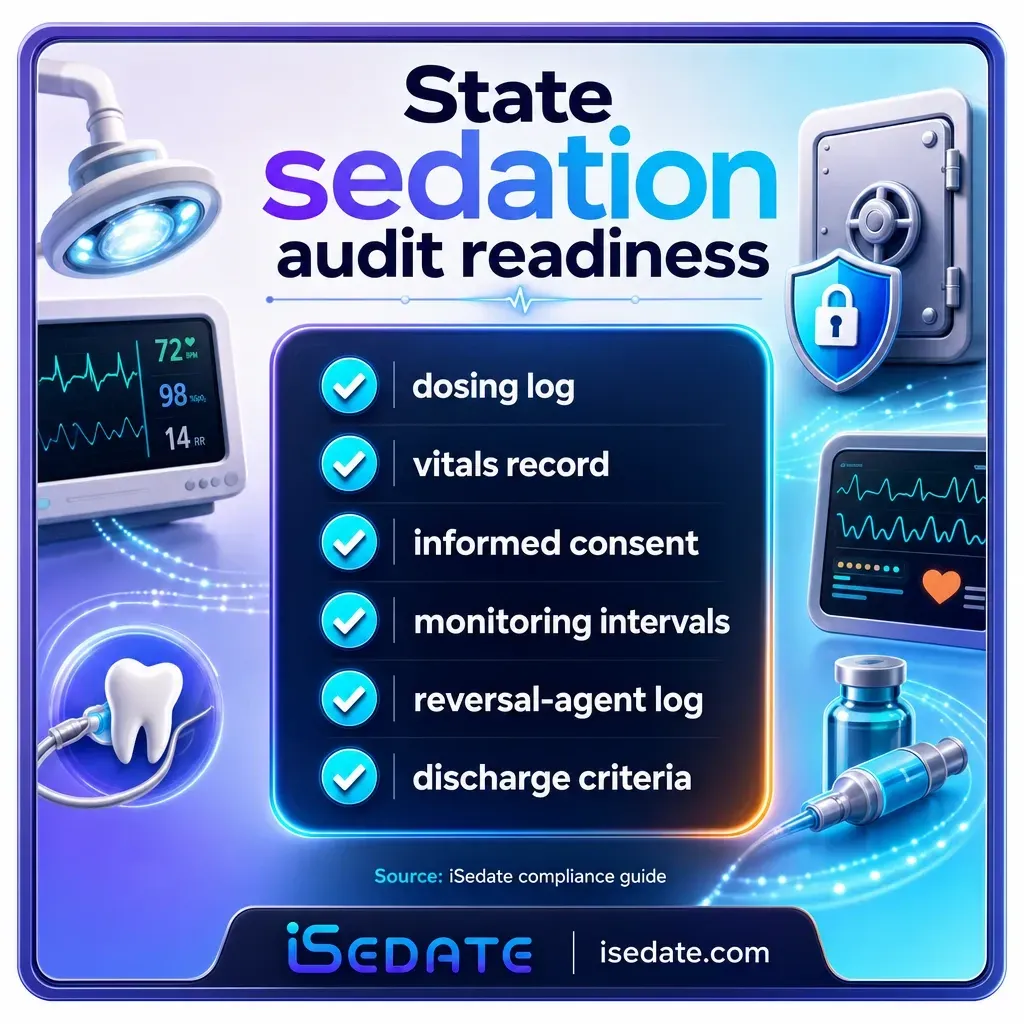
- A complete, time-based anesthetic record is the backbone of defensibility in a board audit or a claim. Real-time charting is a best practice, not paperwork.
- Emergency readiness (reversal agents, positive-pressure oxygen, an AED, documented protocols, and regular drills) turns a rare event into a managed one.

What's in This Guide
Jump to a section:
- The Four Levels of Sedation: A Continuum, Not Four Boxes
- The Core Sedation Techniques
- Patient Selection and Pre-Sedation Assessment
- Consent and Documentation Before the Appointment
- Monitoring During Sedation: The Clinical Standard
- The Anesthetic Record: Documentation as a Best Practice
- Emergency Preparedness: Drugs, Equipment, and Drills
- Recovery and Discharge: Completing the Episode Safely
- Credentialing, Permits, and Training
- Building an Audit-Ready Sedation Program
- Related Resources
- Best-Practice Summary Table
- Frequently Asked Questions
1. The Four Levels of Sedation: A Continuum, Not Four Boxes
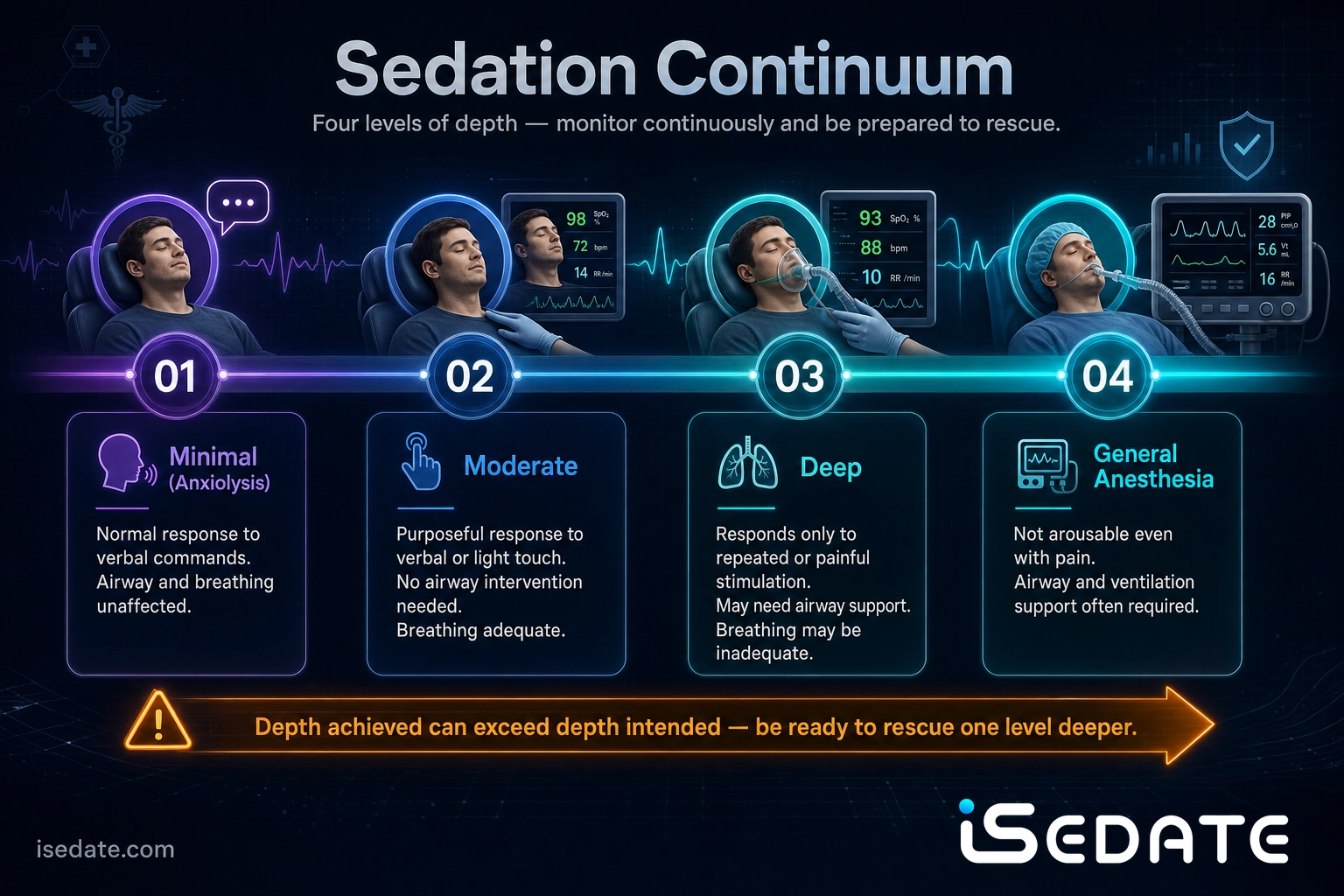
Every sedation best practice rests on one idea that is easy to state and easy to underestimate: sedation is a continuum. The American Dental Association and the American Society of Anesthesiologists describe four reference points along that continuum, but a patient does not move between them in clean steps. Two patients given the same drug at the same dose can land in very different places, and the same patient can drift deeper partway through a procedure as the stimulation changes.
The four reference points are minimal sedation (anxiolysis), moderate sedation, deep sedation, and general anesthesia. They are defined not by the drug or the dose but by the patient's response and physiology. Minimal sedation leaves the patient responding normally to verbal commands with airway, breathing, and circulation untouched. Moderate sedation means the patient responds purposefully to verbal or light tactile stimulation, keeps breathing adequately on their own, and needs no airway intervention. Deep sedation means the patient responds only to repeated or painful stimulation, may need help keeping the airway open, and may not breathe adequately without support. General anesthesia means the patient cannot be aroused even by painful stimulation and frequently needs airway and ventilation support.
Two principles follow directly, and both are load-bearing for safety. First, the level of sedation is independent of the route of administration. An oral benzodiazepine can produce deep sedation in a sensitive patient, and an intravenous agent can produce only light anxiolysis in another. That is why best practice ties monitoring and permits to the deepest level a technique could plausibly reach, not the level the provider intended. Second, because a patient can slip one level deeper than planned, the provider must be trained and equipped to rescue the patient from that deeper level. A clinician providing moderate sedation must be able to manage a patient who has become deeply sedated, which means recognizing it early and supporting the airway and breathing until the patient returns.
The 2025 revision of the ADA's sedation and anesthesia guidelines, adopted by the ADA House of Delegates in October 2025 and released in April 2026, reaffirmed the continuum model and sharpened the expectation that providers are accountable for the depth a patient actually reaches. For a deeper look at how risk changes between the moderate and deep ends of the continuum, see our breakdown of how risk scales from moderate to deep sedation.
| Level | Patient response | Airway / breathing | Typical dental use |
|---|---|---|---|
| Minimal (anxiolysis) | Normal response to verbal commands | Unaffected; breathes normally | Mild anxiety, routine restorative and hygiene |
| Moderate | Purposeful response to verbal or light touch | No intervention needed; adequate spontaneous breathing | Moderate anxiety, longer restorative, minor surgical |
| Deep | Responds only to repeated or painful stimulation | May need airway support; breathing may be inadequate | Oral surgery, extractions, highly anxious patients |
| General anesthesia | Not arousable, even with pain | Airway and ventilation support often required | Complex surgery, special-needs or very young patients |
iSedate Insight: The continuum is the reason "what technique do you use?" is the wrong first question. The right first question is "what is the deepest level this patient could reach, and am I ready to manage them there?" Equip and document to the deepest plausible depth, and the lighter cases take care of themselves.
Source: American Dental Association, updated sedation and anesthesia guidelines | ASA Continuum of Depth of Sedation
2. The Core Sedation Techniques
With the continuum in mind, the techniques themselves become easier to organize. Dental practices rely on four main approaches, each suited to a band of the continuum and a profile of patient. The technique is a means to a depth, not an end in itself, and the best practice is to choose the lightest technique that reliably achieves the comfort and cooperation the procedure needs.
Inhalation sedation with nitrous oxide
Nitrous oxide and oxygen delivered through a nasal hood is the most widely used sedation technique in dentistry and sits firmly in the minimal range for most patients. Its appeal is control: onset and offset are rapid, the depth is titratable breath by breath, and the patient recovers quickly enough to leave without an escort in most cases. Best practice centers on scavenging to protect the dental team from chronic exposure, titrating to effect rather than to a fixed concentration, and always finishing with 100 percent oxygen. Patterns of use and the contexts where nitrous is most valuable are covered in our analysis of nitrous oxide use in dentistry.
Oral (enteral) sedation
Oral sedation uses a swallowed anxiolytic, often a benzodiazepine such as triazolam, to produce minimal or moderate sedation. It is popular because it needs no needle and little equipment, but that simplicity hides a real hazard: absorption is unpredictable, the peak effect arrives well after the dose, and stacking additional doses to chase an effect is a common path to unintended deep sedation. Best practice is a single, weight-appropriate, carefully timed dose, continuous monitoring, and the same rescue readiness required for the deepest level the dose could reach. The safety margins and the most common failure modes are detailed in our reviews of oral sedation in dentistry and oral sedation safety.
Intravenous (IV) sedation
IV sedation delivers agents directly into the bloodstream, which gives the provider precise, rapid titration and a secured vascular line for rescue drugs if they are needed. It typically produces moderate to deep sedation and demands more training, more monitoring, and a dedicated permit. The trade-off for that precision is that the margin for error narrows and the airway deserves constant attention. The complication profile and why the IV route rewards disciplined monitoring are covered in our pieces on IV sedation dentistry and IV sedation complications.
Deep sedation and general anesthesia
At the deepest end, deep sedation and general anesthesia are usually provided by a dentist anesthesiologist, an oral and maxillofacial surgeon, or a physician anesthesiologist or CRNA working with the treating dentist. These techniques are indispensable for complex surgery, very young children, and patients with special needs, and they carry the highest monitoring and facility requirements. The best practice here is unambiguous: a dedicated provider whose only job is the airway and the anesthetic, separate from the clinician performing the dentistry.
Two cross-cutting best practices apply regardless of which technique is chosen. The first is to titrate to effect: give the smallest amount that achieves the target, wait for the full clinical effect to appear before adding more, and resist the pull to redose on a schedule rather than on the patient's response. The second is caution with combinations. Pairing an opioid with a benzodiazepine, or layering nitrous oxide on top of an oral or intravenous agent, can produce greater than additive respiratory depression, and a large share of unintended deep sedation in dental offices happens when drugs are combined without accounting for how they potentiate one another. Whenever techniques are combined, the monitoring and rescue readiness default to the deepest level the combination could plausibly reach, not the level of any single drug.
| Technique | Usual depth | Onset / titratability | Key best-practice guardrail |
|---|---|---|---|
| Nitrous oxide / oxygen | Minimal | Fast, titratable breath by breath | Scavenging; finish on 100% oxygen |
| Oral (enteral) | Minimal to moderate | Slow, delayed peak, hard to titrate | Single timed dose; never stack to chase effect |
| Intravenous | Moderate to deep | Fast, precisely titratable | Continuous airway attention; secured line for rescue |
| Deep sedation / GA | Deep to general | Provider-controlled | Dedicated anesthesia provider separate from operator |
Myth: "Oral sedation is the safe, low-tech option because there is no needle." In reality, the delayed and variable absorption of swallowed drugs is exactly what makes stacking doses dangerous, and an oral regimen can reach deep sedation with no IV access ready for rescue. The absence of a needle does not lower the monitoring or rescue standard. It raises the importance of titrating slowly and watching continuously.
Source: ADA Oral Health Topics: Anesthesia and Sedation
3. Patient Selection and Pre-Sedation Assessment
The single highest-yield best practice in sedation dentistry happens before any drug is given. Most preventable adverse events trace back to a patient who should have been sedated more conservatively, screened more carefully, or referred. A structured pre-sedation assessment is what turns that risk into a decision made in daylight rather than discovered mid-procedure.
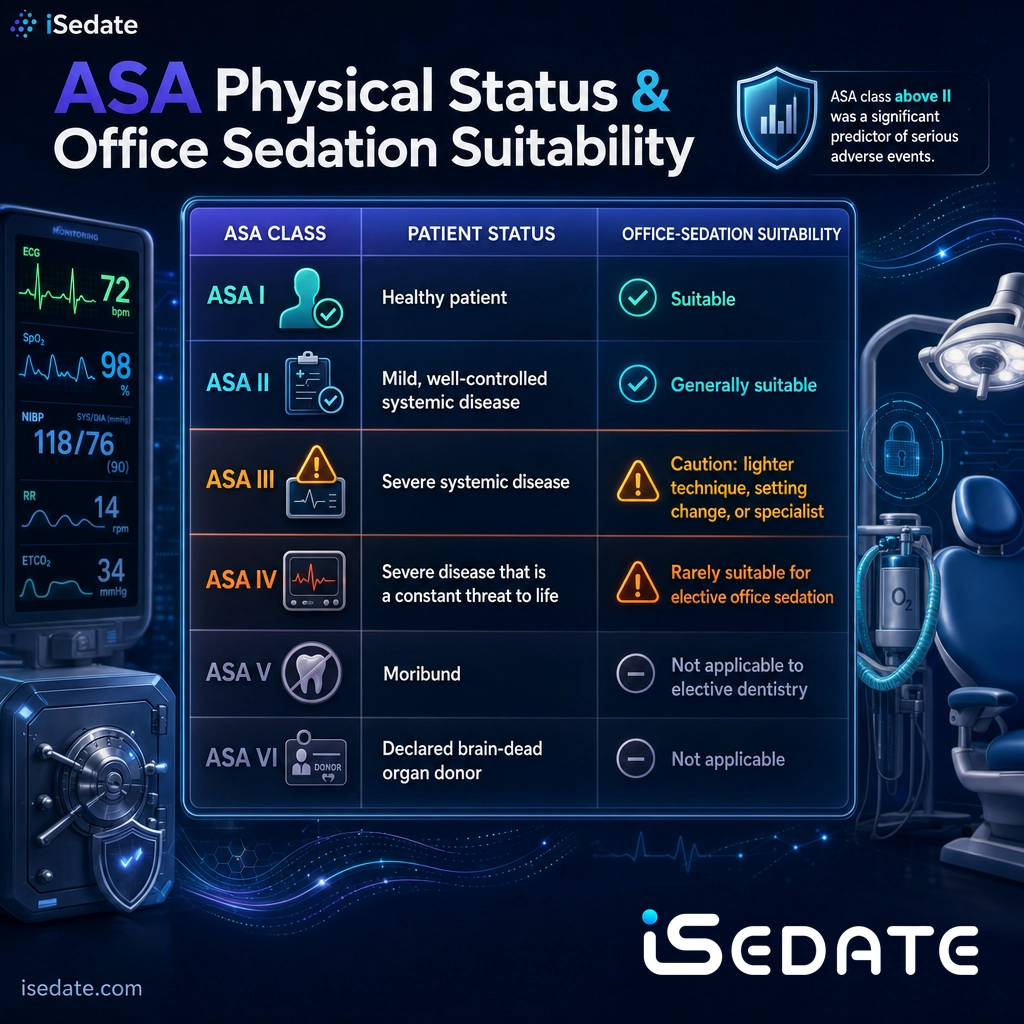
The backbone of that assessment is the ASA Physical Status classification, a six-point scale that stratifies a patient's baseline health. ASA I is a healthy patient and ASA II a patient with mild, well-controlled systemic disease; both are generally appropriate for office-based sedation. ASA III (severe systemic disease) raises the threshold and often argues for a lighter technique, a hospital or surgical-center setting, or an anesthesia specialist. ASA IV and above are rarely candidates for elective office sedation. A Pediatric Sedation Research Consortium analysis of more than 25,000 propofol sedations found that an ASA class above II was one of the significant predictors of a serious adverse event, which is precisely why the classification earns its place at the front of the workflow.
Physical status is necessary but not sufficient. A complete assessment also includes a focused medical history and medication reconciliation, an allergy review, and an airway examination that looks for the features that make rescue harder: a crowded oropharynx, limited mouth opening, a short or thick neck, and a high Mallampati score. The 2025 ADA guidelines added body mass index to the baseline vital signs and strengthened obstructive sleep apnea screening, because excess weight and OSA both raise the odds of airway obstruction under sedation. Fasting status is confirmed against the updated guidance, and baseline vital signs are recorded before the first drug is given so every later number has something to be compared against. Our review of patient comorbidity and sedation risk shows how these factors compound.
Patient selection also means recognizing who sedation is genuinely for. Dental anxiety is common: a national study published in the International Dental Journal found high dental anxiety in 13.3 percent of adults, with estimates ranging from roughly 4 to 20 percent across populations, and anxious patients are measurably less likely to have seen a dentist in the past year. Sedation is one of the few tools that brings those patients back into care, which is the clinical argument for offering it well rather than avoiding it.
| ASA class | Description | Office-sedation suitability |
|---|---|---|
| ASA I | Healthy patient | Suitable |
| ASA II | Mild, well-controlled systemic disease | Generally suitable |
| ASA III | Severe systemic disease | Caution; lighter technique, setting change, or specialist |
| ASA IV | Severe disease that is a constant threat to life | Rarely suitable for elective office sedation |
| ASA V | Moribund; not expected to survive without the operation | Not applicable to elective dentistry |
| ASA VI | Declared brain-dead organ donor | Not applicable |
Source: ASA Physical Status Classification System | Pediatric Sedation Research Consortium data | International Dental Journal dental-anxiety study (2021)
4. Consent and Documentation Before the Appointment
Informed consent for sedation is a clinical conversation, not a signature. Best practice is to document that the patient understood the proposed level of sedation, the alternatives (including no sedation), the material risks, and the recovery expectations, including the requirement for a responsible adult escort. That conversation is captured in the chart, and the consent form is specific to sedation rather than buried in a general treatment consent.
The paperwork that surrounds consent is also where many practices quietly lose time and introduce risk. Medical histories collected on paper are often incomplete or illegible, allergies get transcribed incorrectly, and the pre-operative checklist is reconstructed from memory. Moving intake and consent to structured digital forms removes those failure points: required fields cannot be skipped, medication and allergy entries are standardized, and the completed forms attach directly to the sedation record. iSedate's SedationVault handles digital patient intake and digital consent so the pre-sedation picture is complete and legible before the patient is ever in the chair.
The discipline here is simple to describe and valuable to keep: nothing about the patient's suitability, the agreed plan, or the consent is left to recollection. Everything that informs the sedation decision is written down, time-stamped, and stored where it can be retrieved on demand.
See how SedationVault structures intake, consent, and charting
Source: American Dental Association, updated sedation and anesthesia guidelines
5. Monitoring During Sedation: The Clinical Standard
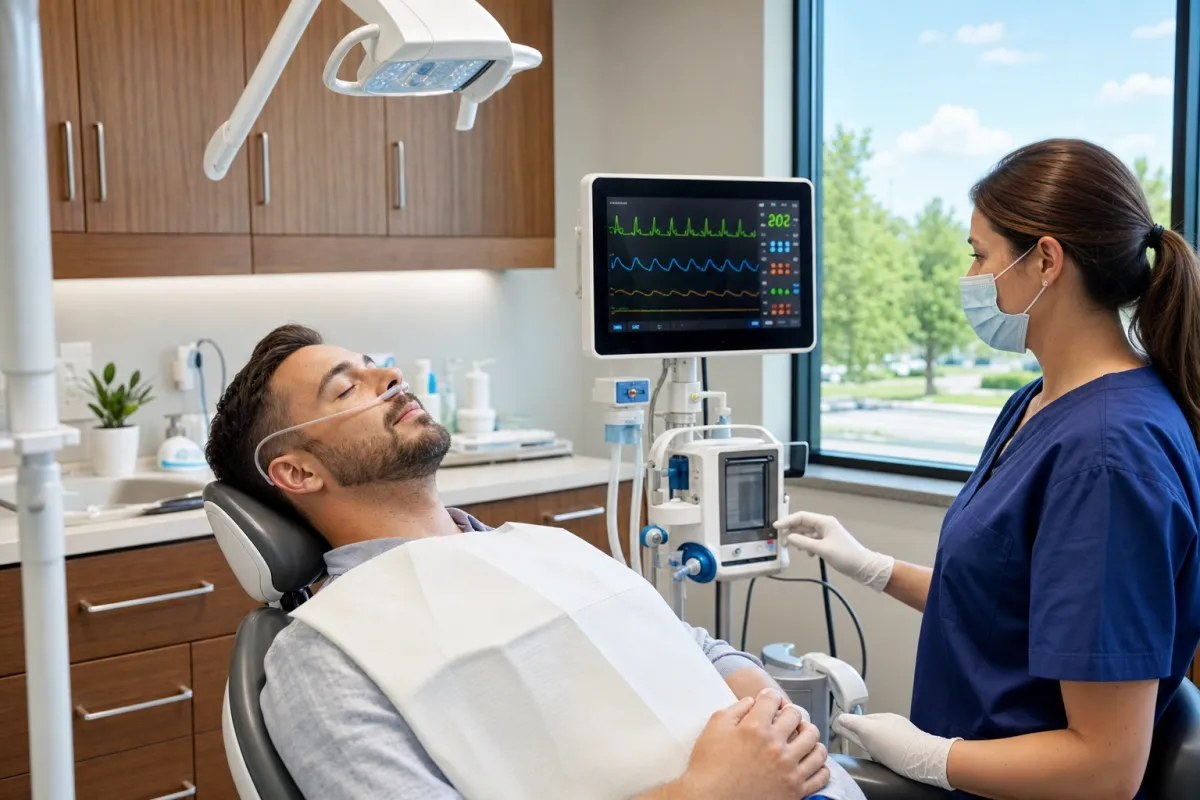
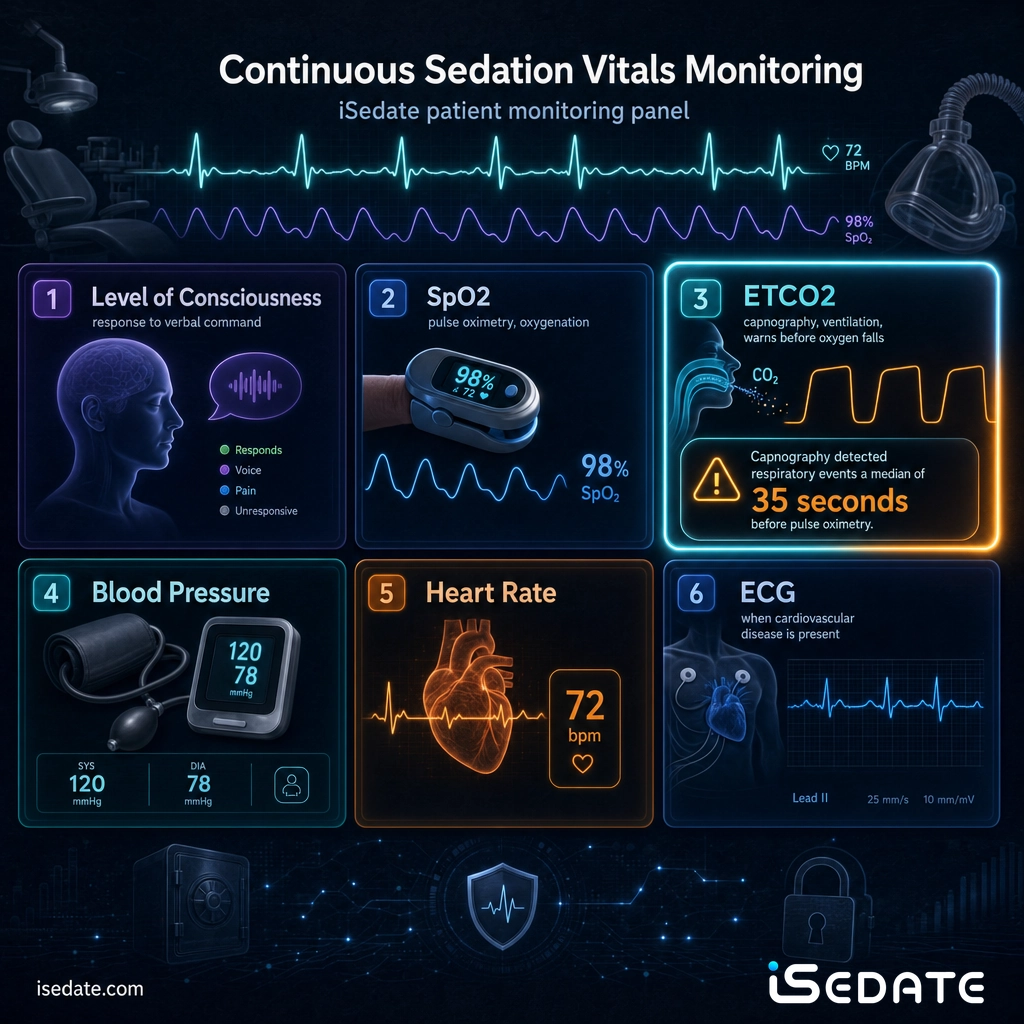
Monitoring is where best practice becomes concrete. The goal is to detect a problem in the seconds it is developing rather than the minute after it has arrived, and the standard is defined by what is measured, how continuously it is measured, and how reliably it is recorded. Current ADA guidance for moderate sedation calls for continuous assessment of five things: level of consciousness, oxygenation, ventilation, blood pressure, and heart rate.
Consciousness is tracked by the patient's response to verbal command, which is the earliest and cheapest sign that the depth is changing. Oxygenation is measured continuously by pulse oximetry. Ventilation is measured by end-tidal carbon dioxide, or capnography, which is the single most important monitoring advance for sedation safety. Blood pressure and heart rate are measured at regular intervals, and continuous ECG is advised for patients with significant cardiovascular disease. The 2025 ADA revision went further and recommended supplemental oxygen from moderate sedation through general anesthesia.
Supplemental oxygen is a double-edged best practice. It raises the patient's oxygen reserve, which is protective, but it also means pulse oximetry will lag even further behind a developing breathing problem, because a well-oxygenated patient can stop ventilating for a long stretch before the saturation number moves. That is the clinical case for pairing supplemental oxygen with capnography rather than relying on the oximeter alone. Monitoring is also a shared responsibility rather than one person's job: the whole sedation team watches both the patient and the numbers, and any team member who notices a change is expected to speak up immediately. Once a patient reaches moderate sedation or deeper, the provider directing the sedation stays dedicated to that role and does not also perform the operative dentistry.
Capnography deserves its own paragraph because of a counterintuitive fact: when a patient is receiving supplemental oxygen, pulse oximetry can stay reassuringly normal for a dangerously long time after breathing has stopped, because the lungs hold an oxygen reserve. Capnography does not wait. It shows the missing breath immediately. In a 2025 study of 101 children undergoing procedural sedation, capnography identified respiratory events a median of 35 seconds earlier than pulse oximetry, detected every apnea episode the pulse oximeter missed, and caught more than three-quarters of the hypoventilation episodes the pulse oximeter did not register. That head start is the window in which a simple jaw thrust or a pause in dosing prevents a desaturation. The data behind this is collected in our review of capnography and sedation safety and our broader look at vital-signs monitoring and sedation safety.
Respiratory events capnography caught that pulse oximetry missed (2025 pediatric study, n=101)
| Parameter | Minimal | Moderate | Deep / GA |
|---|---|---|---|
| Level of consciousness | Observed | Continuous | Continuous |
| Pulse oximetry (SpO2) | Recommended | Continuous | Continuous |
| Capnography (ETCO2) | Consider | Continuous | Continuous |
| Blood pressure | Baseline | Intervals | Intervals |
| Heart rate | Intervals | Continuous | Continuous |
| ECG | As indicated | If CV disease | Continuous |
iSedate Insight: A monitor is only as useful as the record it leaves behind. The practices with the strongest safety culture do not just watch the numbers, they capture them continuously, so the same stream that protects the patient in the moment becomes the evidence that protects the practice later. Live vitals that flow straight into the chart remove the transcription gap entirely.
See live vitals charting in SedationVault
Source: American Dental Association sedation guidelines | Capnography versus pulse oximetry study, Children (2025) | AAPD monitoring and management guideline
6. The Anesthetic Record: Documentation as a Best Practice
Ask an experienced sedation provider what keeps them up at night and the answer is rarely the drug. It is the record. A time-based anesthetic record, logging every drug, dose, and time alongside the vital signs and the clinical response, is required by the ADA guidelines and is the single most important document a sedation practice produces. It serves two masters at once: it guides the care in real time, and it is the evidence that the care met the standard.
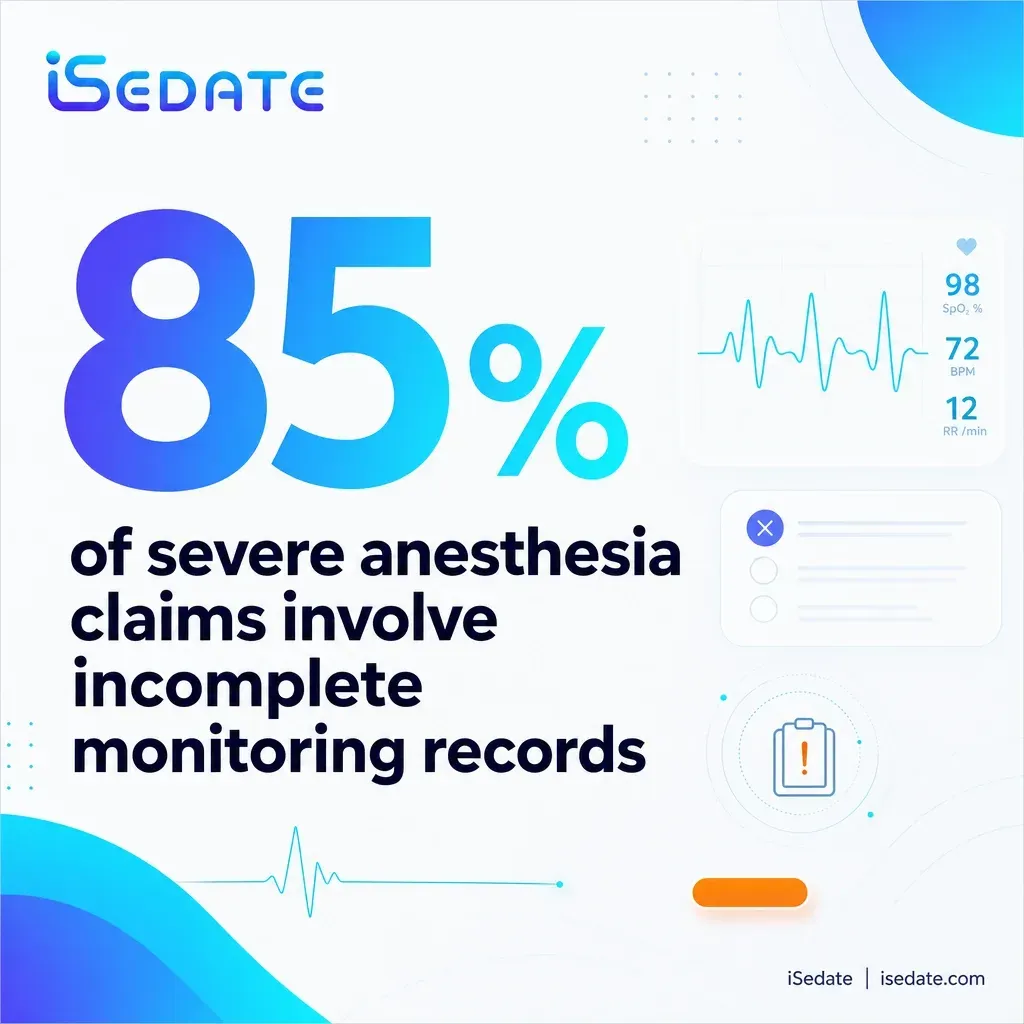
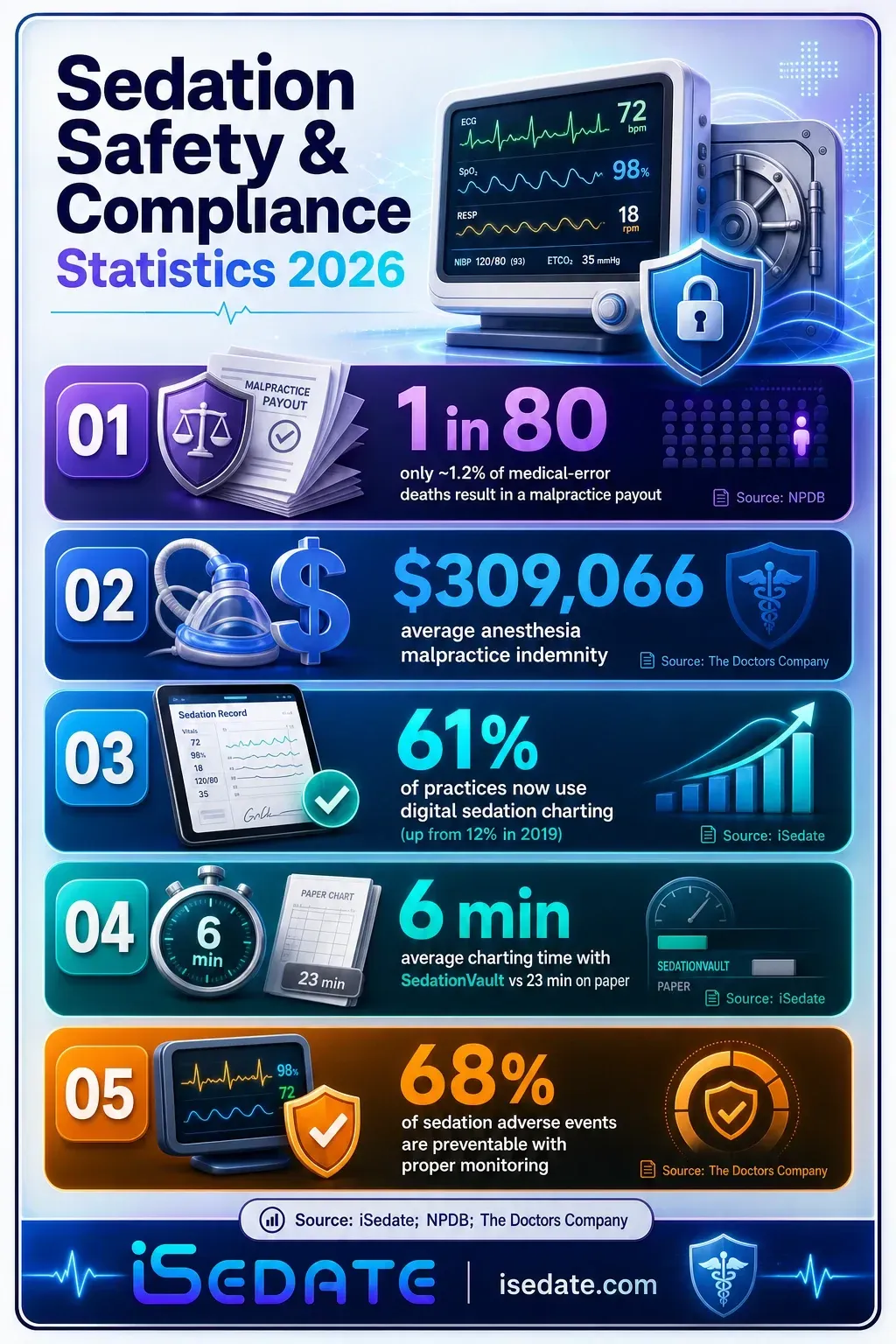
The reason documentation rises to the level of a best practice rather than an administrative chore is what happens when it is absent. In a state board investigation or a malpractice claim, the contemporaneous record is the primary evidence of what occurred. A complete record that shows the vitals trended normally, the doses were appropriate and spaced correctly, and the team responded to any change is a strong defense even when an unavoidable complication occurred. A record with gaps is difficult to defend even when the clinical care was sound, because a missing entry invites the inference that the monitoring itself was missing. Our analyses of standard-of-care violations in sedation cases and board audits and sedation compliance show how often the record, not the care, becomes the pivot of a case.
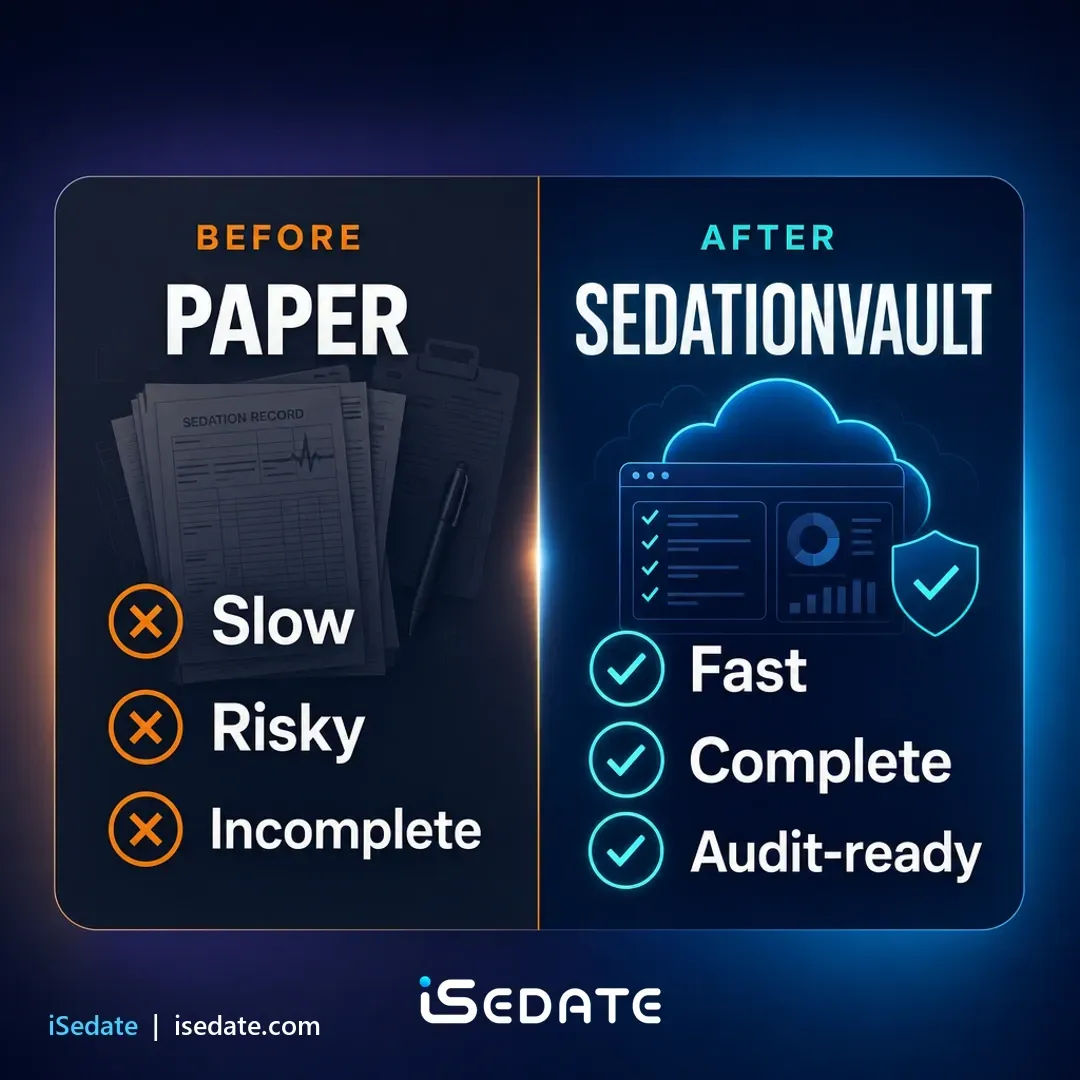
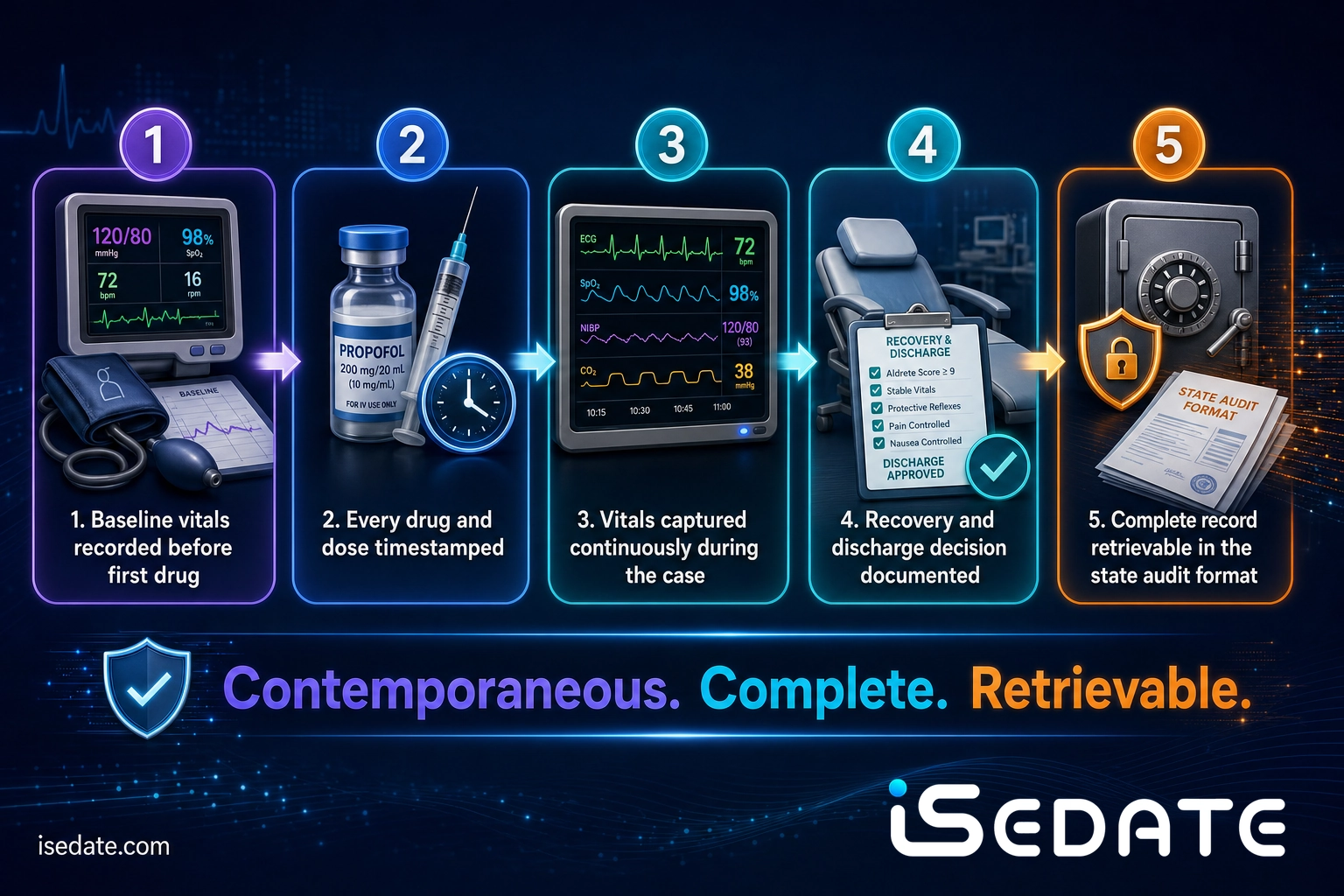
Three documentation habits separate audit-ready practices from the rest. First, the record is contemporaneous: entries are made as events happen, not reconstructed hours later from memory. Second, it is complete: baseline vitals, every dose with its time, the monitoring values at regular intervals, the recovery course, and the discharge decision are all present. Third, it is retrievable: a specific case from eighteen months ago can be produced in minutes, in the format a state board expects. A paper record struggles on all three counts, which is why leading practices chart digitally, in real time, with the vitals flowing in automatically. SedationVault produces an audit-ready visit report and supports ongoing dental sedation compliance so the record is complete by default rather than by heroics.
Source: American Dental Association sedation and anesthesia guidelines

7. Emergency Preparedness: Drugs, Equipment, and Drills
Serious sedation emergencies are rare, and that rarity is the hazard. A team that has never managed an airway obstruction or an oversedation can freeze at the moment it matters most. Best practice treats the emergency as a drill that has been rehearsed, not an event to be improvised, and the 2025 ADA guidelines made that expectation explicit by emphasizing documented emergency protocols and regular team training.
Readiness has a physical layer and a human layer. The physical layer is the equipment and drugs, checked and in date: supplemental oxygen with the ability to deliver positive-pressure ventilation, suction, an airway management kit, a defibrillator or AED, functioning monitors, and emergency medications. The two reversal agents every sedation practice keeps on hand are flumazenil, which reverses benzodiazepines, and naloxone, which reverses opioids. Our review of rescue and reversal agent use and the broader picture of emergency drug and equipment readiness show how uneven that readiness still is across offices.
The human layer is training and role clarity. Each team member knows their job before the emergency starts: who manages the airway, who draws and documents the drugs, who calls for help, who runs the clock. The best way to build that reflex is the mock drill, run on a schedule, where the team rehearses the common scenarios until the sequence is automatic. The broader context of how often in-office emergencies occur is covered in our look at dental office emergencies.
Important: Reversal agents are a rescue, not a routine. Flumazenil and naloxone both have shorter durations of action than many of the drugs they reverse, so a patient can re-sedate after the reversal wears off. A reversed patient is monitored for a prolonged recovery period, never discharged on the assumption that the reversal is permanent.
| Readiness element | What best practice looks like |
|---|---|
| Oxygen and ventilation | Supplemental oxygen plus positive-pressure delivery, checked before every session |
| Airway kit | Oral and nasal airways, suction, and advanced adjuncts matched to the permit level |
| Defibrillation | AED or defibrillator present, maintained, and in date |
| Reversal agents | Flumazenil and naloxone stocked, in date, with prolonged post-reversal monitoring |
| Protocols | Written emergency protocols posted and specific to the setting |
| Drills | Scheduled mock emergencies with defined roles and documentation |
Book a demo to see audit-ready sedation documentation
Source: American Dental Association sedation and anesthesia guidelines | AAPD monitoring and management guideline
8. Recovery and Discharge: Completing the Episode Safely
The procedure ending is not the sedation ending. Recovery is a distinct phase with its own monitoring and its own decisions, and a disproportionate share of late complications happen here, when attention naturally relaxes. Best practice keeps the patient monitored in a recovery area until they meet objective discharge criteria, with the same vigilance that applied during the case winding down gradually rather than switching off.
Discharge is a documented clinical decision, not a function of the clock. A patient is ready to leave when vital signs are stable and near their baseline, the airway is protected and the patient can manage their own secretions, the patient is oriented and can ambulate with assistance, nausea and pain are controlled, and a responsible adult is present to take them home and stay with them. The ADA guidelines reinforce that the dentist does not leave the facility until the patient is discharged, which is a reminder that the provider's responsibility extends across the whole recovery.
Written post-operative instructions go to both the patient and the escort, because a recently sedated patient will not reliably remember a verbal briefing. Those instructions cover activity restrictions, what to expect, warning signs, and whom to call. The discharge assessment and the instructions given are both recorded, closing the loop on the episode in the same record that began with the baseline vitals.
| Discharge criterion | Target |
|---|---|
| Vital signs | Stable and near pre-sedation baseline |
| Airway and breathing | Protected; managing own secretions; adequate ventilation |
| Consciousness | Oriented, or returned to baseline for the patient |
| Mobility | Ambulatory with assistance |
| Comfort | Pain and nausea controlled |
| Escort | Responsible adult present to accompany and supervise |
Note: Discharge criteria are especially strict for children and for patients who received a reversal agent, both of whom can deteriorate after an apparently smooth recovery. Length of observation is matched to the technique and the patient, not to a fixed stopwatch.
Source: AAPD monitoring and management guideline | ADA sedation and anesthesia guidelines
9. Credentialing, Permits, and Training
None of the techniques above are a matter of choice alone. The authority to provide a given level of sedation is granted by the state dental board through a permit, and the permit tracks the continuum: minimal, moderate, and deep sedation or general anesthesia each carry their own permit with distinct education, clinical experience, facility, and inspection requirements. The non-negotiable rule is that the provider must hold the permit matching the deepest level the technique could reach, which circles back to the continuum principle from the start of this guide.
The 2025 ADA update came paired with revised teaching guidelines that reflect current Commission on Dental Accreditation standards and define the educational requirements for minimal and moderate sedation. Both documents are offered as resources to state boards as they set their own rules, which means the national guidance and the state permit requirements move together but are not identical. A practice operating in more than one state, or a provider moving between them, confirms the specific requirements of each jurisdiction rather than assuming they match. Our reviews of sedation provider training and certification and sedation permits and licensing by state map how widely those requirements vary.
Training is not a one-time event. Emergency management skills in particular decay without practice, so best practice treats periodic retraining, certification renewal, and the mock drills described earlier as part of maintaining the permit, not as an optional extra. The provider's credentials, the team's certifications, and the renewal dates belong in the practice's records alongside the clinical documentation.
Source: ADA sedation and anesthesia guidelines and teaching guidelines
10. Building an Audit-Ready Sedation Program
The individual best practices in this guide are necessary, but the practices that run the safest sedation programs do something more: they build a system that makes the right behavior the default and the wrong behavior hard. That is the difference between a practice that follows best practices on a good day and one that follows them on every day, including the busy ones.
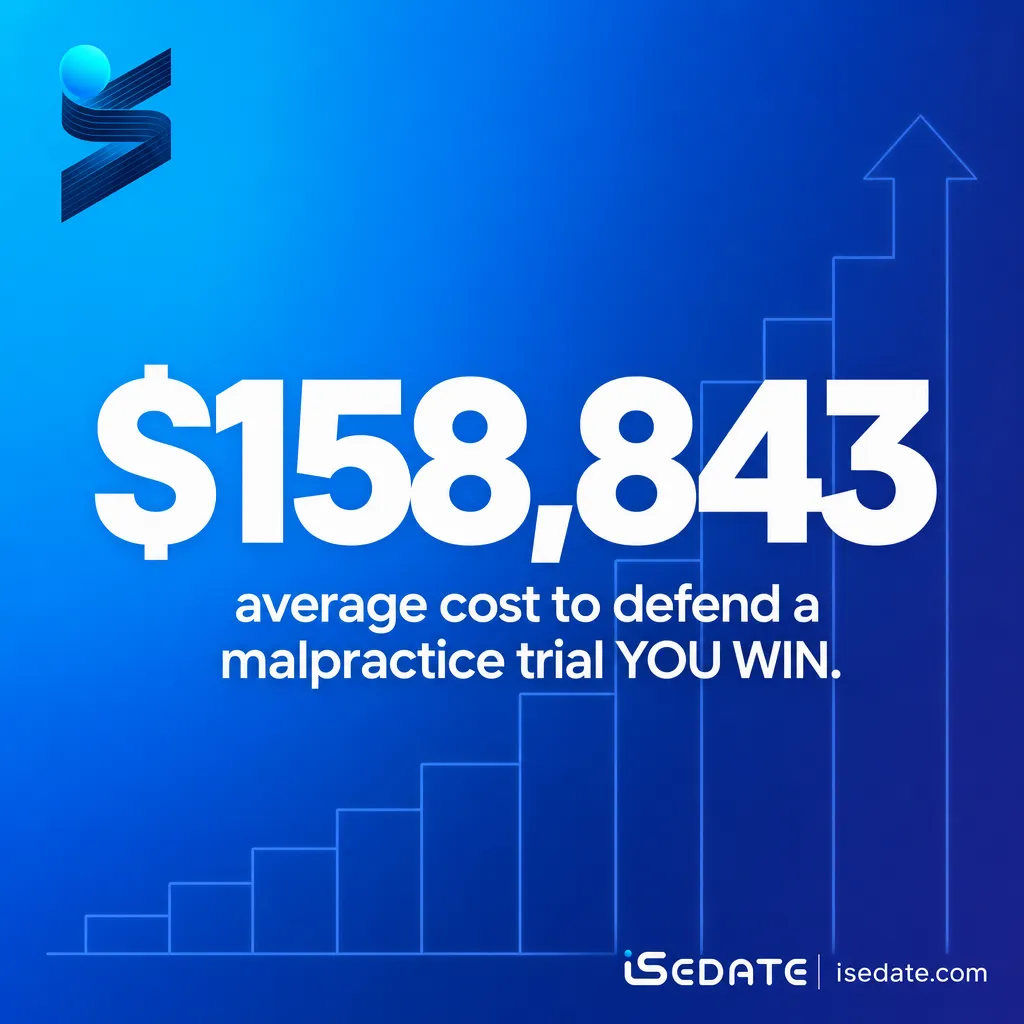
A mature program has a few recognizable features. Patient selection is a structured step with defined thresholds, not a judgment made on the fly. Monitoring values and drug doses are captured continuously and automatically, so the record is a byproduct of doing the case rather than a task bolted onto the end. Emergency readiness is verified on a schedule and rehearsed in drills. And the whole record is retrievable in the format a board audit demands, which means the practice can answer a records request without a scramble. The thread running through all of it is documentation that is complete by design, because a program that documents perfectly protects both the patient in the chair and the practice over time. The connection between flawless documentation and the financial reality of a claim is spelled out in our analysis of dental anesthesia malpractice.
This is the specific problem iSedate's SedationVault was built to solve. It streams live vitals from any monitor straight into a time-based record, timestamps every drug and dose, prompts for the required monitoring entries, and generates state-specific, audit-ready compliance documents on demand, so the best practices in this guide are enforced by the workflow rather than left to discipline. For oral surgeons and dentists who want to see what an audit-ready program looks like in their own setting, the dentist and oral surgeon use-case pages walk through it.
Implementation roadmap
| Action | Priority | Timeline | Supports |
|---|---|---|---|
| Confirm permits match the deepest level each technique can reach | Critical | Now | Credentialing |
| Standardize the pre-sedation assessment (ASA, airway, OSA, BMI, fasting) | Critical | Week 1 | Patient selection |
| Add or verify capnography on every sedation case | High | Weeks 1 to 2 | Monitoring |
| Move intake and consent to structured digital forms | High | Weeks 2 to 4 | Documentation |
| Adopt real-time, vitals-integrated charting | High | Weeks 2 to 4 | Documentation |
| Audit the emergency cart and reversal-agent stock | High | Month 1 | Emergency readiness |
| Schedule recurring mock emergency drills | Medium | Ongoing, quarterly | Emergency readiness |
| Run a records-retrieval test against your state's audit format | Medium | Month 2 | Audit readiness |
Compare SedationVault plans and pricing
Source: ADA sedation and anesthesia guidelines | ASA Continuum of Depth of Sedation
Related Resources
More from the iSedate sedation library
Authoritative external references:
- ADA Guidelines for the Use of Sedation and General Anesthesia by Dentists
- ASA Continuum of Depth of Sedation
- ASA Physical Status Classification System
- AAPD Monitoring and Management of Pediatric Patients During Sedation
- Capnography versus pulse oximetry for early detection of respiratory depression (Children, 2025)
Best-Practice Summary Table
| Stage | Best practice | Why it matters |
|---|---|---|
| Framing | Treat sedation as a continuum | A patient can drift deeper than intended |
| Framing | Match equipment and permit to the deepest plausible depth | Level is independent of route |
| Framing | Maintain rescue capability one level deeper | Core ADA safety principle |
| Technique | Choose the lightest technique that works | Lower depth, lower risk |
| Technique | Scavenge and finish on oxygen with nitrous | Protects the team and the patient |
| Technique | Never stack oral doses to chase an effect | Delayed absorption causes unintended deep sedation |
| Technique | Use a dedicated anesthesia provider for deep sedation and GA | Separates airway management from the procedure |
| Selection | Classify every patient with ASA Physical Status | ASA above II predicts higher adverse-event risk |
| Selection | Perform an airway exam and OSA screen | Identifies difficult rescue before it is needed |
| Selection | Record baseline vitals including BMI | Gives every later value a comparison point |
| Selection | Confirm fasting status per current guidance | Reduces aspiration risk |
| Consent | Use a sedation-specific informed consent | Documents understanding of level, risks, and escort |
| Consent | Collect intake and consent as structured digital forms | Removes illegible, incomplete records |
| Monitoring | Continuously monitor consciousness, SpO2, ETCO2, BP, HR | Detects trouble as it develops |
| Monitoring | Use capnography on every sedation case | Warns before oxygen saturation falls |
| Monitoring | Provide supplemental oxygen from moderate through GA | Current ADA recommendation |
| Documentation | Keep a contemporaneous, time-based anesthetic record | Primary evidence in audits and claims |
| Documentation | Make records complete and retrievable | A gap is hard to defend even with sound care |
| Emergencies | Stock oxygen, AED, airway kit, flumazenil, naloxone | Turns a rare event into a managed one |
| Emergencies | Run scheduled mock drills with defined roles | Builds reflexes that decay without practice |
| Recovery | Monitor to objective discharge criteria, not the clock | Late complications happen during recovery |
| Recovery | Give written instructions to patient and escort | A sedated patient will not recall a briefing |
| Credentialing | Hold the permit matching the deepest level | Legal authority tracks the continuum |
| Credentialing | Renew training and certifications on schedule | Emergency skills decay without practice |
| Program | Build a system where the record is complete by design | Protects every case, not just the careful ones |
Frequently Asked Questions
What are the four levels of sedation in dentistry?
Is the level of sedation determined by the drug or the route of administration?
What monitoring is required during moderate sedation?
Why is capnography recommended for sedation?
How do you select the right patients for in-office sedation?
What emergency equipment and drugs should a sedation practice keep on hand?
What are the discharge criteria after dental sedation?
Do sedation permits and training requirements vary by state?
Why does sedation documentation matter so much?
How does software support sedation best practices?
Methodology and Sources
This guide synthesizes clinical best practices from primary professional and regulatory sources rather than secondary commentary. Technique definitions, the sedation continuum, monitoring expectations, and documentation requirements are drawn from the American Dental Association's Guidelines for the Use of Sedation and General Anesthesia by Dentists (2025 revision, released April 2026), the American Society of Anesthesiologists' Continuum of Depth of Sedation and Physical Status Classification System, and the American Academy of Pediatric Dentistry's monitoring and management guideline. Quantitative claims are cited inline to their primary sources: the capnography detection figures come from a 2025 observational study of 101 children published in the journal Children; the pediatric adverse-event rate comes from the Pediatric Sedation Research Consortium; and the dental-anxiety prevalence comes from a study in the International Dental Journal (2021). State permit and licensing requirements vary, and this guide is an educational resource, not a substitute for the regulations of a provider's own state board or for individualized clinical judgment.
Last Updated: October 2026